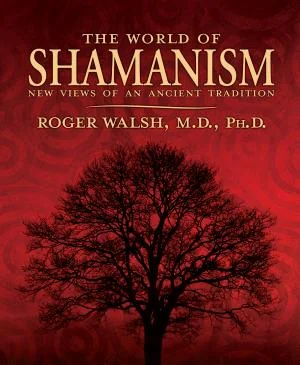
The World of Shamanism
 79
79

The World of Shamanism
Walsh's "The World of Shamanism" offers a commendable, broad survey, distinguishing itself by its academic rigor and systematic approach. He avoids sensationalism, presenting shamanism as a complex cultural and psychological phenomenon rather than a mystical panacea. A particular strength lies in his detailed breakdown of the commonalities and variations across distinct shamanic traditions, such as those found among the Sámi or Siberian peoples. However, the book occasionally suffers from an overabundance of descriptive detail, which can sometimes obscure the more dynamic aspects of shamanic practice. While Walsh diligently outlines the historical development and psychological correlates, the experiential dimension, the raw intensity of a shamanic trance, feels somewhat understated. The work’s objective tone, while a virtue for scholarly purposes, may leave readers craving a more visceral connection to the subject. Nevertheless, for those seeking a well-researched foundation, Walsh delivers a solid, informative account.
📝 Description
79
Roger N. Walsh's 1990 book examines shamanism across cultures and history.
Roger N. Walsh's "The World of Shamanism" offers an objective study of shamanistic practices, examining their core elements across history and diverse cultures. The book details altered states of consciousness, spirit journeys, and healing rituals, aiming to explain how these traditions function and their societal roles. It is written for students of comparative religion, anthropology, and psychology who are interested in empirical study of spiritual phenomena. Walsh moves beyond anecdotal accounts to provide a structured analysis of shamanism's historical development and its appearances worldwide.
The work places shamanism within a broad historical context, tracing its presence from Paleolithic times through its various expressions in indigenous societies. It discusses how shamanistic beliefs and practices adapted and endured, sometimes blending with other traditions, even as societies modernized and dominant religious or scientific views changed. The book investigates the shaman's role as an intermediary, the use of drumming and altered states to access non-ordinary reality, and the human need for spiritual connection and healing. Walsh connects these experiences to psychological and physiological underpinnings, relating them to current scientific understanding.
This book fits within the study of shamanism as a distinct spiritual and healing tradition that predates many organized religions. It examines the practices and beliefs that form a significant part of humanity's historical engagement with altered states, spirit worlds, and communal well-being. Walsh's approach situates these traditions within a comparative framework, acknowledging their persistence and adaptation alongside major world religions and scientific advancements.
💡 Why Read This Book?
• Gain a structured understanding of shamanic practices, including the concept of the 'spirit world' as explored in chapter 4, which provides a comparative analysis of indigenous cosmologies. • Comprehend the historical trajectory of shamanism from its earliest known roots, evidenced by archaeological findings discussed in the early sections of the book. • Explore the intersection of shamanism with psychology, as Walsh examines altered states of consciousness and their therapeutic applications, referencing early 20th-century psychological theories.
⭐ Reader Reviews
Honest opinions from readers who have explored this book.
❓ Frequently Asked Questions
What is the primary difference between shamanism and other spiritual traditions discussed in the book?
Walsh highlights shamanism's direct, unmediated access to the spirit world by the shaman, often through altered states of consciousness. This contrasts with traditions relying more on established dogma or intermediary priesthoods.
Does "The World of Shamanism" cover shamanism in specific geographical regions?
Yes, the book explores shamanistic traditions from various regions, including Siberia, the Americas, and parts of Asia, detailing their unique practices and belief systems.
What role does altered state of consciousness play in shamanism according to Roger N. Walsh?
Walsh emphasizes that altered states, often induced by drumming or chanting, are central to shamanic practice, enabling the shaman to journey to spirit realms for healing, divination, or guidance.
Is the book suitable for beginners interested in shamanism?
Absolutely. Walsh's work is written with a clarity that makes complex anthropological and psychological concepts accessible to a general audience seeking an objective overview.
When was "The World of Shamanism" first published?
The book was first published in 2007, offering a contemporary synthesis of extensive research on shamanistic traditions.
Does the book discuss the scientific basis of shamanic healing?
Yes, Walsh addresses the psychological and physiological effects of shamanic practices, exploring how altered states and ritualistic healing might impact well-being from a scientific perspective.
🔮 Key Themes & Symbolism
The Shamanic Journey
Walsh details the core shamanic practice of journeying, where the shaman enters an altered state to travel to spirit realms. This is not merely a psychological projection but understood within the culture as a genuine traversal of non-ordinary reality. The book examines the techniques used, such as rhythmic drumming, and the purpose of these journeys, which typically involve seeking guidance, healing, or understanding from spirit helpers for the benefit of the community.
Altered States of Consciousness
A significant focus is placed on the various ways shamans induce and utilize altered states. Walsh explores the neurological and psychological correlates of these states, distinguishing them from everyday consciousness. The book analyzes how these states facilitate the shaman's role as an intermediary, allowing access to information and energies unavailable in ordinary waking life, and how this phenomenon has been studied across diverse cultural contexts.
Shamanism and Healing
The book examines shamanism's deep connection to healing, both physical and spiritual. Walsh presents case studies and ethnographic accounts demonstrating how shamans diagnose spiritual causes of illness and employ rituals, plant medicine, and spirit interventions to restore balance. This section explores the efficacy of shamanic healing within its cultural framework and touches upon its potential resonance with modern psychotherapeutic approaches.
Cross-Cultural Comparisons
Walsh systematically compares shamanic practices across different continents and cultures, highlighting both universal elements and unique regional adaptations. By examining traditions from Siberia to the Americas, he illustrates the pervasive nature of shamanism as a fundamental human response to the sacred and the unknown, underscoring its enduring presence throughout history.
💬 Memorable Quotes
Direct passages from the work, attributed to the author.
“Shamanism is a complex of beliefs and practices centered on the shaman, who is believed to have the ability to contact the spirit world and to mediate between the human and spirit realms.”
— This concise definition frames shamanism as a system of belief and action, emphasizing the shaman's important role as a bridge between the mundane and the sacred, a core concept explored throughout the book.
“The shamanic journey is not simply a psychological experience but a perceived reality within the cultural context.”
— This interpretation underscores the objective reality attributed to the shaman's spirit travel by the community, distinguishing it from mere hallucination or internal fantasy and highlighting its functional significance.
“Rhythmic drumming is a common method for inducing altered states of consciousness in shamanic traditions.”
— This points to a specific, widely observed technique central to shamanic practice, explaining how shamans access non-ordinary realities and the sensory input that facilitates this transition.
“Shamanism offers a framework for understanding and addressing illness from both spiritual and psychological perspectives.”
— This highlights the holistic nature of shamanic healing, indicating that it addresses the root causes of ailments, often seen as spiritual imbalances, and impacts the individual's mental and emotional state.
“The study of shamanism provides insights into universal human experiences of altered states and spiritual connection.”
— This suggests that shamanism, despite its cultural specificity, taps into fundamental aspects of human consciousness and the innate drive for meaning and connection beyond the material world.
🌙 Esoteric Significance
Tradition
Shamanism, while not a codified 'tradition' in the Western esoteric sense like Hermeticism or Kabbalah, represents a primordial form of spiritual practice predating organized religion. Walsh's work places it as foundational, exploring a universal human engagement with the sacred and the unseen. It informs later esoteric developments by demonstrating early methods of consciousness alteration and spirit communication, thus providing a historical and anthropological bedrock for understanding various mystical paths.
Symbolism
Key symbols include the World Tree, often depicted as a central axis connecting the underworld, earthly plane, and celestial realms, signifying cosmic order and the shaman's ability to traverse these dimensions. Animal spirits are also paramount, acting as guides, protectors, or embodiments of power, representing the interconnectedness of all life and the inherent wisdom present in the natural world.
Modern Relevance
Contemporary thinkers and practitioners in fields like transpersonal psychology, psychedelic research (e.g., studies on psilocybin's therapeutic effects), and eco-spirituality draw upon the foundational understanding of shamanic practices presented by Walsh. His work provides a scholarly reference point for those exploring consciousness, healing, and the integration of indigenous wisdom into modern life, influencing therapeutic modalities and new spiritual movements.
👥 Who Should Read This Book
• Students of comparative religion and anthropology seeking a comprehensive, objective overview of shamanic traditions worldwide. • Psychologists and therapists interested in the historical roots of altered states of consciousness and their potential therapeutic applications. • Individuals curious about the cross-cultural phenomenon of spirit interaction and healing, looking for an academically rigorous yet accessible introduction.
📜 Historical Context
Published in 2007, "The World of Shamanism" emerged during a period of renewed academic and popular interest in indigenous spiritualities and altered states of consciousness, partly fueled by the work of figures like Mircea Eliade and later scholars who re-examined his theories. Walsh's approach sought to synthesize ethnographic data with psychological and neuroscientific findings, moving beyond earlier, sometimes romanticized, portrayals. The book engaged with the ongoing discourse surrounding shamanism, offering a more empirically grounded perspective than some New Age interpretations prevalent at the time. While not facing overt censorship, the academic study of shamanism often navigated critiques from both skeptical materialists and proponents of purely spiritual explanations, positioning Walsh's work as a bridge between disciplines. Its detailed exploration of techniques and beliefs placed it alongside contemporary anthropological works examining indigenous cosmologies and their persistence in the modern world.
📔 Journal Prompts
The concept of the 'spirit world' as described by Walsh: what archetypal patterns does it mirror in your own inner landscape?
Analyze the role of rhythmic drumming in inducing altered states; how might sonic frequencies affect consciousness?
Consider the shaman's function as a mediator; what societal needs does this intermediary role fulfill?
Reflect on the cross-cultural similarities in shamanic healing practices discussed in the book.
Examine the 'animal spirits' as described; what qualities do they represent, and how might they offer guidance?
🗂️ Glossary
Shaman
An individual believed to have the ability to enter altered states of consciousness to commune with the spirit world, often acting as a healer, diviner, or intermediary for their community.
Altered State of Consciousness (ASC)
A state of awareness that deviates from ordinary waking consciousness, often characterized by profound changes in perception, cognition, and emotion, induced through methods like drumming or fasting.
Spirit World
A non-ordinary field of existence, populated by spirits, deities, and ancestors, which shamans are believed to access and interact with during their journeys.
Spirit Helper
Spiritual entities or beings that guide, protect, and provide knowledge or power to the shaman, assisting them in their work.
Soul Loss
A concept in some shamanic traditions where a part of an individual's soul is believed to have become detached due to trauma, leading to illness or depression.
Animism
The belief that all natural objects, phenomena, and the universe itself possess an independent spiritual or sentient reality.
Cosmology
A theoretical model of the structure and origin of the universe, often including spiritual or mythological elements, as understood by a particular culture or tradition.
This book appears in 1 collection
🔮 Readers Also Liked
Browse all →








From the “Shamanism” Collection
View all →







More Free Occult Philosophy Books
View all →