Map of bones
 84
84

Map of bones
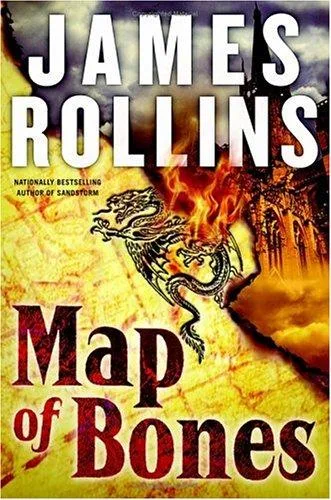
James Rollins’s "Map of Bones" offers a high-octane adventure that, while rooted in thriller conventions, ambitiously pulls at threads of ancient religious history. The book's strength lies in its relentless pacing and the intricate plotting that connects disparate historical clues to a present-day threat. The team's desperate search for the Ark of the Covenant, a relic imbued with immense symbolic and potentially literal power, provides a compelling narrative engine. However, the novel occasionally leans into familiar thriller tropes, with certain character archetypes and plot resolutions feeling somewhat predictable. A notable passage involves the team deciphering cryptic clues left by an ancient order, which, despite its fictional context, evokes the historical practice of esoteric societies preserving secret knowledge. Ultimately, "Map of Bones" succeeds as an entertaining blend of historical mystery and action, even if its esoteric elements serve more as plot devices than deep theological exploration.
📝 Description
84
James Rollins published "Map of Bones" in 2004, a thriller centered on the Ark of the Covenant.
Published in 2004, James Rollins's "Map of Bones" follows a team of specialists uncovering a conspiracy linked to the Ark of the Covenant. The novel blends archaeological discovery with a fast-paced narrative, examining the conflict between faith and science when confronting ancient mysteries. The plot involves a race against time to secure an artifact of immense power, revealing hidden forces that shape human events. The story appeals to readers who enjoy thrillers with a strong investigative element and historical enigmas. It reimagines ancient lore within a contemporary adventure, featuring complex plots with global stakes.
The narrative draws on historical interpretations of religious artifacts and their potential influence. It taps into a popular interest in thrillers that incorporate sacred mysteries, similar to the market reception of works like "The Da Vinci Code." The book explores the concept of hidden legacies and the power attributed to ancient relics, suggesting that certain objects hold exploitable knowledge. This pursuit of the Ark of the Covenant acts as a central motif for uncovering suppressed truths within the story.
While classified as a thriller, "Map of Bones" engages with esoteric traditions by focusing on a powerful religious artifact, the Ark of the Covenant, and the hidden knowledge associated with it. The novel posits that such relics possess residual energy or information that can be exploited, touching upon themes common in occult fiction. It contrasts scientific rationalism with deeply held faith, suggesting a potential synthesis when confronting the unknown. The pursuit of the Ark serves as a narrative device to uncover suppressed truths, a common trope in stories that examine secret histories and forgotten powers.
💡 Why Read This Book?
• Understand how historical religious artifacts, like the Ark of the Covenant, are portrayed as catalysts for global conspiracy and adventure, offering a fictional perspective on their enduring power. • Experience a narrative that juxtaposes scientific investigation with the potential for ancient, faith-based forces to influence modern events, exemplified by the team's reliance on both logic and intuition. • Explore the concept of hidden knowledge preserved by secret societies, as the book's plot unfolds through deciphering ancient texts and symbols to avert a catastrophic outcome.
⭐ Reader Reviews
Honest opinions from readers who have explored this book.
❓ Frequently Asked Questions
What is the main artifact James Rollins focuses on in 'Map of Bones'?
The primary artifact central to the plot of 'Map of Bones' is the Ark of the Covenant, an ancient religious relic of profound significance in Abrahamic traditions.
When was 'Map of Bones' by James Rollins first published?
James Rollins's novel 'Map of Bones' was first published in 2004, placing it within a period of popular interest in historical thrillers.
Does 'Map of Bones' involve secret societies?
Yes, 'Map of Bones' heavily features secret societies that have historically guarded or sought to control powerful ancient artifacts and their hidden knowledge.
What kind of historical elements are explored in 'Map of Bones'?
The book explores elements of ancient religious history, particularly concerning the biblical Ark of the Covenant, and weaves them into a contemporary conspiracy narrative.
Is 'Map of Bones' part of a series?
Yes, 'Map of Bones' is part of James Rollins's Sigma Force series, a collection of thrillers that often blend science, history, and adventure.
What genre does 'Map of Bones' best fit into?
'Map of Bones' is primarily a techno-thriller and adventure novel, though it incorporates elements of historical mystery and religious intrigue.
🔮 Key Themes & Symbolism
The Power of Ancient Relics
The narrative hinges on the potent allure and potential power attributed to ancient religious artifacts, specifically the Ark of the Covenant. This theme explores how objects from antiquity can become focal points for intense pursuit, conflict, and the belief in supernatural or hidden forces. The book posits that such relics are not merely historical curiosities but can hold keys to immense power, capable of shaping global events if they fall into the wrong hands. This concept drives the central conflict and the motivations of various factions vying for control.
Faith vs. Science
A recurring tension in "Map of Bones" is the interplay between scientific rationalism and deeply held faith or ancient beliefs. The protagonists, often scientists or operatives relying on logic and technology, are confronted with phenomena and historical accounts that challenge purely empirical explanations. The book probes whether these two seemingly opposing viewpoints can coexist or even complement each other when facing extraordinary circumstances rooted in religious history and legend. It questions the limits of human understanding when confronted with the sacred or the unknown.
Hidden Histories and Lost Knowledge
The novel operates on the premise that significant historical events and knowledge have been deliberately obscured or suppressed. The pursuit of the Ark of the Covenant is framed as a quest to uncover lost truths that have been guarded by secret societies for centuries. This theme taps into the allure of uncovering clandestine information and challenging established historical narratives. It suggests that ancient orders have long acted as custodians, or manipulators, of knowledge with wide implications for humanity's past and future.
Global Conspiracy
Fundamentally, , "Map of Bones" presents a vast, intricate conspiracy that spans continents and involves powerful, clandestine organizations. This theme highlights the idea that unseen forces are at play, manipulating events behind the scenes for their own gain. The pursuit of the artifact becomes a race against a shadowy network that seeks to exploit its power for destructive purposes, emphasizing the vulnerability of the world to those who operate outside established order and wield hidden influence.
💬 Memorable Quotes
Direct passages from the work, attributed to the author.
“The past is never truly buried.”
— This sentiment suggests that historical events, secrets, and influences continue to impact the present in unseen ways. It underscores the novel's premise that ancient artifacts and hidden knowledge possess a persistent energy or relevance.
“Some truths are too dangerous to be known.”
— This phrase expresses the idea that certain historical or esoteric knowledge is deliberately suppressed because its revelation could destabilize power structures or incite widespread chaos.
“Faith is the ultimate weapon.”
— This concept frames belief, particularly in the context of ancient religious power, as a force capable of achieving extraordinary results, often beyond the scope of conventional means or scientific understanding.
“The map is not the territory, but it guides the way.”
— This interpretation relates to how symbolic representations, ancient texts, or clues, while not the ultimate reality, are essential for navigating towards a hidden truth or objective.
💡 Key Ideas
Editorial paraphrase of the work's core concepts — not direct quotes.
Power corrupts, and absolute power corrupts absolutely.
A classic adage, this quote is often invoked in narratives involving potent artifacts or knowledge, highlighting the inherent danger of unchecked ambition and the corrupting influence of immense power.
🌙 Esoteric Significance
Tradition
While "Map of Bones" is primarily a thriller, its engagement with the Ark of the Covenant touches upon themes relevant to Abrahamic traditions and esoteric interpretations of biblical narratives. It draws from a lineage of thought that views sacred relics not just as historical objects but as conduits of divine power or hidden knowledge. The narrative plays with the idea of an ancient, guarded secret, a common trope in Hermetic and Gnostic traditions where esoteric wisdom is passed down through select lineages to protect humanity from its own misuse.
Symbolism
The central symbol is the Ark of the Covenant itself, representing divine presence, covenant, and immense power. In esoteric contexts, it can symbolize the hidden heart of creation or the nexus of spiritual energy. Other symbols emerge from the ancient clues and texts the protagonists decipher, often drawing from numerology, sacred geometry, or forgotten languages, representing the hidden order and interconnectedness of the universe that only the initiated can perceive.
Modern Relevance
Contemporary interest in "Map of Bones" reflects a modern appetite for narratives that bridge the gap between science and spirituality, history and fiction. Thinkers and readers exploring comparative religion, the history of ancient artifacts, or the psychology of belief systems find resonance in its plot. The novel's popularity contributes to a broader cultural conversation about whether ancient myths and religious texts hold literal or metaphorical truths applicable to understanding contemporary challenges and the human condition.
👥 Who Should Read This Book
• Fans of historical thrillers who enjoy intricate plots involving ancient artifacts and global conspiracies, similar to readers of Dan Brown or Steve Berry. • Individuals curious about fictional explorations of religious history and the potential power of sacred relics like the Ark of the Covenant. • Readers seeking fast-paced adventure stories that blend elements of archaeology, science, and secret societies, offering a speculative look at hidden historical legacies.
📜 Historical Context
Published in 2004, "Map of Bones" emerged during a period of heightened public fascination with historical mysteries and religious conspiracies, largely fueled by the success of works like Dan Brown's "The Da Vinci Code." This era saw a surge in thrillers that blended archaeological discovery with secret societies and ancient lore. Rollins's novel tapped into this zeitgeist, offering a fast-paced narrative centered on the Ark of the Covenant, an artifact with deep roots in biblical history. While contemporary authors like Steve Berry were also exploring similar historical puzzle-solving narratives, Rollins distinguished his approach with a strong emphasis on scientific plausibility and action-heavy sequences. The reception of such books generally indicated a broad audience eager to engage with fictional explorations of sacred texts and hidden historical narratives, though critical discourse often debated the historical accuracy versus the entertainment value.
📔 Journal Prompts
The Ark of the Covenant's perceived power, as depicted in the narrative.
The contrast between scientific deduction and faith-based intuition in uncovering secrets.
The motivations of secret societies guarding ancient knowledge.
The idea of historical truths being deliberately suppressed.
The ethical implications of possessing world-altering artifacts.
🗂️ Glossary
Ark of the Covenant
A sacred chest described in the Hebrew Bible, believed to contain the stone tablets of the Ten Commandments and to represent God's divine presence and covenant with the Israelites.
Sigma Force
The fictional elite special operations unit within the U.S. Special Operations Command that serves as the protagonist team in James Rollins's series.
Relic
An object surviving from an earlier time, especially one of historical or religious interest, often imbued with symbolic or perceived supernatural power.
Conspiracy
A secret plan by a group to do something unlawful or harmful, often involving political or religious power, which is central to the plot's unfolding mystery.
Ancient Artifact
An object made by human beings from an earlier time, particularly of archaeological or historical significance, often believed to hold lost knowledge or power.
Esoteric
Intended for or likely to be understood by only a small number of people with a specialized knowledge or interest; relating to secret or mysterious knowledge.
Codex
An ancient manuscript text in book form, often used in the novel to hold hidden clues or historical records.
🔮 Readers Also Liked
Browse all →







More by James Rollins
All books →




More Free Occult Philosophy Books
View all →