The Neoplatonic Socrates

 80
80

The Neoplatonic Socrates
Harold Tarrant’s "The Neoplatonic Socrates" offers a meticulous examination of how a pivotal figure in Western thought was refracted through the prism of a later, more mystical philosophical system. The strength of this work lies in its detailed tracing of specific interpretations, particularly how figures like Porphyry engaged with Platonic dialogues and the historical Socrates. Tarrant adeptly demonstrates the selective appropriation and transformation of Socratic ethics and epistemology within Neoplatonic metaphysics. A limitation, however, is that the dense academic prose may render it less accessible to those without a prior deep familiarity with both Socratic and Neoplatonic texts, sometimes making the central arguments feel buried. For instance, the nuanced discussion of the Socratic *daimon* as perceived by Iamblichus requires considerable background knowledge to fully appreciate its departure from earlier understandings. Ultimately, Tarrant provides a valuable, if specialized, resource for understanding intellectual lineage and philosophical adaptation.
📝 Description
80
Harold Tarrant's 2014 book examines Socrates through the Neoplatonic lens.
Published in 2014, Harold Tarrant's The Neoplatonic Socrates analyzes how later philosophers, particularly Neoplatonists, understood and integrated Socratic ideas. The book traces the evolution of Socrates' image and doctrines from his own era through late antiquity. Tarrant's study engages with ongoing scholarly discussions about the 'Socratic problem' and the diverse interpretations of Socrates that arose after his death in 399 BCE.
The Neoplatonic synthesis, which gained prominence in the 3rd and 4th centuries CE, sought to reconcile earlier Greek philosophy with emergent mystical and religious currents. This work is written for scholars and advanced students in ancient philosophy, classics, and religious studies. A prior grasp of Socratic philosophy, as found in Plato's early dialogues, and Neoplatonism, including figures like Plotinus and Iamblichus, is beneficial. It will also interest those studying intellectual history, the reception of ancient texts, and the development of Western esoteric traditions.
This book situates Socrates within the lineage of Western esoteric thought by examining his reception by Neoplatonists like Plotinus and Iamblichus. These later thinkers reinterpreted Socratic concepts, such as the daimon, as divine intermediaries and saw the pursuit of virtue and self-knowledge as a path to the ultimate Good. Tarrant shows how the Socratic emphasis on reasoned inquiry, or dialectic, was viewed by Neoplatonists as a preparatory stage for their own mystical ascent. The work highlights how a figure central to Western philosophy became a touchstone for mystical and religious traditions in late antiquity.
💡 Why Read This Book?
• Gain insight into how the historical Socrates, particularly his ethical framework as presented in Plato's early dialogues, was re-envisioned by Neoplatonic philosophers like Plotinus, who saw Socratic virtue as a foundational step towards higher spiritual attainment. • Understand the Neoplatonic interpretation of the Socratic *daimon* (divine sign) not merely as an inner voice but as a complex hierarchical spiritual guide, a concept crucial to understanding late antique esoteric thought. • Appreciate the specific ways Neoplatonists, such as Porphyry, analyzed Socratic dialectic and the pursuit of self-knowledge as preparatory stages for their own mystical ascent towards the One, a process detailed through their engagement with Platonic texts.
⭐ Reader Reviews
Honest opinions from readers who have explored this book.
❓ Frequently Asked Questions
When was Harold Tarrant's "The Neoplatonic Socrates" first published?
Harold Tarrant's "The Neoplatonic Socrates" was first published in 2014, offering a modern academic perspective on ancient philosophical interpretations.
What is the primary focus of "The Neoplatonic Socrates"?
The book focuses on how Neoplatonic philosophers, from the 3rd century CE onwards, understood, interpreted, and integrated the ideas and figure of Socrates into their own philosophical systems.
Which key Neoplatonic figures are discussed in relation to Socrates?
The work examines the interpretations of Socrates by prominent Neoplatonists such as Plotinus, Porphyry, and Iamblichus, detailing their specific philosophical engagements.
What specific Socratic concepts are re-examined through a Neoplatonic lens?
Key concepts like the Socratic *daimon*, the pursuit of virtue, self-knowledge (*gnothi seauton*), and dialectic are analyzed as they were reinterpreted within the Neoplatonic metaphysical and ethical framework.
Is this book suitable for beginners in philosophy?
This book is best suited for readers with a solid background in both Socratic philosophy and Neoplatonism due to its academic depth and detailed analysis.
What is the 'Socratic problem' mentioned in the context of this book?
The 'Socratic problem' refers to the difficulty scholars face in distinguishing the historical Socrates from the character Socrates presented in Plato's dialogues, a challenge Tarrant addresses through later interpretations.
🔮 Key Themes & Symbolism
Socrates as a Neoplatonic Archetype
The work meticulously details how Neoplatonic thinkers, particularly from the 3rd century CE onwards, viewed Socrates not just as a historical figure but as an exemplar of the philosophical life. They saw his pursuit of virtue, his intellectual rigor, and his ethical teachings as foundational elements that paved the way for their own more complex metaphysical systems. Tarrant illustrates how Socrates' emphasis on self-examination and the care of the soul was adapted to fit the Neoplatonic model of ascent towards the divine, often portraying him as a crucial, albeit preliminary, guide on this spiritual journey.
Reinterpretation of the Socratic Daimon
A central theme is the Neoplatonic transformation of Socrates' famous *daimon* – his divine sign or inner voice. Tarrant shows how philosophers like Iamblichus and Porphyry moved beyond a simple understanding of an intuitive moral compass. They frequently reinterpreted the *daimon* as a hierarchical spiritual entity, a divine intermediary or a personal guiding intellect, integral to the soul's journey through the cosmic levels. This recontextualization highlights the Neoplatonic tendency to allegorize and spiritualize earlier philosophical concepts to fit their own cosmology.
Dialectic and Mystical Ascent
The book explores how the Socratic method of dialectic, characterized by rigorous questioning and logical argumentation, was perceived by Neoplatonists. While acknowledging its value in clearing the mind of false beliefs, they often positioned it as a necessary but insufficient precursor to their own methods of achieving higher knowledge. Tarrant explains how Neoplatonists like Plotinus viewed Socratic inquiry as a vital step in purifying the intellect, enabling it to then transcend rational thought through intuition and direct mystical experience of the ultimate reality, the One.
The Socratic Life as a Model
Tarrant examines how the biographical elements and reported sayings of Socrates were synthesized into a Neoplatonic ideal of philosophical living. The focus is on how Socrates' commitment to justice, his indifference to worldly possessions, and his unwavering pursuit of truth in the face of death were presented as a living embodiment of the virtues necessary for spiritual progress. This portrayal served to legitimize Neoplatonism by grounding its ideals in the revered figure of Socrates, a central to Western philosophical tradition.
💬 Memorable Quotes
Direct passages from the work, attributed to the author.
“The Neoplatonists tended to see Socrates as an important, but not ultimate, stage in the philosopher's progress.”
— This statement captures how later philosophers like Plotinus and Porphyry viewed Socrates. They valued his ethical teachings and dialectical method but considered them preparatory steps, superseded by their own more profound, mystical doctrines aiming for union with the divine.
“The Socratic *daimon* was often reinterpreted as a spiritual guide or intermediary.”
— This highlights a key Neoplatonic adaptation. The Socratic notion of an inner divine sign was elevated and systematized, becoming part of a complex hierarchy of spiritual beings that facilitated the soul's ascent, moving beyond a purely psychological interpretation.
“Plato's early dialogues provided the primary source material for the Neoplatonic Socrates.”
— This points to the textual basis for Tarrant's study. Neoplatonists primarily engaged with Socrates through Plato's writings, particularly the dialogues considered 'early,' shaping their understanding and subsequent philosophical developments.
“Self-knowledge was seen as a foundation for the Neoplatonic philosophical journey.”
— This reflects the enduring Socratic maxim 'Know Thyself.' Tarrant's work explains how Neoplatonists integrated this into their system, viewing introspection and understanding one's own soul as the crucial first step towards recognizing and connecting with the divine.
💡 Key Ideas
Editorial paraphrase of the work's core concepts — not direct quotes.
Virtue, for the Neoplatonic Socrates, was a necessary condition for apprehending higher realities.
This paraphrased concept emphasizes the ethical core of Socrates as retained and integrated by Neoplatonism. It suggests that moral purification and the cultivation of virtues were seen as prerequisites for the intellectual and spiritual insights central to the Neoplatonic path.
🌙 Esoteric Significance
Tradition
This work sits within the lineage of Western Esotericism, specifically the Hermetic and Gnostic-inflected branches of Neoplatonism. While Neoplatonism itself is a philosophical system, its later developments, particularly those of Iamblichus, incorporated theurgic practices and a hierarchical cosmology that aligns with esoteric traditions. Tarrant's study examines how this philosophical framework interpreted the figure of Socrates, revealing the esoteric underpinnings of late antique thought that sought divine knowledge and union.
Symbolism
The Socratic *daimon* functions as a key symbol, reinterpreted by Neoplatonists not just as an inner voice but as a divine intermediary or guiding intellect, linking the human soul to higher spiritual realms. The concept of *gnothi seauton* (Know Thyself) also operates symbolically, representing the internal journey of self-discovery essential for spiritual ascent. Furthermore, Socrates' martyrdom is often symbolized as the philosopher's ultimate detachment from the material world, demonstrating the Neoplatonic ideal of transcending earthly concerns.
Modern Relevance
Contemporary thinkers and practitioners within Western Esotericism, particularly those studying Hermeticism, Gnosticism, and various forms of ceremonial magic, draw on the Neoplatonic interpretations of classical figures. The idea of philosophical practice as a path to spiritual transformation, as exemplified by the Neoplatonic Socrates, continues to influence modern spiritual seekers. Schools of comparative mysticism and depth psychology also find value in tracing these historical reinterpretations of foundational philosophical figures.
👥 Who Should Read This Book
• Advanced students of Classics and Ancient Philosophy: Those researching the Socratic problem, the development of Platonic thought, or the intellectual history of late antiquity will find Tarrant's detailed analysis of specific interpretations invaluable. • Scholars of Religious Studies and Comparative Mysticism: Readers interested in how philosophical concepts were integrated into spiritual and mystical frameworks will benefit from understanding the Neoplatonic appropriation of Socrates. • Practitioners of Western Esoteric Traditions: Individuals engaged with Neoplatonism, Hermeticism, or Gnosticism seeking to understand the historical roots and philosophical underpinnings of their traditions will find this work informative.
📜 Historical Context
The intellectual field of late antiquity, particularly from the 3rd century CE onwards, was characterized by a vibrant synthesis of Greek philosophy and burgeoning religious and mystical currents. This era saw the rise of Neoplatonism, spearheaded by figures like Plotinus (c. 204/5 – 270 CE) and his successor Porphyry (c. 234 – c. 305 CE). These thinkers sought to systematize and spiritualize the Platonic tradition, often engaging critically with earlier philosophical schools. They viewed Socrates, as presented in Plato's dialogues, as a foundational figure whose ethical teachings and dialectical method were essential, yet ultimately preparatory, for their own complex metaphysical doctrines. While Stoicism offered a competing ethical framework, Neoplatonism distinguished itself through its emphasis on mystical union with the transcendent One. Tarrant's work contributes to understanding this specific reception history, showing how Socrates was transformed into a precursor figure within this highly influential intellectual movement.
📔 Journal Prompts
The Neoplatonic interpretation of the Socratic *daimon* as a spiritual guide.
Socrates' dialectic as a precursor to Neoplatonic mystical ascent.
The concept of *gnothi seauton* within the Neoplatonic framework.
How Socrates' ethical stance in Plato's dialogues informed Neoplatonic ideals.
The role of figures like Plotinus in shaping the 'Neoplatonic Socrates'.
🗂️ Glossary
Neoplatonism
A philosophical system originating in the 3rd century CE, primarily associated with Plotinus, that synthesized Platonic philosophy with mystical and religious elements, emphasizing an ascent towards a transcendent 'One'.
Socratic Daimon
The divine sign or inner voice that Socrates claimed to possess, which warned him against certain actions. Neoplatonists interpreted this concept in more complex, hierarchical spiritual terms.
Dialectic
A method of philosophical argument involving rigorous questioning and logical reasoning, famously employed by Socrates, aimed at uncovering truth and exposing ignorance.
Gnosis
Greek for 'knowledge,' often referring to a special, intuitive, or revealed knowledge of spiritual truths, central to Gnostic and some Neoplatonic traditions.
The One
The ultimate, transcendent principle in Neoplatonism, the source of all reality, which is beyond being and comprehension, often sought through mystical union.
Theurgy
Religious rites or practices believed to facilitate communion with divine beings or the evocation of divine powers, a practice associated with later Neoplatonism, particularly Iamblichus.
Gnothi Seauton
Ancient Greek aphorism meaning 'Know Thyself,' a central tenet of Socratic and later philosophical and spiritual traditions, emphasizing introspection and self-awareness.
🔮 Readers Also Liked
Browse all →









More by Harold Tarrant
All books →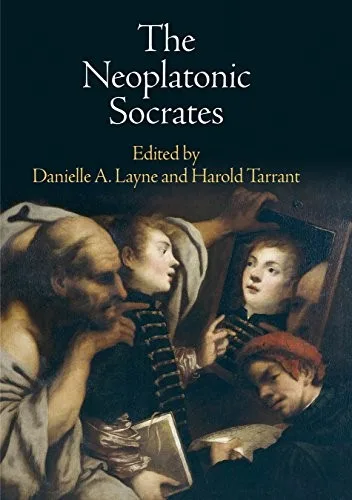

More Free Occult Philosophy Books
View all →