Astral Projection (Deep Mind Tape)
 78
78

Astral Projection (Deep Mind Tape)
Melita Denning and Osborne Phillips’s ‘Astral Projection (Deep Mind Tape)’ offers a remarkably structured approach to a subject often shrouded in vagueness. Unlike many contemporaries who relied on impressionistic accounts, the authors present a rigorous, almost procedural manual for out-of-body travel. Their insistence on the will and precise mental control as prerequisites for successful projection is particularly compelling, grounding the practice in disciplined self-mastery. A notable strength lies in the detailed descriptions of preparatory exercises, which feel tangible and actionable. However, the book’s earnest, almost didactic tone can occasionally feel dry, lacking the evocative flair some readers might expect from accounts of the astral plane. The concept of the 'astral body' is presented as a distinct, albeit energetic, entity, which is a clear and understandable framework. Ultimately, for the disciplined seeker of practical astral projection techniques, this work provides a solid, if unadorned, foundation.
📝 Description
78
Melita Denning and Osborne Phillips published Astral Projection (Deep Mind Tape) in 1979, detailing practical occult techniques.
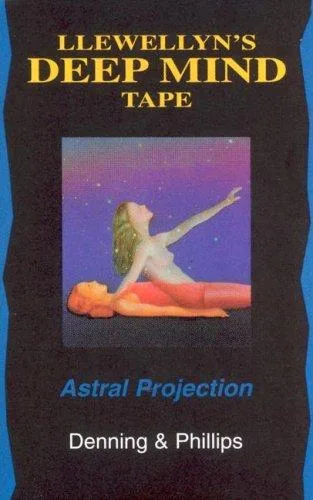
Published in 1979, Astral Projection (Deep Mind Tape) by Melita Denning and Osborne Phillips outlines systematic methods for conscious out-of-body projection. It functions less as a philosophical study and more as a practical manual, detailing techniques for achieving and controlling these experiences. The authors treat astral projection as a skill to be learned through focused practice, emphasizing mental discipline, visualization exercises, and specific energetic preparations. This book is intended for serious students of esoteric philosophy and those dedicated to developing their psychic and spiritual abilities. It suits individuals who prefer a methodical, disciplined approach to spiritual growth and seek concrete, applicable strategies. Readers should anticipate detailed instructions and understand that mastering these techniques requires consistent effort.
The work emerged during a resurgence of interest in occultism and parapsychology, a period following the counter-cultural movements of the 1960s. Unlike many popular books of that era that relied on anecdotal evidence or broad spiritual ideas, Denning and Phillips advocated for a structured, almost scientific approach to astral projection. This book distinguishes itself through its direct engagement with established esoteric traditions. It serves as a connection between older occult teachings and the developing self-help oriented spiritual market.
Emerging in 1979, Astral Projection (Deep Mind Tape) appeared during a period of renewed interest in occultism and parapsychology. While some popular works of the era focused on anecdotal accounts or generalized spiritual concepts, Denning and Phillips offered a more structured approach to astral projection. The book engages directly with established esoteric traditions, bridging older occult teachings with the growing self-help oriented spiritual market.
💡 Why Read This Book?
• Learn specific techniques for astral projection, such as the 'deep mind tape' method, which offers a distinct approach to consciousness detachment unavailable in generalized meditation guides. • Understand the concept of the 'astral body' as presented by Denning and Phillips, providing a concrete framework for exploring non-physical existence distinct from purely philosophical or energetic models. • Gain practical insights into mental discipline and visualization as applied to out-of-body experiences, a focus that differentiates this 1979 work from more recent, often less structured, spiritual self-help literature.
⭐ Reader Reviews
Honest opinions from readers who have explored this book.
❓ Frequently Asked Questions
What year was Astral Projection (Deep Mind Tape) first published?
Astral Projection (Deep Mind Tape) by Melita Denning and Osborne Phillips was first published in 1979, positioning it within a significant period of interest in esoteric and parapsychological studies.
What is the 'Deep Mind Tape' method mentioned in the book?
The 'Deep Mind Tape' method refers to specific techniques detailed by Denning and Phillips for inducing altered states of consciousness conducive to astral projection, likely involving focused audio or mental cues for deep relaxation and separation.
Are Melita Denning and Osborne Phillips known for other works?
Yes, Melita Denning and Osborne Phillips were prolific authors in the esoteric field, known for their comprehensive works on various occult subjects, often collaborating to present detailed systems of practice.
Does the book discuss the dangers of astral projection?
While the book focuses on systematic training, it implicitly addresses safety through its emphasis on control and preparation, suggesting that disciplined practice mitigates common fears associated with astral projection.
What is the primary goal of the techniques presented in Astral Projection (Deep Mind Tape)?
The primary goal is to achieve conscious, controlled separation of the astral body from the physical form, enabling exploration of non-physical realms and development of psychic faculties.
Is this book suitable for complete beginners in the occult?
The book is suitable for beginners who possess a disciplined mindset and are serious about practical occultism, though its systematic approach may be more challenging than introductory spiritual texts.
🔮 Key Themes & Symbolism
Conscious Separation
The central theme is the deliberate separation of the 'astral body' from the physical form. Denning and Phillips present this not as a passive phenomenon but an active, willed process requiring specific mental states and techniques. The work meticulously outlines how to cultivate the necessary focus and energetic conditions, detailing the transition from physical awareness to astral perception and mobility. This emphasis on control distinguishes their approach, framing astral projection as a disciplined occult art rather than mere psychic exploration.
The Astral Body
The book posits the existence of a distinct, though non-physical, 'astral body' as the vehicle for out-of-body experiences. This energetic form is described as possessing its own senses and ability to traverse the planes of existence. Denning and Phillips explore its nature, its connection to the physical organism, and the methods by which it can be consciously directed. Understanding and manipulating this vehicle is presented as fundamental to mastering astral projection, moving beyond theoretical concepts to practical application.
Will and Mental Discipline
A central to the authors' methodology is the critical role of the human will and rigorous mental discipline. The work stresses that successful astral projection hinges on the practitioner's ability to command their thoughts, emotions, and focus. Techniques are designed to strengthen this inner control, enabling the student to initiate projection, read through the astral plane intentionally, and return safely. This focus on inner mastery provides a practical framework for achieving reliable and purposeful out-of-body journeys.
Navigating Non-Physical Planes
Beyond the act of projection, the book addresses the nature of the 'astral plane' itself. It describes this as a distinct area of existence, layered and complex, accessible through the astral body. Denning and Phillips offer guidance on perceiving and interacting with this environment, emphasizing awareness and caution. The work serves as a guide to understanding the characteristics of these planes, preparing the practitioner for the experiences they might encounter during their journeys.
💬 Memorable Quotes
Direct passages from the work, attributed to the author.
“The astral body can be deliberately projected and controlled.”
— This statement captures the core thesis of the book: astral projection is not a random event but a skill that can be learned and mastered through systematic practice and focused will.
“Mental discipline is the key to conscious separation.”
— This highlights the authors' emphasis on the internal work required for out-of-body travel. It suggests that external techniques are secondary to the practitioner's ability to control their thoughts and focus.
“Preparation is essential for safe and effective projection.”
— This reflects the authors' methodical approach, underscoring that readiness, both physical and mental, is crucial for a successful and secure astral projection experience.
“The will directs the astral body's movement.”
— This emphasizes the active role of the practitioner's intent in guiding their astral form. It positions the will as the primary faculty for reading through the non-physical dimensions.
💡 Key Ideas
Editorial paraphrase of the work's core concepts — not direct quotes.
The astral plane is a real environment accessible through specific means.
This paraphrased concept conveys the book's stance that the astral realm is not merely imaginative but a tangible, albeit non-physical, dimension that can be explored with the appropriate methods.
🌙 Esoteric Significance
Tradition
This work draws heavily from the Western Esoteric Tradition, particularly its Hermetic and Theosophical branches, which emphasize the multi-layered nature of reality and the potential for human consciousness to traverse these layers. It presents astral projection as a practical discipline within this lineage, focusing on the systematic development of faculties rather than purely theoretical or devotional practices. The emphasis on controlled experience and precise technique aligns with the training methods found in more formalized occult orders, offering a bridge for practitioners seeking tangible results.
Symbolism
The 'astral body' itself functions as a primary symbol, representing the mobile, energetic aspect of consciousness distinct from the physical form. The 'astral plane' symbolizes the non-physical dimensions of reality that are accessible through focused consciousness. The 'deep mind' can be seen as a symbolic gateway, representing the subconscious or deeper layers of awareness that must be accessed and controlled to achieve projection.
Modern Relevance
Contemporary practices in lucid dreaming, consciousness exploration, and even certain biofeedback techniques echo the principles outlined by Denning and Phillips. Thinkers and practitioners in fields exploring non-ordinary states of consciousness, remote viewing, and the nature of the subtle bodies often reference or build upon the foundational concepts presented in works like this. Its structured approach continues to appeal to those seeking systematic methods for expanding awareness beyond the physical senses.
👥 Who Should Read This Book
• Aspiring practitioners of Western Esotericism seeking concrete methods for astral projection, moving beyond theoretical study to practical application. • Students of consciousness studies interested in historical approaches to out-of-body experiences and the systematic development of psychic faculties. • Individuals engaged in meditation and visualization practices who wish to deepen their control and explore directed experiences of non-physical reality.
📜 Historical Context
Published in 1979, 'Astral Projection (Deep Mind Tape)' emerged during a fertile period for esoteric thought, following the spiritual explorations of the 1960s and preceding the full bloom of the New Age movement. This era saw a division in occult literature: on one side, more academic or historical treatments of magic and mysticism, and on the other, practical guides aimed at self-development. Denning and Phillips positioned their work firmly in the latter camp, offering a structured, almost quasi-scientific methodology for astral projection. This contrasted with the more generalized, often less disciplined, approaches to consciousness expansion found in popular spiritual literature of the time. While figures like Robert Monroe were also exploring consciousness through auditory techniques, Denning and Phillips's approach was distinct in its direct lineage to traditional occult training methods, emphasizing will and visualization over purely technological aids, though the 'Deep Mind Tape' implies some level of structured audio guidance.
📔 Journal Prompts
The conscious separation of the astral body: what mental preparations are most challenging?
The role of the will in directing astral movement: identify one instance where your will faltered.
The nature of the astral plane: how does this concept differ from imaginative projection?
Describe the 'Deep Mind Tape' method's potential impact on achieving controlled projection.
Reflect on the importance of mental discipline for navigating non-physical realms.
🗂️ Glossary
Astral Body
The non-physical, energetic counterpart to the physical body, believed to be the vehicle for consciousness during astral projection and other out-of-body experiences.
Astral Projection
The intentional and conscious separation of the astral body from the physical body, allowing for travel and experience on the astral plane.
Astral Plane
A non-physical dimension of reality, often described as existing parallel to or superimposed upon the physical world, accessible through the astral body.
Deep Mind
Refers to a state of deep consciousness or subconsciousness, often induced through specific techniques, from which astral projection can be initiated.
Mental Discipline
The practice of training the mind to focus, control thoughts and emotions, and direct attention with precision, considered essential for occult practices.
Will
The faculty of conscious intention and determination, seen as the primary force for initiating and directing actions, particularly in the context of astral projection.
Visualization
The mental process of creating vivid images or scenes in the mind, used as a technique to prepare for, initiate, and guide astral projection.
🔮 Readers Also Liked
Browse all →









More by Melita Denning, Osborne Phillips
All books →




More Free Occult Philosophy Books
View all →