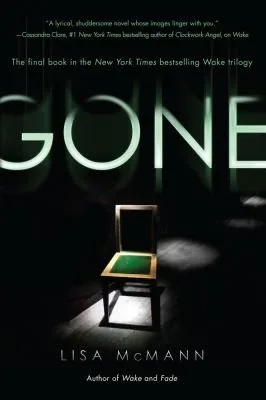
Gone The Final Book In The Wake Trilogy
 82
82

Gone The Final Book In The Wake Trilogy
The conclusion of Lisa McMann's *Wake* trilogy, *Gone*, delivers on the promise of escalating stakes, presenting Janie Scott with her most challenging encounters yet. The narrative's strength lies in its unflinching portrayal of the psychological toll Janie's abilities take; her exhaustion and desperation feel palpable. However, the resolution of the central conflict, particularly the mechanics of how Janie ultimately confronts the antagonist, feels somewhat rushed in the final act. A particularly potent moment involves Janie’s desperate attempt to sever her connection to the spirit world, illustrating the immense burden she carries. The book’s exploration of a character’s lingering essence and the struggle for peace after death is compelling, even if the pacing falters slightly towards the end. *Gone* provides a satisfying, albeit imperfect, culmination to Janie’s spectral journey.
📝 Description
82
Lisa McMann's *Gone*, published in 2011, is the final book in the Wake trilogy.
This novel concludes Janie Scott's story in the Wake trilogy, a series that examines mortality and the afterlife through a protagonist who sees and interacts with ghosts. The narrative pushes Janie to her limits as she confronts the spectral realm and her own fate, blurring the lines between life, death, and the spiritual plane. The story is written for young adults who enjoy supernatural thrillers with a thoughtful bent. Readers interested in consciousness, the nature of reality, and the persistence of the departed will find *Gone* particularly resonant. It offers a fictional structure for contemplating spiritual ideas, blending action with reflections on existence beyond the physical.
*Gone* appeared in a literary scene rich with paranormal romance and urban fantasy. It found its own space by concentrating on the mechanics of the afterlife and the psychological impact of encountering the dead. Unlike other authors who focused on vampires or urban magic, McMann's trilogy distinguished itself with its attention to ghosts and the moral questions surrounding interaction with them. This aligns with a broader trend in the early 2010s toward more introspective supernatural stories.
The Wake trilogy, and *Gone* in particular, engages with concepts often found in spiritualist and occult traditions. These include the persistence of consciousness beyond the physical body and the idea that strong emotions or unresolved issues can leave an imprint, or spiritual residue, on places or people. Janie's ability to perceive and interact with ghosts allows the narrative to explore the lingering presence of the deceased and the potential for communication. This fictional approach touches upon beliefs about the soul's journey and the interconnectedness of the living and the dead, common in various esoteric philosophies.
💡 Why Read This Book?
• Understand the narrative exploration of soul transference, a concept central to Janie's final confrontation, offering a fictional perspective on consciousness beyond the body. • Experience the intense portrayal of Janie's psychic exhaustion as depicted throughout the novel, providing a visceral sense of the burden of her abilities. • Examine the symbolic weight of the "final book" status for the trilogy, reflecting on how narrative conclusions can shape our understanding of unresolved spiritual or existential questions.
⭐ Reader Reviews
Honest opinions from readers who have explored this book.
❓ Frequently Asked Questions
What is the primary conflict Janie Scott faces in 'Gone'?
In 'Gone', Janie Scott faces her ultimate confrontation with a malevolent spirit who seeks to possess her. This conflict forces her to make critical decisions about her own life and the fate of those around her, pushing the boundaries of her abilities.
When was 'Gone' by Lisa McMann first published?
Lisa McMann's 'Gone', the final book in the Wake trilogy, was first published in 2011.
Does 'Gone' require reading the previous books in the Wake trilogy?
While it's possible to glean some understanding, reading the preceding books, 'Wake' and 'Fever', is highly recommended. They establish Janie Scott's character, her unique abilities, and the foundational lore crucial for appreciating the stakes in 'Gone'.
What makes the concept of ghosts in McMann's 'Wake' trilogy unique?
McMann's portrayal of ghosts is unique because they are corporeal entities Janie can physically interact with, and their presence is tied to unresolved issues or trauma, making them more than just spectral apparitions but extensions of lingering earthly problems.
What themes does 'Gone' explore regarding the afterlife?
'Gone' explores themes of spiritual persistence, the struggle for peace after death, and the consequences of lingering attachment to the physical world, presenting the afterlife as a complex space influenced by unresolved earthly matters.
Is 'Gone' considered a standalone novel or part of a series?
'Gone' is definitively part of a series; it is the third and final book in Lisa McMann's 'Wake' trilogy. Understanding the preceding installments is key to following the character arcs and plot developments.
🔮 Key Themes & Symbolism
Confronting Lingering Spirits
The narrative centers on Janie Scott's direct engagement with spectral entities, particularly a formidable antagonist. This isn't merely observation; it involves active struggle and negotiation with beings tethered to the material world by unresolved trauma or unfinished business. The book examines the psychological and emotional toll this constant interaction exacts on Janie, highlighting the difficulty of maintaining one's own spiritual and mental equilibrium when perpetually exposed to the elements of the departed.
The Nature of Consciousness After Death
Central to the plot is the exploration of what consciousness constitutes after the cessation of biological life. McMann presents ghosts not as ethereal wisps but as tangible manifestations of personality and memory, suggesting that the essence of a person persists. The book probes the idea of spiritual anchors and the forces that compel spirits to remain, raising questions about the continuity of self and the potential for resolution or torment in the spectral state.
Destiny and Free Will
Janie Scott's journey throughout the trilogy, culminating in 'Gone', is one of grappling with her unique abilities and the destiny they seem to impose upon her. The narrative questions the extent to which her path is predetermined by her powers or if she possesses genuine agency to shape her future. This tension between fate and choice is amplified by the supernatural elements, forcing Janie to make profound decisions that impact both the living and the spectral realms.
The Burden of Empathy
Janie's ability to perceive and interact with ghosts is intrinsically linked to empathy, as she often feels their pain and unfinished business. 'Gone' pushes this theme to its limit, showcasing how Janie’s profound empathy becomes both a source of strength and a significant vulnerability. The book explores the ethical quandaries of her interventions and the personal cost of carrying the emotional weight of so many departed souls.
💬 Memorable Quotes
Direct passages from the work, attributed to the author.
“The final confrontation with the malevolent spirit.”
— This refers to the climax where Janie must directly face and overcome the primary antagonistic force, a spectral entity intent on harming her or others, representing the ultimate test of her abilities and resolve.
“Janie's exhaustion and desperation to escape her abilities.”
— This captures the profound psychological toll Janie's constant interaction with ghosts takes, highlighting her deep fatigue and yearning for normalcy, illustrating the immense burden of her unique gift.
“The concept of spirits being tied to unresolved earthly issues.”
— This captures the series' premise that ghosts are not random apparitions but are intrinsically linked to unfinished business or emotional trauma from their lives, acting as a core thematic element for understanding their presence.
“The blurred lines between life and the spectral realm.”
— This signifies the narrative's focus on the permeable barrier between the living world and the domain of ghosts, emphasizing how Janie's experiences constantly challenge conventional perceptions of reality and existence.
“The ultimate choice Janie must make regarding her destiny.”
— This points to the critical decision Janie faces at the conclusion of the trilogy, which will define her future and her relationship with the supernatural, exploring themes of free will versus predetermination.
🌙 Esoteric Significance
Tradition
While not explicitly aligned with a single historical esoteric tradition like Hermeticism or Kabbalah, McMann's *Wake* trilogy, culminating in *Gone*, taps into folk beliefs and animistic concepts concerning spirits and the afterlife. It echoes Gnostic ideas of a material world influenced by lingering spiritual energies and touches upon themes present in spiritualism movements regarding communication with the deceased. The work departs from rigid doctrine by focusing on the psychological and emotional entanglement with spirits rather than a structured metaphysical system.
Symbolism
The spectral entities themselves function as potent symbols of unresolved trauma, regret, and unfinished business from the earthly plane. Janie's ability to see and interact with them symbolizes her profound, often burdensome, empathy and her role as a mediator between the living and the elements of the past. The physical interactions with ghosts represent the tangible impact of emotional and spiritual states, suggesting that the intangible can manifest with real-world consequences.
Modern Relevance
Contemporary discussions around mental health, trauma, and the lasting impact of unresolved emotional issues find resonance in McMann's portrayal of spirits. Practices focusing on energy clearing and addressing residual energetic imprints, often found in New Age or modern witchcraft circles, echo the book's premise of confronting and resolving lingering spiritual or emotional 'attachments'. The novel’s exploration of consciousness beyond the physical body also aligns with ongoing interest in consciousness studies and near-death experiences.
👥 Who Should Read This Book
• Young adults interested in supernatural thrillers that explore psychological depth and the mechanics of the afterlife, offering a different perspective than typical paranormal romance. • Readers curious about the concept of consciousness persistence and the nature of spirits, who appreciate fictional narratives that grapple with existential questions. • Fans of the *Wake* trilogy seeking a definitive conclusion to Janie Scott's journey, eager to see how her unique abilities and the supernatural conflicts resolve.
📜 Historical Context
Published in 2011, *Gone* emerged during a period of intense popularity for young adult supernatural fiction, a genre heavily influenced by the success of works like Stephenie Meyer's *Twilight* series and Cassandra Clare's *Mortal Instruments*. While many contemporaries focused on vampires, werewolves, or urban fantasy tropes, Lisa McMann's *Wake* trilogy, and *Gone* specifically, carved out a distinct niche by concentrating on the physicality and psychological impact of interacting with ghosts. This focus on the mechanics of the spectral realm and the personal cost to the protagonist offered a more introspective and less romanticized take on the paranormal compared to some other popular series. The reception was generally positive within its target demographic, with critics noting its ability to blend suspense with emotional depth. Unlike works that faced overt censorship, the primary challenge for books like *Gone* was standing out in a crowded market, requiring authors to offer unique premises and compelling character development to capture reader attention.
📔 Journal Prompts
Janie Scott's constant exposure to spectral energy.
The concept of spiritual anchors binding ghosts to the earth.
The ethical implications of Janie interacting with departed souls.
The narrative's portrayal of unresolved trauma manifesting as spirits.
The ultimate choice Janie makes regarding her future and abilities.
🗂️ Glossary
Ghost
In the context of the *Wake* trilogy, a ghost is the corporeal manifestation of a deceased person whose spirit is tethered to the earthly realm, often due to unresolved issues or strong emotional ties.
Wake
The title of the first book and the series' central concept, referring to the presence of ghosts and Janie Scott's ability to perceive and interact with them.
Fever
The second book in the trilogy, which explores the escalating danger and complexity of Janie's encounters with the spectral world.
Possession
The act by which a spirit attempts to take control of a living person's body, a primary threat Janie faces in *Gone*.
Spectral Realm
The plane or dimension inhabited by ghosts, which frequently intersects with the physical world in the narrative.
Spiritual Anchor
An element, emotion, or unresolved issue from a person's life that binds their spirit to the earthly plane after death.
Janie Scott
The protagonist of the *Wake* trilogy, a teenage girl with the ability to see and interact with ghosts.
🔮 Readers Also Liked
Browse all →








More by Lisa McMann
All books →





More Free Occult Philosophy Books
View all →