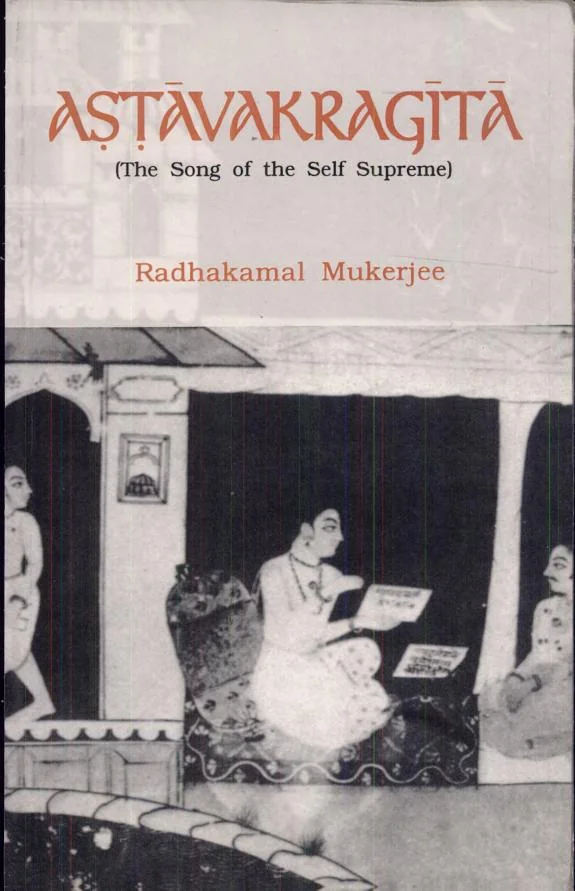
Aṣṭāvakragītā (the Song of the Self Supreme)
 73
73

Aṣṭāvakragītā (the Song of the Self Supreme)
Radhakamal Mukerjee's presentation of the Aṣṭāvakragītā offers a focused lens on a text that, while less known than the Upanishads, carries immense contemplative weight. The original blurb rightly highlights its unique systematic approach to mystical experience, moving beyond abstract doctrine to the felt reality of the Self. Mukerjee’s rendering, first published in 2000, provides access to a profound dialogue concerning liberation. A particular strength lies in its consistent emphasis on the immanence of the Supreme Self, a concept vividly explored in the early chapters. However, the text's inherent philosophical density can, at times, feel overwhelming without extensive prior grounding in Advaita Vedanta. The passage discussing the illusion of multiplicity, where the world is seen as a dream-like projection of consciousness, is a powerful illustration of its core message. This edition serves as a valuable conduit to an ancient wisdom tradition for the modern seeker.
📝 Description
73
The Aṣṭāvakragītā presents a dialogue on the nature of the Self, attributed to the sage Aṣṭāvakra.
This Sanskrit text, the Aṣṭāvakragītā, details a conversation between the sage Aṣṭāvakra and King Janaka. It systematically discusses the Self (Atman) and its ultimate reality, aiming for peace and bliss. The work is significant for its direct approach to mystical experience. It treats the Supreme Self not as a mere philosophical idea but as a state of being that can be directly known. The text is organized into twenty chapters, each addressing particular points of this realization.
It is written for those committed to spiritual liberation and contemplative practices. The book appeals to individuals looking for a non-dualistic view of existence and who are ready to examine consciousness beyond normal perception. Readers who value philosophical depth alongside poetic descriptions of spiritual states will find value here. It is especially relevant for those interested in Advaita Vedanta and similar non-dual traditions.
The Aṣṭāvakragītā is connected to the Upanishadic and early Vedanta traditions, likely taking its current form in the early centuries CE. Its philosophical ideas align with these ancient Indian texts. The book emphasizes knowledge (Jnana) as the primary path to liberation, placing it within the Jnana Yoga tradition. It shares common ground with other Indian spiritual writings like the Bhagavad Gītā and the Yoga Sūtras, offering a specific angle on self-knowledge and freedom.
💡 Why Read This Book?
• Gain a systematic understanding of the Self's transcendence, as presented in the twenty chapters of the Aṣṭāvakragītā, offering a direct path to peace and bliss beyond ordinary perception. • Explore the concept of the Supreme Self as the ultimate reality, a central tenet of Advaita Vedanta, and learn how to distinguish it from the illusory ego (ahamkara). • Engage with the poetic and imaginative spiritual fervor of an ancient Indian contemplative classic, akin to the Bhagavad Gītā, for direct insight into self-realization.
⭐ Reader Reviews
Honest opinions from readers who have explored this book.
❓ Frequently Asked Questions
What is the primary philosophical school associated with the Aṣṭāvakragītā?
The Aṣṭāvakragītā is deeply rooted in the Advaita Vedanta tradition, a school of Hindu philosophy that emphasizes the non-dual nature of reality, positing that the individual soul (Atman) is identical with the ultimate reality (Brahman).
Who are the main characters in the dialogue of the Aṣṭāvakragītā?
The central figures are the sage Aṣṭāvakra, a young and profoundly realized master, and King Janaka, a ruler who seeks enlightenment and liberation from worldly attachments.
What is the significance of the number twenty in the text?
The text is structured into twenty chapters, each systematically addressing different facets of self-knowledge, liberation, and the nature of the Supreme Self, guiding the reader through a progressive realization.
How does the Aṣṭāvakragītā define liberation (moksha)?
Liberation is defined not as an attainment of something new, but as the direct realization of one's true nature as the unchanging, pure consciousness (Atman), free from the illusion of the ego and the phenomenal world.
Is the Aṣṭāvakragītā related to the Mahābhārata?
Yes, the sage Aṣṭāvakra, who is the central speaker in the Aṣṭāvakragītā, is a character who appears in the epic Mahābhārata, though this specific text is a later, dedicated treatise.
What is the 'Self Supreme' mentioned in the title?
The 'Self Supreme' refers to the ultimate, transcendental consciousness (Atman or Brahman) that is the sole reality, beyond all dualities of subject and object, existence and non-existence.
🔮 Key Themes & Symbolism
The Undivided Self
The core of the Aṣṭāvakragītā posits that the Self (Atman) is singular, pure consciousness, identical with Brahman. This is not an intellectual concept but a state of being to be realized. The text systematically dismantles the illusion of a separate, individual ego (ahamkara) and the multiplicity of the perceived world, which are presented as unreal projections. Liberation arises from the direct apprehension of this fundamental unity, leading to a cessation of suffering caused by perceived separation.
Illusion of the World
The phenomenal universe, with its constant flux and apparent diversity, is characterized as a grand illusion or a dream. The text explains that this perceived reality arises from ignorance (avidya) and the mind's tendency to superimpose form and identity onto the formless, attributeless Absolute. Understanding this illusory nature is crucial for detachment and for recognizing the unchanging Self that underlies all phenomena, much like the screen on which a movie is projected.
Path to Peace and Bliss
The ultimate goal presented is not merely intellectual understanding but a lived experience of supreme peace (shanti) and bliss (ananda). This state is achieved by abiding in the true nature of the Self, free from the disturbances of desire, aversion, and the fear of death. The Aṣṭāvakragītā outlines this path through direct realization, emphasizing knowledge (jnana) as the primary means to dissolve ignorance and attain this unshakeable inner contentment.
The Sage and the King
The dialogue format between the sage Aṣṭāvakra and King Janaka provides a framework for the transmission of profound spiritual truths. Janaka, despite his royal status and worldly responsibilities, embodies the seeker who has turned inward. This dynamic illustrates that spiritual realization is accessible to all, regardless of external circumstances, and highlights the importance of a qualified guru-disciple relationship for awakening.
💬 Memorable Quotes
Direct passages from the work, attributed to the author.
“The Self is eternal, unchanging, and alone.”
— This expresses the non-dualistic core of the text, asserting the Self's absolute nature as the sole reality, beyond the transient phenomena of the material world and individual existence.
“All this world is like a dream, arising and subsiding.”
— This highlights the illusory nature of empirical reality, comparing it to a dream to emphasize its impermanence and lack of ultimate substance, a key insight for detachment.
“Attachment is the cause of suffering; freedom from attachment leads to liberation.”
— This pragmatic statement identifies the root of worldly sorrow in clinging to impermanent objects and experiences, pointing towards non-attachment as the direct route to spiritual freedom.
“Know the Self as pure consciousness, the witness of all.”
— This instructs the seeker to identify with the immutable consciousness that observes all experiences without being affected by them, a foundational step in realizing the true Self.
“The wise one sees no difference between joy and sorrow.”
— This describes the equanimity of the realized individual, who perceives all dualities as ultimately unreal and remains undisturbed by the fluctuations of worldly fortune.
🌙 Esoteric Significance
Tradition
The Aṣṭāvakragītā is a quintessential text of the Advaita Vedanta tradition within Hinduism. It represents a direct, unmediated path to realization through knowledge (Jnana Yoga), emphasizing the non-dual nature of ultimate reality. It departs from more ritualistic or devotional paths by focusing intensely on the direct experience and intellectual discernment of the Self as pure consciousness, aligning with the vedantic pursuit of Brahman.
Symbolism
The primary symbol is the 'Self Supreme' itself, representing the boundless, undifferentiated consciousness (Brahman/Atman) that is the sole reality. The dialogue format between the sage Aṣṭāvakra and King Janaka symbolizes the transmission of ultimate knowledge from a realized master to a seeker, regardless of social standing. The concept of the world as a dream or illusion functions symbolically to de-emphasize attachment to transient forms and experiences.
Modern Relevance
Contemporary Advaita Vedanta teachers and practitioners often reference the Aṣṭāvakragītā for its clear articulation of non-dual principles. Its direct approach to realizing the Self appeals to modern mindfulness and meditation movements seeking to understand consciousness. Thinkers exploring transpersonal psychology and the nature of subjective experience also find value in its systematic deconstruction of the ego and its exploration of liberated states of being.
👥 Who Should Read This Book
• Students of Advaita Vedanta: Those seeking a foundational text that systematically explains the non-dual nature of reality and the path to liberation through knowledge. • Contemplative practitioners: Individuals engaged in meditation and self-inquiry who wish to deepen their understanding of consciousness and the Self beyond ordinary perception. • Comparative religion scholars: Researchers interested in the diverse expressions of spiritual liberation and metaphysical thought within Indian philosophical traditions.
📜 Historical Context
The Aṣṭāvakragītā emerges from the rich philosophical soil of ancient India, aligning closely with the Advaita Vedanta tradition that crystallized around the early centuries CE. Its teachings echo the Upanishadic emphasis on the identity of Atman and Brahman, and its structure as a dialogue between a sage and a king mirrors pedagogical methods seen in texts like the Bhagavad Gītā. This period saw a proliferation of Sanskrit philosophical and spiritual literature, including the Yoga Sūtras of Patañjali, which offered complementary paths to liberation. While specific reception data for the Aṣṭāvakragītā itself is scarce, its philosophical lineage means it engaged implicitly with the debates between various schools of Hindu thought, such as the dualistic Dvaita Vedanta. Its systematic exposition of non-dual realization solidified its place within the broader canon of Indian contemplative classics.
📔 Journal Prompts
The Self as pure consciousness, the witness of all experiences.
The world as a dream-like projection of the mind.
Distinguishing the true Self from the ego (ahamkara).
The role of knowledge (jnana) in achieving liberation (moksha).
The state of peace and bliss beyond duality.
🗂️ Glossary
Atman
The individual soul or Self, understood in Advaita Vedanta as identical with Brahman, the ultimate reality. It is pure consciousness, eternal and unchanging.
Brahman
The supreme, unchanging, infinite reality that is the source and substratum of all existence. In Advaita, it is identical with Atman.
Ahamkara
The ego-principle; the sense of individual selfhood that creates the illusion of a separate 'I' and fosters identification with the body and mind.
Moksha
Liberation or release from the cycle of birth and death (samsara) and from suffering, achieved through the realization of one's true nature.
Jnana Yoga
The path of knowledge and wisdom, emphasizing intellectual inquiry, discrimination, and direct realization of the truth as the means to liberation.
Samsara
The continuous cycle of birth, death, and rebirth, driven by karma and ignorance, from which liberation (moksha) is sought.
Avidya
Ignorance; specifically, the primal ignorance that conceals the true nature of reality and leads to the mistaken identification with the ego and the phenomenal world.
This book appears in 1 collection
🔮 Readers Also Liked
Browse all →









From the “Vedanta” Collection
View all →




More Free Occult Philosophy Books
View all →