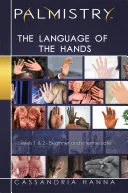
Palmistry: the Language of the Hands
 72
72

Palmistry: the Language of the Hands
Cassandria Hanna's "Palmistry: the Language of the Hands" presents a refreshing, grounded perspective on a practice often relegated to the mystical fringe. Her academic background, including a PhD in philosophy specializing in metaphysical parapsychology, lends a serious analytical tone absent in many palmistry guides. The work's strength lies in its systematic approach, breaking down the complex iconography of the palm into digestible components. Hanna avoids sensationalism, focusing instead on the hand as a map of psychological tendencies and life potentials. A particularly effective section details the subtle variations in the Heart Line, linking them directly to emotional expression and relational patterns, moving beyond simplistic interpretations. However, the book occasionally feels dense, with the sheer volume of information potentially overwhelming beginners. A more robust visual guide, beyond what the text alone can provide, would have enhanced its practical application. Despite this, Hanna's "Palmistry" offers a credible and insightful resource for understanding the hands.
📝 Description
72
Cassandria Hanna's 2018 book reveals palmistry as a system for understanding human psychology, not just fortune-telling.
Palmistry: the Language of the Hands details the practice of chiromancy, examining how hand lines, mounts, and shapes can reveal character and potential. Cassandria Hanna presents this art as a sophisticated method for psychological insight, guiding readers through the specific meanings of palm features. The book covers everything from the major life lines to minor markings, explaining their significance.
This work is for anyone interested in self-understanding, practical psychology, or esoteric traditions. Whether new to hand reading or seeking to improve existing skills, readers will find Hanna's methodical approach insightful. It is especially useful for those studying metaphysical arts or aiming to enhance their intuition. Hanna places palmistry within its historical context, noting its presence across cultures for millennia. Practices like Vedic traditions and Hellenistic Greece demonstrate its long, often debated, use for self-inquiry. By treating palmistry as a symbolic language, the book acknowledges its historical role in spiritual insight and social assessment, similar to astrology and physiognomy.
Palmistry, or chiromancy, has a history stretching back thousands of years, appearing in cultures from India to ancient Greece. Often studied alongside astrology and physiognomy, it was viewed not merely as fortune-telling but as a complex symbolic language. This tradition sought to understand human character, potential, and life paths through the physical characteristics of the hands. Hanna's work taps into this lineage, presenting palmistry as a tool for self-inquiry and psychological insight within a persistent esoteric practice.
💡 Why Read This Book?
• Learn to interpret the subtle language of your own hands, gaining insight into your psychological makeup and life trajectory as detailed by the analysis of hand mounts and finger proportions. • Understand the historical and philosophical underpinnings of palmistry, moving beyond superstition to appreciate its role as a system of somatic divination, as explored in its historical context. • Develop a practical skill for self-reflection and interpersonal understanding by learning to identify and interpret specific palmistry symbols, such as the Life Line and Fate Line, presented with clear explanations.
⭐ Reader Reviews
Honest opinions from readers who have explored this book.
❓ Frequently Asked Questions
What is the primary focus of Cassandria Hanna's "Palmistry: the Language of the Hands"?
The book focuses on palmistry as a detailed system for understanding character and life pathways through the analysis of hand lines, mounts, and shapes, rather than simple fortune-telling.
Who is the author, Cassandria Hanna, and what are her qualifications?
Cassandria Hanna holds an MM degree in performing arts and a PhD in philosophy, specializing in metaphysical parapsychology. She is also an intuitive, medium, and Reiki master.
Does the book cover the historical aspects of palmistry?
Yes, it situates palmistry within its long historical lineage, acknowledging its presence in various cultures and its role alongside other divinatory arts and philosophical inquiries.
What specific elements of the hand does the book analyze?
It analyzes the major and minor lines, the mounts (e.g., Venus, Jupiter), hand shapes (Earth, Air, Fire, Water), finger shapes, and various markings like stars and crosses.
Is this book suitable for complete beginners in palmistry?
The book offers a systematic approach that can benefit beginners, though its comprehensive nature might require dedicated study. It aims to provide a deeper understanding beyond basic interpretations.
Where does Cassandria Hanna teach palmistry?
Cassandria Hanna teaches palmistry in Atlanta, Georgia, indicating a practical, hands-on element to her expertise.
🔮 Key Themes & Symbolism
The Hand as a Microcosm
Hanna posits the hand as a direct reflection of an individual's inner landscape and life journey. This theme explores how the physical structure and markings of the palm—lines, mounts, and shapes—serve as a symbolic language. It moves beyond simple prediction, framing palmistry as a psychological tool for self-discovery and understanding innate potentials and challenges. The work emphasizes that the hand is not static but reflects evolving energies and life experiences.
Systematic Interpretation of Palmistry
A central theme is the methodical breakdown of chiromancy into its constituent parts. Hanna details the significance of major lines like the Life, Head, and Heart lines, alongside the less commonly discussed mounts and finger formations. This systematic approach allows readers to build a comprehensive interpretive framework, treating palmistry as an analytical discipline rather than a collection of arbitrary signs. The book guides the reader through classifying hand shapes, such as the elemental types (Earth, Air, Fire, Water).
Palmistry as Applied Psychology
This work reframes palmistry as a form of embodied psychology, connecting physical hand features to mental and emotional states. Hanna's academic specialization in metaphysical parapsychology informs this perspective, suggesting that the hands offer tangible indicators of personality traits, aptitudes, and relational dynamics. The book explores how specific markings and line formations can reveal patterns of thought, emotional expression, and behavioral tendencies, making it a tool for self-awareness and personal development.
The Evolution of Hand Markings
Hanna touches upon the dynamic nature of the palm, suggesting that markings and lines can shift over time, reflecting personal growth and life changes. This theme highlights that palmistry is not a fixed destiny but a fluid map. Understanding these potential shifts encourages a proactive engagement with one's life path, viewing the hands as a living document that responds to conscious choices and experiences. This perspective emphasizes agency over fatalism.
💬 Memorable Quotes
Direct passages from the work, attributed to the author.
“The palm is a map of the soul's journey.”
— This concise statement expresses the book's core thesis: that the physical lines and features of the hand are not arbitrary but represent a symbolic representation of an individual's inner life, potential, and the path they are traversing.
“Each mount corresponds to a planetary influence and a specific human quality.”
— This highlights the astrological underpinnings of palmistry, linking specific areas of the palm (mounts like Venus or Jupiter) to archetypal energies and personality traits, suggesting a cosmic connection to our physical form.
“Hand shapes provide a foundational understanding of temperament.”
— This refers to the classification of hands into elemental types (Earth, Air, Fire, Water), indicating that the basic structure and shape of the hand offer broad insights into a person's core nature and how they interact with the world.
“The Heart Line reveals patterns of emotional expression and connection.”
— This emphasizes the practical application of reading specific lines, focusing on the Heart Line as a key indicator of an individual's capacity for love, their emotional landscape, and the nature of their relationships.
“Understanding the nuances of the palm allows for greater self-awareness.”
— This interpretation focuses on the practical benefit of studying palmistry, positioning it as a tool for introspection and personal growth, enabling individuals to better comprehend their own motivations and tendencies.
🌙 Esoteric Significance
Tradition
This work engages with the Hermetic tradition, which views the cosmos as reflected in the microcosm, and the human body as a map of greater universal forces. Palmistry, in this context, is a form of somatic divination that aligns with the Hermetic principle of 'As Above, So Below.' Hanna's approach, informed by her philosophical background, emphasizes understanding the underlying principles rather than mere predictive techniques, fitting within a lineage that seeks knowledge through symbolic interpretation and direct observation of correspondences.
Symbolism
Key symbols in palmistry, as explored in the book, include the major lines (Life, Head, Heart, Fate), which represent core energies and life trajectories, and the mounts (e.g., Mount of Venus for love and passion, Mount of Jupiter for ambition and leadership). These symbols function as a symbolic language, with their shapes, lengths, and markings (like stars or islands) offering nuanced interpretations of an individual's character, potential, and life experiences, acting as a coded map of the psyche.
Modern Relevance
In contemporary esoteric and self-help circles, Hanna's work finds relevance in the growing interest in somatic psychology and embodied knowing. Thinkers and practitioners exploring mindfulness, self-awareness, and intuitive development often turn to systems like palmistry. Schools focusing on Western Esotericism and comparative divination studies may use this book as a modern, academically-informed text for understanding chiromancy's principles and its potential applications in personal growth and psychological insight.
👥 Who Should Read This Book
• Aspiring palmists seeking a structured introduction to chiromancy, who will benefit from Hanna's methodical breakdown of hand analysis, including lines, mounts, and shapes. • Students of esoteric traditions interested in comparative divination, who can use this book to understand palmistry's place within broader Hermetic and philosophical frameworks. • Individuals focused on personal development and psychological self-discovery, who will find the book's approach to the hands as a map of character and potential particularly valuable.
📜 Historical Context
Cassandria Hanna's "Palmistry: the Language of the Hands," first published in 2016, arrives in an era where esoteric practices are experiencing a resurgence, often integrated into wellness and self-help movements. This contemporary context differs sharply from the historical reception of palmistry, which faced significant opposition. During the Victorian era, for instance, palmistry was both popular and subject to societal disapproval, often associated with charlatans and marginalized spiritualists. While Hanna's work is situated within this long tradition, its academic framing—her PhD in philosophy specializing in parapsychology—positions it distinctively from earlier, more purely mystical or occultist texts. Contemporary figures like psychotherapist and author, Barry D. Lynes, who writes extensively on the 'Life Line,' demonstrate a continued engagement with palmistry as a diagnostic tool, echoing Hanna's approach of viewing the hand as a map of potential.
📔 Journal Prompts
The shape of your dominant hand: what elemental classification does it suggest, and how does that align with your self-perception?
Reflect on the interpretation of the Heart Line as presented by Hanna; how does it map onto your relational experiences?
Consider the planetary associations of the mounts on your palm; which qualities do you most strongly identify with, and why?
Analyze a significant marking on your palm (e.g., a star, cross, or island); what does its interpretation suggest about a life event or tendency?
How does the concept of the hand as a 'microcosm' of the soul's journey inform your understanding of your own life path?
🗂️ Glossary
Chiromancy
The art and practice of divination and character analysis through the study of the palm and fingers. It is synonymous with palmistry.
Mounts
The fleshy, raised areas on the palm, each typically associated with a planet and corresponding human qualities such as love, intellect, or ambition.
Life Line
A major crease on the palm, generally curving around the base of the thumb, often interpreted as relating to vitality, physical health, and major life experiences.
Head Line
A prominent line across the palm, usually horizontal, indicating mental abilities, thought processes, communication style, and intellectual tendencies.
Heart Line
A major line running horizontally across the upper palm, typically read for insights into emotional nature, romantic relationships, and heart health.
Fate Line
A line, often vertical, running upwards from the base of the palm towards the fingers, interpreted as relating to destiny, career path, and life's significant events.
Elemental Hand Shapes
A classification system categorizing hands into four types (Earth, Air, Fire, Water) based on their proportions, each suggesting a fundamental temperament and approach to life.