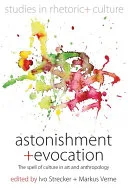
Astonishment and Evocation
 78
78

Astonishment and Evocation
Ivo Strecker and Markus Verne’s Astonishment and Evocation offers a compelling examination of how societies are molded by practices that enchant and captivate. The collection’s strength lies in its interdisciplinary approach, bridging aesthetics, anthropology, and rhetoric to explore the potent force of evocation. Particularly striking is the argument, inspired by Stephen Tyler, that even scholarship thrives on a sense of wonder, an openness to the uncanny. However, the book sometimes struggles with a lack of cohesive focus across its diverse essays, with some contributions feeling more theoretical than grounded. The exploration of ethnographic 'evocation' is a particularly potent thread, suggesting that understanding cultural phenomena requires more than detached observation; it demands an engagement with the evocative power of the subject itself. While not a unified manifesto, the collection presents a valuable case for recognizing the aesthetic and persuasive dimensions inherent in both cultural production and its study.
📝 Description
78
Published in June 2013, Astonishment and Evocation examines how persuasive practices across societies inspire awe and enchantment.
This collection of essays, first published in 2013, investigates how art, media, and rhetoric function to awe and enchant audiences. The authors extend this inquiry to academic study, recognizing that intellectual curiosity often stems from wonder and an openness to phenomena beyond the immediately apparent.
The volume is for scholars and students in aesthetics, anthropology, and rhetoric interested in the power of evocation. It appeals to researchers studying the performative aspects of culture, the role of enchantment in social cohesion, and how perceived magic shapes human understanding. Those interested in the intersection of academic study and aesthetic experience will find this collection particularly useful.
Drawing inspiration from Stephen Tyler's conceptualization of ethnography as an art of evocation, this work emerged as a counterpoint to positivist approaches in anthropology. It emphasizes the subjective, aesthetic, and performative dimensions of cultural representation. The collection reflects a broader intellectual movement in the late 20th and early 21st centuries that sought to integrate insights from humanities and social sciences, challenging traditional disciplinary boundaries.
💡 Why Read This Book?
• Gain a nuanced understanding of 'evocation' as a concept, moving beyond mere persuasion to explore how cultural forms, inspired by thinkers like Stephen Tyler, actively conjure experience and meaning. • Analyze the role of enchantment and awe in social cohesion and artistic expression, challenging purely rationalist views of human behavior and cultural production. • Discover how a sense of wonder, as discussed in the book's exploration of scholarship since 2013, drives intellectual inquiry and opens new avenues for understanding.
⭐ Reader Reviews
Honest opinions from readers who have explored this book.
❓ Frequently Asked Questions
What is the central thesis of Astonishment and Evocation regarding societal influence?
The book argues that all societies are significantly shaped by arts, media, and persuasive practices that evoke awe, captivate, and enchant audiences, influencing social structures and understanding.
Who is Stephen Tyler and what is his connection to this book?
Stephen Tyler is a figure whose view of ethnography as an art of evocation inspired the contributors. His perspective frames how cultural representation can actively summon experience.
Which academic fields are represented in Astonishment and Evocation?
The collection features international scholars from aesthetics, anthropology, and rhetoric, reflecting an interdisciplinary approach to the study of evocation and astonishment.
When was Astonishment and Evocation first published?
The book was first published on June 1, 2013, bringing together contemporary perspectives on its subject matter.
How does the book view the role of wonder in scholarship?
It posits that scholarship itself is often driven by a profound sense of wonder and a willingness to engage with phenomena that lie beyond the obvious, a perspective central to its inquiry.
What does the concept of 'evocation' mean in the context of this book?
Evocation refers to the power of cultural practices and artistic expressions to summon, conjure, or bring forth specific experiences, emotions, or understandings in an audience.
🔮 Key Themes & Symbolism
The Spell of Persuasion
This theme unpacks how various forms of media and artistic expression are engineered to produce states of awe and enchantment. It moves beyond simple communication to analyze the affective and psychological dimensions of cultural consumption, examining how these practices can appear to cast a spell. The collection interrogates the mechanisms by which audiences are captivated, exploring the inherent persuasive power that shapes perceptions and societal norms.
Wonder as Scholarly Drive
Contrary to a purely objective stance, the book highlights how intellectual inquiry, particularly in fields like anthropology and aesthetics, is often propelled by a fundamental sense of wonder. This involves a deep-seated willingness to be open to what lies beyond the immediately apparent or empirically verifiable. The essays suggest that this openness to the extraordinary is not a deviation from rigorous study but a crucial component of genuine discovery and deeper understanding.
Ethnography as Evocation
Inspired by Stephen Tyler's work, this theme re-envisions ethnography not merely as descriptive documentation but as an art of 'evocation.' This implies that the anthropologist's task involves more than observation; it requires a skillful conjuring of the cultural experience itself for the reader. The essays explore how ethnographic writing can evoke the sensory, emotional, and symbolic realities of a culture, fostering a more immersive and empathetic comprehension.
Aesthetics and Social Fabric
The collection scrutinizes the integral role of aesthetic experiences and practices in the construction and maintenance of social order. It examines how the capacity to awe, enchant, or captivate contributes to shared realities and collective identities. By focusing on these often-overlooked dimensions, the book offers a richer understanding of how cultural forms function to bind societies together and shape their collective consciousness.
💬 Memorable Quotes
Direct passages from the work, attributed to the author.
“All societies are shaped by arts, media, and other persuasive practices that can awe, captivate, enchant or otherwise seem to cast a spell on the audience.”
— This foundational statement sets the stage for the book's exploration of how aesthetic and persuasive forces are not peripheral but central to societal structure and influence.
“Scholarship itself often is driven by a sense of wonder and a willingness to be open to what lies beyond the obvious.”
— This highlights the subjective and almost mystical element that can fuel academic pursuit, suggesting that genuine intellectual breakthroughs often stem from curiosity about the unknown.
“Inspired by Stephen Tyler’s view of ethnography as an art of evocation...”
— This points to a key theoretical influence, framing ethnography as a performative act that conjures cultural realities rather than simply describing them, emphasizing subjective experience.
“...international scholars from the fields of aesthetics, anthropology, and rhetoric explore the sp...”
— This indicates the interdisciplinary nature of the collection, drawing on diverse academic perspectives to analyze the complex concept of evocation across different cultural and intellectual domains.
“The book broadens and deepens this perspective.”
— This concise phrase suggests the collection's ambition to expand upon existing theories of cultural influence and aesthetic engagement, offering more sophisticated analyses.
🌙 Esoteric Significance
Tradition
While not explicitly tied to a single esoteric lineage like Hermeticism or Gnosticism, Astonishment and Evocation appeals to traditions that emphasize the power of symbol, ritual, and altered states of consciousness to effect transformation. Its focus on 'enchantment' and 'evocation' echoes concepts found in Western esotericism concerning theurgy, the invocation of spiritual forces, and the use of art and performance to access deeper realities or influence perception.
Symbolism
The book's core concepts of 'astonishment' and 'evocation' function as potent symbolic motifs. Astonishment represents a state of heightened awareness, a break from the mundane that opens individuals to new possibilities or truths. Evocation, in turn, symbolizes the active power to conjure these states or realities, akin to alchemical processes that transform base matter or magical rituals that call forth unseen influences.
Modern Relevance
Contemporary thinkers in fields like performance studies, media theory, and even certain branches of psychology engage with the book's ideas. Its exploration of how captivating practices shape belief and social reality is highly relevant to understanding digital media's influence, the psychology of persuasion in politics and marketing, and the role of immersive experiences in modern life. Researchers exploring the 'new animism' or shamanic studies might also find value in its focus on evocative power.
👥 Who Should Read This Book
• Scholars of anthropology, aesthetics, and rhetoric seeking to understand the performative and affective dimensions of cultural practices. • Researchers interested in the concept of 'evocation' and its application to fields like ethnography, art criticism, and media studies. • Students and practitioners of the arts and media who wish to analyze the mechanisms of audience captivation and enchantment.
📜 Historical Context
Published in June 2013, Astonishment and Evocation emerged during a period of increasing interdisciplinary dialogue, particularly at the intersection of the humanities and social sciences. The intellectual currents it tapped into included post-structuralist theories of performance and reception, as well as a renewed interest in the affective dimensions of culture, moving away from purely cognitive or rationalist explanations. It engaged with a lineage of thought that questioned the strict separation between art, ritual, and everyday social practice. The work implicitly addressed debates within anthropology concerning representational practices, offering an alternative to the purely critical or deconstructive approaches that had gained prominence following the 'writing culture' debate. While not directly engaging with a specific contemporary author in its blurb, its perspective on ethnography as 'evocation,' inspired by Stephen Tyler, placed it in conversation with scholars like James Clifford and George Marcus who were also re-examining the role of the ethnographer and the nature of ethnographic writing.
📔 Journal Prompts
The concept of 'evocation' as an art form.
The role of 'astonishment' in shaping societal perceptions.
How 'enchantment' functions in contemporary media.
Reflecting on scholarship driven by 'wonder'.
Analyzing the 'spell' cast by persuasive practices.
🗂️ Glossary
Evocation
The act or process of summoning, conjuring, or bringing forth something, particularly an experience, feeling, or understanding, often through artistic or rhetorical means.
Astonishment
A state of great surprise or wonder, often leading to a temporary suspension of disbelief or a heightened state of perception.
Enchantment
The state of being under a spell or deeply captivated; the quality of being charming or delightful, often associated with magic or allure.
Persuasive Practices
Methods, techniques, or activities employed to influence the beliefs, attitudes, or behaviors of others, often through aesthetic or rhetorical appeal.
Aesthetics
The branch of philosophy concerned with the nature and appreciation of beauty, art, and taste; the principles governing artistic creation and perception.
Rhetoric
The art of effective or persuasive speaking or writing, especially the use of figures of speech and other compositional techniques.
Ethnography
The scientific description of the customs of individual peoples and cultures; the study and systematic recording of human cultures.