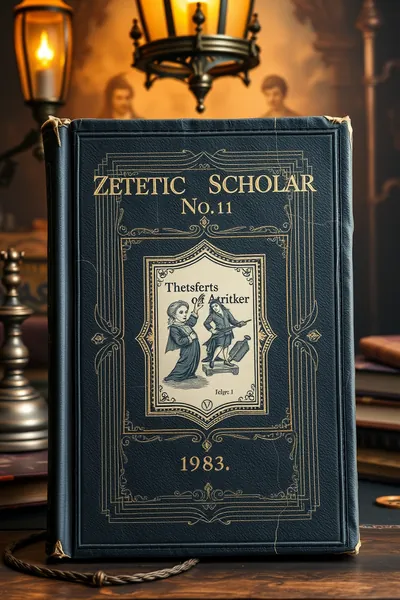
Homeopathic Bedside Clinical Tips

 74
74

Homeopathic Bedside Clinical Tips
Farokh J. Master's "Homeopathic Bedside Clinical Tips" offers a direct, no-nonsense approach to homeopathic practice that is refreshing in its focus. The strength of this book lies in its sheer utility; it's less an academic treatise and more a clinician's notebook, packed with observations that feel hard-won. Master doesn't shy away from the nitty-gritty of case management. For instance, his specific advice on differentiating between remedies for common pediatric complaints, like teething, provides immediate practical value. However, the book's greatest asset is also its limitation: the rapid-fire presentation of tips, while efficient, can sometimes feel a bit disconnected, lacking deeper theoretical explication for each point. A homeopath might wish for more extended case analyses to fully grasp the reasoning behind every recommendation. Nevertheless, for the busy practitioner, it delivers on its promise of quick, actionable guidance.
📝 Description
74
Farokh J. Master's 2004 book offers practical homeopathic clinical tips for patient care.
Homeopathic Bedside Clinical Tips, published in 2004, compiles specific advice for homeopaths managing patients. The book focuses on applying homeopathic principles directly in clinical practice, translating theoretical knowledge into actionable guidance for a variety of ailments. It serves as a reference for practitioners, aiming to connect established homeopathic theory with the daily challenges of treating individuals.
The work is designed for both new and experienced homeopaths, as well as students seeking real-world case insights. Those interested in the practical use of materia medica and repertory at the patient's side will find its contents especially useful. Master's approach emphasizes careful symptom observation and precise remedy selection, underscoring the importance of individualizing treatment from the extensive materia medica.
Published in 2004, Master's book engages with the tradition of homeopathic practice that began with Samuel Hahnemann and was later developed by figures like James Tyler Kent. It addresses a continuing need for practical, contemporary guides within the field of classical homeopathy. The book situates itself within a broader interest in complementary medicine, offering modern examples and therapeutic pointers that build upon earlier codifications of homeopathic knowledge.
💡 Why Read This Book?
• Gain specific, actionable advice for common ailments that goes beyond generalized materia medica, directly applicable from the first reading, as seen in the detailed symptom pictures for conditions like "Fever with Chill." • Learn to differentiate remedies for nuanced presentations, enhancing diagnostic precision, exemplified by the distinct indications provided for remedies in "Headache" cases. • Acquire practical tips for bedside management that can be immediately integrated into your practice, such as the author's guidance on "Anxiety and Sleeplessness" management.
⭐ Reader Reviews
Honest opinions from readers who have explored this book.
❓ Frequently Asked Questions
What specific year was Homeopathic Bedside Clinical Tips first published?
Homeopathic Bedside Clinical Tips by Farokh J. Master was first published in 2004, making it a relatively modern contribution to homeopathic literature.
Who is the primary audience for Farokh J. Master's book?
The primary audience consists of practicing homeopaths and students of homeopathy who are looking for practical, clinical guidance for patient care.
Does the book cover a wide range of conditions?
Yes, the book covers a broad spectrum of common ailments, offering specific tips for their homeopathic management in a clinical setting.
What is the main focus of the book's content?
The book's main focus is on practical, bedside clinical tips, emphasizing the precise application of homeopathic remedies based on symptom presentation.
How does this book relate to classical homeopathic texts?
It complements classical texts by offering contemporary, distilled practical advice derived from established homeopathic principles, making them more accessible for daily practice.
Is this book suitable for beginners in homeopathy?
Yes, students and early-career homeopaths will find the clear, concise tips particularly useful for developing their clinical skills and understanding remedy application.
🔮 Key Themes & Symbolism
Precise Symptom Analysis
The work underscores the critical importance of accurate symptom capture and analysis in homeopathic prescribing. Master emphasizes identifying the most characteristic symptoms that truly differentiate one remedy from another. This involves looking beyond general complaints to find the unique nuances of a patient's experience, a core part of classical homeopathy since Hahnemann's era. The book provides specific examples of how to hone in on these differentiating factors for various conditions, ensuring practitioners don't overlook the subtle but vital clues that lead to the correct simillimum.
Bedside Application
This book is fundamentally about translating homeopathic theory into tangible, on-the-spot clinical action. It addresses the realities of patient interaction, offering guidance that can be applied directly during a consultation. The emphasis is on efficiency and effectiveness, providing quick reference points for common scenarios. This practical orientation aims to empower homeopaths to make confident prescribing decisions at the bedside, bridging the gap between academic study and real-world patient care.
Remedy Differentiation
A significant portion of the text is dedicated to helping practitioners distinguish between similar remedies that might present with overlapping symptoms. Master provides clear, concise pointers for selecting the most appropriate remedy when faced with a differential diagnosis. This focus on fine-tuning prescription accuracy is crucial for achieving optimal therapeutic outcomes and reflects the depth of knowledge required in homeopathic practice.
Individualization of Treatment
The core tenet of homeopathy—treating the individual, not just the disease—is consistently reinforced. The book guides the reader to look for the unique expression of illness in each patient. By focusing on characteristic symptoms and individual sensibilities, Master advocates for a personalized approach to healing, moving beyond generic protocols to find the remedy that most closely matches the totality of the patient's state.
💬 Memorable Quotes
Direct passages from the work, attributed to the author.
“The key to successful prescribing lies in the accurate and detailed observation of the patient.”
— This statement highlights the foundational principle of homeopathy: that the practitioner's ability to observe and record symptoms precisely is paramount for selecting the correct remedy.
“For sleeplessness, note whether it is from anxiety, pain, or an overactive mind.”
— This illustrates the principle of individualization, emphasizing that the cause or nature of a symptom (here, sleeplessness) is crucial for remedy selection.
“Small children often present with peculiar symptoms that are highly characteristic.”
— This interpretation suggests that in pediatric cases, unusual or specific symptoms, often easily dismissed, can be the most reliable guides to the correct homeopathic remedy.
“A practitioner must be adept at comparing the patient's state with the known pathogenesis of remedies.”
— This emphasizes the essential skill of matching the patient's unique symptom picture to the provings (pathogenesis) of various homeopathic remedies found in the materia medica.
💡 Key Ideas
Editorial paraphrase of the work's core concepts — not direct quotes.
When faced with a fever, consider the accompanying chills and thirst for precise differentiation.
This paraphrase points to the importance of keynote symptoms and modalities (like temperature and thirst) in distinguishing between remedies that treat fever.
🌙 Esoteric Significance
Tradition
While homeopathy itself is a distinct medical system, its principles align with broader esoteric concepts of vitalism and energy. It operates on the premise of a subtle, animating life force (the 'vital force') that can be influenced by minuscule doses of medicinal substances. This speaks to traditions like vitalism, which posits an animating principle beyond purely material explanations, and Hermetic philosophy's emphasis on correspondence and unseen influences.
Symbolism
The concept of the 'vital force' itself can be seen as a symbolic representation of the animating principle present in many esoteric traditions. The precise 'simillimum' chosen is symbolic of finding the energetic signature that harmonizes with the patient's own vital essence. The potency of remedies, often incredibly diluted, symbolizes the power of subtle energies and information over brute material force.
Modern Relevance
Contemporary practitioners of energy medicine, holistic health coaches, and even some integrative physicians draw inspiration from homeopathic principles. While not always prescribing classical remedies, the focus on individualization, symptom totality, and understanding the body's subtle energetic balance echoes in modern wellness paradigms and practices influenced by holistic approaches.
👥 Who Should Read This Book
• Practicing homeopaths seeking to enhance their diagnostic accuracy and efficiency with quick reference tips for common patient presentations. • Students of homeopathy who wish to bridge the gap between theoretical learning and practical, real-world clinical application in a bedside setting. • Holistic health practitioners interested in understanding the core principles of homeopathic remedy selection and its emphasis on individualized care.
📜 Historical Context
Farokh J. Master's "Homeopathic Bedside Clinical Tips," published in 2004, arrived in an era of resurgent interest in complementary and alternative medicine. While homeopathy's roots trace back to Samuel Hahnemann in the late 18th century, the early 21st century saw a global push for practical guides that made complex materia medica accessible. The book builds upon the extensive work of classical homeopaths like James Tyler Kent, whose "Lectures on Homeopathic Philosophy" (published posthumously in 1900) laid groundwork for understanding remedy selection. Master's contribution focuses on distilling this knowledge into direct, actionable advice for contemporary practitioners. It emerged in a landscape where, alongside the established classical tradition, various integrated or modified homeopathic approaches were also being explored, making a clear, bedside-focused manual particularly valuable for those seeking to hone their everyday practice.
📔 Journal Prompts
The totality of symptoms presented by a patient.
Characteristic symptoms for differentiating between "Arsenicum album" and "Rhus toxicodendron."
The role of the vital force in chronic disease management.
Applying principles from the "Headache" section to a personal experience.
Comparing the described approach to remedy selection with your current clinical methods.
🗂️ Glossary
Materia Medica
A comprehensive reference work detailing the medicinal properties of substances, particularly homeopathic remedies, including their symptoms, modalities, and clinical uses.
Repertory
An index or catalog of symptoms, arranged systematically, that lists the remedies known to produce or cure each symptom, used for remedy selection.
Simillimum
The homeopathic remedy that most closely matches the totality of the patient's symptoms, believed to be the most effective for cure.
Totality of Symptoms
The complete picture of a patient's illness, including physical, mental, and emotional symptoms, modalities, and sensations, used for selecting the simillimum.
Characteristic Symptoms
Unusual, rare, peculiar, or striking symptoms that are most indicative of a specific remedy and help differentiate it from others.
Modalities
Factors that aggravate (worsen) or ameliorate (improve) a patient's symptoms, such as time of day, temperature, position, or external influences.
Vital Force
The inherent, animating life principle or energy that sustains health and is influenced by homeopathic remedies in the process of healing.
🔮 Readers Also Liked
Browse all →







More by Farokh J. Master
All books →

More Free Occult Philosophy Books
View all →