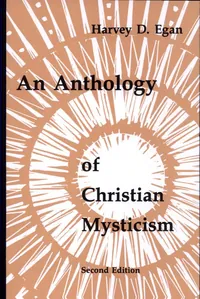
Gershom Scholem

 76
76

Gershom Scholem
The academic biography of Gershom Scholem by Gershon Scholem and Paul R. Mendes-Flohr offers an indispensable, if sometimes dense, exploration of the scholar who arguably invented the modern academic study of Jewish mysticism. The book excels in detailing Scholem's intellectual journey, meticulously mapping his engagement with obscure Kabbalistic texts and his critical reassessment of figures like Abraham Abulafia. One particular strength is the careful exposition of Scholem's methodological rigor, demonstrating how he transformed the study of esoteric Judaism from a mere antiquarian pursuit into a serious historical discipline. However, the work occasionally suffers from its own academic depth, sometimes presenting Scholem's complex arguments with a thoroughness that can feel overwhelming to the non-specialist reader. A passage discussing Scholem's analysis of the Zohar's linguistic innovations, for instance, is both illuminating and demanding. Ultimately, this volume serves as a crucial, if challenging, resource for understanding the intellectual foundations of Kabbalah scholarship.
📝 Description
76
Published in 1994, this biography examines Gershom Scholem's life and his reshaping of Jewish mysticism studies.
This volume details the life and scholarly contributions of Gershom Scholem, a central figure in the academic study of Jewish mysticism and the Kabbalah. It follows his intellectual path, from early involvement with Zionism and Hebrew to his dedicated focus on Judaism's esoteric traditions. The book highlights Scholem's scholarship, which aimed to establish Jewish mysticism as a valid area for historical and religious research, moving it from the periphery to the core of academic discussion.
The work is suited for academics, graduate students, and serious readers interested in Jewish thought, mysticism, and religious history. It offers insight into the foundational work of Scholem, who shaped modern Kabbalah studies. Those engaged with comparative mysticism, religious history, or the philosophical basis of Jewish tradition will find relevant material. The book also addresses intellectual biography and the development of academic fields.
Gershom Scholem's work brought a rigorous academic lens to traditions often relegated to the occult or marginalized. His scholarship, beginning in the early 20th century, treated Jewish mystical texts and movements, particularly the Kabbalah, as significant historical phenomena deserving of serious study. He connected these esoteric streams to broader currents in Jewish history and thought, demonstrating their impact on religious expression and intellectual life. This biography situates his own intellectual development within that larger project of understanding and legitimizing the study of Jewish esoteric traditions.
💡 Why Read This Book?
• Understand the foundational methodology of modern Kabbalah studies, appreciating how Gershom Scholem established rigorous historical and philological standards for analyzing esoteric Jewish texts. • Gain insight into Scholem's critical interpretation of the Zohar, a pivotal text in Kabbalistic literature, and its significance for understanding Jewish mystical thought. • Explore Scholem's complex relationship with German philosophy and Zionism, recognizing how these broader intellectual currents shaped his unique approach to Jewish mysticism.
⭐ Reader Reviews
Honest opinions from readers who have explored this book.
❓ Frequently Asked Questions
What was Gershom Scholem's primary academic contribution?
Gershom Scholem's primary contribution was establishing the academic study of Jewish mysticism and the Kabbalah as a legitimate field of historical and religious inquiry, employing rigorous philological and historical methods.
When was Gershom Scholem active as a scholar?
Gershom Scholem was active as a scholar primarily from the 1930s onwards, holding a professorship at the Hebrew University of Jerusalem and publishing influential works throughout the mid to late 20th century.
What is the Zohar, and why is it important in Kabbalah?
The Zohar is the foundational text of Kabbalah, a mystical commentary on the Torah. It is crucial for its elaborate doctrines on divine emanations (Sefirot), creation, and the nature of God, shaping Jewish mystical thought for centuries.
Did Gershom Scholem engage with other forms of mysticism?
Yes, while focused on Jewish mysticism, Scholem's work implicitly engaged with broader comparative mysticism and the history of religion, often drawing distinctions to define the unique character of Jewish esoteric traditions.
What key historical movements did Scholem study?
Scholem extensively studied key historical movements within Jewish mysticism, including the development of Kabbalah in medieval Spain, the messianic upheaval surrounding Shabbetai Tzvi in the 17th century, and the early Hasidic movement.
What is the significance of Paul R. Mendes-Flohr's role in this book?
Paul R. Mendes-Flohr co-authored this work, contributing to the biographical and interpretive scholarship on Gershom Scholem, ensuring a comprehensive academic presentation of his life and intellectual legacy.
🔮 Key Themes & Symbolism
Foundations of Kabbalah Studies
This book meticulously documents Gershom Scholem's project to establish the academic study of Jewish mysticism. It highlights his critical approach to sources, his rigorous philological methods, and his efforts to distinguish Kabbalah from later romanticized or syncretic interpretations. Scholem's work, particularly his analysis of texts like the Zohar and the writings of figures such as Abraham Abulafia, aimed to reveal the historical development and theological depth of Jewish esoteric traditions, moving them from the fringe to the core of religious scholarship.
Messianism and Historical Upheaval
A significant focus is Scholem's examination of messianic movements within Jewish history, most notably the dramatic 17th-century episode of Shabbetai Tzvi. The book details Scholem's analysis of the complex theological and psychological factors that fueled such movements, and how they reflected underlying tensions within Jewish thought. Scholem viewed these historical events not as aberrations but as crucial expressions of the mystical and eschatological impulses deeply embedded within the Jewish tradition.
The Zohar and Lurianic Kabbalah
The book explores Scholem's groundbreaking scholarship on the Zohar, the foundational text of Kabbalah, exploring its authorship, language, and mystical doctrines. It also covers his extensive work on Isaac Luria (the Ari), whose complex system of cosmic redemption and ethical imperatives profoundly influenced subsequent Kabbalistic thought. Scholem's interpretations of these core traditions provide a framework for understanding the evolution and impact of Jewish mysticism.
Intellectual Biography and Method
Beyond the specific mystical traditions, the volume serves as an intellectual biography of Gershom Scholem himself. It traces his personal journey from early German-Jewish intellectual circles and Zionism to his becoming a preeminent scholar at the Hebrew University of Jerusalem. The book emphasizes his engagement with philosophical currents such as German Idealism and his development of a unique critical methodology for studying religious phenomena, particularly those considered esoteric.
💬 Memorable Quotes
Direct passages from the work, attributed to the author.
“The Kabbalah is not a static doctrine but a dynamic, evolving tradition.”
— This highlights Scholem's emphasis on the historical development of Jewish mysticism, viewing it not as a monolithic entity but as a living tradition that adapted and transformed over centuries.
“Messianism is a central, often explosive, force in Jewish history.”
— This points to Scholem's focus on the role of messianic aspirations and movements as potent historical drivers within the Jewish experience, often leading to significant social and religious upheaval.
“The Zohar's language is itself a mystical act.”
— This interpretation underscores Scholem's belief that the linguistic innovations and symbolic richness of the Zohar are not mere literary devices but integral to its mystical content and power.
“Understanding Jewish mysticism requires understanding its historical context.”
— This emphasizes Scholem's core scholarly principle: that esoteric traditions must be studied through rigorous historical analysis, not solely through subjective interpretation or detached theological speculation.
💡 Key Ideas
Editorial paraphrase of the work's core concepts — not direct quotes.
Scholem sought to rescue Kabbalah from oblivion and myth.
This paraphrased concept reflects Scholem's mission to bring the study of Kabbalah into the area of academic respectability, separating historical fact from later romantic or pseudoscientific claims.
🌙 Esoteric Significance
Tradition
This work is central to the academic tradition of studying Kabbalah, a major stream within Jewish mysticism. Scholem's scholarship, as detailed here, sought to delineate Kabbalah as a distinct esoteric tradition within Judaism, tracing its development from medieval Spain through figures like Isaac Luria and movements like Hasidism. He established a framework for understanding Kabbalah not as a monolithic system but as a complex, historically situated phenomenon, moving it from the area of occult esotericism towards rigorous religious and intellectual history.
Symbolism
Key symbols explored include the Sefirot, the ten divine emanations central to Kabbalistic cosmology, representing aspects of God's creative power and relationship with the world. The Tree of Life diagram, visually representing the Sefirot, is another crucial motif. The book also likely touches upon the symbolism of letters and names in Kabbalah, particularly their role in creation and mystical practice, as articulated in texts like the Sefer Yetzirah and the Zohar.
Modern Relevance
Scholem's rigorous academic approach continues to influence contemporary scholars of Jewish mysticism, religious studies, and the history of ideas. Thinkers and practitioners engaged with Kabbalah today, whether academically or in spiritual contexts, grapple with the foundations Scholem laid. His work remains a touchstone for understanding the historical development of Jewish esoteric thought, informing modern interpretations of Kabbalistic texts and practices, and providing a critical lens for distinguishing historical Kabbalah from New Age appropriations.
👥 Who Should Read This Book
• Scholars of Jewish Studies and Religious History seeking to understand the foundational academic work on Kabbalah and Jewish mysticism. • Students of Esotericism interested in the historical development and intellectual currents of Western mystical traditions, particularly those within the Abrahamic faiths. • Intellectual Historians examining the life and work of Gershom Scholem, a key figure in 20th-century thought, and his impact on establishing new academic disciplines.
📜 Historical Context
The publication of this biography in 1994 occurred in an era where Gershom Scholem's monumental work had already reshaped the academic landscape for decades. His scholarship, beginning in earnest in the 1930s at the Hebrew University of Jerusalem, challenged prevailing notions of Jewish history by centering the significance of its mystical traditions. This was a departure from earlier scholarship that often marginalized or dismissed Kabbalah. Scholem's approach provided a counterpoint to purely rationalist or secular interpretations of Judaism that were prevalent among some Jewish intellectuals and scholars of the time. Key contemporaries who built upon or debated his work include scholars like Moshe Idel, who offered alternative interpretations of Kabbalistic concepts, and scholars of Hasidism who engaged with Scholem's foundational studies. The reception of Scholem's work was overwhelmingly positive within academic circles, though some debated his specific interpretations and historical periodizations.
📔 Journal Prompts
Gershom Scholem's engagement with the Zohar's linguistic innovations.
The role of messianism in Jewish history as analyzed by Scholem.
Scholem's methodological distinctions between historical Kabbalah and later interpretations.
The influence of German Idealism on Scholem's understanding of religious experience.
The impact of the Shabbetai Tzvi movement on Jewish mystical thought.
🗂️ Glossary
Kabbalah
A tradition of Jewish mysticism that explores the divine nature, creation, and the relationship between God and the universe, often through esoteric interpretations of the Torah.
Zohar
The foundational text of Kabbalah, a complex commentary on the Torah written in Aramaic, attributed to Rabbi Shimon bar Yochai, but largely considered by scholars to be the work of Moses de León in 13th-century Spain.
Sefirot
Ten divine attributes or emanations described in Kabbalistic cosmology, which represent the unfolding of God's creative power and the structure of the spiritual realms.
Shabbetai Tzvi
A 17th-century Sephardic mystic who proclaimed himself the Messiah, leading a widespread movement that caused significant upheaval and controversy within Jewish communities.
Abraham Abulafia
A 13th-century Spanish Kabbalist known for his ecstatic Kabbalah, which emphasized the use of divine names and contemplative techniques to achieve prophetic states.
Isaac Luria (the Ari)
A 16th-century Kabbalist whose teachings, particularly concepts like Tzimtzum (divine contraction) and Tikkun (rectification), profoundly shaped subsequent Kabbalistic thought, forming Lurianic Kabbalah.
Philology
The study of language in oral and written historical sources; it is the intersection of textual criticism, literary criticism, history, and linguistics.
🔮 Readers Also Liked
Browse all →







More Free Mysticism & Contemplation Books
View all →