Archetypes in Religion and Beyond
 78
78

Archetypes in Religion and Beyond
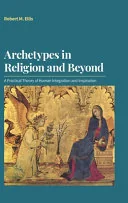
Robert M. Ellis’s "Archetypes in Religion and Beyond" offers a refreshingly practical approach to a concept often mired in abstract discourse. Ellis constructs a functional theory of archetypes that, crucially, avoids the pitfalls of reductionism. His analysis of how these patterns operate across diverse religious cosmologies is meticulous. A particular strength lies in his ability to connect abstract theoretical points to concrete examples drawn from various mythologies, making the complex accessible. However, the work’s academic tone, while precise, may occasionally feel dense for readers less accustomed to philosophical argumentation. A passage discussing the archetype of the "Wise Old Man" as a generative principle for wisdom traditions, rather than a static character, exemplifies the book’s insightful, dynamic perspective. Ellis provides a valuable, if challenging, re-evaluation of archetypal theory.
📝 Description
78
Robert M. Ellis published Archetypes in Religion and Beyond in 2022, proposing a functional model for understanding archetypes.
This 2022 book presents a theoretical framework for archetypes, suggesting a functional model that avoids oversimplification. It examines how these fundamental patterns appear in various religious traditions and philosophical systems. The work provides a systematic method for analyzing recurring motifs and symbolic structures that shape human consciousness and cultural expression.
The book is intended for scholars of comparative religion, depth psychology practitioners, and students of esoteric traditions. It will appeal to those seeking a rigorous analysis of the symbolic basis of religious thought and myth, particularly concerning the intersection of psychology, philosophy, and theology. Ellis engages with contemporary interest in Jungian psychology and archetypal studies, aiming to advance beyond earlier interpretations.
The core idea is a functional theory of archetypes, seeing them as active principles shaping perception and experience. The book investigates their operation across different religious cosmologies and mythologies, offering a consistent analytical perspective. It also differentiates archetypes from specific myths or symbols, emphasizing the underlying generative patterns.
Published in 2022, this work engages with the ongoing exploration of archetypal theory, particularly its roots in Jungian psychology. It situates itself within a tradition that seeks to understand the deeper symbolic currents in human culture and spirituality. By proposing a functional model, Ellis moves beyond purely psychological interpretations, suggesting a broader role for archetypal principles in shaping meaning and perception across diverse belief systems. This approach resonates with esoteric philosophies that investigate universal patterns underlying manifest reality.
💡 Why Read This Book?
• Gain a functional, non-reductive theory of archetypes that explains their role across religions, moving beyond purely psychological interpretations, as detailed in the 2022 publication. • Understand how recurring symbolic structures, distinct from specific myths, actively shape human consciousness and cultural expression, providing a unique analytical tool. • Explore the practical application of archetypal analysis to diverse religious cosmologies, offering a fresh perspective for students of comparative religion and esoteric studies.
⭐ Reader Reviews
Honest opinions from readers who have explored this book.
❓ Frequently Asked Questions
What is Robert M. Ellis's core argument about archetypes in his 2022 book?
Ellis argues for a functional theory of archetypes, proposing they are active principles shaping perception and meaning rather than static symbols or mere psychological projections.
How does "Archetypes in Religion and Beyond" differ from Carl Jung's work?
While building on Jungian foundations, Ellis's 2022 work emphasizes a functional, less purely psychological, model of archetypes, focusing on their operational role across diverse religious systems.
What kind of examples does the book use to illustrate its theory?
The book draws examples from a wide array of religious cosmologies and mythologies, analyzing recurring motifs and symbolic structures to demonstrate the functional nature of archetypes.
Is this book suitable for beginners in esoteric studies?
It is geared towards serious students and scholars due to its academic rigor, but its clear explanations of complex concepts make it accessible for those with a foundational interest.
What is the benefit of a 'functional' theory of archetypes?
A functional theory highlights how archetypes actively shape understanding and experience, providing insight into their pervasive influence on human thought and culture across different traditions.
When was 'Archetypes in Religion and Beyond' first published?
The book was first published in 2022, placing it within contemporary discussions on psychology and religious studies.
🔮 Key Themes & Symbolism
Functional Archetypal Theory
Ellis proposes that archetypes should be understood not merely as psychological patterns but as active, generative principles that structure our perception and understanding of the world. This functional approach emphasizes their role in creating meaning across diverse cultures and religious systems. Unlike static symbolic interpretations, this theory posits archetypes as dynamic forces that inform cosmologies, myths, and individual consciousness, offering a more robust framework for analysis.
Archetypes Across Religions
The book meticulously examines how archetypal patterns manifest in various religious traditions, from ancient cosmologies to modern mythologies. It demonstrates that these underlying structures are not confined to one cultural context but appear universally, albeit with unique cultural expressions. By analyzing these shared patterns, Ellis provides a lens through which to understand the common threads binding disparate religious experiences and beliefs.
Avoiding Reductive Explanations
A central tenet of Ellis's work is the rejection of oversimplified or reductionist explanations of archetypes, particularly those that confine them solely to psychological phenomena. The theory aims to be comprehensive, acknowledging their psychological dimension while asserting their broader functional significance in shaping human cognition, culture, and spiritual understanding. This avoids reducing complex symbolic systems to mere symptoms.
The Generative Nature of Symbols
Ellis explores how archetypes act as generative matrices for symbols, myths, and narratives. They are the underlying patterns from which specific cultural expressions emerge. Understanding this generative capacity allows for a deeper appreciation of the dynamic relationship between universal patterns and their particular manifestations in religious and philosophical thought, revealing how meaning is continuously created.
💬 Memorable Quotes
Direct passages from the work, attributed to the author.
“A functional theory avoids reducing the complexity of religious meaning.”
— This highlights the book's methodological commitment. It suggests that understanding archetypes functionally preserves their capacity to explain the richness and depth of religious thought without oversimplification.
“The same underlying patterns appear across vastly different cosmologies.”
— This observation points to the universality of archetypal structures. Ellis suggests that despite cultural variations, fundamental patterns of meaning-making are consistent throughout human religious expression.
“Understanding archetypes requires examining their operation, not just their definition.”
— This emphasizes a practical, analytical approach. The focus is on how archetypes function and manifest in concrete examples of religious thought and practice, rather than abstract definitions.
“Mythology is the expression of archetypal dynamics.”
— This statement links narrative and symbolic content directly to the underlying archetypal forces. It suggests that myths serve as vehicles for these generative principles.
💡 Key Ideas
Editorial paraphrase of the work's core concepts — not direct quotes.
Archetypes are not merely symbols but active principles that shape experience.
This quote expresses Ellis's core argument: archetypes possess a dynamic force that influences how we perceive and interpret reality, moving beyond passive symbolic representation.
🌙 Esoteric Significance
Tradition
While drawing heavily from Jungian psychology, which itself has deep roots in Hermeticism, Gnosticism, and alchemy, Ellis's work is primarily a philosophical and theoretical exploration rather than a direct transmission of esoteric doctrine. It fits within the broader esoteric milieu by treating archetypes as fundamental principles of consciousness and reality that underpin manifest phenomena, including religious experience. It departs from more dogmatic traditions by focusing on a universally applicable analytical framework.
Symbolism
Key symbols often discussed in relation to archetypes include the Mandala (representing wholeness and the Self), the Serpent (often symbolizing transformation, chthonic forces, or primordial wisdom), and the Great Mother (embodying creation, nurturing, and the unconscious). In Ellis's functional model, these are not just static images but expressions of active forces that structure perception and meaning within religious and philosophical systems.
Modern Relevance
Ellis's functional approach to archetypes has relevance for contemporary thinkers in fields ranging from consciousness studies and integral theory to modern paganism and Jungian analysis. His work provides a framework for understanding the persistent power of myth and symbol in a secularized world, influencing those who seek to understand the underlying patterns of human spirituality and meaning-making in contemporary culture and practice.
👥 Who Should Read This Book
• Scholars of comparative religion and mythology seeking a rigorous, non-reductive framework for analyzing cross-cultural symbolic patterns. • Depth psychology practitioners and students of Jungian analysis interested in exploring a functional, operational model of archetypes beyond purely psychological interpretations. • Advanced students of esoteric traditions and philosophy looking for a theoretical work that bridges classical archetypal concepts with contemporary analytical methods.
📜 Historical Context
Robert M. Ellis’s "Archetypes in Religion and Beyond," published in 2022, arrives at a moment of sustained academic and popular interest in archetypal theory, largely reignited by Carl Jung’s work in the mid-20th century. Ellis’s approach engages with this legacy but seeks to establish a more robust, functional model. His work implicitly challenges purely psychological interpretations prevalent in some academic circles, such as those that might align with post-structuralist critiques of universal meaning. While Jung’s contemporaries like Mircea Eliade explored comparative mythology with a similar interest in universal patterns, Ellis’s theoretical framework offers a distinct emphasis on the generative and operational aspects of archetypes. The book contributes to contemporary discussions within depth psychology and comparative religion, aiming to provide a coherent theoretical structure for analyzing symbolic phenomena across diverse traditions.
📔 Journal Prompts
The functional dynamics of the 'Wise Old Man' archetype.
How the 'Great Mother' archetype manifests in a specific religious cosmology.
Reflecting on the generative capacity of symbols in personal experience.
Comparing the archetypal patterns in two different mythologies discussed.
Analyzing personal perceptions through the lens of functional archetypes.
🗂️ Glossary
Archetype
A fundamental, universal pattern or motif that structures human consciousness and experience, manifesting in myths, symbols, and dreams. Ellis emphasizes their functional, generative role.
Functional Theory
An approach that understands archetypes not as static entities but as active principles or forces that shape perception, cognition, and the creation of meaning.
Cosmology
A framework of beliefs concerning the origin and structure of the universe, often incorporating religious or mythological elements.
Mythology
A collection of myths, especially one belonging to a particular religious or cultural tradition; the study of myths.
Reductive Explanation
An explanation that oversimplifies a phenomenon by reducing it to a single cause or aspect, ignoring its complexity.
Symbol
An object, figure, or concept that represents something else, typically a more abstract idea. In Ellis's work, symbols emerge from and express archetypal dynamics.
Depth Psychology
A branch of psychology, pioneered by figures like Freud and Jung, that explores the unconscious mind and its influence on behavior and experience.
This book appears in 1 collection
🔮 Readers Also Liked
Browse all →









From the “Archetypes” Collection
View all →![Archetypal principles and hierarcheis [sic]](/img/thumb/archetypal-principles-and-hierarcheis-sic-john-peter-anton.webp)



More Free Occult Philosophy Books
View all →