Aradia
 78
78

Aradia
Leland's Aradia is a fascinating artifact, presenting a vision of Italian witchcraft that feels both ancient and distinctly Victorian. The narrative of Aradia herself, a messianic figure sent by Diana, offers a unique theological framework distinct from common Wiccan or ceremonial magic traditions. Its strength lies in its evocative language and the sheer volume of spells and rituals presented, which, whether historically accurate or Leland's own creative synthesis, provide rich material for study. However, the work's reliance on a single, uncorroborated source (Marianna) and its publication date of 1899 cast considerable doubt on its claim to represent a genuinely ancient, unbroken tradition. The passage describing Aradia's descent from the moon is particularly striking, painting a vivid, almost astronomical, origin story for a spiritual leader. Ultimately, Aradia functions less as a definitive historical record and more as a significant, albeit contested, influence on modern paganism.
📝 Description
78
Charles Godfrey Leland published Aradia, or the Gospel of the Witches, in 1899, claiming it was a genuine witch text.
This 1899 book, Aradia, or the Gospel of the Witches, presents itself as a collection of spells, prayers, and stories from an Italian witchcraft tradition. Charles Godfrey Leland stated he transcribed the material from an elderly Tuscan woman named Marianna. The text centers on Aradia, a messianic figure said to be the daughter of Diana and Lucifer, who came to teach magic and rebellion.
The work details practices such as the witches' sabbath, known as a *sabba*, and includes numerous incantations. While presented as an authentic historical document, its status as a direct transcription remains a subject of scholarly discussion. It reflects a late Victorian interest in occultism and the preservation of folk traditions.
Scholars of folklore, comparative religion, and Western esotericism have an interest in this work. It also appeals to modern practitioners of witchcraft and paganism looking for historical connections. Those intrigued by the intersection of occultism, romanticism, and the documentation of folk customs will find material for consideration.
Aradia appeared in 1899, a time of considerable interest in spiritualism and occult revival in the West. Leland, an American folklorist, was part of intellectual circles exploring esoteric knowledge. This period saw many efforts to record and disseminate occult and magical traditions, often as a reaction to modernization. The book's assertion of a pre-Christian Italian witchcraft tradition contributed to discussions and debates among folklorists and historians of religion regarding the nature and origins of such practices.
💡 Why Read This Book?
• Understand the specific mythos of Aradia, presented as a witch messiah sent by Diana, a concept not commonly found in other witchcraft texts, offering a unique spiritual genealogy. • Explore a collection of over 200 spells and incantations, many invoking specific entities and natural phenomena, providing practical ritualistic material distinct from later codified systems. • Examine the historical context of late 19th-century occultism through Leland's work, revealing how figures like him sought to document and interpret folk traditions, influencing later esoteric movements.
⭐ Reader Reviews
Honest opinions from readers who have explored this book.
❓ Frequently Asked Questions
Is 'Aradia, or the Gospel of the Witches' a historically accurate representation of ancient Italian witchcraft?
The authenticity of Aradia as a direct historical document is heavily debated. Charles Godfrey Leland claimed it was transcribed from an Italian witch in 1899, but scholars question its accuracy, suggesting it may be a blend of folklore, Leland's interpretations, and possibly even his own creative embellishments.
Who is Aradia in the context of the book?
Aradia is depicted as the daughter of the Roman goddess Diana and Lucifer, sent to Earth to teach magic to the oppressed and to liberate them from servitude and the Church. She is presented as a messianic figure for witches.
What kind of magic or spells are described in Aradia?
The book contains numerous spells, incantations, and rituals for various purposes, including love, healing, protection, and revenge. Many invoke pagan deities, spirits, and natural elements, reflecting a folk magic tradition.
When was 'Aradia, or the Gospel of the Witches' first published?
Charles Godfrey Leland's 'Aradia, or the Gospel of the Witches' was first published in 1899.
What is Stregheria?
Stregheria is a term often associated with Italian witchcraft. 'Aradia' is presented as a foundational text for this tradition, detailing its beliefs, rituals, and mythology, though its historical basis is subject to scholarly discussion.
Is this book considered part of the public domain?
As 'Aradia, or the Gospel of the Witches' was first published in 1899, its original text is in the public domain in many countries, allowing for free online access and republication.
🔮 Key Themes & Symbolism
The Aradian Mythos
Central to the text is the figure of Aradia, presented not merely as a witch but as a divine messenger. Her lineage, tracing back to Diana and Lucifer, establishes a unique theological cosmology. Her mission to liberate the poor and oppressed from tyrannical masters and religious dogma positions her as a revolutionary messiah. This narrative provides a foundational myth for a specific witch tradition, emphasizing rebellion and empowerment against established hierarchies, a theme resonating through various esoteric movements.
Folk Magic and Incantations
The book is replete with practical magic, offering over 200 spells and incantations. These range from charms for love and wealth to curses and protective rituals. The invocations often call upon natural forces, celestial bodies (especially the moon), and a pantheon of spirits and deities. This focus on accessible, nature-based folk magic distinguishes it from more formalized ceremonial systems and highlights a desire to preserve and disseminate what Leland claimed were ancient Italian witch practices.
The Sabbath and Witch Gatherings
A significant element is the description of the witches' sabbath, or *sabba*. These gatherings are portrayed as sacred events, distinct from the fearful depictions often found in historical records. The text suggests these meetings were times for spiritual communion, magical practice, and communal bonding, reinforcing the idea of witches as a distinct, often persecuted, but spiritually rich community. The emphasis on the *sabba* as a positive, empowering ritual is key to the book's unique perspective.
Liberation and Rebellion
The overarching message of Aradia is one of liberation. Aradia is sent to teach witches how to break the chains of slavery, both physical and spiritual. The text implicitly critiques oppressive social structures and religious doctrines that subjugate the masses. This theme of rebellion against authority, particularly against the Church and feudal lords, positions the witch tradition as a force for social justice and personal autonomy, a radical stance for its time.
💬 Memorable Quotes
Direct passages from the work, attributed to the author.
“‘The devil is the embodiment of the spirit of liberty, and the enemy of all oppression.’”
— This interpretation posits a redefinition of the 'devil' figure within this context. Instead of a malevolent entity, it represents the spirit of freedom and resistance against tyranny, aligning the witch's path with a radical pursuit of liberty.
“‘I am Aradia, the Goddess of the Moon.’”
— This statement establishes Aradia's divine nature and her celestial origin. Connecting her directly to the moon, a potent symbol in many pagan and witchcraft traditions, imbues her teachings with cosmic authority and lunar magic.
“‘And Aradia taught to her disciples the true way of the Sabbath.’”
— This highlights the importance of the *sabba* (sabbath) within the narrative. Aradia's role is crucial in transmitting the correct practices and spiritual significance of these witch gatherings, emphasizing their sacredness and communal purpose.
“‘All women ought to be made priestesses.’”
— This concept underscores the egalitarian and potentially matriarchal underpinnings of the tradition presented. It suggests a spiritual framework where women hold inherent authority and are central to ritual and leadership roles.
💡 Key Ideas
Editorial paraphrase of the work's core concepts — not direct quotes.
‘...and Aradia was made the means of the salvation of the poor.’
This paraphrased concept highlights Aradia's messianic role. She is not just a teacher of magic but a liberator, specifically tasked with uplifting the downtrodden and oppressed, framing witchcraft as a tool for social and spiritual emancipation.
🌙 Esoteric Significance
Tradition
Aradia is primarily associated with the Western esoteric tradition, specifically influencing modern pagan and witchcraft movements. While Leland presented it as a direct transcription of an ancient Italian folk religion (Stregheria), its place within established lineages like Hermeticism or Kabbalah is tangential. It offers a distinct, earth-centered, and often rebellious spiritual path that departs from the hierarchical structures of ceremonial magic, emphasizing instead a direct connection to nature and folk deities.
Symbolism
The moon is a paramount symbol, as Aradia herself is presented as a 'Goddess of the Moon.' It signifies the divine feminine, cycles, intuition, and hidden knowledge. The *sabba* (sabbath) represents sacred space and time for ritual, community, and communion with the divine, distinct from conventional religious observance. Natural elements like herbs, water, and fire are also heavily employed, symbolizing their inherent magical properties and the witch's connection to the living world.
Modern Relevance
Aradia remains a foundational text for many modern witchcraft traditions, particularly those identifying as Stregheria or Italian-American witchcraft. Its themes of empowerment, rebellion against oppression, and nature-based spirituality continue to resonate. Contemporary practitioners draw upon its spells and mythology, adapting them to modern contexts. Thinkers and authors in neo-paganism frequently cite Aradia, engaging with its controversial yet influential portrayal of witchcraft.
👥 Who Should Read This Book
• Students of Western Esotericism: Those researching the evolution of occultism and pagan revivals in the late 19th and early 20th centuries will find Aradia a critical, albeit debated, primary source. • Modern Witchcraft Practitioners: Individuals interested in the historical roots and diverse expressions of witchcraft will gain insight into a specific Italian folk tradition and its influence on contemporary practices. • Folklore and Mythology Enthusiasts: Readers fascinated by the collection and interpretation of folk tales, legends, and spiritual beliefs will appreciate Leland's attempt to document a unique cultural and religious expression.
📜 Historical Context
Charles Godfrey Leland's 'Aradia, or the Gospel of the Witches,' published in 1899, arrived during a fervent period of occult revival in late Victorian England and America. Influenced by the Romantic movement's idealization of folk traditions and the burgeoning esoteric milieu, Leland sought to document what he believed were remnants of ancient Italian witchcraft. This era saw widespread interest in spiritualism, Theosophy (founded by Helena Blavatsky in 1875), and various pagan revivals. Leland's work engaged with contemporary folkloric studies but also reflected a growing desire among occultists to find pre-Christian, nature-based spiritual paths. While figures like Eliphas Lévi were developing ceremonial magic, Leland focused on folk practices. The book’s reception was mixed; some embraced it as a genuine historical text, while others, particularly more academically inclined folklorists, questioned its provenance and Leland's methodology, noting its late compilation.
📔 Journal Prompts
Aradia's descent from the moon: Explore the symbolic meaning of this celestial origin for a liberator figure.
The concept of the *sabba*: How might a modern gathering embody the spirit of communal empowerment described?
Analyze the recurring invocations of natural elements: What is their significance in Aradia's spellcraft?
Reflect on Aradia's mission to liberate the poor: How does this theme challenge traditional power structures?
Consider the dichotomy of Diana and Lucifer in Aradia's parentage: What does this union signify within the text's cosmology?
🗂️ Glossary
Aradia
The central figure in the text, presented as a messianic witch sent by the goddess Diana to teach magic and liberate the oppressed. Often referred to as the 'Goddess of the Moon'.
Stregheria
A term often used to describe Italian witchcraft. Leland's book is presented as a foundational text for this tradition, though its historical accuracy is debated.
Sabba
The witches' sabbath, described in the text as a sacred gathering for ritual, magical practice, and spiritual communion, distinct from negative historical portrayals.
Diana
The Roman goddess of the hunt, moon, and magic, identified in Aradia as Aradia's mother, linking the witch tradition to classical paganism.
Incantation
A spoken charm or spell, often recited as part of a ritual. The book contains numerous examples of incantations for various magical purposes.
Folk Magic
Magical practices rooted in the traditions and beliefs of ordinary people within a specific culture or region, often passed down orally.
Lucifer
In the context of Aradia, presented not as a purely evil figure but as a progenitor of Aradia alongside Diana, potentially symbolizing rebellion or a primal light.
🔮 Readers Also Liked
Browse all →
![D. [i. e., Doktor] Balthasar Bekkers reformierten Predigers in Amsterdam bezauberte Welt. ... 1781: Vol 1 Iss 81](/img/thumb/d-i-e-doktor-balthasar-bekkers-reformierten-predigers-in-amsterdam-bezauberte-welt-1781-vol-1-iss-81-bekker-balthasar-1634-1698.webp)
More by Charles Godfrey Leland
All books →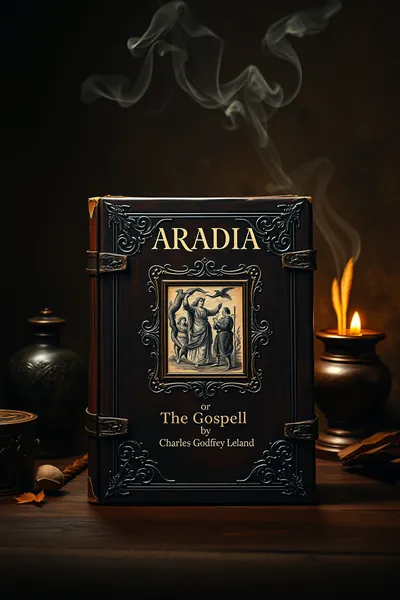
More Free Witchcraft & Paganism Books
View all →