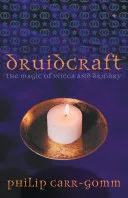
Druidcraft: The Magic of Wicca and Druidry
 81
81

Druidcraft: The Magic of Wicca and Druidry
Philip Carr-Gomm's "Druidcraft" offers a pragmatic exploration of the connections between Wicca and Druidry, two major currents in modern Paganism. The author, himself a prominent figure in Druidry, adopts a clear, accessible prose that avoids overly academic jargon. He effectively highlights shared origins and a common reverence for nature, which serves as the book's most compelling argument. A particular strength lies in his explanation of the Ninefold Path within Druidry, a concept that provides a structured framework for personal development. However, the work occasionally feels more like a sympathetic overview than a critical analysis, particularly when discussing the historical fluidity of both traditions. While Carr-Gomm acknowledges the divergence, the book could benefit from a deeper engagement with the more controversial aspects of early Wiccan history or the diverse, sometimes conflicting, interpretations within modern Druidry. Nonetheless, for those seeking a grounded introduction to these paths, "Druidcraft" provides a solid foundation.
📝 Description
81
Philip Carr-Gomm's 2014 book compares Wicca and Druidry, often called 'the Craft'.
Published in 2014, Druidcraft: The Magic of Wicca and Druidry by Philip Carr-Gomm offers a comparative look at two major Western Pagan paths. The book examines the shared historical connections and different practices of Wicca and Druidry. It aims to clarify the spiritual paths these nature-focused religions provide, noting their recent increase in popularity worldwide. This work is for people interested in modern Paganism, especially those who want to connect with nature-based spirituality. It is useful for beginners learning about Wicca and Druidry, as well as experienced followers seeking to understand the historical and conceptual links between these two spiritual systems. Individuals interested in comparing religions or Western esoteric studies will also find the book valuable. It places Wicca and Druidry within the wider context of Western esoteric thought and recent Pagan movements, acknowledging their British Isles origins and their development into separate yet related spiritual traditions. The text points to the current global growth of these paths, which stems from a need for spiritualities that highlight ecological consciousness and connection to the natural world.
This book fits within the study of modern Western esotericism, specifically the resurgence of Pagan traditions in the 20th and 21st centuries. It addresses the convergence and divergence of Wicca, a religion largely shaped by Gerald Gardner and others in the mid-20th century, and modern Druidry, which draws inspiration from ancient Celtic practices and was revived by figures like Iolo Morganwg. The text situates these paths within a broader movement seeking nature-based spiritualities and alternatives to mainstream religions, often emphasizing personal experience and ecological awareness.
💡 Why Read This Book?
• Understand the foundational similarities and differences between Wicca and Druidry, appreciating their shared emphasis on nature worship as explored in the book's comparative approach. • Gain insight into the Ninefold Path of Druidry, a specific conceptual framework for spiritual growth presented in the text, offering a structured method for personal practice. • Discover how both "the Craft" and Druidry are rooted in the British Isles, providing historical context for their modern global resurgence and connection to ecological spirituality.
⭐ Reader Reviews
Honest opinions from readers who have explored this book.
❓ Frequently Asked Questions
What is the main difference between Wicca and Druidry according to "Druidcraft"?
"Druidcraft" explains that while both traditions venerate nature and share roots in the British Isles, Wicca typically emphasizes ritual magic and a pantheon of God and Goddess, whereas Druidry focuses on a more direct connection with nature, ancestral wisdom, and a philosophical path often structured by concepts like the Ninefold Path.
When was "Druidcraft: The Magic of Wicca and Druidry" first published?
Philip Carr-Gomm's "Druidcraft: The Magic of Wicca and Druidry" was first published on March 27, 2014.
Does the book discuss the history of Paganism?
Yes, "Druidcraft" situates Wicca and Druidry within the historical context of the British Isles and their subsequent global revival, exploring their development as distinct yet related Western Pagan traditions.
Is "Druidcraft" suitable for beginners?
Yes, the book is suitable for beginners seeking an introduction to Wicca and Druidry, offering a clear overview of their core beliefs, practices, and shared spiritual ethos rooted in nature.
What does "the Craft" refer to in the book?
In "Druidcraft," "the Craft" is presented as a common term used to refer to Wicca, highlighting its association with magical practice and its place within the broader spectrum of Western Pagan traditions.
What is the significance of nature in "Druidcraft"?
Nature is central to "Druidcraft," serving as the primary spiritual focus for both Wicca and Druidry. The book explores how love of nature informs their practices, cosmologies, and the search for a spirituality rooted in the earth.
🔮 Key Themes & Symbolism
Nature as Sacred
The core of "Druidcraft" emphasizes nature as the primary locus of the sacred for both Wicca and Druidry. It details how practitioners find divinity not in distant deities alone, but immanently within the natural world—trees, rivers, seasons, and cycles. This perspective grounds their spirituality, fostering a sense of ecological responsibility and interconnectedness that contrasts with more anthropocentric religious systems.
Comparative Traditions
This work functions as a comparative study of two major Western Pagan streams: Wicca and Druidry. It highlights their shared origins in the British Isles and their subsequent divergence into distinct, yet related, paths. The book explores how "the Craft" (Wicca) and modern Druidry offer different, yet complementary, approaches to nature-based spirituality and magical practice.
Spiritual Renaissance
Carr-Gomm addresses the significant global resurgence of interest in both Wicca and Druidry. This renaissance is framed as a response to modern alienation, with individuals seeking authentic spiritual connections rooted in nature and ancient traditions. The book charts this contemporary revival, suggesting it fulfills a deep human need for meaning and belonging.
The Practice of Magic
Magic is presented as an integral component of both traditions, though perhaps more overtly in Wicca. In "Druidcraft," magic is understood not as manipulation, but as a way to align oneself with natural forces and enhance spiritual awareness. It's explored as a tool for personal growth, healing, and fostering a deeper relationship with the living world.
💬 Memorable Quotes
Direct passages from the work, attributed to the author.
“Druidry and Wicca... are the two great streams of the Western Pagan tradition.”
— This foundational statement establishes the book's central thesis: the interconnectedness and significance of these two nature-based spiritual paths within the broader context of Western esotericism.
“Both traditions originated in the British Isles.”
— This historical anchor grounds the discussion, linking contemporary Pagan practices to specific geographical and cultural roots, suggesting an ancestral lineage that appeals to practitioners.
“more and more people seek a spirituality rooted in a love of nature.”
— This observation points to the driving force behind the contemporary resurgence of Wicca and Druidry, identifying a widespread yearning for a nature-centered, earth-attuned spiritual path.
“also known as "the Craft"”
— This phrase serves as a concise identifier for Wicca, highlighting its common vernacular and its established place within the spectrum of modern Pagan practices discussed in the book.
“experiencing a renaissance all over the world”
— This points to the global expansion and renewed interest in these esoteric traditions, framing their current popularity as a significant spiritual movement of the modern era.
🌙 Esoteric Significance
Tradition
This work fits within the lineage of modern Western Esotericism, specifically the contemporary Pagan and Neo-Pagan movements. It engages with the revival and reinterpretation of ancient European traditions, particularly the perceived magical and nature-based spiritualities of Celtic Druidry and the Wiccan tradition, which itself draws from various esoteric currents including ceremonial magic and folklore.
Symbolism
Key symbols explored implicitly include the tree (representing connection to the earth and heavens, central to Druidic cosmology), the wheel of the year (marking seasonal cycles vital to both traditions' rituals and understanding of time), and the concept of "the Craft" itself, symbolizing the magical arts and the practitioner's skill in working with natural forces.
Modern Relevance
Contemporary thinkers and practitioners in both Wicca and Druidry continue to draw on comparative works like Carr-Gomm's. Its emphasis on nature spirituality resonates strongly with modern ecological concerns and the growing demand for earth-centered, non-dogmatic forms of religious expression in the 21st century.
👥 Who Should Read This Book
• Aspiring practitioners of nature-based spirituality seeking to understand the foundational elements of both Wicca and Druidry before committing to a specific path. • Students of comparative religion interested in the development and interrelation of modern Pagan traditions originating in the British Isles. • Individuals exploring alternative spiritualities who are drawn to a worldview emphasizing ecological connection, ritual, and personal magic.
📜 Historical Context
Philip Carr-Gomm's "Druidcraft" emerges within the context of the late 20th and early 21st-century Pagan revival, a period marked by renewed interest in pre-Christian European traditions. Published in 2014, it follows decades of scholarship and practice that saw figures like Gerald Gardner popularize Wicca from the mid-20th century onwards, and Philip Heselton and John Michael Greer contribute significantly to the modern reconstruction of Druidry. The book engages with the intellectual currents of comparative religion and Western esotericism, seeking to bridge the perceived gap between the magical practices of Wicca and the nature-philosophical path of Druidry. While not directly engaging in polemics, its existence implicitly addresses the need for clearer articulations of these traditions, countering both mainstream skepticism and internal sectarian divisions that characterized earlier periods. Its focus on shared roots in the British Isles places it within a lineage of scholarship exploring indigenous European spiritualities.
📔 Journal Prompts
The concept of "the Craft" as presented for Wicca and its relation to Druidic practices.
Reflect on the shared origins of Wicca and Druidry in the British Isles.
Consider the role of nature-based spirituality in addressing modern societal needs.
Analyze the significance of the seasonal cycles as described in relation to both traditions.
Explore personal connections to the symbolism of trees and natural elements within the book's framework.
🗂️ Glossary
The Craft
A colloquial term often used to refer to Wicca, emphasizing its magical practices and its status as a distinct spiritual tradition within modern Paganism.
Western Pagan Tradition
A broad category encompassing various nature-centered, polytheistic, or duotheistic spiritual paths originating from or inspired by the indigenous religions of Europe, including Wicca and Druidry.
Renaissance
In this context, refers to the significant resurgence and global growth of interest and practice in Wicca and Druidry during the late 20th and early 21st centuries.
Spirituality Rooted in Nature
A form of religious or spiritual practice that emphasizes the sacredness of the natural world, finding divinity and meaning in ecological systems, cycles, and phenomena.
British Isles
The geographical region comprising Great Britain, Ireland, and surrounding islands, cited as the historical origin point for both Wicca and modern Druidry.
Immanence
The philosophical or theological concept that the divine is present within the material world, as opposed to being transcendent or existing entirely outside of it.
Ninefold Path
A specific conceptual framework within some modern Druidic traditions, outlining a set of virtues or stages for personal and spiritual development.