Applied Dhamma
 78
78

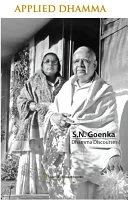
Applied Dhamma
S.N. Goenka's *Applied Dhamma* presents a compelling case for the relevance of ancient Buddhist ethics in the modern world. What distinguishes this collection is its relentless focus on the 'how-to' of spiritual practice. Goenka, through numerous talks, dispenses with theoretical debates, instead offering direct guidance on integrating principles like *sila* (ethical conduct) and *samadhi* (concentration) into the fabric of daily life. A particular strength lies in the sheer breadth of contexts addressed; the book's utility is demonstrated for everyone from prisoners to CEOs. However, the sheer volume of talks, while comprehensive, can lead to some repetition. One particularly resonant section details how to maintain equanimity when faced with criticism in a professional setting, illustrating the application of *anicca* (impermanence) to emotional responses. While lacking the structured progression of a single treatise, *Applied Dhamma* serves as a vital resource for those committed to embodying their spiritual path.
📝 Description
78
S.N. Goenka's 2006 book collects discourses demonstrating Dhamma's practical application.
Applied Dhamma presents S.N. Goenka's teachings on integrating Buddhist principles, particularly Vipassana meditation, into daily life. These discourses, delivered over many years, move past theoretical discussions to offer concrete methods for ethical conduct and mental discipline. The book aims to guide anyone seeking to apply spiritual insights within secular settings, whether in professional roles, family life, or during times of personal challenge. It addresses the universal human need for inner peace and ethical clarity.
The material is relevant for individuals from all walks of life, including students, business leaders, public servants, and those in caregiving roles. Goenka's approach emphasizes experiential understanding and practical application, making the teachings accessible to a broad audience. Anyone facing ethical questions or striving for greater mental calm amidst life's demands will find valuable guidance here. The book encourages the cultivation of an equanimous mind and ethical behavior as pathways to deeper awareness.
Goenka's teachings belong to the Theravada tradition of Burma, emphasizing direct, experiential insight through Vipassana meditation. This approach emerged in the West during the latter half of the 20th century, offering an alternative to more philosophical or syncretic Buddhist interpretations. His method focuses on the rigorous, disciplined practice of observing sensations to understand impermanence, suffering, and non-self, making the path to liberation accessible to householders rather than solely monastics.
💡 Why Read This Book?
• Learn to apply *vipassana* meditation techniques to specific professional challenges, moving beyond theory to practical, day-to-day problem-solving. • Discover how the principle of *anicca* (impermanence) can be consciously used to manage emotional reactions in demanding social and personal interactions. • Gain actionable strategies for cultivating *sila* (ethical conduct) in diverse environments, as demonstrated through examples drawn from Goenka's 20th-century teaching experiences.
⭐ Reader Reviews
Honest opinions from readers who have explored this book.
❓ Frequently Asked Questions
What is the core principle of S.N. Goenka's 'Applied Dhamma'?
The core principle is the practical application of Buddha's teachings (Dhamma) in everyday life. It emphasizes integrating ethical conduct (*sila*) and Vipassana meditation into personal, professional, and social spheres, moving beyond mere theoretical understanding.
Who is S.N. Goenka and why is his work significant?
S.N. Goenka (1924-2013) was a renowned teacher of Vipassana meditation who brought the technique from Burma to India and then globally. His approach, emphasizing direct experience over dogma, has made Buddhist meditation accessible to millions worldwide since the mid-20th century.
How does 'Applied Dhamma' differ from theoretical Buddhist texts?
Unlike texts focused purely on philosophy, 'Applied Dhamma' provides concrete guidance and examples for implementing Buddhist principles in real-world situations. It addresses specific challenges faced by various professions and social roles.
What is Vipassana meditation as taught by S.N. Goenka?
Vipassana, meaning 'to see things as they really are,' is a meditation technique focused on observing reality through bodily sensations. Goenka's method teaches practitioners to develop equanimity and insight by observing impermanence (*anicca*).
Can individuals with no prior Buddhist knowledge benefit from 'Applied Dhamma'?
Yes, the book is designed for a broad audience, including those new to Buddhist concepts. Goenka explains principles in accessible terms, focusing on universal human experiences and practical ethics rather than religious dogma.
When was 'Applied Dhamma' first published?
The collection of talks that form 'Applied Dhamma' draws from teachings delivered over many years by S.N. Goenka, with the compiled work first published on December 5, 2025.
🔮 Key Themes & Symbolism
Dhamma in Daily Life
This theme underscores the central argument that Buddhist teachings are not confined to monastic settings but are essential tools for reading through the complexities of modern existence. S.N. Goenka illustrates how principles like *anicca* (impermanence), *dukkha* (suffering), and *anatta* (non-self) can be directly applied to reduce stress, improve interpersonal relationships, and foster ethical decision-making in professional and personal spheres. The work stresses that true understanding comes from direct experience, not just intellectual assent, making the practice of Dhamma a continuous, active engagement with reality.
Vipassana as a Practical Tool
The collection highlights Vipassana meditation not as an esoteric ritual but as a pragmatic method for mental purification and self-awareness. Goenka explains how the systematic observation of bodily sensations cultivates equanimity, enabling practitioners to respond to situations with clarity rather than reactive emotion. This theme is explored through various contexts, showing how Vipassana can enhance focus in students, build resilience in leaders, and promote calm understanding in challenging environments, such as prisons or high-pressure workplaces.
Ethical Conduct (Sila)
A significant focus is placed on *sila*, or ethical conduct, as the indispensable foundation for meditation and wisdom. Goenka argues that genuine spiritual progress is impossible without abstaining from harmful actions—killing, stealing, sexual misconduct, lying, and intoxicants. The talks illustrate how cultivating *sila* fosters inner peace and creates harmonious social interactions, providing practical advice on upholding ethical standards in diverse and often compromising situations encountered by professionals, law enforcement, and ordinary citizens.
Universal Applicability
Applied Dhamma champions the universality of the Buddha's teachings, asserting their relevance across all cultural, religious, and social boundaries. S.N. Goenka deliberately avoids sectarian language, focusing on the core psychological and ethical principles that can benefit anyone seeking to live a more peaceful and meaningful life. The inclusion of diverse audiences—from prisoners to business executives—demonstrates the adaptability of these ancient techniques to contemporary human challenges, irrespective of background.
💬 Memorable Quotes
Direct passages from the work, attributed to the author.
“The path of Dhamma is not for escaping the world, but for living in the world with wisdom and compassion.”
— This statement captures the book's core message: spiritual practice is not an abdication of worldly responsibilities but a method for engaging with them more effectively and ethically. It highlights the practical, 'applied' nature of the teachings.
“Every action rooted in anger or aversion creates more suffering for oneself and others.”
— This highlights the practical application of ethical conduct (*sila*) and mental training. It explains the causal link between negative emotional states and the creation of suffering, advocating for mindful responses instead.
“The mind has the power to remain balanced, even amidst turmoil.”
— This interpretation speaks to the goal of Vipassana meditation: developing equanimity. It suggests that inner peace is achievable not by changing external circumstances, but by training the mind to remain stable regardless of conditions.
“True understanding arises not from reading books, but from observing reality within.”
— This emphasizes the experiential nature of the Dhamma path as taught by Goenka. It contrasts intellectual knowledge with direct, embodied insight gained through practices like Vipassana meditation.
💡 Key Ideas
Editorial paraphrase of the work's core concepts — not direct quotes.
Observe your breath, observe your sensations, and you will begin to observe the truth of impermanence.
This quote points directly to the Vipassana technique taught by Goenka. It links the physical act of meditation (observing breath and sensations) to the profound philosophical understanding of *anicca*, emphasizing direct experience as the source of insight.
🌙 Esoteric Significance
Tradition
While S.N. Goenka's teachings are rooted in the Theravada Buddhist tradition, their emphasis on direct experiential insight and mind-body connection places them within a broader esoteric framework concerned with consciousness transformation. Esoterically, the path of Vipassana can be seen as a practical method for accessing subtle levels of awareness and understanding the fundamental nature of reality, akin to contemplative practices found in other mystical lineages that seek direct apprehension of truth beyond dogma.
Symbolism
The primary 'symbol' in Goenka's teachings is the breath, representing the constant flow of *anicca* (impermanence) and the anchor for present-moment awareness. Bodily sensations serve as a map of the practitioner's internal state, revealing the interplay of mind and matter. The concept of *sankharas* (mental formations) represents the conditioned patterns of reaction that Vipassana aims to dissolve, symbolizing the hidden architecture of the psyche that binds one to suffering.
Modern Relevance
Contemporary mindfulness movements, secularized meditation apps, and stress-reduction programs in corporate settings owe a significant debt to the popularization of Vipassana techniques by Goenka and his students. Thinkers and practitioners in fields ranging from positive psychology to neuroscience are exploring the empirically verifiable effects of sustained meditation practice, often drawing implicitly or explicitly on the methods disseminated by his global organization.
👥 Who Should Read This Book
• Individuals seeking practical methods to manage stress and emotional reactivity in demanding professions, drawing on techniques tested since the mid-20th century. • Students of comparative religion and philosophy interested in the experiential application of Buddhist principles beyond academic study. • Anyone looking for a structured, non-dogmatic approach to self-discovery and ethical living, applicable across diverse cultural and belief systems.
📜 Historical Context
S.N. Goenka's teachings emerged in the latter half of the 20th century, a period characterized by a growing Western interest in Eastern contemplative traditions, often mediated through popular figures like Alan Watts who presented more syncretic forms of Buddhism. Goenka's approach, however, remained strictly within the Burmese Theravada tradition, emphasizing the original teachings of the Buddha as preserved in the Pali Canon. His method of Vipassana meditation, transmitted through intensive 10-day courses, offered a direct, non-sectarian, and experiential path that contrasted with the more philosophical or ritualistic Buddhist practices sometimes encountered. While mainstream academia focused on textual analysis and comparative religion, Goenka's work emphasized practical application for the layperson, resonating with a global audience seeking relief from modern anxieties. His teachings gained significant traction throughout the 1970s and 1980s, establishing a worldwide network of meditation centers.
📔 Journal Prompts
The application of *sila* in professional interactions.
Cultivating equanimity during moments of personal difficulty.
Observing the impermanence (*anicca*) of passing thoughts.
Translating the awareness of bodily sensations into daily actions.
The role of non-reactivity in resolving interpersonal conflicts.
🗂️ Glossary
Dhamma
The teachings of the Buddha, encompassing his insights into the nature of reality, ethics, and the path to liberation. In a broader sense, it refers to the natural law or the way things are.
Vipassana
A meditation technique meaning 'to see things as they really are.' It involves observing reality, particularly bodily sensations and mental processes, with equanimity to gain insight into impermanence, suffering, and non-self.
Anicca
The Pali word for impermanence. It refers to the fundamental characteristic of all conditioned phenomena—that they are in a constant state of flux and change.
Sila
Ethical conduct or morality. It forms the foundation of the path, involving abstaining from harmful actions and cultivating wholesome ones, essential for mental purification.
Samadhi
Concentration or mental absorption. It refers to the state of focused attention achieved through meditation, which provides a stable platform for developing wisdom.
Dukkha
Often translated as suffering, dissatisfaction, or unease. It points to the inherent unsatisfactoriness of conditioned existence due to impermanence and attachment.
Anatta
Non-self or egolessness. The doctrine that there is no permanent, unchanging, independent self or soul within phenomena.
This book appears in 1 collection
🔮 Readers Also Liked
Browse all →









From the “Vipassana” Collection
View all →






More Free Occult Philosophy Books
View all →