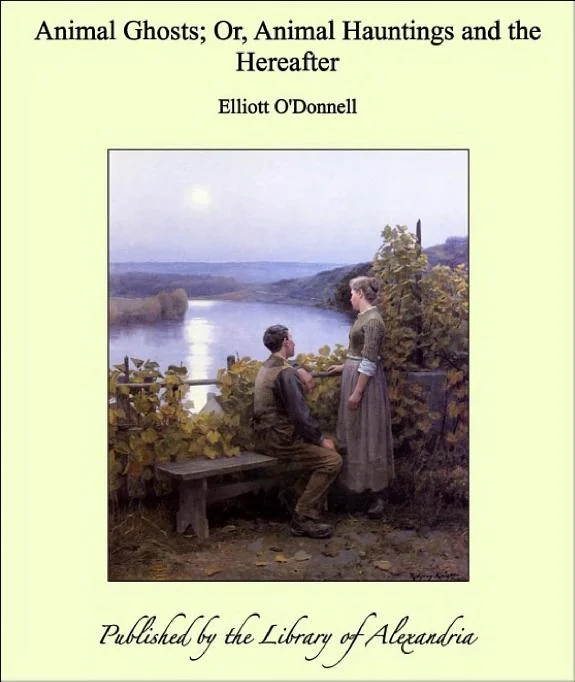
Animal Ghosts; Or, Animal Hauntings and the Hereafter
 72
72

Animal Ghosts; Or, Animal Hauntings and the Hereafter
Elliott O'Donnell's "Animal Ghosts" offers a curious window into early 20th-century beliefs about the spirit world, specifically concerning our animal companions. The strength of the work lies in its sheer volume of collected anecdotes, painting a picture of a time when the spiritual persistence of animals was a more widely debated notion. O'Donnell's conviction is palpable, even if his methodology is strictly anecdotal. A significant limitation, however, is the lack of critical analysis; the author presents each story with a degree of credulity that may strain modern readers. The passage detailing spectral dogs guarding old estates, while evocative, exemplifies this uncritical approach. Ultimately, "Animal Ghosts" serves as a historical artifact of spiritualist inquiry rather than a definitive exploration of the subject.
📝 Description
72
Elliott O'Donnell's 1913 book, Animal Ghosts, examines spectral animal phenomena and their persistence after death.
Elliott O'Donnell's 1913 work, Animal Ghosts; Or, Animal Hauntings and the Hereafter, presents a collection of accounts and theories concerning animal spirits. O'Donnell, known for his writings on the supernatural, compiled evidence suggesting that animals possess souls capable of remaining in the world after their physical bodies cease to exist. This book leans more towards anecdotal accounts and speculation than strict scholarly research, aiming to convince readers of the reality of animal hauntings. It covers a range of phenomena involving both domestic and wild animals, considering possible motivations for their post-mortem manifestations.
The book is best suited for those interested in the spiritualist movements of the late Victorian and Edwardian eras, historical paranormal investigations, and folklore surrounding animal spirituality. Readers accustomed to modern empirical standards for paranormal evidence may find O'Donnell's approach differs significantly. The work offers insight into the period's broader fascination with the afterlife and communication with the deceased, extending these inquiries to include the animal kingdom.
Published in 1913, "Animal Ghosts" appeared during a peak period of interest in spiritualism and the occult, following the death of Queen Victoria and amid the active investigations of the Society for Psychical Research. This era saw a widespread cultural focus on the afterlife and communication with spirits. O'Donnell's work taps into this fascination by extending the discourse on spiritual survival and post-mortem phenomena to the animal kingdom, a subject less commonly addressed within mainstream spiritualist circles of the time.
💡 Why Read This Book?
• Gain insight into early 20th-century spiritualist beliefs by examining O'Donnell's compilation of spectral animal accounts from his 1913 publication. • Understand the historical context of paranormal investigation concerning non-human entities, a perspective often overlooked in modern ghost studies. • Explore the concept of the animal soul and its potential for post-mortem manifestation as presented in "Animal Ghosts," a core theme of the book.
⭐ Reader Reviews
Honest opinions from readers who have explored this book.
❓ Frequently Asked Questions
What is the primary focus of Elliott O'Donnell's "Animal Ghosts"?
The book primarily focuses on collecting and analyzing anecdotal evidence and theories concerning animal hauntings and the persistence of animal consciousness after death, as published in 1913.
When was "Animal Ghosts" first published?
"Animal Ghosts; Or, Animal Hauntings and the Hereafter" was first published on January 1, 1913.
Does the book provide scientific evidence for animal ghosts?
No, the book relies heavily on anecdotal accounts and speculative reasoning rather than empirical or scientific evidence, reflecting the nature of paranormal literature from its era.
What kind of animals does O'Donnell discuss in "Animal Ghosts"?
O'Donnell discusses a wide range of animals, including beloved pets like dogs and cats, as well as wild creatures, examining their potential to manifest as spectral entities.
Who is Elliott O'Donnell and what is his background?
Elliott O'Donnell was a prolific writer on the supernatural, particularly ghosts and hauntings, active in the early 20th century. "Animal Ghosts" is one of his many works exploring the spectral realm.
Is "Animal Ghosts" available online for free?
As a work published in 1913, "Animal Ghosts" is in the public domain and is often available for free online through digital archives and libraries.
🔮 Key Themes & Symbolism
The Animal Soul
O'Donnell posits that animals possess a distinct soul or spirit capable of surviving physical death, a concept central to "Animal Ghosts." This enduring spiritual essence, he argues, is the source of spectral manifestations. The book explores various types of animal spirits, from loyal pets to wilder entities, suggesting their appearances are tied to emotional bonds, unresolved issues, or territorial claims. This perspective challenges anthropocentric views of the afterlife prevalent in some spiritualist circles of the early 20th century, granting animals a recognized place in the post-mortem realm.
Manifestations of Animal Hauntings
The work meticulously catalogues different forms animal hauntings can take, as documented in the early 1900s. These range from auditory phenomena, such as phantom footsteps or cries, to visual apparitions of animals in familiar or unexpected locations. O'Donnell categorizes these hauntings, considering factors like the animal's species, its relationship with living humans, and the perceived reason for its lingering presence. The book details instances of spectral animals appearing to warn of danger, comfort the grieving, or simply occupy their former territories.
Belief Systems of the Era
"Animal Ghosts" reflects the broader spiritualist and occult milieu of the early 20th century. The collection of anecdotes and O'Donnell's earnest approach align with a period when the investigation of the paranormal, including the nature of consciousness and the afterlife, was gaining academic and popular traction. The book’s reception and content are indicative of a cultural landscape open to the idea of spirits beyond the human, particularly in a time influenced by movements like Theosophy and widespread spiritualist séances.
The Unseen Connection
A core theme is the profound, often unseen, connection between animals and humans that transcends physical life. O'Donnell presents numerous accounts where the lingering presence of an animal spirit is attributed to a deep affection or loyalty formed during its life. This suggests that the emotional and energetic imprints left by animals are potent enough to create enduring spectral phenomena, offering a perspective on interspecies bonds that extends into the metaphysical.
💬 Memorable Quotes
Direct passages from the work, attributed to the author.
“The spirits of animals, like those of men, may be drawn to those they loved.”
— This interpretation underscores the belief that emotional bonds are a primary factor in post-mortem manifestations, implying that the love between humans and animals creates a spiritual tether.
“The appearance of animal ghosts is not necessarily confined to their former haunts.”
— This concept suggests that animal spirits can appear in places beyond their familiar environments, perhaps drawn by the presence of specific individuals or significant emotional events.
“Many a time has a cat's phantom been seen to leap on the bed of its deceased mistress.”
— This illustrates the intimate and familiar nature of some animal hauntings, where spectral pets continue to interact with their owners in ways that echo their living behavior.
“The terror caused by a phantom animal may be as great as that caused by a human spectre.”
— This emphasizes the perceived reality and impact of animal apparitions, suggesting they are not diminished by their non-human origin but can evoke genuine fear and awe.
💡 Key Ideas
Editorial paraphrase of the work's core concepts — not direct quotes.
A dog's ghost, for instance, will often be seen in the place it was accustomed to guard.
This quote highlights O'Donnell's categorization of animal hauntings, suggesting that spectral animal behavior mirrors their earthly routines and attachments, particularly loyalty and territoriality.
🌙 Esoteric Significance
Tradition
O'Donnell's work sits loosely within the broader tradition of Western esotericism, particularly influenced by spiritualism and early parapsychology. While not strictly Hermetic or Kabbalistic, it engages with the concept of a persistent soul or consciousness that can interact with the material world, a theme present across many esoteric lineages. It departs from more structured magical systems by focusing on anecdotal evidence and a generalized belief in post-mortem survival, aligning more with the empirical, albeit subjective, investigations of psychical research at the turn of the 20th century.
Symbolism
The primary symbolism in "Animal Ghosts" revolves around the animal itself as a symbol of enduring loyalty, instinct, and primal connection. A spectral dog often symbolizes unwavering guardianship or affection, while a cat might represent independence or a comforting, domestic presence. These animal forms serve as potent symbols of the spiritual energy and emotional imprints left behind by living creatures, signifying that the bonds formed in life have metaphysical weight and can manifest visibly.
Modern Relevance
Contemporary paranormal investigators and animal communicators often draw upon the foundational ideas presented in works like "Animal Ghosts." While methodology has evolved, the core concept of animals possessing spirits that can linger or communicate appeals to modern pet bereavement counselors and those exploring interspecies telepathy. The book's legacy lies in its early, albeit uncritical, validation of the idea that animals have a significant afterlife, influencing subsequent explorations in cryptozoology and spiritualist interpretations of animal consciousness.
👥 Who Should Read This Book
• Researchers of paranormal history: Those interested in the evolution of ghostlore and spiritualism will find this a valuable primary source on early 20th-century beliefs. • Enthusiasts of animal spirituality: Readers fascinated by the concept of animal souls and their potential for post-mortem existence will appreciate O'Donnell's extensive anecdotal evidence. • Comparative folklorists: Scholars studying cross-cultural beliefs about the afterlife, spirits, and the animal kingdom will find this work offers a specific Western perspective from 1913.
📜 Historical Context
Published in 1913, Elliott O'Donnell's "Animal Ghosts" emerged during a fervent period for spiritualism and psychical research. The Society for Psychical Research, founded in 1882, was actively investigating phenomena like apparitions and mediumship, while figures like Sir Arthur Conan Doyle championed the belief in life after death. O'Donnell's work tapped into this widespread fascination with the unseen, extending the discourse on ghosts beyond human spirits to include animals. This was a departure from some mainstream spiritualist circles that focused primarily on human communication, though Theosophy, with its broader metaphysical scope, was gaining traction and might have offered a parallel interest in animal consciousness. The book's reception was likely mixed, aligning with believers in the spiritual persistence of animals while being dismissed by skeptics or those with more anthropocentric views of the soul.
📔 Journal Prompts
The concept of the animal soul and its post-mortem persistence.
Manifestations of animal hauntings and their perceived causes.
The enduring loyalty symbolized by spectral animal appearances.
The role of emotional bonds in creating spectral animal phenomena.
The historical context of "Animal Ghosts" within early 20th-century spiritualism.
🗂️ Glossary
Animal Ghosts
Spectral apparitions or phenomena attributed to deceased animals, as explored in Elliott O'Donnell's 1913 book.
Hereafter
The state or period of existence after death; the afterlife, in this context, specifically concerning animals.
Spectral Manifestation
The appearance or sensory experience (visual, auditory, etc.) of a ghost or spirit, applied here to animal entities.
Animal Soul
The spiritual or vital essence of an animal, believed by O'Donnell and others to survive physical death and potentially manifest.
Haunting
The phenomenon of a ghost or spirit repeatedly appearing or making its presence known in a particular place or to specific individuals.
Spiritualism
A religious movement based on the belief that the spirits of the dead can communicate with the living, popular in the late 19th and early 20th centuries.
Anecdotal Evidence
Evidence based on personal accounts or stories rather than systematic scientific observation or experimentation.
This book appears in 1 collection
🔮 Readers Also Liked
Browse all →








From the “Apparitions” Collection
View all →
More Free Occult Philosophy Books
View all →