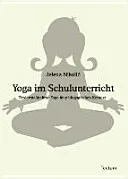
Yoga im Schulunterricht
 80
80

Yoga im Schulunterricht
Jelena Nikolić's Yoga im Schulunterricht offers a pragmatic framework for educators eager to introduce yoga into the classroom, moving beyond mere physical exercise. The strength of the book lies in its clear, step-by-step approach, making complex yogic concepts accessible for a non-specialist audience. A particularly compelling section details how simple *asana* modifications can support students with attention difficulties. However, the work could benefit from more extensive case studies illustrating long-term impacts across diverse school populations. Despite this, Nikolić provides a valuable resource for enriching the educational experience through ancient practices.
📝 Description
80
Jelena Nikolić's 2011 book Yoga im Schulunterricht details bringing yoga into schools.
First published in 2011, Yoga im Schulunterricht by Jelena Nikolić offers a structured method for incorporating yoga into educational settings. The book goes beyond physical poses to highlight yoga's broad benefits for students' minds, emotions, and learning. It gives teachers practical advice on how to introduce yoga, explaining how to adapt traditional methods for a school environment. The text is aimed at educators, school leaders, and psychologists interested in new teaching approaches. Yoga instructors looking to teach in schools, and parents curious about yoga's impact on children's well-being and schoolwork, will also find it useful. Those involved in developing curricula or school health programs can use the strategies presented.
The early 2010s saw increased interest in mindfulness within Western education, partly due to worries about student stress. Nikolić's work fits into this trend, which aimed to blend Eastern contemplative practices with secular schooling. While this movement sometimes met resistance from established educational groups, pilot programs and research showing positive results helped it gain acceptance. The book discusses yogic ideas like *pratyahara* (sense withdrawal) and *dharana* (concentration) to improve focus in class. It also covers *asana* (postures) as tools for self-control, not just for physical health. Techniques like mindful breathing (*pranayama*) are shown as ways to reduce anxiety and boost emotional understanding in students. The book also touches on yogic philosophy about interconnectedness.
This book is situated within the modern trend of adapting Eastern contemplative practices for Western secular contexts, particularly education. It draws from classical yogic concepts, translating principles like sense withdrawal (*pratyahara*), concentration (*dharana*), and breathwork (*pranayama*) into accessible classroom tools. While the book focuses on practical application, its underlying framework acknowledges the yogic understanding of mind-body unity and the potential for these practices to foster inner balance and self-awareness, extending beyond mere stress reduction to a form of spiritual development adapted for a younger demographic.
💡 Why Read This Book?
• Gain specific techniques for using *asana* and *pranayama* to foster student concentration, drawing directly from Chapter 3's practical exercises. • Understand how to adapt yogic principles like *dharana* for classroom management, as outlined in the section on mindful attention. • Discover strategies for integrating holistic well-being practices into the curriculum, referencing the early 2010s educational shift discussed in the historical context.
⭐ Reader Reviews
Honest opinions from readers who have explored this book.
❓ Frequently Asked Questions
What age groups is Yoga im Schulunterricht suitable for?
The book provides adaptable strategies for various age groups, from primary school children to adolescents. Nikolić focuses on modifying poses and breathing exercises to suit developmental stages, making it relevant for educators across the K-12 spectrum.
Does the book require prior yoga knowledge for teachers?
No, the book is designed for educators with little to no prior yoga experience. It explains foundational concepts and poses clearly, aiming to equip teachers with the necessary understanding to introduce yoga safely and effectively.
What are the main benefits of yoga in schools discussed in the book?
The book highlights benefits such as improved focus, stress reduction, enhanced emotional regulation, and better physical health. Nikolić emphasizes how these contribute to a more positive learning environment and overall student well-being.
Are there specific chapters dedicated to different aspects of yoga?
Yes, the book is structured to cover various facets, including dedicated sections on *asana* (physical postures), *pranayama* (breathing techniques), and mindfulness practices, alongside pedagogical approaches for implementation.
When was Yoga im Schulunterricht first published?
Yoga im Schulunterricht was first published in 2011, placing its emergence within a period of growing interest in mindfulness and contemplative practices in Western education.
Can this book help with student behavioral issues?
Yes, the book suggests that practices like mindful breathing (*pranayama*) and focused attention (*dharana*) can help students develop self-regulation skills, potentially leading to improved behavior and reduced classroom disruption.
🔮 Key Themes & Symbolism
Pedagogy of Presence
The work champions a 'pedagogy of presence,' advocating for educators to cultivate mindful awareness as a foundational element of teaching. This involves not just delivering content but being fully present with students, fostering an environment of calm and focused attention. Nikolić suggests that by integrating practices like mindful breathing (*pranayama*), teachers can model self-regulation and create a more conducive atmosphere for learning. This approach shifts the focus from external discipline to internal cultivation, empowering both teacher and student.
Holistic Student Development
Yoga im Schulunterricht posits that true education addresses the whole student—mind, body, and spirit. It argues against a purely academic focus, proposing that integrating yogic principles supports emotional intelligence, stress management, and physical well-being. By introducing concepts like *asana* for physical grounding and *dharana* for mental focus, the book aims to equip students with tools for navigating life's challenges, fostering resilience and a balanced approach to learning and personal growth.
Adaptation of Ancient Practices
A central theme is the skillful adaptation of ancient yogic traditions for a modern, secular educational context. Nikolić addresses the challenge of translating esoteric concepts into practical, accessible classroom activities. This involves understanding the underlying principles of practices like *pratyahara* (sense withdrawal) and presenting them in ways that are relevant and beneficial to students without requiring deep philosophical immersion. The book provides a model for how timeless wisdom can be recontextualized for contemporary needs.
Mind-Body Connection in Learning
The book strongly emphasizes the interconnectedness of the mind and body in the learning process. It challenges the Cartesian separation of mental and physical faculties, arguing that physical states profoundly influence cognitive abilities and emotional states. Through techniques such as focused breathing and mindful movement, Nikolić illustrates how students can achieve greater mental clarity and emotional stability, thereby enhancing their capacity for learning and academic achievement.
💬 Memorable Quotes
Direct passages from the work, attributed to the author.
“The classroom is a space where the mind's concentration can be cultivated through quiet stillness.”
— This highlights the book's core idea: that the school environment, often perceived as chaotic, can be intentionally structured to foster mental focus using yogic principles of quietude and attention training.
“Simple breathing exercises can anchor a restless student in the present moment.”
— This emphasizes the practical, accessible nature of yogic techniques like *pranayama*. It suggests that even basic breathwork can have a significant impact on a student's ability to manage restlessness and engage with their immediate surroundings.
“Physical postures are not mere exercises but tools for self-awareness and emotional balance.”
— This reframes *asana* beyond physical fitness, positioning it as a method for students to connect with their internal states, understand their emotions, and develop greater self-control.
“Introducing elements of yogic philosophy requires careful translation for a secular audience.”
— This acknowledges the potential challenges in presenting esoteric concepts within a mainstream educational setting, stressing the need for sensitive and context-appropriate communication.
“The goal is not to create yogis, but to foster calmer, more focused, and resilient learners.”
— This clarifies the book's pragmatic aim: to leverage yoga's benefits for educational enhancement rather than religious indoctrination, focusing on tangible improvements in student conduct and learning.
🌙 Esoteric Significance
Tradition
While not explicitly aligning with a singular esoteric lineage, *Yoga im Schulunterricht* draws heavily from the Hatha Yoga tradition, which itself has roots in Tantric and broader Indian yogic philosophies. Its adaptation for a secular context involves carefully extracting practical applications of concepts like *pranayama* (breath control) and *asana* (postures) while often de-emphasizing the more overtly spiritual or devotional aspects found in classical yogic texts. The work functions as a bridge, translating esoteric principles into accessible tools for modern psychological and educational benefit.
Symbolism
The book utilizes the symbolism inherent in yogic practice, reinterpreting it for educational purposes. The 'Lotus Position' (*Padmasana*), for instance, while a symbol of enlightenment in many traditions, is presented here as a posture that encourages stable grounding and focused sitting. Similarly, the concept of *nadis* (energy channels) is simplified to explain how breathwork can influence a student's internal state of calm or energy, making the esoteric understandable through physiological effects.
Modern Relevance
Contemporary educational psychology and school wellness programs frequently incorporate elements discussed in Nikolić's work. Schools globally are exploring mindfulness, yoga, and social-emotional learning (SEL) initiatives, directly reflecting the principles advocated in *Yoga im Schulunterricht*. Thinkers in the field of educational neuroscience and practitioners focused on trauma-informed teaching often cite the benefits of somatic practices for regulation, aligning with the book's emphasis on the mind-body connection in learning.
👥 Who Should Read This Book
• Educators seeking practical, evidence-informed methods to enhance student focus and reduce classroom stress, drawing from Chapter 4's techniques for mindful attention. • Yoga instructors interested in developing curricula for institutional settings, benefiting from the adaptation strategies outlined in the book's pedagogical sections. • School administrators and curriculum developers looking to integrate holistic well-being practices, informed by the early 2010s educational trends discussed historically.
📜 Historical Context
First published in 2011, Jelena Nikolić's *Yoga im Schulunterricht* emerged during a period of heightened awareness regarding mental health and well-being in educational systems worldwide. The early 2010s saw a surge in interest in mindfulness-based interventions and contemplative practices as potential tools to address rising student anxiety and attention deficits. This era was marked by initiatives like the 'Mind, Brain, and Education' movement, which sought to bridge scientific understanding with pedagogical application. Nikolić's work fit into this broader trend, offering a concrete methodology for integrating yoga, a practice often associated with spiritual traditions, into secular school curricula. While contemporary figures like Jon Kabat-Zinn had already popularized secular mindfulness, Nikolić focused specifically on the structured application of yoga postures (*asana*) and breathing techniques (*pranayama*) within the classroom, differentiating her approach. The reception of such works often involved navigating skepticism from traditional educators concerned about time constraints and the potential for 'spiritualizing' the curriculum, yet pilot programs and research began to build a case for its efficacy.
📔 Journal Prompts
The classroom application of *dharana* for sustained focus.
Adapting *asana* for diverse student needs.
The role of *pranayama* in emotional regulation.
Reflecting on the mind-body connection in learning.
Cultivating teacher presence through mindful practice.
🗂️ Glossary
Asana
Refers to physical postures in yoga. In the context of the book, these are adapted for classroom use to promote physical health, body awareness, and a calm demeanor.
Pranayama
The practice of breath control or regulation. The book details specific breathing exercises designed to calm the nervous system, improve concentration, and manage stress in students.
Dharana
A yogic concept signifying concentration or focused attention. The book explores how to cultivate this skill in students to enhance their ability to learn and engage with material.
Pratyahara
The practice of withdrawing the senses from external distractions. It's presented as a method to help students focus inward and reduce susceptibility to classroom disruptions.
Mindful Awareness
A state of present-moment consciousness without judgment. The book advocates for teachers and students to cultivate this, fostering a more focused and less reactive learning environment.
Holistic Education
An approach to learning that considers the whole person—intellectual, emotional, physical, and social well-being—rather than focusing solely on academic achievement.
Self-Regulation
The ability to manage one's emotions, behaviors, and thoughts effectively. Yoga practices are presented as tools to help students develop this crucial skill.