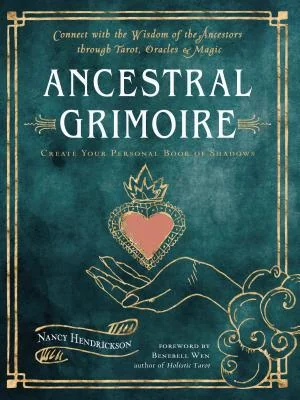
Ancestral Grimoire
 78
78

Ancestral Grimoire
Nancy Hendrickson’s ‘Ancestral Grimoire’ offers a refreshing, action-oriented approach to the concept of a personal Book of Shadows. Instead of presenting a finished product, Hendrickson guides the reader through the *process* of creation. Her emphasis on the grimoire as a living document, evolving with the practitioner, is its strongest asset. The section detailing the organizational structure for recording spells and observations, particularly the suggested categorization of 'intent,' 'method,' and 'outcome,' provides a solid, methodical framework. However, the work could benefit from more explicit engagement with the historical lineage of grimoires beyond the 2022 publication context; while it champions personal creation, a deeper dive into how earlier practitioners documented their work—even if different in format—would add valuable comparative depth. The core strength lies in its immediate applicability for the solitary practitioner seeking structure. The verdict: A pragmatic handbook for building one's own magical archive.
📝 Description
78
Nancy Hendrickson's 'Ancestral Grimoire' (2022) guides readers to build their own magical record.
This book details how to construct a personal grimoire, often called a Book of Shadows. It moves past theory to give practitioners a structure for documenting their own magical insights, rituals, and observations. The aim is to create a unique, growing document that changes with the user's magical path, not a fixed collection of spells.
It is for individuals already practicing magic who want to organize and deepen their knowledge through personal notes. The approach suits those who prefer self discovery and personal magical systems over following one specific tradition. New witches, solitary practitioners, and anyone interested in grimoires as personal tools will find its methods useful.
The core idea is the 'personal grimoire' as a tool for active magical growth. This requires understanding basic magical elements—intent, energy work, correspondences, and ritual structure—and developing ways to record and analyze them. The grimoire is shown as more than a place for spells; it is a dynamic journal of spiritual development, a space for insights, testing ideas, and tracking energetic shifts.
Published in 2022, 'Ancestral Grimoire' appears as personal, handwritten magical records gain traction amidst digital abundance. Unlike historical grimoires, often compilations or dictated works, Hendrickson's book promotes building a modern personal grimoire. This aligns with contemporary esoteric trends that emphasize individual spiritual authority and experiential knowledge, diverging from the more structured doctrines found in movements like Theosophy or certain ceremonial orders.
💡 Why Read This Book?
• Learn to construct a personalized magical record-keeping system, moving beyond generic spell collections to document your unique magical journey, as detailed in the 'personal grimoire' concept. • Gain practical methods for organizing your magical practice, including specific frameworks for noting intent, method, and observed outcomes, directly applicable to your own ritual logs. • Understand the grimoire not just as a static spellbook, but as a dynamic tool for spiritual growth and self-discovery, fostering a deeper, experiential connection with your practice.
⭐ Reader Reviews
Honest opinions from readers who have explored this book.
❓ Frequently Asked Questions
What is a 'personal grimoire' as presented in Ancestral Grimoire?
A personal grimoire is a custom-created magical text where practitioners document their unique spells, rituals, observations, and insights. 'Ancestral Grimoire' guides users to build this living document, reflecting their individual magical path.
When was Ancestral Grimoire first published?
The book 'Ancestral Grimoire' by Nancy Hendrickson was first published in 2022, placing it firmly within contemporary esoteric literature.
Does Ancestral Grimoire provide pre-written spells?
No, the primary focus of 'Ancestral Grimoire' is on teaching the practitioner how to create their *own* Book of Shadows, rather than offering a compilation of ready-made spells.
What kind of magical practices does the book support?
The book supports a wide range of personal magical practices by providing a flexible framework for documentation, suitable for solitary practitioners and various traditions.
Is Ancestral Grimoire suitable for beginners?
Yes, it is well-suited for beginners who are actively practicing magic and wish to establish a personal system for recording their experiences and developing their craft.
What is the core philosophy behind creating a personal grimoire?
The core philosophy is that a magical practice is deeply personal and grows through individual experience and dedicated record-keeping. The grimoire serves as a record of this evolving, personalized journey.
🔮 Key Themes & Symbolism
Personalized Magical Record
The central theme is the creation of a 'personal grimoire'—a unique Book of Shadows crafted by the practitioner. This concept moves away from inherited texts, emphasizing the individual's direct experience and magical discoveries. Hendrickson outlines methods for organizing entries, capturing rituals, observations, and personal insights, fostering a dynamic and evolving magical journal. The book advocates for a highly individualized approach, encouraging practitioners to develop their own systems for cataloging magical work.
Experiential Practice Documentation
This theme focuses on the practical application of magical theory through rigorous documentation. The work provides frameworks for recording not just spells, but the *process* of magic: intent, methodology, energetic conditions, and observed results. By detailing these elements, practitioners can analyze their successes and failures, refine their techniques, and gain a deeper, analytical understanding of their craft. The grimoire becomes a laboratory for magical experimentation.
Evolution of the Practitioner
The grimoire is presented as a mirror to the practitioner's spiritual and magical evolution. As the user fills its pages over time, the text becomes a proof of their growth, learning, and changing perspectives. The emphasis is on a living document that reflects the practitioner's journey, encouraging continuous engagement and reflection. This perspective fosters a sense of ownership and personal authority over one's magical path.
Structure for Magical Study
Hendrickson offers concrete organizational strategies for building a functional grimoire. This includes suggestions for indexing, cross-referencing, and categorizing different types of magical information. The aim is to transform a potentially chaotic collection of notes into a coherent and accessible resource for future reference and study. The book provides the scaffolding upon which practitioners can build their own personalized library of magical knowledge.
💬 Memorable Quotes
Direct passages from the work, attributed to the author.
“Create your personal book of shadows.”
— This concise statement from the cover captures the book's primary objective: empowering the reader to construct their own unique magical record, distinct from any pre-existing grimoire.
“The grimoire is a living document.”
— This interpretation highlights the dynamic nature of the personal grimoire as envisioned by Hendrickson. It's not a static text but one that grows and changes with the practitioner's ongoing magical work and development.
“Beyond collection, toward analysis.”
— This phrase suggests the book's purpose extends beyond mere spell compilation, encouraging practitioners to critically examine their magical actions and results for deeper learning and refinement.
💡 Key Ideas
Editorial paraphrase of the work's core concepts — not direct quotes.
Document intent, method, and outcome.
This paraphrase points to a key organizational principle within the book, suggesting a structured approach to recording magical workings that allows for analysis and understanding of their efficacy.
Your grimoire reflects your unique path.
This paraphrased concept underscores the deeply personal and individualized nature of the magical practice advocated by the book. It emphasizes the practitioner's autonomy and the unique journey of their craft.
🌙 Esoteric Significance
Tradition
While not strictly adhering to a single lineage, 'Ancestral Grimoire' draws heavily from the practical, experiential currents found within Western Esotericism, particularly modern witchcraft and solitary practices. It aligns with the Hermetic principle of 'As Above, So Below' by encouraging practitioners to meticulously record their inner work and its manifestation in the outer world. The emphasis on personal authority and direct experience echoes Gnostic ideals, albeit without the specific theological framework.
Symbolism
The book itself, as a physical or digital repository, functions symbolically as a 'sacred space' for magical work. The act of writing and organizing within it imbues the pages with the practitioner's energy and intent. Symbols used within the practitioner's own recorded spells or sigils (which they would create and document) gain power through this personal inscription and repeated engagement, becoming unique anchors for their magical operations.
Modern Relevance
Contemporary practitioners of witchcraft, chaos magic, and psychological occultism find significant value in Hendrickson's approach. Thinkers and groups focused on self-initiation, personal gnosis, and pragmatic magic often draw upon methods that encourage detailed journaling and the creation of personalized magical toolkits, of which the grimoire is a prime example. It speaks to modern desires for authenticity and tangible results in spiritual practice.
👥 Who Should Read This Book
['• Solitary practitioners of witchcraft and magic seeking a structured method to record their personal magical workings and insights.', '• Students of esoteric history interested in the evolution of grimoires from historical compilations to contemporary personalized texts.', '• Aspiring practitioners who want to establish a disciplined approach to their magical development from the outset.']
📜 Historical Context
Published in 2022, Nancy Hendrickson's 'Ancestral Grimoire' arrives in a field of esoteric practice increasingly focused on individual empowerment and personalized spiritual paths. While the tradition of the grimoire stretches back centuries, with influential texts like the 'Key of Solomon' (circulated in manuscript form from the 17th century onward) offering codified magical systems, Hendrickson's work diverges significantly. It champions the creation of a *personal* grimoire, a concept less emphasized in the era of widespread, often standardized, ceremonial magic manuals that gained traction in the late 19th and early 20th centuries. This focus on individual authorship and experiential documentation stands in contrast to the more communally or authoritatively dictated texts of earlier periods. The book's publication reflects a contemporary trend, particularly within modern witchcraft and neo-paganism, that values subjective experience and self-directed learning over strict adherence to historical doctrines or the pronouncements of established orders.
📔 Journal Prompts
The concept of a 'personal grimoire' as a living document.
Your personal ritual structure: intent, method, and outcome.
Analyzing the effectiveness of a recently documented spell.
Reflecting on the evolution of your magical practice over the past year.
Developing a new sigil for a specific magical goal.
🗂️ Glossary
Grimoire
A textbook of magic, typically containing instructions for invoking spirits, casting spells, and performing magical rituals. In 'Ancestral Grimoire,' the emphasis is on a *personal* grimoire.
Book of Shadows
A personal record of magical knowledge, spells, rituals, and observations, often associated with Wicca and modern witchcraft. It is essentially a practitioner's customized grimoire.
Personal Grimoire
A grimoire created by an individual practitioner, reflecting their unique magical experiences, discoveries, and system, rather than being a pre-written or inherited text.
Intent
The focused will and purpose behind a magical working. In the context of the book, documenting intent is crucial for analyzing the success or failure of a ritual.
Ritual Structure
The organized components of a magical ceremony or spell, often including preparation, invocation, the working itself, and conclusion. The book provides guidance on documenting this structure.
Correspondences
The symbolic relationships between various elements (planets, colors, herbs, etc.) used in magical workings to enhance intent and power. Documenting these is encouraged.
Outcome
The result or effect observed after a magical working has been performed. Analyzing outcomes is presented as a key step in refining magical practice.
This book appears in 2 collections
🔮 Readers Also Liked
Browse all →








From the “Grimoires” Collection
View all →




More Free Occult Philosophy Books
View all →