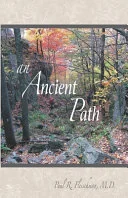
An Ancient Path
 75
75

An Ancient Path
Fleischman’s 2007 lectures, collected in An Ancient Path, offer a considered, if sometimes uneven, attempt to bridge psychiatric practice with esoteric philosophy. The strength lies in Fleischman's genuine effort to ground abstract concepts in clinical experience, particularly evident when discussing the Boston talks for mental health professionals. However, the adaptation of content for diverse audiences sometimes leads to a lack of consistent depth. A passage discussing the perceived similarities between therapeutic states and meditative awareness, while interesting, could have benefited from more rigorous delineation of the distinct methodologies. The inclusion of Q&A is a welcome feature, providing direct insight into audience reception and Fleischman’s responses. Ultimately, the book serves as a valuable, though not definitive, exploration for those curious about the overlap between the mind sciences and older spiritual disciplines.
📝 Description
75
In 2007, psychiatrist Paul R. Fleischman delivered lectures across Europe and America that are collected in An Ancient Path.
An Ancient Path collects lectures Paul R. Fleischman, M.D., gave in 2007. Fleischman, a psychiatrist, structured these talks for different audiences, showing how the setting influenced their content. His medical background provides a particular viewpoint on the topics he addresses. The book includes question and answer sessions, allowing readers to engage directly with the material. This work is suitable for mental health professionals, consciousness studies researchers, and anyone interested in the connection between psychology and spiritual thought. It may help readers understand how psychological ideas can relate to or be informed by esoteric concepts.
The lectures took place during a time of increasing interest in mindfulness and contemplative practices. Fleischman's talks in Freiberg, for example, were directed at "Mindfulness" researchers, connecting his ideas to current scientific study of altered states. His Boston lectures focused on mental health professionals, placing esoteric ideas within a clinical context. Fleischman examines the links between the mind and subtle energies, comparing psychiatric insights with older wisdom traditions.
Fleischman's work engages with traditions that seek understanding beyond conventional scientific or materialist frameworks. He draws parallels between modern psychological concepts and older systems of thought that address the inner life. The lectures attempt to bridge empirical observation with subjective experience, suggesting a more integrated view of human awareness. This approach aligns with contemplative traditions that emphasize direct experience and inner development.
💡 Why Read This Book?
• Gain an understanding of how psychiatric concepts might align with esoteric notions of consciousness, as explored in the 2007 lectures given to mental health professionals in Boston. • Discover potential connections between clinical psychology and contemplative practices, informed by Fleischman's engagement with "Mindfulness" researchers in Freiberg. • Examine the author's approach to bridging empirical observation and experiential knowledge, a key element discussed across the varied talks.
⭐ Reader Reviews
Honest opinions from readers who have explored this book.
❓ Frequently Asked Questions
What is the primary focus of Paul R. Fleischman's "An Ancient Path"?
The book centers on lectures given in 2007 by psychiatrist Paul R. Fleischman, M.D., exploring the intersection of psychological understanding and esoteric thought, adapted for different audiences.
Who were the intended audiences for these lectures?
Audiences varied, including mental health professionals in Boston and "Mindfulness" researchers in Freiberg, Germany, with content tailored to each group.
When were these lectures originally delivered?
The lectures that comprise "An Ancient Path" were delivered in 2007.
Does the book include any interactive elements?
Yes, "An Ancient Path" features several question and answer sessions that followed the original lectures, offering direct engagement.
What is the author's professional background?
Paul R. Fleischman is a medical doctor (M.D.) specializing in psychiatry.
What is the significance of the previous ISBN mentioned?
The note about ISBN 9781928 indicates this title has been previously published, suggesting it is a re-release or has had different editions.
🔮 Key Themes & Symbolism
Psychiatry Meets Esotericism
Fleischman, a psychiatrist, uses his clinical experience as a lens to examine concepts often relegated to esoteric traditions. He seeks common ground between the language of the psyche and older wisdom systems, suggesting that the therapeutic process and spiritual disciplines share fundamental approaches to human transformation. The work explores how understanding the mind through a medical framework can illuminate, and be illuminated by, non-ordinary states of consciousness and inner exploration.
Audience-Specific Discourse
A unique aspect of "An Ancient Path" is its origin in lectures tailored for specific audiences in 2007. The talks delivered to mental health professionals in Boston naturally differ in emphasis from those presented to "Mindfulness" researchers in Freiberg. This contextual adaptation offers a fascinating case study in how complex ideas are communicated across different intellectual and professional landscapes, highlighting the importance of framing in esoteric discourse.
Consciousness and Intention
The book touches upon the nature of consciousness and the power of intention, concepts central to many esoteric paths. Fleischman's background allows him to discuss these in relation to psychological states, suggesting a scientific or quasi-scientific basis for phenomena often described mystically. He probes how focused intention might influence perception and reality, drawing parallels between therapeutic goals and spiritual aspirations.
Bridging Empirical and Experiential
Fleischman's work grapples with the challenge of reconciling objective, empirical observation with subjective, experiential knowledge. As a psychiatrist, he is trained in empirical methods, yet his engagement with esoteric thought requires an appreciation for inner, felt experience. The lectures attempt to build a bridge, proposing that these two modes of knowing are not mutually exclusive but can offer complementary perspectives on the human condition.
💬 Memorable Quotes
Direct passages from the work, attributed to the author.
“The nature of each audience partly shaped the contents of each talk.”
— This statement underscores the contextual nature of knowledge and communication, particularly relevant when discussing complex topics like consciousness and spirituality across different fields.
“The Boston talk was to mental health professionals in the USA.”
— This specific mention anchors one of the lectures within a professional, Western medical context, highlighting the book's aim to engage with established scientific disciplines.
“The Freiberg talk was to "Mindfulness" researchers in Germany.”
— This detail places another lecture within the academic study of mindfulness, indicating Fleischman's engagement with contemporary scientific research on altered states and contemplative practices.
“Several question and answer sessions are included.”
— This indicates that the book is not merely a collection of monologues but includes dialogue, offering insights into audience reception and further clarification of the presented ideas.
“This title was previously published under ISBN 9781928”
— This note signals that the work has a prior publication history, suggesting it has found an audience and perhaps underwent revisions or re-releases over time.
🌙 Esoteric Significance
Tradition
While not strictly adhering to a single esoteric lineage, "An Ancient Path" draws from the broad currents of Western Esotericism, particularly its interest in consciousness, subtle energies, and inner transformation. It attempts to translate concepts familiar to traditions like Hermeticism or Gnosticism into the language of modern psychology and psychiatry, seeking to make them accessible and relevant to a contemporary, scientifically-minded audience.
Symbolism
The work implicitly engages with symbols of the mind's journey, such as the therapeutic process itself as a metaphor for spiritual ascent, or the concept of 'intention' as a subtle force shaping reality. While not overtly symbolic in its presentation, it interprets psychological states and therapeutic outcomes through a lens that echoes ancient notions of inner alchemy and the quest for wholeness.
Modern Relevance
Contemporary thinkers and practitioners exploring transpersonal psychology, integral theory, and consciousness studies will find resonance with Fleischman's work. His attempt to bridge clinical psychology with esoteric concepts informs current discussions on the efficacy of mindfulness, meditation, and other contemplative practices within therapeutic settings and personal development.
👥 Who Should Read This Book
• Mental health professionals seeking to understand potential overlaps between clinical psychology and esoteric wisdom traditions. • Researchers in consciousness studies interested in how psychiatric perspectives can engage with non-ordinary states of awareness. • Individuals exploring personal growth who are curious about the relationship between psychological well-being and ancient spiritual disciplines.
📜 Historical Context
Published in 2020, "An Ancient Path" collects lectures given by Paul R. Fleischman, M.D., in 2007. This period saw a burgeoning interest in mindfulness, meditation, and contemplative practices, both within academic research and popular culture. Fleischman's engagement with "Mindfulness" researchers in Freiberg, Germany, places his work within the contemporary dialogue between science and spirituality. Simultaneously, his talks to mental health professionals in Boston indicate an effort to integrate esoteric concepts with established psychiatric frameworks, a move that would have been met with varied reception. While not directly engaging with figures like Carl Jung, whose work on archetypes and the collective unconscious often touched similar territory, Fleischman's approach from a medical doctor's perspective offered a distinct, evidence-informed perspective on subjects often explored through purely philosophical or mystical lenses. The lectures represent an attempt to bridge these worlds at a time when the scientific validation of subjective experience was gaining traction.
📔 Journal Prompts
The adaptation of concepts for "Mindfulness" researchers in Freiberg.
The specific context of Boston talks for mental health professionals.
Fleischman's use of his psychiatric background to explore esoteric ideas.
The nature of consciousness as discussed in the lectures.
The role of intention in shaping experience, as presented in the talks.
🗂️ Glossary
Esoteric
Pertaining to or accessible only by a select group of people with a specialized knowledge or interest, often relating to mystical or occult traditions.
Psychiatry
The branch of medicine focused on the diagnosis, treatment, and prevention of mental, emotional, and behavioral disorders.
Mindfulness
A mental state achieved by focusing one's awareness on the present moment, while calmly acknowledging and accepting one's feelings, thoughts, and bodily sensations.
Consciousness
The state of being aware of and responsive to one's surroundings; the totality of one's thoughts, feelings, and intentions.
Intention
The action or process of intending; a thing intended; purpose.
Empirical Observation
Information acquired through direct observation or experience, verifiable by experiment or repetition.
Experiential Knowledge
Knowledge gained through direct participation in or experience of something, emphasizing subjective understanding.
This book appears in 1 collection
🔮 Readers Also Liked
Browse all →







From the “Vipassana” Collection
View all →





More Free Occult Philosophy Books
View all →