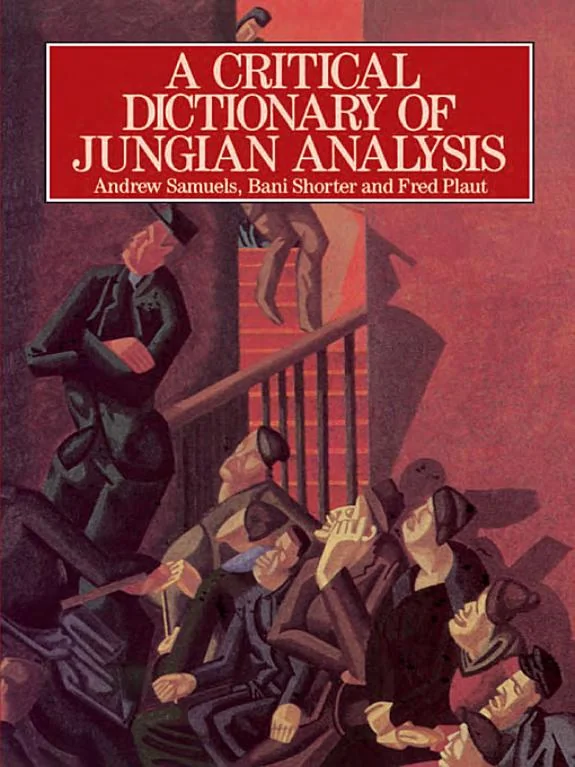
A Critical Dictionary of Jungian Analysis
 82
82

A Critical Dictionary of Jungian Analysis
The strength of Samuels, Shorter, and Plaut's dictionary lies in its commitment to critical scholarship rather than mere exposition. It acknowledges the difficulty inherent in Jung's writing, a point underscored by its initial publication in 1986. Rather than simply defining terms like 'archetype,' the book interrogates their usage and theoretical implications, offering a more nuanced understanding than a standard glossary. A notable limitation, however, is that the critical attitude, while valuable, can sometimes lean towards academic dissection, potentially obscuring the experiential dimension central to Jungian practice for some readers. The entry on 'Individuation,' for instance, meticulously traces its conceptual lineage but might leave a reader seeking its lived phenomenology wanting more. Despite this, the work remains a vital reference for serious students of Jungian analysis.
📝 Description
82
Published in 1986, A Critical Dictionary of Jungian Analysis unpacks Carl Jung's complex ideas.
Andrew Samuels, Bani Shorter, and Fred Plaut compiled this dictionary to clarify the specialized language of analytical psychology. It moves beyond simple definitions to engage critically with Jungian concepts, examining their theoretical foundations and historical growth. The book's structure allows readers to look up specific terms, making Jung's often dense writings more accessible.
This reference is useful for students and professionals in Jungian psychology, depth psychology, and fields like archetypal studies and comparative mythology. It also appeals to historians of ideas and those interested in 20th-century psychological thought. Individuals struggling with Jung's terminology will find this a valuable resource. The dictionary covers central Jungian notions, including the collective unconscious, archetypes, individuation, shadow, anima, and animus. It also discusses less common terms and their origins within Jung's work and the analytic tradition that followed. The authors' critical approach means entries often consider various interpretations or possible weaknesses of these concepts.
Jungian psychology, with its focus on the unconscious, archetypes, and individuation, occupies a unique space within esoteric traditions. This dictionary arrives not to present dogma, but to critically examine the very framework of this psychological system. It acknowledges that Jung's ideas, while influential, can appear arcane. By providing detailed, contextualized definitions, the book aims to make the symbolic language and theoretical structures of Jungian analysis more transparent, allowing for a more informed engagement with its esoteric dimensions.
💡 Why Read This Book?
• Gain a critical understanding of foundational Jungian concepts like the 'collective unconscious,' moving beyond simple definitions to explore their theoretical nuances and historical development as presented in this 1986 reference. • Clarify specific Jungian terminology, such as 'anima' and 'animus,' with detailed entries that contextualize their meaning within the broader framework of analytical psychology and its scholarly discourse. • Appreciate the intellectual lineage of Jungian psychology by examining how concepts are presented and critically assessed, providing a scholarly perspective distinct from introductory texts.
⭐ Reader Reviews
Honest opinions from readers who have explored this book.
❓ Frequently Asked Questions
What distinguishes 'A Critical Dictionary of Jungian Analysis' from other Jungian glossaries?
Published in 1986, this dictionary emphasizes a critical, scholarly approach, analyzing concepts rather than just defining them. It explores theoretical underpinnings and historical context, offering a more in-depth perspective than standard glossaries.
Who are the primary authors of 'A Critical Dictionary of Jungian Analysis'?
The primary authors are Andrew Samuels, Bani Shorter, and Fred Plaut. The work was first published in 1986, reflecting a significant period of Jungian scholarship.
Is this book suitable for someone new to Jungian psychology?
While dense, its dictionary format allows newcomers to look up specific terms encountered in other Jungian texts. However, its critical nature makes it more suited for those seeking a deeper, analytical understanding beyond introductory material.
What historical period does the book's scholarship reflect?
The scholarship primarily reflects the state of Jungian analysis up to its initial publication in 1986, engaging with key developments and debates within the field at that time.
Does the dictionary cover recent developments in Jungian thought after 1986?
No, as the dictionary was first published in 1986, it does not include conceptual or theoretical advancements in Jungian psychology that have emerged since that date.
What is the 'critical attitude' mentioned in the book's description?
The 'critical attitude' refers to the authors' approach of not merely defining Jungian terms but also examining their theoretical foundations, historical evolution, and potential limitations or alternative interpretations.
🔮 Key Themes & Symbolism
Archetypal Structures
The dictionary meticulously dissects the concept of archetypes, positing them as innate, universal psychic predispositions inherited from the collective unconscious. It explores how these primordial patterns manifest in myths, dreams, and individual lives, serving as fundamental organizing principles of the psyche. The critical lens applied allows for an examination of their theoretical weight and practical application within analytical psychology, distinguishing core Jungian ideas from later interpretations.
The Process of Individuation
Individuation, the lifelong psychological process of integrating the conscious and unconscious aspects of the self to achieve wholeness, is a central theme. This dictionary provides a scholarly examination of its stages, challenges, and ultimate aim. It clarifies how concepts like the shadow, anima, and animus are crucial elements to be confronted and integrated, moving the individual towards self-realization and a unique psychic identity.
Shadow and Anima/Animus
Key to understanding the dynamic interplay of the psyche, the shadow represents the repressed, darker aspects of the personality, while the anima (feminine in men) and animus (masculine in women) represent the contrasexual archetypes. This dictionary offers detailed entries, explaining their function in psychological development, the projection onto others, and the necessity of their conscious recognition for psychological maturity and authenticity.
Analytical Psychology's Lexicon
Beyond specific concepts, the work functions as a critical guide to the specialized language developed by Carl Jung and his followers. It aims to explain terms that can appear opaque, providing scholarly context and analytical depth. This focus on language is crucial for understanding the theoretical framework and the distinct approach of Jungian psychology compared to other schools of thought.
💬 Memorable Quotes
Direct passages from the work, attributed to the author.
“The language of Jung's writings... is sometimes difficult to understand.”
— This observation, present in the original blurb, highlights the primary motivation for the dictionary's creation: to provide clarity and accessibility to a complex body of psychological theory and terminology.
“This guide... combines scholarship and historical accuracy with a stimulating, critical attitude.”
— This principle guides the authors' approach, indicating that the dictionary aims not just to define terms but to critically engage with their meaning, origins, and implications within analytical psychology.
“Archetypes are primordial images or patterns.”
— This captures the essence of the dictionary's explanation of archetypes, framing them as fundamental, inherited psychic structures that shape human experience and perception across cultures.
“Individuation is the process of becoming a whole person.”
— This concise interpretation reflects the dictionary's treatment of individuation, emphasizing its goal of psychological integration and the realization of one's unique potential.
💡 Key Ideas
Editorial paraphrase of the work's core concepts — not direct quotes.
The Jungian lexicon can be dense.
This paraphrased sentiment underscores the challenge faced by students and scholars engaging with Jung's work, emphasizing the need for a carefully curated and critically informed reference tool.
🌙 Esoteric Significance
Tradition
While primarily a work of analytical psychology, this dictionary touches upon esoteric currents by addressing concepts like archetypes and the collective unconscious, which have parallels in Gnostic and Hermetic traditions concerning universal patterns and hidden knowledge. It bridges academic psychology with the symbolic language often found in esoteric literature, framing Jungian concepts within a framework that speaks to deeper, often unconscious, psychic structures that transcend the individual.
Symbolism
Key symbols like the 'Shadow' represent the alchemical concept of the prima materia—the unrefined, often rejected, aspect of the self that must be confronted for transformation. The 'Anima' and 'Animus' can be seen as internal divine counterparts, akin to divine consorts in various mythologies, whose integration leads to psychic wholeness. The concept of 'Individuation' itself carries the alchemical major work, the Great Work of spiritual and psychological transformation.
Modern Relevance
Contemporary depth psychologists, archetypal theorists, and even figures in literary criticism and mythology studies continue to draw upon the foundational concepts elucidated in this dictionary. Its critical approach remains relevant for understanding the ongoing evolution of Jungian thought and its application in fields ranging from psychotherapy to cultural analysis, particularly for those exploring the symbolic dimensions of human experience.
👥 Who Should Read This Book
• Students of analytical psychology and depth psychology seeking a scholarly reference to clarify complex Jungian terminology and theoretical frameworks. • Researchers in comparative mythology and religious studies interested in the archetypal underpinnings of human narratives and belief systems as explored through a Jungian lens. • Practicing psychotherapists who utilize Jungian or psychodynamic approaches and require precise definitions and critical analyses of core concepts for their clinical work.
📜 Historical Context
Published in 1986, 'A Critical Dictionary of Jungian Analysis' emerged during a period when Jungian psychology, while established, was undergoing significant academic scrutiny and development. The intellectual landscape was shaped by ongoing debates within psychoanalysis and the rise of post-structuralist thought, which often questioned foundational psychological theories. This dictionary provided a vital resource for working through the often-arcane terminology of Carl Jung's work, offering a scholarly and critical perspective that distinguished it from simpler introductory guides. It engaged with the complex legacy of Jungian thought, acknowledging figures like Erich Neumann and Marie-Louise von Franz, and provided a structured counterpoint to more existential or humanistic psychologies that were also prominent. Its critical stance reflected a maturing academic engagement with Jungian ideas.
📔 Journal Prompts
The concept of the collective unconscious and its archetypal patterns.
Jung's model of the Shadow and its integration.
The process of individuation and its personal meaning.
The roles of the Anima and Animus in psychic balance.
Critical analysis of a specific Jungian term's historical development.
🗂️ Glossary
Archetype
A primordial, inherited psychic structure or pattern that influences human behavior and experience, manifesting as universal themes and images in myths, dreams, and art. Central to Jungian psychology.
Collective Unconscious
The deepest layer of the unconscious psyche, containing inherited psychic material common to all humanity, expressed through archetypes. Contrasted with the personal unconscious.
Individuation
The lifelong psychological process of differentiation of the self, involving the integration of conscious and unconscious elements to achieve wholeness and psychological maturity.
Shadow
The unconscious, repressed aspect of the personality, often containing traits that the ego deems unacceptable. Integration of the shadow is crucial for psychological wholeness.
Anima
The unconscious feminine aspect present in the male psyche. It influences emotions and relationships and represents a connection to the unconscious.
Animus
The unconscious masculine aspect present in the female psyche. It influences logic and assertion and represents a connection to the unconscious.
Complex
An emotionally charged cluster of ideas, memories, and feelings organized around a common theme in the unconscious psyche. Often originates from early experiences.
This book appears in 1 collection
🔮 Readers Also Liked
Browse all →









From the “Jungian Psychology” Collection
View all →







More Free Occult Philosophy Books
View all →