The Vampyre
 73
73

The Vampyre
Polidori's "The Vampyre" is a compact, chilling novella that fundamentally reshaped the vampire mythos. Its strength lies in the creation of Lord Ruthven, a figure who transcends the grotesque revenants of folklore to embody a sophisticated, aristocratic predator. The prose, though concise, effectively builds an atmosphere of dread and moral decay. Ruthven's charm serves as a terrifying mask for his insatiable lust and callous disregard for human life, a concept Polidori renders with unsettling clarity, particularly in scenes detailing his victims' fates. However, the narrative can feel somewhat episodic, and the motivations of the protagonist, Aubrey, sometimes strain credulity as he succumbs to Ruthven's influence. The novella's brevity is both a virtue and a minor limitation, offering a potent glimpse into the origins of the modern vampire but leaving the reader wishing for deeper exploration of its dark psychology. Despite these points, "The Vampyre" remains a crucial text, a stark and influential precursor to the gothic and horror literature that followed.
📝 Description
73
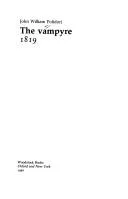
John William Polidori's "The Vampyre" appeared in 1819, shaping the aristocratic vampire figure.
Published anonymously in 1819, John William Polidori's "The Vampyre" is a short novel that established the aristocratic vampire as a literary figure. It tells the story of Lord Ruthven, a nobleman who appears charming but hides a predatory nature. Ruthven moves in high society, preying on the innocent with a cold, cruel demeanor. This portrayal differed from earlier, more monstrous vampire figures found in folklore.
The novella originated from a ghost story contest in 1816 near Lake Geneva, involving Lord Byron, Mary Shelley, Percy Bysshe Shelley, and Polidori. While Mary Shelley created "Frankenstein," Polidori's "The Vampyre" drew inspiration from Byron's character and existing gothic tales. The work became popular, sometimes mistakenly attributed to Byron, and cemented its place in literary history. Its 1819 publication marked a move away from folkloric vampires toward a more sophisticated, upper-class antagonist.
Emerging from the Romantic era's fascination with the darker aspects of human nature and the supernatural, "The Vampyre" shifted the depiction of vampires. It moved them from grotesque, folkloric revenants to figures of sophisticated, aristocratic evil. This transformation reflects an esoteric interest in the corruption of the elite and the dark allure of the forbidden, presenting a creature that operates within societal structures while embodying primal predatory instincts.
💡 Why Read This Book?
• Gain insight into the genesis of the modern vampire archetype, learning how Lord Ruthven, created in the "summer of 1816" near Geneva, established the figure of the aristocratic, seductive predator, distinct from earlier folkloric monsters. • Understand the critique of aristocratic decadence and social corruption, recognizing how Polidori used the supernatural figure of the vampire to comment on the moral bankruptcy and predatory nature present within early 19th-century society. • Appreciate the literary context of Romanticism by examining "The Vampyre's" relationship to the "Byronic hero" and the ghost story competition involving Lord Byron and Mary Shelley, understanding its place in literary history.
⭐ Reader Reviews
Honest opinions from readers who have explored this book.
❓ Frequently Asked Questions
When was John William Polidori's "The Vampyre" first published and was it initially attributed to Lord Byron?
"The Vampyre" was first published anonymously in 1819. Due to its association with Lord Byron, who was a friend of Polidori and present at the famous 1816 ghost story competition, it was often mistakenly attributed to Byron for some time.
What is the significance of the "summer of 1816" in relation to "The Vampyre"?
The summer of 1816, spent near Lake Geneva, Switzerland, was when Polidori, Lord Byron, Mary Shelley, and Percy Bysshe Shelley engaged in a ghost story competition. "The Vampyre" was Polidori's contribution, inspired by Byron and the gothic atmosphere of the time.
How did Polidori's vampire differ from earlier depictions?
Polidori's Lord Ruthven was a departure from earlier, more monstrous folkloric vampires. Ruthven is an aristocratic, charming, and sophisticated figure who preys on society from within, establishing the template for the seductive, aristocratic vampire seen in later literature.
What literary movement influenced "The Vampyre"?
The novella is deeply rooted in the Gothic literary tradition and is also a significant example of Romantic literature. It explores themes common to both, such as the supernatural, alienation, moral decay, and the darker aspects of human nature, particularly through the lens of the Byronic hero.
Is "The Vampyre" publicly available to read online?
Yes, as "The Vampyre" was published in 1819, it is in the public domain. Many online archives and literary websites offer free access to the full text of the novella.
What is the primary theme explored through Lord Ruthven?
Lord Ruthven embodies the "Byronic hero," characterized by his charisma, brooding nature, moral ambiguity, and destructive tendencies. He serves as a vehicle to explore themes of aristocratic corruption, predatory behavior disguised by social grace, and the dangers of unchecked privilege.
🔮 Key Themes & Symbolism
The Aristocratic Predator
Polidori's Lord Ruthven redefined the vampire as an aristocratic figure, moving beyond grotesque peasant superstitions. Ruthven operates within high society, using his charm and status to mask his predatory nature. This theme critiques the inherent corruption and exploitation possible within privileged classes, suggesting that true monstrosity can reside beneath a veneer of civilization. The novella uses this figure to explore the dangers of unchecked power and the moral decay that can accompany wealth and status, making the vampire a potent symbol of societal rot.
Social Corruption and Deception
The novella functions as a sharp commentary on the superficiality and moral bankruptcy of the society it depicts. Characters like Aubrey are easily swayed by wealth and social standing, failing to see the true depravity of Lord Ruthven. Polidori uses the supernatural element to expose the real-world predatory behaviors that can exist within social structures, where appearances are paramount and true intentions are hidden. The vampire's existence highlights the deceptive nature of appearances and the ease with which innocence can be corrupted by worldly allure and false promises.
The Byronic Hero Archetype
Lord Ruthven is a quintessential example of the Byronic hero, a literary figure popularized by Lord Byron. This archetype is characterized by a dark charisma, a brooding and mysterious persona, alienation from society, and a complex moral ambiguity that often includes arrogance and a disregard for conventional morality. Ruthven's seductive charm, combined with his dangerous and destructive nature, embodies the fascination and terror associated with this type of anti-hero, influencing countless literary characters in the centuries that followed.
Innocence Corrupted
A central theme is the vulnerability of innocence when confronted by sophisticated evil. The character of Aubrey, initially naive and impressionable, is drawn into Lord Ruthven's orbit and ultimately falls victim to his machinations. This corruption is not merely physical but also moral and psychological, as Aubrey becomes complicit in or tragically unaware of Ruthven's atrocities. The novella illustrates how easily pure intentions can be twisted and destroyed by external forces that are cunning, powerful, and devoid of empathy, particularly within a society that values superficial connections.
💬 Memorable Quotes
Direct passages from the work, attributed to the author.
“He was a vampire, and therefore in his way, a devil.”
— This direct statement in the text explicitly labels Lord Ruthven as a vampire and equates his nature with that of a devil. It underscores the supernatural and inherently evil essence of the character, framing his actions not just as monstrous but as diabolical, aligning him with ultimate cosmic malevolence.
“He was not a man, but a creature of the night.”
— This interpretation captures the essence of the vampire's otherness and supernatural origin. It contrasts the human guise with the monstrous reality, emphasizing the creature's nocturnal existence and its fundamental separation from humanity, highlighting its alien and terrifying nature.
💡 Key Ideas
Editorial paraphrase of the work's core concepts — not direct quotes.
You must not be surprised if I tell you that he was a vampire.
This line, often appearing in narrative summaries or reflections on the story, highlights the shocking revelation of Ruthven's true nature. It signals the narrative's intent to move beyond mere gothic horror into the specific mythos of the vampire, emphasizing the disbelief and terror associated with such an unnatural existence.
We see that Lord Ruthven is a being who must satisfy his appetites.
This paraphrased concept points to the relentless, instinctual drive of the vampire. It suggests that Ruthven's predatory actions are not necessarily born of malice alone but are a fundamental necessity of his being, a compulsion that defines his existence and dictates his interactions with the mortal world.
The vampire feeds on the life force of others.
This paraphrased concept defines the core mechanism of vampirism as presented in the story. It moves beyond mere blood-drinking to the more symbolic act of consuming vitality and essence, positioning the vampire as a parasitic entity that sustains itself by draining the very life from its victims.
🌙 Esoteric Significance
Tradition
While not explicitly belonging to a defined esoteric tradition like Kabbalah or Theosophy, "The Vampyre" taps into ancient archetypes of the undead and parasitic entities found in various folklores, which have later been reinterpreted through esoteric lenses. Its focus on a corrupted aristocracy and the draining of life force can be viewed through a Gnostic lens as a commentary on the material world's corrupting influence or a symbolic representation of Archontic entities that feed on human spiritual energy. The work serves as a foundational text for modern occult interpretations of the vampire archetype.
Symbolism
The primary symbol is the vampire itself, representing not just death but a perversion of life, an aristocratic predator that drains vitality and corrupts innocence. Lord Ruthven embodies the "shadow self" or the anima/animus in its destructive aspect—a charismatic but ultimately soul-destroying force. The opulent settings of high society symbolize the superficiality and moral decay that the vampire exploits, acting as a gilded cage or a hunting ground for this parasitic entity. The draining of life essence symbolizes a spiritual vampirism that can afflict individuals and societies.
Modern Relevance
The vampire archetype, as solidified by Polidori, remains a potent symbol in contemporary occultism and esoteric thought. Modern practitioners and writers often explore the concept of psychic vampirism, where individuals drain emotional or energetic vitality from others. The figure of the charismatic, manipulative predator also resonates in discussions of power dynamics, cult leadership, and narcissistic personality disorders within esoteric psychology. "The Vampyre" continues to inform discussions on the dark side of human nature and the symbolic representation of spiritual parasites.
👥 Who Should Read This Book
• Students of gothic literature and early horror fiction seeking the origins of the modern vampire archetype, providing foundational knowledge distinct from later interpretations. • Readers interested in the Romantic period and its literary landscape, offering insight into the "Byronic hero" and the influential ghost story competition of 1816. • Esoteric scholars and practitioners exploring the evolution of supernatural archetypes, examining how the vampire figure transitioned from folklore to a symbol of aristocratic corruption and psychic predation.
📜 Historical Context
Born from a famous summer of literary creation in 1816, "The Vampyre" emerged from a gathering of literary giants near Lake Geneva, including Lord Byron, Mary Shelley, and Percy Bysshe Shelley. Polidori, Byron's physician, conceived this tale of the aristocratic vampire during a period when gothic literature was popular, but vampire figures were largely confined to folktales. The novella's publication in 1819, though initially anonymous and often wrongly attributed to Byron, proved immensely influential. It shifted the perception of vampires from grotesque monsters to sophisticated, alluring predators, setting a precedent that would dominate vampire fiction for centuries. This work gained notoriety not just for its subject matter but also for its association with Byron, whose persona arguably inspired the character of Lord Ruthven, solidifying its place within the Romantic era's fascination with the dark, the mysterious, and the morally ambiguous.
📔 Journal Prompts
Lord Ruthven's aristocratic charm as a mask for predatory behavior.
The theme of innocence corrupted by worldly influence.
The "summer of 1816" ghost story competition's lasting impact.
Aubrey's susceptibility to social status and false promises.
The vampire as a symbol of societal decay.
🗂️ Glossary
Vampire
A mythical creature that subsists by feeding on the vital essence (in modern interpretations, often blood) of living beings. Polidori's depiction revolutionized the figure into an aristocratic, seductive predator.
Gothic Literature
A genre characterized by elements of horror, death, and gloom, often featuring supernatural events, decaying settings, and psychological terror. "The Vampyre" is a key text in its development.
Byronic Hero
A literary archetype popularized by Lord Byron, characterized by a brooding, rebellious, and charismatic but morally ambiguous or destructive personality.
Romanticism
An artistic, literary, and intellectual movement that originated in Europe toward the end of the 18th century, emphasizing emotion, individualism, and glorification of the past and nature.
Supernatural
Attributed to some force beyond scientific understanding or the laws of nature. In "The Vampyre," this refers to the existence and nature of Lord Ruthven.
Aristocracy
A class of persons holding high rank and privilege, especially by birth. Polidori uses this social stratum as the setting and source of corruption for his vampire.
Archetype
A recurring symbol or motif in literature, art, or mythology that represents universal patterns of human nature. The vampire is a powerful archetype.
🔮 Readers Also Liked
Browse all →







More by John William Polidori
All books →
More Free Occult Philosophy Books
View all →