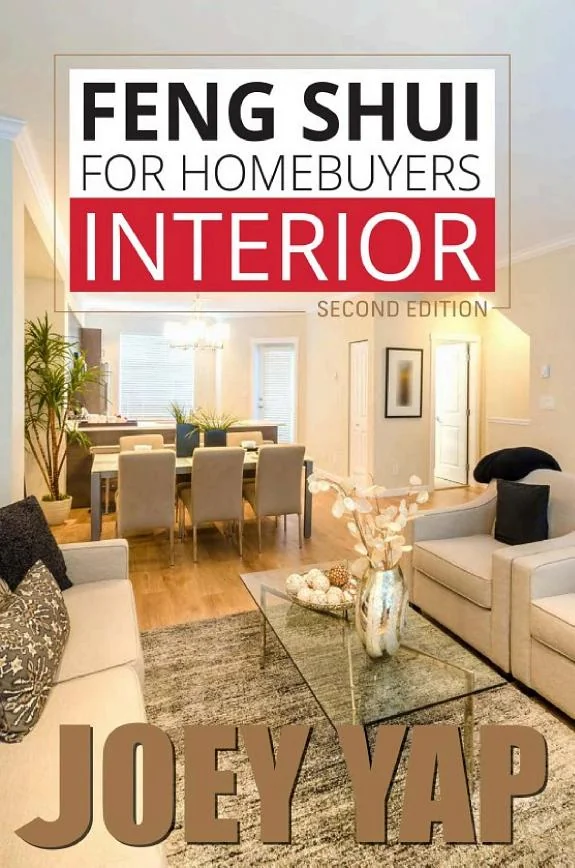
Feng Shui for Homebuyers
 73
73

Feng Shui for Homebuyers
Joey Yap’s "Feng Shui for Homebuyers" offers a refreshingly direct approach to a subject often shrouded in mystique. The book’s strength lies in its clear, visually supported explanations, particularly its detailed house plans and photographs that illustrate common Feng Shui considerations. Yap’s emphasis on actionable advice, such as prioritizing toilet location and understanding the impact of color, moves the practice beyond abstract theory into tangible property assessment. However, the work sometimes feels constrained by its singular focus on pre-purchase screening, occasionally glossing over the more nuanced, long-term energetic cultivation within a home once occupied. While the 2017 publication date places it within contemporary Feng Shui discourse, a deeper engagement with contrasting geomantic schools might have added further critical dimension. Ultimately, "Feng Shui for Homebuyers" serves as an effective, pragmatic toolkit for the discerning property seeker.
📝 Description
73
Joey Yap's 2017 book provides practical Feng Shui for home buyers.
Feng Shui for Homebuyers, by Joey Yap, offers a practical approach to assessing residential properties using traditional Chinese geomancy. The book concentrates on how a house's interior layout and exterior environment influence the flow of auspicious Qi. Yap aims to give prospective homeowners the tools to recognize beneficial and harmful features before they purchase a property.
This guide is primarily for people actively buying a home who want to include Feng Shui in their decision. It suits beginners needing a clear, illustrated explanation and those with some knowledge who wish to improve their property assessment skills. The book's focus on practical use makes it helpful for anyone seeking a harmonious home and wanting to understand a property's energetic aspects, regardless of their prior experience with Feng Shui.
Published in 2017, this work appeared during a time of increasing interest in Eastern esoteric practices. Joey Yap, a known author and educator in Feng Shui, based his methods on classical Feng Shui principles. The book's aim to demystify esoteric arts for everyday application contrasts with purely academic studies of geomancy.
Feng Shui for Homebuyers is situated within the tradition of Chinese geomancy, a practice concerned with harmonizing individuals with their environment. This specific application focuses on residential spaces, aiming to align occupants with beneficial energetic currents, known as Qi. The book draws from classical Feng Shui methodologies, which have evolved over centuries, to provide actionable advice. It represents a modern effort to translate complex geomantic principles into accessible guidance for everyday life, particularly for a significant life decision like purchasing a home.
💡 Why Read This Book?
• You will learn to prioritize essential interior Feng Shui elements, like the critical placement of toilets and the influence of color schemes, as detailed in the book's practical screening methods. • Gain the ability to evaluate a property's external environment and its alignment with personal auspicious directions, a core concept explored using specific house plans and illustrations. • Understand how to assess a home's overall Qi flow from a traditional geomancy perspective, enabling you to identify properties that support well-being, as guided by Joey Yap's established methodologies.
⭐ Reader Reviews
Honest opinions from readers who have explored this book.
❓ Frequently Asked Questions
What does "Interior Feng Shui" mean in the context of buying a home?
Interior Feng Shui refers to the assessment of the energetic qualities within a house, focusing on aspects like the main door's placement, the location and condition of toilets, the flow of Qi through different rooms, and the impact of colors, as detailed in Joey Yap's guide.
How important is the house's facing direction according to Feng Shui?
The facing direction is crucial as it determines the property's energetic alignment with the surrounding environment and influences its interaction with the occupants' personal auspicious directions, a concept thoroughly explained in the book.
Does this book explain how to use Feng Shui for renovations?
While primarily focused on property selection before purchase, the principles discussed regarding Qi flow, room placement, and environmental factors provide a foundational understanding that can inform renovation decisions.
Are color choices significant in Feng Shui for a home?
Yes, color choices are presented as significant factors that affect the Feng Shui of a property by influencing the Qi. The book explores how different colors can impact the home's energy and inhabitants' well-being.
Is Joey Yap's book suitable for someone new to Feng Shui?
Absolutely. Feng Shui for Homebuyers is designed with clarity and includes color illustrations and house plans, making it accessible for beginners looking to apply Feng Shui principles to property selection.
What makes this book different from other Feng Shui guides?
This book specifically targets the homebuyer's decision-making process, offering a structured approach to screening properties based on interior and exterior Feng Shui factors, rather than general life application.
🔮 Key Themes & Symbolism
Interior Qi Flow
The work meticulously dissects the internal layout of a residence, emphasizing how the placement of key areas like the main entrance and bathrooms critically affects the circulation of auspicious Qi. It illustrates how the arrangement of rooms, corridors, and even furniture can either enhance or obstruct the vital energy, directly impacting the occupants' health and prosperity. Understanding this internal dynamic is presented as paramount for selecting a harmonious living space.
External Environment Analysis
Beyond the walls of a house, the book scrutinizes the surrounding landscape and its energetic influence. This includes evaluating the property's facing direction, proximity to potential 'sha qi' (negative energy) sources, and the presence of supportive natural or man-made formations. The interaction between the external environment and the individual's personal auspicious directions is a central theme, guiding readers to choose locations that offer synergistic energetic support.
Color and Energy Dynamics
Feng Shui for Homebuyers explores the subtle yet significant role colors play in modulating the Qi of a home. It explains how different hues can evoke specific energies and influence the atmosphere of various spaces. The book provides practical guidance on selecting color palettes that align with the desired energetic outcome for different areas of the house, contributing to a balanced and supportive environment.
Personal Auspicious Directions
A central to the book is the integration of personal energetics into property assessment. It guides readers on identifying their individual auspicious directions, based on traditional Chinese calculations. This knowledge is then applied to evaluating whether a property's orientation and layout are compatible with the occupant's unique energetic profile, ensuring a harmonious relationship between person and place.
💬 Memorable Quotes
Direct passages from the work, attributed to the author.
“How do you select a property that has good Interior Feng Shui?”
— This question captures the book's core purpose: providing a systematic method for evaluating the internal energetic qualities of a home before purchase, moving beyond aesthetic appeal to functional energy assessment.
“What should you prioritise when screening the interior of a house, from a Feng Shui perspective?”
— This highlights the book's practical, decision-oriented approach, guiding readers to focus on the most impactful interior elements for auspicious Qi flow and overall household harmony.
“How important are the location of toilets?”
— This points to the book's attention to specific, often overlooked, details in home layout that have significant energetic implications according to classical Feng Shui principles.
“Do colours affect the Feng Shui of a property?”
— This addresses the tangible influence of color in Feng Shui, indicating the book's exploration of how chromatic choices contribute to the energetic balance and well-being within a dwelling.
“Does it matter that the house does not face your personal auspicious direction?”
— This question underscores the book's emphasis on the crucial link between a property's orientation and the individual occupant's energetic compatibility, a key factor in harmonious living.
🌙 Esoteric Significance
Tradition
This work draws from the tradition of Classical Feng Shui, a system with roots tracing back thousands of years in Chinese cosmology and Taoist philosophy. It specifically emphasizes the practical application of principles derived from schools like Form and Compass, focusing on the tangible interaction between human dwellings and their environment to harmonize Qi. While eschewing overtly religious dogma, it operates within a worldview where the environment profoundly influences human fortune and well-being.
Symbolism
Key symbols implicitly explored include the 'Dragon' (representing the flow of Qi in the landscape), the 'Tiger' (representing protective or potentially aggressive energies), and the 'Tortoise' (representing stability). The arrangement of these 'forces' in the external environment and their translation into internal space layouts, such as the placement of a main door ('Mouth of Qi'), are central to the book's symbolic language.
Modern Relevance
Contemporary practitioners of modern Feng Shui, interior designers seeking to integrate energetic principles, and individuals interested in holistic living and wellness spaces continue to draw upon the practical methodologies outlined by Joey Yap. His work is often cited in online forums and courses focusing on accessible Feng Shui applications for residential properties.
👥 Who Should Read This Book
• Prospective homeowners seeking to make informed decisions about property selection by incorporating energetic considerations. • Individuals new to Feng Shui who desire a clear, visual guide to understanding basic principles relevant to residential spaces. • Existing practitioners looking for a focused resource on pre-purchase property screening techniques based on traditional geomancy.
📜 Historical Context
Published in 2017, Joey Yap’s "Feng Shui for Homebuyers" arrived during a period where interest in practical applications of Eastern esoteric systems, like Feng Shui, remained robust globally. Yap, already a prolific author and educator since the early 2000s, operated within a landscape where Feng Shui had largely transitioned from niche interest to mainstream self-help, often presented in accessible, visually-driven formats. This work aligns with that trend, focusing on actionable advice for consumers rather than deep theoretical exploration. Unlike more academic studies of Chinese geomancy, which might engage with historical texts like the *Book of Burial* or discuss regional variations, Yap's approach is firmly rooted in contemporary, often simplified, interpretations designed for immediate practical use. The book did not appear amidst significant controversy or censorship, reflecting the established, albeit sometimes debated, place of Feng Shui within modern wellness and lifestyle discourse.
📔 Journal Prompts
The main door's placement relative to the overall property layout.
Prioritizing toilet location during a property viewing.
Assessing the impact of external environmental features on a potential home.
Evaluating color choices for different rooms based on desired Qi.
The relationship between a house's facing direction and personal auspicious directions.
🗂️ Glossary
Qi (Chi)
The fundamental life force or vital energy believed to flow through all things. In Feng Shui, its harmonious flow is essential for well-being and prosperity.
Interior Feng Shui
The assessment and application of Feng Shui principles specifically to the internal layout, design, and energy flow within a house.
Auspicious Direction
Personal directions calculated based on an individual's birth date and gender, considered favorable for activities like facing while sleeping or working.
Sha Qi
Negative or 'killing' energy, often associated with sharp angles, clutter, or undesirable environmental features that can negatively impact a space.
Main Door
The primary entrance to a home, often referred to as the 'Mouth of Qi', considered a critical point for drawing beneficial energy into the residence.
Geomancy
The traditional Chinese practice of Feng Shui, involving the art and science of arranging buildings and land to harmonize with the flow of Qi.
House Plan
A diagram or blueprint showing the layout, dimensions, and spatial relationships of rooms and features within a building.
This book appears in 1 collection
🔮 Readers Also Liked
Browse all →








From the “Geomancy” Collection
View all →









More Free Occult Philosophy Books
View all →