De vita Pythagorica
 76
76

De vita Pythagorica
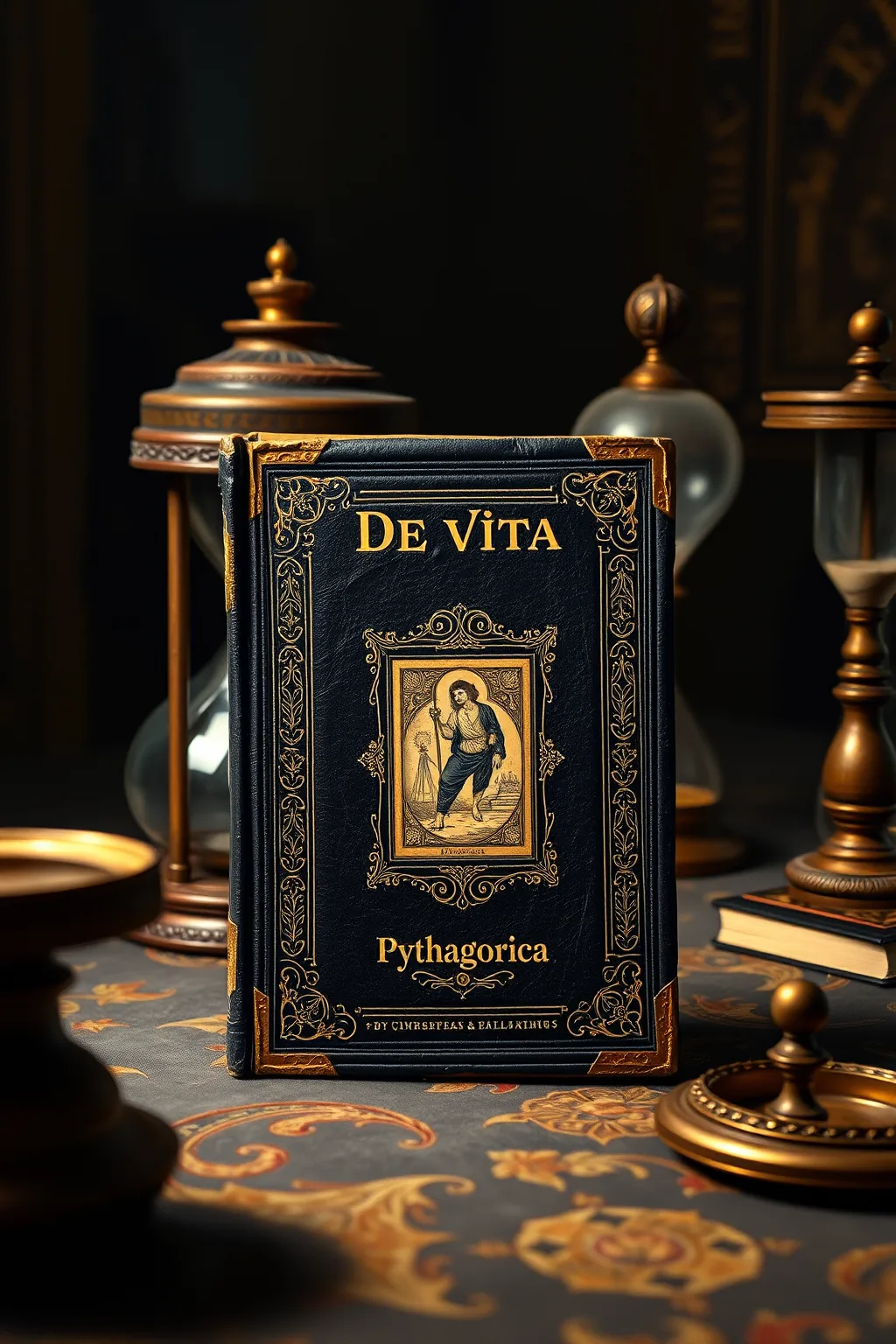
Iamblichus’s *De vita Pythagorica* offers a meticulously constructed portrait of the philosopher as a divine exemplar, far removed from the historical figure and closer to a spiritual archetype. The text is invaluable for its detailed exposition of the Pythagorean way of life, presented not as a mere historical curiosity but as a blueprint for achieving spiritual and intellectual harmony. The sheer volume of prescribed practices – from diet and dress to ritual and communal living – reveals the depth of the Pythagorean ideal as Iamblichus understood it. However, the work’s strength in presenting this idealized vision is also its limitation; it is less a biography and more a hagiography, intended to inspire and instruct through an almost mythical portrayal. The emphasis on Pythagoras as a thaumaturge, performing miracles and receiving divine pronouncements, while characteristic of Iamblichus's Neoplatonist approach, can overshadow the philosophical underpinnings for readers seeking purely intellectual arguments. Ultimately, it serves as a powerful testament to how philosophical traditions are shaped and transmitted through the lives of their venerated figures.
📝 Description
76
Iamblichus wrote *On the Pythagorean Life* around the 4th century CE to portray Pythagoras as a divine teacher.
Iamblichus's *De vita Pythagorica*, or *On the Pythagorean Life*, details the ethical, spiritual, and philosophical principles of the Pythagorean way of life. Written in the late Roman Empire, this text goes beyond a simple biography. It reconstructs an ideal philosophical existence, emphasizing asceticism, purification, and a connection with the divine. Iamblichus presents Pythagoras not only as a mathematician but as a revered figure, a teacher, and a model for conduct. The book outlines his practices, teachings, and accounts of his miracles.
This work is particularly valuable for scholars of ancient philosophy, especially those studying Neoplatonism and the later reception of Pythagorean ideas. It also interests students of religious history looking at the evolution of spiritual disciplines and the concept of the sage in antiquity. Individuals exploring the historical roots of Western mysticism and the philosophical basis of contemplative practices will find significant material here. The book offers detailed philosophical analysis and an account of an idealized philosophical existence.
As a prominent Neoplatonist, Iamblichus sought to synthesize Platonic thought with Pythagorean traditions and the growing interest in theurgy. *De vita Pythagorica* reflects this synthesis, presenting an idealized biography of Pythagoras that emphasizes his role as a spiritual guide and miracle worker. This approach differs from earlier, more purely philosophical accounts, highlighting the practical and ritualistic aspects of Pythagoreanism. The text situates Pythagoreanism within a broader spiritual and philosophical landscape of the late Roman period, where the pursuit of divine knowledge and purification was central.
💡 Why Read This Book?
• Gain insight into the Neoplatonist interpretation of Pythagoras, understanding the philosophical emphasis on *katharsis* and asceticism as presented in Iamblichus’s influential text. • Explore the concept of the philosopher as a divinely inspired figure, examining how *De vita Pythagorica* depicts Pythagoras as a model for spiritual and intellectual perfection. • Understand the historical development of esoteric communities, learning about the specific practices and ethical codes described for the Pythagorean way of life circa the 4th century CE.
⭐ Reader Reviews
Honest opinions from readers who have explored this book.
❓ Frequently Asked Questions
What is the primary focus of Iamblichus's *De vita Pythagorica*?
The book's primary focus is to present Pythagoras not just as a historical figure or mathematician, but as an ideal sage and divine exemplar. It details the ethical, spiritual, and ascetic practices that constituted the Pythagorean way of life, emphasizing purification and communion with the divine.
Who was Iamblichus and when did he live?
Iamblichus was a prominent Syrian Neoplatonist philosopher who lived from approximately 245 to 325 CE. He was a student of Porphyry and a significant figure in the development of Neoplatonism, known for his synthesis of Platonic philosophy with mystical and theurgic practices.
What does *De vita Pythagorica* reveal about ancient Pythagorean practices?
The work details various practices such as specific dietary laws (vegetarianism), periods of silence, asceticism, ritual purification, and communal living. It portrays these as essential components for achieving spiritual and intellectual enlightenment and emulating the divine.
Is *De vita Pythagorica* a historical biography?
While it purports to describe Pythagoras's life, the text functions more as a philosophical and spiritual idealization. Iamblichus uses Pythagoras as a model to expound on Neoplatonic and Pythagorean principles of virtue, wisdom, and divine connection, rather than providing strict historical accounts.
What is the significance of *katharsis* in this text?
*Katharsis* (purification) is a central concept, referring to the cleansing of the soul from bodily passions and ignorance. Iamblichus outlines various ascetic, ethical, and intellectual practices recommended by the Pythagoreans as means to achieve this spiritual purification.
What is the relationship between this work and Neoplatonism?
*De vita Pythagorica* is a key text within Neoplatonism, as Iamblichus sought to integrate Pythagorean thought with Plato's philosophy. The work reflects Neoplatonist ideals of ascending towards the divine through intellectual and spiritual discipline, portraying Pythagoras as a preeminent example.
🔮 Key Themes & Symbolism
The Ideal Philosopher
The text constructs an archetype of the philosopher, embodied by Pythagoras, who achieved divine status through rigorous discipline and wisdom. This ideal encompasses not only intellectual prowess but also ethical purity, ascetic practices, and a profound connection to the divine. It presents a life dedicated to *theoria* (contemplation) and *aretē* (virtue), making the philosopher a mediator between the human and the celestial realms. This portrayal served as a model for subsequent philosophical and spiritual aspirants within the Neoplatonic tradition.
Asceticism and Purification
Central to the Pythagorean way of life as described is the concept of *katharsis*, or purification. This involves abstaining from certain foods, practicing silence, engaging in physical and mental discipline, and adhering to a strict moral code. Iamblichus details these practices as essential for freeing the soul from bodily corruptions and ignorance, enabling it to pursue higher knowledge and attain spiritual harmony. The emphasis is on cultivating an ascetic lifestyle that fosters inner order and receptivity to divine truths.
The Pythagorean Community
The book depicts the Pythagorean society as a model for communal living based on philosophical principles. It highlights aspects like shared property, strict hierarchies, mutual respect, and a common pursuit of knowledge and virtue. This communal aspect was integral to the Pythagorean ideal, fostering an environment where individuals could support each other's spiritual and intellectual development. The text illustrates how a disciplined collective could embody philosophical ideals in everyday life.
Theurgy and Divine Union
While focusing on philosophical life, *De vita Pythagorica* also touches upon theurgic elements, reflecting Iamblichus's broader interests. Pythagoras is presented as one who could commune with the divine through rituals and sacred knowledge, achieving a form of divine union. This aspect underscores the Neoplatonic belief that the ultimate aim of philosophy is to transcend the material world and achieve ecstatic union with the ultimate divine principle, often through practices that bridge the human and the sacred.
💬 Memorable Quotes
Direct passages from the work, attributed to the author.
“Pythagoras was not only wise but also divine.”
— This statement expresses the text's portrayal of Pythagoras as more than a human philosopher; he is presented as a figure touched by the divine, a teacher of sacred knowledge and a model of spiritual perfection for humanity.
“The Pythagorean life demands rigorous purification of body and soul.”
— This highlights the central role of *katharsis* (purification) in the Pythagorean system. It signifies a comprehensive discipline involving ascetic practices, dietary restrictions, and ethical conduct aimed at spiritual cleansing and enlightenment.
“Silence is a key element in the training of a philosopher.”
— This emphasizes the value placed on introspection and contemplation within the Pythagorean discipline. The practice of silence was intended to quiet the mind, allowing for deeper reflection and receptivity to higher truths.
“The community was bound by shared principles and mutual respect.”
— This points to the importance of communal living in the Pythagorean ideal. The structure of their society was designed to foster shared philosophical pursuits, ethical development, and harmonious relationships among its members.
“Pythagoras taught that the universe is ordered by number.”
— This reflects the fundamental Pythagorean belief in the mathematical structure of reality. It suggests that understanding numerical relationships is key to comprehending the cosmos and achieving philosophical insight.
🌙 Esoteric Significance
Tradition
This work is a central to Neoplatonic thought, specifically as it pertains to the reconstruction and veneration of ancient philosophical lineages. Iamblichus, a key Neoplatonist, uses Pythagoreanism to illustrate his own philosophical system, which emphasizes the ascent of the soul towards the One through intellectual and theurgic practices. It departs from purely philosophical exegesis by incorporating elements of divine revelation and ritual, positioning Pythagoras as a divine messenger and model for theurgic practice.
Symbolism
The text is rich with symbolism related to numbers, which were seen by Pythagoreans as the fundamental principles of reality. The Tetractys (the sacred triangle of ten points) is a prime example, symbolizing cosmic order and divine harmony. The number 'one' represents the ultimate source, while the even and odd numbers symbolize duality and the generation of the cosmos. Dietary restrictions, particularly vegetarianism, symbolize the purification of the body as a vessel for a higher soul.
Modern Relevance
Contemporary esoteric practitioners and scholars of Western Esotericism frequently reference *De vita Pythagorica*. It informs modern Pythagorean revival movements, neo-Pythagorean philosophies, and certain branches of ceremonial magic that seek to emulate ancient models of spiritual discipline. Thinkers and groups interested in the historical development of asceticism, contemplative practices, and the philosopher as a spiritual guide often draw upon Iamblichus's detailed portrayal.
👥 Who Should Read This Book
• Students of ancient philosophy and Neoplatonism seeking an in-depth look at Iamblichus's interpretation of Pythagoreanism and its emphasis on the ideal sage. • Scholars of comparative religion and spiritual history interested in the development of ascetic practices, purification rituals, and the concept of the divine philosopher in antiquity. • Practitioners of esoteric traditions looking to understand the historical roots of Western mysticism, theurgy, and the philosophical underpinnings of spiritual discipline.
📜 Historical Context
Written by Iamblichus around the turn of the 4th century CE, *De vita Pythagorica* emerged during the twilight of classical antiquity, a period rich with philosophical and religious synthesis. As a leading figure in Syrian Neoplatonism, Iamblichus sought to revitalize Pythagoreanism by integrating it with Platonic philosophy and a strong emphasis on theurgy and divine revelation. His work presented an idealized, almost hagiographic, image of Pythagoras, distinguishing it from earlier, more philosophical accounts. This approach was characteristic of the era's intellectual climate, which saw figures like Porphyry (Iamblichus's teacher) also engaging in similar biographical idealizations of philosophical masters. Iamblichus's emphasis on ritual and divine communion positioned Pythagoreanism within a broader spiritual landscape that included Gnosticism and other mystery traditions, offering a path to salvation distinct from, yet often competing with, early Christianity. The work's reception contributed significantly to the Neoplatonic canon, influencing later thinkers like Proclus.
📔 Journal Prompts
The Pythagorean emphasis on silence: What are its potential benefits for modern contemplative practice?
Iamblichus's portrayal of Pythagoras as a divine figure: How does this ideal shape the concept of philosophical pursuit?
The practice of *katharsis* as described: Reflect on its application beyond diet to emotional and intellectual cleansing.
The communal structure of the Pythagoreans: How might its principles be adapted for contemporary intentional communities?
Pythagorean number symbolism: Explore a specific symbol, such as the Tetractys, and its potential meaning.
🗂️ Glossary
Neoplatonism
A philosophical system originating in the 3rd century CE, building on Plato's ideas. Key figures include Plotinus and Iamblichus. It emphasizes the ascent of the soul towards a supreme, transcendent principle (The One) through intellectual and spiritual disciplines.
Pythagoreanism
An ancient philosophical and religious movement founded by Pythagoras in the 6th century BCE. Known for its emphasis on mathematics, cosmology, asceticism, and the transmigration of souls.
Asceticism
A lifestyle characterized by severe self-discipline and abstention from all forms of indulgence, typically for religious or spiritual reasons. It aims to attain spiritual goals through self-denial.
Katharsis
Greek for 'purification' or 'cleansing.' In Pythagorean and Platonic philosophy, it refers to the process of purifying the soul from bodily passions, ignorance, and corrupting influences to achieve a higher state of being.
Theurgy
A system of religious rites and practices, particularly prominent in later Neoplatonism, aimed at invoking divine powers or achieving union with the divine through ritual actions and sacred ceremonies.
Theoria
Greek for 'contemplation' or 'speculation.' In philosophy, it refers to the highest form of intellectual activity, involving the contemplation of eternal truths and divine realities.
Tetractys
A triangular figure of ten dots arranged in four rows (1+2+3+4=10). It was a sacred symbol for Pythagoreans, representing cosmic order, harmony, and the fundamental structure of the universe.
🔮 Readers Also Liked
Browse all →








More Free Occult Philosophy Books
View all →