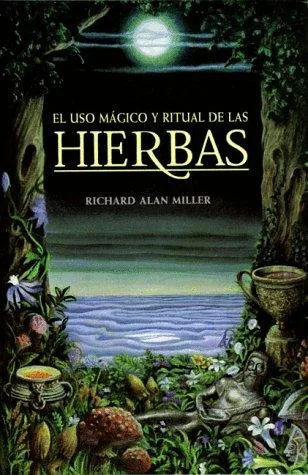
El uso mágico y ritual de las hierbas (Inner Traditions)
 65
65

El uso mágico y ritual de las hierbas (Inner Traditions)


Ophelia Vance, Mystical Literature Reviewer — Richard Alan Miller's 'The Magical and Ritual Use of Herbs' is an indispensable tome for any serious student of green magic. Miller masterfully bridges ethnobotany, folklore, and esoteric practice, presenting herbs not just as remedies, but as potent allies in spiritual transformation. His exploration of psychotropic flora is particularly insightful, revealing their historical and ritualistic significance in ways that are both scholarly and deeply experiential. This book is a profound resource for practitioners seeking to deepen their connection with the plant kingdom and integrate its energies into their magical and therapeutic work. Its comprehensive scope and Miller's authoritative yet accessible prose make it a standout.
📝 Description
65
Richard Alan Miller's 1985 book details the magical and ritual applications of plants.
This book examines the use of herbs not just for their physical properties, but for their energetic signatures and their role in ritual. Miller discusses how common plants can act as conduits to spiritual experiences. He addresses the psychotropic aspects of certain flora, viewing them as tools for accessing altered states of consciousness and connecting with spiritual entities. The text also delves into the folklore surrounding humanity's historical connection to the plant world. It encourages readers to see the inherent spiritual life in plants and considers their influence on the soul and spirit, beyond mere physical healing. The work is presented as a resource for understanding the sacred uses of plants in ritual and uncovering forgotten methods of power and healing.
Appearing in 1985, this work is situated within the Western esoteric tradition, drawing on traditions that link botanical knowledge with magical and spiritual practices. It aligns with currents of thought that view plants not merely as biological organisms but as sentient beings with distinct energetic qualities. The book's focus on ritual, consciousness alteration, and the spiritual dimension of plant use connects it to historical practices found in shamanism, witchcraft, and alchemy, offering a modern interpretation of these ancient connections.
💡 Why Read This Book?
Uncover the ancient secrets of botanical magic and its profound connection to ritual and consciousness. 'The Magical and Ritual Use of Herbs' offers a gateway to understanding the energetic properties of plants, their symbolic language, and their therapeutic applications beyond the physical. Ideal for spiritual seekers, practitioners of folk magic, and anyone yearning to deepen their connection with the natural world.
⭐ Reader Reviews
Honest opinions from readers who have explored this book.
❓ Frequently Asked Questions
What is the primary focus of this book?
The book focuses on the magical, ritualistic, and therapeutic applications of herbs, exploring their energetic properties, symbolic meanings, and historical uses in spiritual practices and consciousness alteration.
Does the book cover psychotropic plants?
Yes, it delves into the psychotropic properties of certain plants, examining their role in shamanic journeys, divination, and sacred rituals across various cultures and historical periods.
Who is Richard Alan Miller?
Richard Alan Miller is a respected author and researcher known for his work in ethnobotany, parapsychology, and the study of consciousness, with a particular focus on the intersection of plants and magic.
Is this book suitable for beginners?
While comprehensive, the book offers valuable insights for beginners interested in herbalism and magic. However, its depth may be best appreciated by those with some foundational knowledge or a strong desire to learn.
What kind of rituals are discussed?
The book discusses a range of rituals, including those for healing, protection, divination, spiritual communion, and altering consciousness, all deeply intertwined with the specific properties and symbolism of various herbs.
🔮 Key Themes & Symbolism
The Sacred Pharmacopoeia
This theme explores the concept of plants as more than mere physical entities, but as sacred vessels imbued with vital energy and ancient wisdom. It looks at how different herbs carry unique spiritual signatures, acting as conduits for divine forces, facilitating communication with nature spirits, and serving as potent tools in magical operations. The focus is on understanding the energetic resonance of plants, their symbolic language in folklore and mythology, and their role in creating sacred space and enhancing ritualistic intent, transforming mundane ingredients into powerful agents of transformation and healing.
Consciousness and Botanical Allies
This central theme examines the profound relationship between specific plants, particularly those with psychotropic properties, and the expansion of human consciousness. Miller elucidates how these botanical allies have been historically used across cultures to induce altered states, facilitate shamanic journeys, enhance divination, and deepen spiritual experiences. It moves beyond a purely pharmacological understanding to explore the symbolic and energetic pathways through which plants can unlock hidden dimensions of the mind, revealing their capacity to act as guides, catalysts, and teachers on the path of inner exploration and spiritual insight.
Ritual, Folklore, and Symbiosis
This theme investigates the intricate collection connecting herbal knowledge with ritualistic practice, ancient folklore, and the symbiotic relationship between humanity and the plant world. It explores how stories, myths, and traditions have preserved and transmitted vital information about the magical and therapeutic uses of herbs for generations. The focus is on understanding the practical application of this knowledge in crafting potent rituals, from simple healing rites to complex ceremonies, highlighting how the reverence for and understanding of plant spirits fosters a deeper connection to the earth and its inherent magical forces.
💬 Memorable Quotes
Direct passages from the work, attributed to the author.
“The herb is a key, not a door.”
— This aphorism suggests that plants are tools or facilitators, not the ultimate goal. They open pathways to deeper understanding or altered states, but the true transformation or knowledge comes from within the individual using them.
“Every leaf whispers a forgotten name.”
— This poetic phrase emphasizes the inherent sentience and ancient wisdom held within the plant kingdom, suggesting that attentive observation can reveal profound, lost knowledge.
“The root remembers what the flower forgets.”
— This highlights the grounding, foundational nature of roots in storing ancient energy and wisdom, contrasting it with the fleeting beauty and ephemeral nature of flowers, symbolizing deeper, more enduring knowledge.
“The greatest magic lies in seeing the sacred in the mundane.”
— This emphasizes the core principle of esoteric practice: finding profound spiritual significance and power not in extraordinary circumstances, but within the everyday world, such as in common plants.
💡 Key Ideas
Editorial paraphrase of the work's core concepts — not direct quotes.
Alchemy is the art of awakening the spirit within the form.
This quote positions magical practice, particularly with herbs, as a form of spiritual alchemy, focused on drawing out and activating the inherent life force or consciousness within physical substances.
🌙 Esoteric Significance
Tradition
This work draws heavily from a confluence of esoteric traditions, including Western Hermeticism, shamanism, and indigenous plant-based spiritual practices. It aligns with the Hermetic principle of 'As Above, So Below,' viewing herbs as microcosmic reflections of macrocosmic forces. The emphasis on plant spirits and communion with nature connects to animistic and shamanic worldviews, while the exploration of consciousness alteration and symbolic interpretation appeals to alchemical and Gnostic thought, offering a holistic approach to understanding the plant kingdom's role in spiritual evolution.
Symbolism
The symbolism within 'The Magical and Ritual Use of Herbs' is many-sided, treating each plant as a living sigil. Roots symbolize grounding, memory, and the underworld; leaves represent growth, vitality, and the manifest world; flowers embody beauty, spirit, and ephemeral consciousness; and seeds signify potential, rebirth, and the future. The psychotropic properties are seen as keys to unlocking symbolic gateways, allowing the practitioner to engage with archetypal energies and divine intelligences through the plant's unique energetic signature and folkloric associations.
Modern Relevance
In an age often characterized by disconnection from the natural world and a reliance on synthetic solutions, Miller's book offers a potent reminder of the intrinsic power and spiritual depth of botanical allies. Its relevance lies in its ability to guide practitioners toward a more conscious and respectful engagement with nature, fostering holistic healing that addresses mind, body, and spirit. The exploration of plant consciousness and its role in expanding awareness provides contemporary seekers with tools for personal growth, spiritual exploration, and a deeper understanding of our interconnectedness with the earth's living systems.
👥 Who Should Read This Book
This book is a treasure for a diverse audience. **Beginners** in herbalism or magic will find an accessible introduction to the deeper spiritual and ritualistic dimensions of plants. **Scholars** and researchers of ethnobotany, folklore, and comparative religion will appreciate its scholarly depth and cross-cultural insights. **Spiritual seekers** yearning for a more profound connection with nature and its inherent energies will discover a pathway to sacred communion. **Practitioners** of witchcraft, shamanism, and other esoteric disciplines will find a wealth of practical knowledge and inspiration for their ritual work and personal practice, enriching their understanding and application of botanical magic.
📜 Historical Context
Published in an era increasingly interested in alternative spiritualities and the rediscovery of ancient wisdom, Richard Alan Miller's 'The Magical and Ritual Use of Herbs' emerged as a significant contribution to the burgeoning fields of ethnobotany and esoteric studies. The late 20th century witnessed a renewed fascination with shamanism, consciousness research, and the forgotten practices of folk magic, often fueled by a desire to reconnect with nature in an increasingly industrialized world. This book tapped into that zeitgeist, offering a scholarly yet accessible exploration of a subject that had been relegated to the fringes of mainstream understanding. It provided a framework for understanding the deep historical and cultural significance of herbs, not just for their medicinal properties, but for their integral role in ritual, spiritual development, and the exploration of consciousness, bridging the gap between academic inquiry and practical occultism.
📔 Journal Prompts
Reflect on a plant in your immediate environment. What do you sense its 'spirit' or energetic essence to be, beyond its physical form?
Consider a childhood memory involving a specific plant. What was the emotional or symbolic significance of that plant in your life at that time?
If you could consult with a plant spirit for guidance on a specific life challenge, which plant would you choose and what question would you ask?
Explore the folklore or historical uses of a common herb. How does this knowledge transform your perception of its everyday presence?
Imagine yourself preparing a ritual using a specific herb. Describe the intention, the process, and the desired outcome, focusing on the symbolic role of the herb.
🗂️ Glossary
Ethnobotany
The scientific study of the relationships between people and plants. It explores how cultures use plants for medicine, food, shelter, and spiritual practices, often examining traditional ecological knowledge and its cultural significance.
Psychotropic
Relating to or denoting substances that affect the state of mind, such as hallucinogens and stimulants. In a magical context, these are often seen as tools for altering consciousness and accessing spiritual realms.
Sigil
An object or symbol believed to possess magical power. In magical traditions, sigils can be created from intent and charged with energy, often serving as focal points for ritual work or as personal talismans.
Animism
The belief that objects, places, and creatures all possess a distinct spiritual essence. In the context of herbalism, this often translates to the belief that plants have spirits or souls that can be communicated with and respected.
Hermeticism
A religious, philosophical, and esoteric tradition based on writings attributed to Hermes Trismegistus. It emphasizes principles like 'As Above, So Below,' the interconnectedness of all things, and the pursuit of divine knowledge and spiritual enlightenment.
This book appears in 3 collections
🔮 Readers Also Liked
Browse all →



More by Richard Alan Miller
All books →

From the “Ritual Magic” Collection
View all →






More Free Magic & Ritual Books
View all →