The Farseekers
 73
73

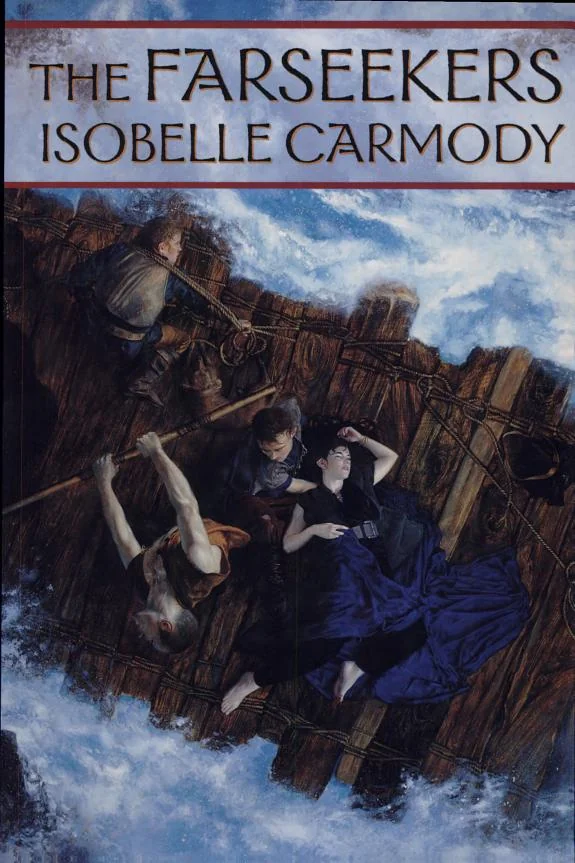
The Farseekers
Carmody's "The Farseekers" plunges deeper into the fraught world of Obernewtyn, presenting Elspeth Gordie not just as a survivor but as a nascent leader. The strength of the novel lies in its unflinching depiction of the Misfits' precarious existence, particularly the chilling presence of the Council and its "Purges." Carmody excels at portraying the internal struggles of characters grappling with immense power and societal rejection. However, the pacing in the middle section, while necessary for character development, occasionally falters, making the plot feel stretched before its crucial climax. A particularly potent moment involves Elspeth's dangerous quest, which forces her to confront her own limitations and the true cost of her abilities, a sequence that encapsulates the book's darker, more mature tone. The work ultimately succeeds as a compelling continuation, solidifying its place as a significant entry in YA speculative fiction.
📝 Description
73
Published in 2000, The Farseekers continues Isobelle Carmody's Obernewtyn Chronicles.
The Farseekers follows Elspeth Gordie, a young woman with potent psychic gifts, in a world fractured by totalitarian rule. Elspeth and other "Misfits," individuals with unregistered mental abilities, flee persecution by the Council. Their destination is Obernewtyn, a secluded mountain refuge where they can develop their powers for survival. The narrative charts their struggle against the constant threat posed by the Council, which views their abilities as dangerous.
This second novel in the Obernewtyn Chronicles expands on its post-apocalyptic setting and the societal structures that oppress those with divergent talents. Carmody's work distinguishes itself with its dark, politically charged undertones. It directly confronts themes of societal control and the persecution of individuals deemed "different." The book is suited for readers aged 12 and up who appreciate character-driven fantasy, detailed world-building, and the examination of unique abilities.
The Farseekers situates its "Misfits" within a speculative fiction tradition that examines latent human potential and its societal implications. The "Menti" abilities described, a form of unregistered psychic power, resonate with esoteric discussions of consciousness and extrasensory perception. Obernewtyn functions as a crucible for these powers, echoing historical and fictional accounts of hidden communities dedicated to cultivating unique mental disciplines away from mainstream societal interference or fear. The narrative explores how such abilities, when feared and suppressed, can lead to societal control, but when honed, can become tools for liberation and understanding.
💡 Why Read This Book?
• Gain insight into the development of psychic abilities, specifically "Farseeking," as explored through Elspeth Gordie's journey, offering a unique perspective on mental power beyond conventional fantasy tropes. • Understand the societal implications of prejudice and control through the Council's "Purges" in the year 2000's literary landscape, providing a critical lens on power dynamics. • Experience the narrative tension of a community fighting for survival on the mountain keep of Obernewtyn, illustrating resilience against overwhelming odds.
⭐ Reader Reviews
Honest opinions from readers who have explored this book.
❓ Frequently Asked Questions
What year was The Farseekers first published?
The Farseekers was first published on August 5, 2000, as the second book in the Obernewtyn Chronicles.
Who is the author of The Farseekers?
The author of The Farseekers is Isobelle Carmody, an acclaimed Australian writer known for her fantasy series.
What is Obernewtyn in The Farseekers?
Obernewtyn is a remote mountain keep that serves as a sanctuary and training ground for "Misfits" with extraordinary mental powers in the novel.
What are 'Misfits' in the context of The Farseekers?
"Misfits" are individuals with unregistered psychic or "Menti" abilities who are feared and persecuted by the totalitarian Council in the book's world.
What is the main conflict in The Farseekers?
The main conflict involves Elspeth Gordie and the other Misfits at Obernewtyn defending themselves against the oppressive Council, while Elspeth undertakes a dangerous quest.
What is the significance of 'Farseeking' in the book?
'Farseeking' refers to a psychic ability, possibly precognition or deep insight, that is central to Elspeth's character development and the plot's progression.
🔮 Key Themes & Symbolism
Persecution of the Gifted
The novel powerfully illustrates the societal fear and systematic persecution of individuals with unique mental abilities, termed 'Misfits.' The Council's 'Purges' and their fear of 'Menti' powers reflect real-world historical instances of witch hunts and the suppression of those who deviate from the norm. This theme explores the destructive consequences of intolerance and the struggle for acceptance when inherent qualities are deemed dangerous.
Sanctuary and Self-Discovery
Obernewtyn serves as more than just a physical refuge; it's a crucible for self-discovery and the development of latent psychic powers. The remote mountain keep provides a controlled environment where the Misfits can learn to harness their abilities, moving from fear and suppression to understanding and control. This theme highlights the importance of safe spaces for growth and the journey of embracing one's true nature.
Resistance and Resilience
The Farseekers chronicles the Misfits' fight for survival and autonomy against the totalitarian Council. Elspeth Gordie's leadership, though often reluctant, embodies the spirit of resistance. The narrative emphasizes the resilience of individuals and communities facing overwhelming oppression, showcasing their determination to protect their way of life and their fundamental right to exist, even when outnumbered and outgunned.
The Nature of Power
Carmody examines the dual nature of psychic power – its potential for destruction when wielded with malice or fear, and its capacity for protection and understanding when developed responsibly. Elspeth's internal struggle with her own burgeoning powers, and the Council's extreme reaction to them, question who gets to define and control power, and what the ethical responsibilities are for those who possess it.
💬 Memorable Quotes
Direct passages from the work, attributed to the author.
“The Council feared what they did not understand, and sought to eradicate it.”
— This concept highlights the core conflict driven by ignorance and fear, a recurring theme in the suppression of the Misfits and their unique abilities, reflecting broader societal tendencies.
“Obernewtyn was a place where the broken could heal and the hunted could hide.”
— This captures the dual purpose of the sanctuary: not only a refuge from external threats but also an internal space for personal recovery and the development of identity.
“Elspeth's Farseeking ability offered glimpses, but the future remained uncertain.”
— This points to the complex and often unreliable nature of precognitive or intuitive powers, suggesting that even extraordinary gifts do not guarantee a clear path forward.
“The Council's grip tightened, increasing the danger for all Menti.”
— This statement underscores the escalating threat and the pervasive control exerted by the authoritarian regime, creating a constant sense of peril for those with mental gifts.
💡 Key Ideas
Editorial paraphrase of the work's core concepts — not direct quotes.
The Misfits were forced to hone their powers before the inevitable confrontation.
This paraphrased idea emphasizes the urgent need for self-development and preparedness in the face of impending conflict with an oppressive force.
🌙 Esoteric Significance
Tradition
While not strictly adhering to a single esoteric lineage, "The Farseekers" draws from archetypal themes found in Gnosticism and Hermeticism, particularly the concept of inherent spiritual power (gnosis) suppressed by a controlling, ignorant demiurge (the Council). It explores the idea of awakening latent potentials within individuals deemed 'outsiders' by mundane society, a common thread in many mystical traditions that emphasize inner development and liberation from external dogma.
Symbolism
The mountain keep of Obernewtyn symbolizes ascent and spiritual refuge, a place for the Misfits to rise above their persecution and develop their "Menti" powers. The concept of "Farseeking" itself symbolizes intuitive perception and a deeper connection to truth or future possibilities, akin to divination. The "Purges" orchestrated by the Council represent the destructive force of ignorance and fear, seeking to extinguish inner light and conformity.
Modern Relevance
Contemporary discussions around neurodiversity, the ethics of AI and consciousness, and the societal integration of individuals with exceptional abilities echo themes present in "The Farseekers." Thinkers and practitioners exploring transhumanism, the development of enhanced cognitive functions, and the philosophical implications of mind-body dualism may find Carmody's exploration of psychic powers and societal reaction particularly relevant to current debates.
👥 Who Should Read This Book
• Young adult readers seeking fantasy with depth, exploring themes of prejudice, power, and resilience against oppressive regimes. • Enthusiasts of dystopian fiction interested in how societies react to and control individuals with unique abilities, offering a lens on social control mechanisms. • Aspiring writers and world-builders looking for examples of intricate character development and the creation of a compelling, albeit dark, speculative world.
📜 Historical Context
The Farseekers, published in 2000, emerged within a burgeoning era for young adult speculative fiction, a landscape increasingly populated by complex narratives. While authors like J.K. Rowling were capturing global attention, Carmody's work distinguished itself through its darker, more overtly dystopian themes and its direct engagement with societal control and the persecution of difference. The novel’s exploration of psychic abilities and the fear they engendered can be seen as a response to, or parallel with, ongoing philosophical and scientific inquiries into consciousness and the mind, which were gaining traction in various intellectual circles. Unlike purely escapist fantasy, Carmody's narrative grappled with political oppression and the ethics of power, positioning it as a more challenging and critical work within its genre. The initial publication in Australia also placed it within a distinct literary tradition, separate from the dominant UK/US markets.
📔 Journal Prompts
Elspeth Gordie's struggle with her 'Menti' powers, reflecting societal fear.
The symbolic significance of Obernewtyn as a sanctuary.
The Council's motivations for 'Purges' and their control over Misfits.
The meaning of 'Farseeking' in relation to personal intuition.
Resilience and community building among the persecuted characters.
🗂️ Glossary
Misfits
Individuals possessing extraordinary mental or psychic abilities (Menti) who are feared and persecuted by the ruling Council.
Menti
Refers to the psychic or mental powers possessed by the Misfits, often perceived as dangerous by the Council.
Obernewtyn
A remote mountain keep that serves as a sanctuary and training ground for Misfits, offering refuge from the Council.
Council
The totalitarian ruling body in the novel's world, which fears and seeks to control or eradicate individuals with Menti abilities.
Farseeking
A specific psychic ability possessed by Elspeth Gordie, hinting at precognition, useful insights, or the ability to perceive distant events.
Purges
The systematic persecution and elimination of individuals with Menti abilities carried out by the Council.
Menti-talented
An alternative term used to describe individuals possessing psychic or mental abilities, often in contrast to the Council's terminology.
This book appears in 1 collection
🔮 Readers Also Liked
Browse all →








From the “Extrasensory Perception” Collection
View all →







More Free Occult Philosophy Books
View all →