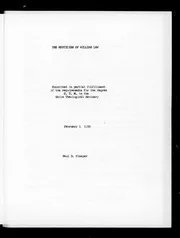
Active Meditations for Contemplative Prayer
 71
71

Active Meditations for Contemplative Prayer
Thomas Keating’s "Active Meditations for Contemplative Prayer" offers a potent distillation of his life’s work in making Centering Prayer accessible. The strength lies in its compilation, presenting Keating’s distinct, gentle voice across various themes without requiring readers to sift through his extensive bibliography. A particularly resonant passage explores the nature of "letting go" as not an act of forceful release, but a quiet, ongoing surrender to the present moment. However, the book's structure, while offering thematic unity, occasionally leads to a sense of repetition, as core ideas are revisited from slightly different angles. A limitation for some might be the inherent passivity of Centering Prayer itself, which demands a significant degree of patience and trust that may not align with all spiritual seekers’ temperaments. Nonetheless, it serves as a valuable, if undemanding, guide to cultivating interior silence.
📝 Description
71
Published in 2023, this book distills Thomas Keating's teachings on Centering Prayer.
This collection gathers the core teachings of Thomas Keating, a key figure in modern Christian contemplative practice. Compiled after his death, it condenses his extensive writings into practical guidance for Centering Prayer. The book acts as a direct source for Keating's insights on developing inner silence and sensing divine presence. It focuses on actionable advice for daily spiritual practice, moving beyond abstract ideas.
"Active Meditations for Contemplative Prayer" is suited for those seeking a clear, adaptable method for prayer and meditation. It is for people feeling overwhelmed by modern life, offering a way to find calm and spiritual grounding. Whether new to Centering Prayer or experienced, readers will find support for incorporating this practice into their lives to gain peace and self-understanding.
Thomas Keating's work stems from a long monastic tradition within Christianity, specifically the Cistercian path. His efforts, particularly through Contemplative Outreach founded in 1984, aimed to revive and make accessible the contemplative heart of this tradition for contemporary laypeople. This book represents a modern expression of that lineage, bridging ancient practices with the challenges and opportunities of 21st-century spiritual life. It offers a structured method to experience the divine presence that is central to Christian mysticism.
💡 Why Read This Book?
• You will learn the fundamental principles of Centering Prayer as taught by its modern proponent, Thomas Keating, enabling a consistent practice beyond mere relaxation techniques. • You will gain an understanding of "interior prayer" as presented in Keating’s framework, facilitating a deeper, non-verbal connection with the divine presence, as detailed in sections on the prayer of consent. • You will discover practical methods for integrating contemplative stillness into a busy 21st-century life, drawing directly from Keating's guidance on finding sacred space amidst daily routines.
⭐ Reader Reviews
Honest opinions from readers who have explored this book.
❓ Frequently Asked Questions
What is Centering Prayer according to Thomas Keating?
Centering Prayer, as taught by Thomas Keating, is a contemplative prayer practice rooted in the Christian tradition. It involves a simple, non-verbal method of "resting in God's presence" by consenting to divine action within, aiming for deeper union and interior peace.
Who founded Contemplative Outreach and when?
Contemplative Outreach was founded by Thomas Keating, along with William Meninger and Basil Pennington, in 1984. It is a global community dedicated to teaching Centering Prayer and supporting practitioners.
Is 'Active Meditations for Contemplative Prayer' suitable for beginners?
Yes, the book is highly suitable for beginners. It breaks down the practice of Centering Prayer into digestible concepts and offers practical advice, making it accessible for those new to contemplative prayer methods.
What is the significance of "active meditations" in the title?
The term "active meditations" highlights that Centering Prayer, while seemingly passive, requires an ongoing, gentle intention and "prayer of consent" to remain present with God. It's an active surrender rather than a vacant state.
When was Thomas Keating's 'Active Meditations for Contemplative Prayer' first published?
Thomas Keating's 'Active Meditations for Contemplative Prayer' was first published on January 19, 2023, posthumously compiling his teachings.
How does Centering Prayer differ from mindfulness meditation?
While both involve focus, Centering Prayer is specifically a Christian contemplative practice aiming for union with God, using a sacred word as a symbol of intention. Mindfulness typically focuses on non-judgmental awareness of the present moment without a specific theological goal.
🔮 Key Themes & Symbolism
Centering Prayer Method
The book meticulously outlines the Centering Prayer method, emphasizing its roots in the Christian contemplative tradition. It details the process of selecting a sacred word and the gentle return to this anchor when the mind wanders. Keating guides readers to understand this practice not as a technique to achieve a state, but as a "prayer of consent" to God's presence. The focus is on surrender and receptivity, fostering an "active" engagement with divine intimacy rather than passive waiting.
The Divine Indwelling
A central theme is the concept of the divine indwelling – the belief that God resides within each person. Keating's teachings encourage practitioners to become aware of this ever-present reality. The meditations serve to quiet the ego and the noise of daily life, allowing one to perceive and experience this inner divine presence more profoundly. It's about recognizing the sacred space already within, accessible through focused prayer and surrender.
Disconnection and Reconnection
Keating addresses the pervasive sense of disconnection in modern life – from oneself, others, and the divine. The book offers Centering Prayer as a powerful antidote, a means to cultivate reconnection. By practicing stillness and letting go of distractions, individuals can re-establish a vital link to their inner spiritual core. This process is depicted as a gradual unfolding, leading to greater wholeness and peace.
Grace and Surrender
The role of divine grace is paramount in Keating's exposition. He posits that the transformation experienced through Centering Prayer is ultimately God's work, facilitated by the individual's willingness to surrender. This involves releasing preconceived notions, desires, and aversions, allowing grace to operate freely. The "active" aspect lies in this continuous, gentle act of consenting to this divine unfolding.
💬 Memorable Quotes
Direct passages from the work, attributed to the author.
“The function of prayer is to bring us to the state of divine union.”
— This statement captures Keating's view of prayer not as a mere request or conversation, but as a transformative process aimed at achieving a profound, unified state of being with the divine. It underscores the ultimate goal of contemplative practices.
“Centering Prayer is a prayer of consent.”
— This highlights the active, yet surrendered, nature of the practice. It's not about forceful effort, but a gentle, ongoing willingness to allow God's presence and action to be the focus, even amidst distractions.
“Letting go is the spiritual path.”
— Interpretation: This concise statement points to the core practice of releasing attachments, thoughts, and egoic self-consciousness as the primary means of spiritual progress and encountering the divine.
“We are invited to be present to God who is present to us.”
— This emphasizes the reciprocal nature of the contemplative relationship. It's not a one-sided pursuit, but an awareness of God's constant presence and our human response of turning towards that presence.
“The fruit of silence is prayer.”
— Interpretation: This aphorism suggests that cultivating inner silence through practices like Centering Prayer naturally leads to a deeper, more authentic form of prayer, moving beyond words to direct experience.
🌙 Esoteric Significance
Tradition
Keating's work is firmly situated within the Christian contemplative tradition, specifically drawing from the lineage of Christian mysticism, often termed the "perennial wisdom" within esoteric circles. While not Gnostic or Kabbalistic, it shares with these traditions an emphasis on direct, unmediated experience of the divine. His method of Centering Prayer can be seen as a structured, practical application of the inner contemplative path that echoes practices found in various mystical schools, focusing on transcending the discursive mind to access deeper spiritual realities.
Symbolism
While "Active Meditations for Contemplative Prayer" is largely non-symbolic in its direct instruction, the concept of "sacred space" functions symbolically, representing the inner sanctuary of the soul where God resides. The "sacred word" itself, often a single, simple word chosen by the practitioner, acts as a symbol of intention – a focal point to gently return to, symbolizing the will's orientation towards the divine presence. The very act of "letting go" can be seen as a symbolic shedding of the egoic self to reveal the true, divine-infused self.
Modern Relevance
Keating's teachings remain highly relevant today, influencing contemporary Christian contemplative practice and finding echoes in secular mindfulness and meditation movements. Thinkers and practitioners interested in the intersection of psychology and spirituality, or those seeking non-dualistic experiences within a structured framework, often engage with his work. His emphasis on "active surrender" and finding stillness amidst chaos speaks directly to the challenges of modern existence, making Centering Prayer a valuable tool for mental and spiritual well-being.
👥 Who Should Read This Book
• Individuals seeking to deepen their Christian faith through contemplative practices, particularly those interested in a non-verbal approach to prayer. • Busy professionals and individuals experiencing stress, looking for practical methods to cultivate inner peace and resilience in daily life. • Students of comparative mysticism and spirituality, wanting to understand a significant modern development within the Christian contemplative tradition.
📜 Historical Context
Thomas Keating's work on Centering Prayer emerged within a mid-to-late 20th-century Christian landscape that, while rich in contemplative tradition, often saw these practices relegated to monastic enclaves. Keating, alongside contemporaries like Basil Pennington and William Meninger, spearheaded the Contemplative Outreach movement starting in 1984 to reintegrate these ancient methods into the lives of laypeople. This effort countered a prevailing emphasis on more active, outward forms of piety and evangelism. His approach drew heavily from medieval Christian mystics, such as the author of "The Cloud of Unknowing," but translated their wisdom into accessible language and practice for a modern audience. While the Catholic Church at large has generally supported contemplative practices, Keating's specific outreach model represented a significant grassroots revival. His work gained traction alongside a broader, albeit sometimes disparate, interest in meditation and spirituality across Western culture, which also saw figures like Thomas Merton exploring similar themes of interiority and interfaith dialogue.
📔 Journal Prompts
Reflect on the "prayer of consent" as described by Keating, and how it differs from a prayer of petition.
Consider the concept of "sacred space" within you; how does this idea challenge or affirm your current self-perception?
Analyze your own experience of "letting go" during daily activities, noting moments of resistance and surrender.
Explore the "divine indwelling" as presented by Keating; what does this concept imply about your relationship with God?
How might the practice of returning to your "sacred word" during distractions reshape your approach to focused tasks?
🗂️ Glossary
Centering Prayer
A contemplative prayer practice, rooted in the Christian tradition, designed to facilitate the growth of interior prayer and foster a deeper union with God. It involves a simple, non-verbal method of consenting to God's presence and action within.
Contemplative Outreach
A global community founded by Thomas Keating, William Meninger, and Basil Pennington, dedicated to teaching Centering Prayer and supporting practitioners in cultivating a life of contemplative prayer.
Prayer of Consent
The active, though gentle, willingness to allow God's presence and action to be the focus of one's prayer, even amidst distractions. It is a core element of Centering Prayer.
Sacred Word
A simple, chosen word used in Centering Prayer as a symbol of one's intention to be present to God. It serves as a gentle anchor to return to when the mind wanders.
Divine Indwelling
The theological concept that God resides within every person. Centering Prayer aims to raise awareness of this ever-present divine reality within oneself.
Interior Prayer
Prayer that focuses on the inner spiritual life and direct experience of God, rather than external rituals or vocalizations. Centering Prayer is a practice of interior prayer.
Letting Go
The process of releasing attachments, thoughts, egoic self-consciousness, and preconceived notions during contemplative practice, allowing for greater receptivity to divine grace.
This book appears in 1 collection
🔮 Readers Also Liked
Browse all →





From the “Contemplative Prayer” Collection
View all →








More Free Mysticism & Contemplation Books
View all →