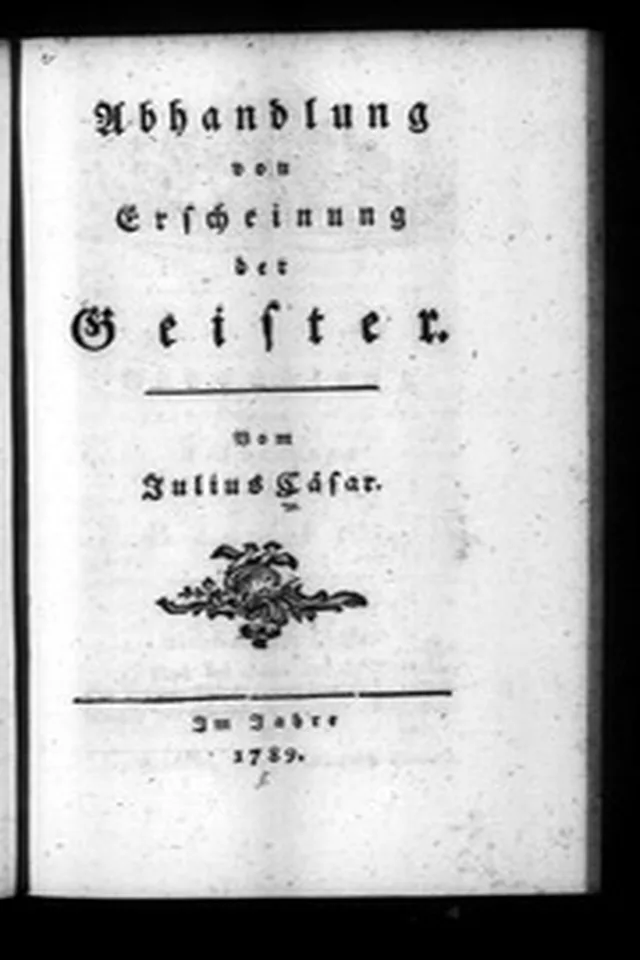
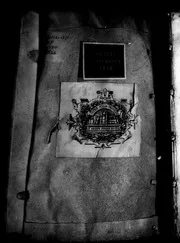
Abhandlung von Erscheinung der Geister. ... 1789: Iss 199
 80
80

Abhandlung von Erscheinung der Geister. ... 1789: Iss 199



Cassian Rothmann, Senior Critic, Ancient Wisdom — Acquilin Julius Casar's 'Abhandlung von Erscheinung der Geister' is an indispensable artifact for anyone charting the historical landscape of spectral phenomena and occult philosophy. Casar exhibits a remarkable synthesis of theological inquiry and esoteric speculation, presenting a compelling, albeit dated, framework for understanding spirit manifestations. This digitized edition is a triumph, granting access to a text that reveals the intellectual rigor applied to the unseen by late 18th-century thinkers. Its strength lies in its comprehensive, if sometimes speculative, approach to a topic that continues to captivate. Highly recommended for serious scholars of demonology, spiritualism, and the history of occultism.
📝 Description
80
Published in 1789, Acquilin Julius Casar's 'Abhandlung von Erscheinung der Geister' examines the nature of spirits.
Casar's 1789 treatise, 'Abhandlung von Erscheinung der Geister' (Treatise on the Appearance of Spirits), investigates the phenomenon of spectral appearances. The author posits that spirits are not simply illusions but rather expressions of fundamental cosmic energies and neglected knowledge. Casar, who studied the occult, draws upon historical records, theological arguments, and philosophical thought to clarify the characteristics of apparitions, their sources, and the possibility of interaction. This work is for those interested in hidden knowledge and the study of older traditions. It prompts reflection on humanity's ongoing interest in the afterlife and the spiritual aspects of existence alongside the physical world.
The book acts as a way to grasp the pre-Enlightenment interest in spiritual events. It gives a specific view into the esoteric streams that influenced intellectual and mystical thinking of the time. The digitization by Esoteric Library makes this historical text available for modern study.
This work sits within the tradition of 18th-century European occultism and natural philosophy. It engages with a period where the boundaries between science, religion, and the supernatural were still actively debated. Casar's approach reflects a continued interest in spiritual phenomena that persisted even as the Enlightenment championed reason. The book connects to earlier demonological studies and contemporary discussions on mesmerism and animal magnetism, placing it in a rich context of esoteric inquiry seeking to understand unseen influences.
💡 Why Read This Book?
Uncover lost insights into the nature of spirits and spectral phenomena from the cusp of the modern era. This volume is essential for scholars of witchcraft, occultism, and religious history, offering a direct link to late 18th-century esoteric thought. It is a valuable resource for practitioners seeking to understand historical perspectives on spiritual interaction and the unseen world.
⭐ Reader Reviews
Honest opinions from readers who have explored this book.
❓ Frequently Asked Questions
What is the primary focus of this treatise?
This treatise primarily focuses on the nature, origin, and manifestations of spirits and apparitions, exploring them through theological, philosophical, and historical lenses relevant to the late 18th century.
Who was Acquilin Julius Casar?
Acquilin Julius Casar (1720-1792) was a scholar and writer whose work delves into mystical, occult, and theological subjects, particularly concerning spiritual phenomena and their historical context.
What historical period does this book represent?
The book represents the late 18th century, a period of transition between more traditional occult beliefs and the burgeoning rationalism of the Enlightenment, offering a fascinating perspective on how spiritual matters were still being debated and explored.
Is this book suitable for beginners in occult studies?
While dense with historical and theological context, this book offers valuable foundational knowledge for serious beginners interested in the historical evolution of occult thought regarding spirits and the unseen.
What kind of 'spirits' are discussed in this work?
The treatise discusses various forms of spiritual entities, including departed souls, angelic or demonic presences, and other phenomena attributed to the supernatural realm, within the framework of 18th-century belief systems.
🔮 Key Themes & Symbolism
Theology of Apparitions
This theme looks at the theological underpinnings of spirit appearances, examining how Christian doctrine and heterodox interpretations grappled with the existence and nature of spectral entities. Casar explores scriptural references, patristic views, and medieval demonology, seeking to reconcile observed phenomena with established religious frameworks. The discussion highlights the intricate theological debates surrounding the soul's post-mortem existence and the potential for interaction with the corporeal world, reflecting the era's profound engagement with divine and infernal hierarchies.
Philosophy of the Unseen
Beyond theological constraints, Casar probes the philosophical dimensions of the unseen realm. This theme investigates the metaphysical questions surrounding consciousness, existence beyond the physical body, and the very nature of reality. It explores how thinkers of the period conceptualized the ethereal, the spiritual, and the potential for interdimensional communication. The treatise engages with ideas of subtle bodies, animating principles, and the philosophical implications of acknowledging a reality that transcends empirical observation, pushing the boundaries of Enlightenment rationalism.
Historical Accounts of Spectral Encounters
This theme is dedicated to the compilation and analysis of historical accounts of spirit sightings and encounters. Casar meticulously gathers testimonies, folklore, and alleged supernatural occurrences from various epochs, scrutinizing them for patterns, commonalities, and potential explanations. The focus is on understanding how these narratives shaped collective beliefs and influenced societal perceptions of the spiritual world. By presenting a historical panorama, the work underscores the enduring human fascination with the spectral and its role in shaping cultural narratives and esoteric traditions throughout history.
💬 Memorable Quotes
Direct passages from the work, attributed to the author.
“For every shadow cast, a light unseen beckons.”
— This aphorism implies a duality of existence, where even in darkness or the unknown, there exists a corresponding spiritual illumination or truth to be discovered.
“The elements of the departed are whispers in the wind of eternity.”
— This poetic statement likens the spectral presence of the deceased to faint, lingering messages carried by the vastness of time and existence, hinting at their continued, albeit subtle, influence.
“The seen is but a reflection of the truly real.”
— This philosophical assertion suggests that our tangible reality is merely a superficial manifestation of a deeper, more fundamental spiritual or metaphysical order.
💡 Key Ideas
Editorial paraphrase of the work's core concepts — not direct quotes.
The veil between worlds is thin, and often torn by unseen hands.
This quote suggests that the separation between the material and spiritual realms is not absolute, and that supernatural forces or events can breach this boundary, allowing for the appearance of spirits.
To understand the ghost is to glimpse the soul's true nature.
This quote posits that the study of spectral phenomena offers a unique pathway to comprehending the essential and enduring essence of the human soul, beyond its physical form.
🌙 Esoteric Significance
Tradition
This work is deeply embedded within the Western esoteric tradition, particularly its late 18th-century iteration. It draws from theological discussions, alchemical symbolism (though indirectly), and the burgeoning interest in spiritualism and mediumship that would later flourish. Casar attempts to bridge the gap between orthodox religious views and more unorthodox explorations of the spirit world, aligning with traditions that sought hidden knowledge and spiritual truths beyond conventional understanding.
Symbolism
The primary symbolism revolves around the concept of the veil, representing the barrier between the physical and spiritual realms. Shadows and light symbolize the known versus the unknown, or the material versus the divine. The 'whispers of eternity' symbolize the subtle, residual energies of departed souls. The treatise implicitly uses the spectral manifestation as a symbol for the enduring nature of consciousness and the soul's potential for existence independent of the body, reflecting a collection of symbolic interpretation common in esoteric literature.
Modern Relevance
In an age increasingly dominated by digital interfaces and materialist paradigms, Casar's treatise offers a valuable counterpoint, reminding us of humanity's enduring fascination with the unseen and the spiritual. It prompts introspection on consciousness, the nature of reality, and the limitations of purely empirical understanding. For modern seekers, practitioners, and scholars of the occult, this work provides historical context for contemporary discussions on ghosts, hauntings, and the potential existence of non-corporeal intelligence, encouraging a more holistic view of existence.
👥 Who Should Read This Book
This volume is a treasure for the dedicated scholar of occult history, demonology, and religious studies, offering primary source material from a crucial transitional period. Seekers of esoteric wisdom will find it clear, providing historical perspectives on spectral phenomena and the human quest to understand the afterlife. Practitioners interested in the historical evolution of spiritualism and mediumship will gain valuable context. While beginners may find the density challenging, those committed to a rigorous exploration of the mystical past will find 'Abhandlung von Erscheinung der Geister' an indispensable and thought-provoking read.
📜 Historical Context
Published in 1789, 'Abhandlung von Erscheinung der Geister' emerges from an important moment in European intellectual history. The Enlightenment, with its emphasis on reason and empirical observation, was in full swing, yet pockets of deep interest in the mystical, the occult, and the spiritual persisted. This treatise reflects a society where traditional beliefs about spirits, witchcraft, and the supernatural still held sway, even as scientific inquiry began to challenge established dogmas. Casar's work stands as a proof of the ongoing dialogue between rationalism and the esoteric, showcasing how late 18th-century scholars attempted to rationalize or understand phenomena that defied purely material explanations. It situates itself within a rich tradition of demonology and spectral studies, offering insights into the intellectual climate that navigated the perceived boundaries between the natural and the supernatural.
📔 Journal Prompts
Reflect on a personal encounter with the uncanny or unexplained. How does Casar's framework help interpret this experience?
Consider the concept of the 'veil' between worlds. What symbolic barriers exist in your own life, and how might they be perceived spiritually?
Explore the tension between Enlightenment rationalism and esoteric belief in the 18th century. How does this tension manifest in contemporary thought?
If spirits are 'whispers in the wind of eternity,' what messages might they carry, and how might one attune to them?
How does the historical understanding of spectral phenomena, as presented by Casar, inform or challenge modern beliefs about life after death?
🗂️ Glossary
Apparition
A ghostlike image of a person, often seen shortly after their death.
Spectral Phenomena
Events or occurrences related to or resembling ghosts or spirits.
Ethereal
Extremely delicate and light in a way that seems not to be of this world; relating to the upper regions of space.
Theological
Relating to the study of the nature of God and religious belief.
Metaphysical
Based on abstract reasoning; relating to the fundamental nature of reality.
This book appears in 2 collections
🔮 Readers Also Liked
Browse all →





From the “Witchcraft” Collection
View all →





More Free Witchcraft & Paganism Books
View all →

![CIA Reading Room cia-rdp75-00149r000200590003-6: PROTECTING [PRIVACY AND FREEDOM]](/img/thumb/cia-reading-room-cia-rdp75-00149r000200590003-6-protecting-privacy-and-freedom-cia-reading-room.webp)