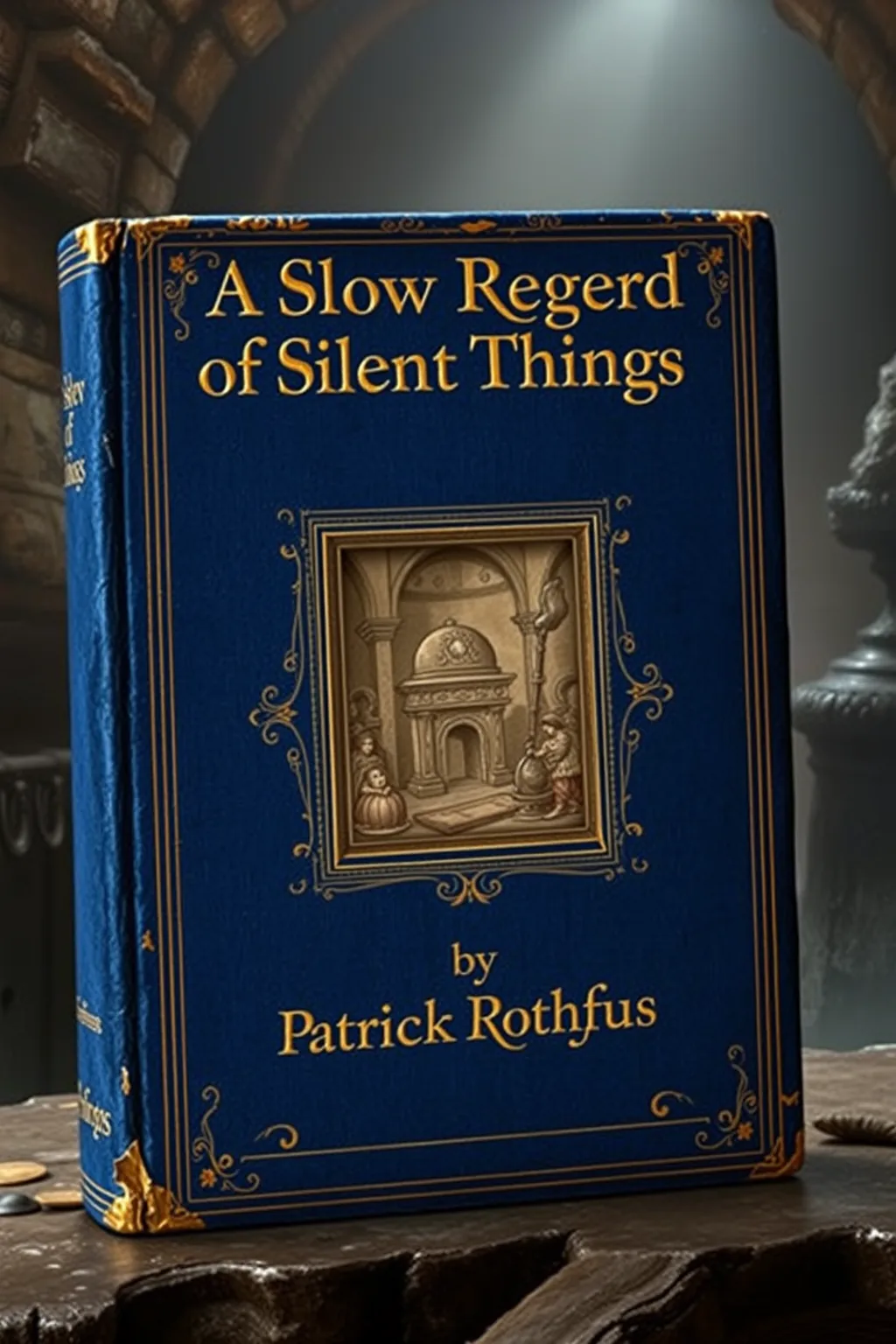
A Slow Regard of Silent Things
 80
80

A Slow Regard of Silent Things
Patrick Rothfuss’s 2016 novella, A Slow Regard of Silent Things, presents a stark departure from his usual narrative fare, opting for an experiential immersion into the meticulous craft of magic. The strength of this work lies in its almost tactile depiction of Kvothe’s process within his workshop. Rothfuss excels at rendering the sensory details – the smell of wood shavings, the feel of tools, the subtle shifts in magical energy – creating a palpable atmosphere of focused creation. However, this very strength can also be its limitation. The absence of dialogue or traditional plot progression may alienate readers accustomed to more conventional storytelling, leaving them adrift in a sea of detailed actions without clear narrative anchors. The extended passage detailing the construction of a specific magical binding, for instance, is both beautiful in its execution and potentially challenging in its lack of conventional pacing. While it offers a unique window into a specific kind of magical practice, its experimental nature requires a specific kind of readerly patience. It is a quiet, intense focus on doing, rather than telling.
📝 Description
80
Patrick Rothfuss's 2016 novella, A Slow Regard of Silent Things, centers on a single act of magic.
This novella bypasses typical narrative arcs in favor of a focused, almost meditative look at a single magical event. The story follows Kvothe in his workshop as he undertakes a complex piece of sympathetic magic. The writing emphasizes the detailed and careful process of this act, creating an immersive experience rather than a plot-driven story.
It is not a book for those expecting the broad scope of Rothfuss's Kingkiller Chronicle. Instead, it will interest readers who enjoy experimental fiction, quiet observation, and a close examination of how magic works. The text appeals to those curious about the philosophy behind magic, the act of creation, or the sensory details of intricate craftsmanship.
Published in 2016, the novella's focus on meticulous, ritualistic magic aligns with traditions that value process and intent. It shows a form of magic based on deep understanding and connection, where actions on one thing affect another through unseen links. The work highlights the relationship between a craftsman, their materials, and their workshop, suggesting a connection between focused will and tangible results.
💡 Why Read This Book?
• You will experience a unique literary approach to magic, focusing on the sensory and procedural aspects of sympathetic binding as detailed in the workshop scenes, offering a tangible understanding of magical craft. • You will gain an appreciation for the profound connection between a creator and their work, exemplified by Kvothe’s deep focus and interaction with materials and tools, a theme explored throughout the novella’s 2016 publication. • You will feel the meditative quality of focused, intricate work, understanding how Rothfuss uses descriptive prose to build atmosphere and convey the internal state of a character engaged in a complex magical undertaking.
⭐ Reader Reviews
Honest opinions from readers who have explored this book.
❓ Frequently Asked Questions
What is the main difference between A Slow Regard of Silent Things and Rothfuss's other books?
Unlike the Kingkiller Chronicle, A Slow Regard of Silent Things (2016) is a novella that foregoes traditional plot and dialogue for a focused, descriptive exploration of a magical process within a single setting.
Who is the main character in A Slow Regard of Silent Things?
The central figure is Kvothe, the protagonist from Patrick Rothfuss's Kingkiller Chronicle, but this novella focuses solely on his solitary magical work, not his broader adventures.
What is the primary theme explored in this book?
The primary theme is the intricate process of sympathetic magic and creation, emphasizing the meticulous actions, sensory details, and deep focus involved in magical craftsmanship.
Is A Slow Regard of Silent Things a difficult read?
Its difficulty lies in its unconventional structure; it requires patience and an appreciation for descriptive prose and internal focus rather than external plot, published in 2016.
What is sympathetic magic as depicted in the book?
Sympathetic magic involves creating a link between two things, where an action performed on one affects the other, a concept Rothfuss visually demonstrates through Kvothe's workshop activities.
Does this book contain magic systems similar to other fantasy novels?
It depicts a form of magic rooted in understanding and manipulating connections (sympathy), focusing on the 'how' of its execution rather than broad, codified rules, a departure from many detailed magic systems.
🔮 Key Themes & Symbolism
The Art of Creation
This work intensely focuses on the act of creation itself, particularly the intricate and precise labor involved in performing a complex magical task. It details the selection of materials, the use of tools, and the step-by-step process of building or binding something through magic. The 2016 publication date places it within a context where authors were exploring more focused thematic content. It suggests that the magic is not just in the outcome but deeply embedded in the meticulous, almost devotional process undertaken by the practitioner, Kvothe.
Sympathetic Resonance
The core magical concept explored is sympathy, the idea that objects or entities can be linked, and actions performed on one will affect the other. The novella illustrates this not through exposition but through Kvothe's actions: carefully preparing materials, understanding their intrinsic properties, and manipulating them to create or reinforce a magical connection. This focus on the 'how' of sympathetic magic, rather than its broader applications, allows for a detailed examination of its principles in practice.
The Workshop as Sacred Space
Kvothe's workshop becomes a microcosm of focused intent and magical practice. The description of the environment – the tools, the smells, the textures – emphasizes its importance as a place where the mundane and the magical converge. It's portrayed as a space of deep concentration, where the outside world fades away, and the practitioner's entire being is dedicated to the task at hand. This elevation of the workspace aligns with traditions that view dedicated spaces as crucial for ritual and effective magic.
Silence and Observation
The title itself, 'A Slow Regard of Silent Things,' points to the novella's emphasis on quiet observation and patient understanding. The narrative unfolds slowly, mirroring the deliberate pace of Kvothe's work. It suggests that true understanding and mastery of magic, or indeed any craft, comes not from grand pronouncements but from patient, silent attention to the details and the inherent nature of the 'silent things' – the materials, the tools, the unseen forces.
💬 Memorable Quotes
Direct passages from the work, attributed to the author.
“Magic was a matter of knowing the right way to do things.”
— This interpretation emphasizes the procedural and skillful aspect of magic presented in the novella. It frames magic not as an innate talent or a mysterious force, but as a craft learned through careful study, practice, and adherence to specific, effective methods.
“The smell of wood shavings and drying herbs filled the air.”
— This simple descriptive quote grounds the magical proceedings in tangible sensory detail. It illustrates Rothfuss's technique of immersing the reader in the physical environment of the workshop, making the magical process feel more real and immediate.
“Sympathy was about connection, about making one thing stand for another.”
— This interpretation defines the core magical principle explored. It highlights the relational aspect of sympathy, where understanding and manipulating the links between disparate elements are key to its practice, as shown in the novella.
💡 Key Ideas
Editorial paraphrase of the work's core concepts — not direct quotes.
The only way to learn the name of a thing is to know it better than it knows itself.
This paraphrased concept highlights the deep, almost intimate understanding required to master or command something. It suggests that true knowledge transcends surface-level familiarity, demanding an insight into the very essence or 'self' of the subject.
He worked with the quiet patience of a man who had learned that the most important things often took the longest.
This paraphrased concept underscores the novella's theme of deliberate pacing and the value of sustained effort. It suggests that significant achievements, particularly in magical or creative endeavors, are the result of long, patient dedication rather than quick results.
🌙 Esoteric Significance
Tradition
While not explicitly adhering to a single lineage, the novella's focus on sympathetic magic and deep understanding of materials echoes principles found in Western Esotericism, particularly Hermeticism and certain alchemical traditions that emphasize process, intent, and the interconnectedness of all things. The idea of 'knowing' a thing to influence it aligns with concepts of gnosis and the power of true names. It departs from more overtly religious or theological esoteric frameworks by centering on a practical, almost artisanal application of magical principles.
Symbolism
The primary symbols are the tools of the craft – hammers, knives, precisely measured components – which represent the practitioner's skill, knowledge, and focused intent. The workshop itself symbolizes a space of transformation, where raw materials are brought into being through dedicated effort. The silent, ongoing process of magical binding symbolizes the patient, often unseen work required to achieve profound change or creation, reflecting deeper esoteric principles of manifestation and the power of focused will.
Modern Relevance
Contemporary practitioners of various magical disciplines, particularly those interested in ritual craft, sympathetic magic, or the philosophy of making, find resonance in Rothfuss's detailed depiction. Thinkers exploring the intersection of consciousness and material reality, or the meditative aspects of skilled labor, might draw parallels. Its focus on process over outcome makes it relevant to modern discussions of mindfulness, deliberate practice, and the value of slow, intentional creation in a fast-paced world.
👥 Who Should Read This Book
• Aspiring practitioners of sympathetic magic or ritual craft seeking a literary exploration of process and intent. • Readers of experimental or literary fantasy who appreciate atmospheric prose and a focus on detailed magical execution over plot. • Students of narrative structure interested in how an author can create immersion and tension through description and sensory detail alone, without conventional dialogue or conflict.
📜 Historical Context
Patrick Rothfuss's A Slow Regard of Silent Things, published in 2016, emerged in a literary landscape where authors often explored supplementary or experimental works alongside their major series. While not directly tied to a historical esoteric movement, its focus on the meticulous, almost ritualistic practice of magic aligns with certain interpretations of Hermeticism and other traditions that emphasize the sacredness of craft and deep understanding. Its publication occurred during a period of significant growth in the fantasy genre, with authors like N.K. Jemisin and Brandon Sanderson also releasing notable works, though Rothfuss’s novella took a decidedly different, introspective path. Unlike the more plot-driven fantasy prevalent at the time, it prioritized atmosphere and process. The work’s reception was largely framed by expectations set by his prior Kingkiller Chronicle novels, with many reviewers noting its experimental nature and quiet intensity. It offered a counterpoint to the more action-oriented narratives, focusing instead on the internal experience and detailed execution of magical work.
📔 Journal Prompts
Kvothe's meticulous preparation of materials for binding, as detailed in the novella's 2016 publication.
The quiet, focused atmosphere of the workshop as a space for magical creation.
The concept of 'knowing a thing better than it knows itself' as applied to craft.
The sensory details: smells, textures, and sounds of silent work.
The deliberate, slow pacing of the magical process described.
🗂️ Glossary
Sympathy
A form of magic based on the principle of connection, where an action performed on one object or entity affects another linked object or entity. It requires understanding the intrinsic nature of the things being linked.
Binding
In the context of the novella, a specific act of sympathetic magic that creates or reinforces a connection between two or more elements, often involving precise construction and energetic manipulation.
Workshop
The physical space where Kvothe conducts his magical work, described in detail. It serves as a microcosm of the magical process, filled with tools, materials, and the atmosphere of focused creation.
Naming
The act of understanding the true essence or fundamental nature of a thing, which grants the namer a degree of control or influence over it. Implied through Kvothe's deep understanding of his materials.
Regard
A look, view, or notice. In the title, it suggests a slow, deliberate, and attentive observation, particularly of things that are usually overlooked or silent.
Silent Things
Refers to the inanimate objects, materials, and subtle forces that are central to the magical process. The novella encourages a deep, patient observation of these elements.
Kvothe
The protagonist of Patrick Rothfuss's Kingkiller Chronicle series, who is depicted in this novella performing a complex act of magical creation within his workshop.
🔮 Readers Also Liked
Browse all →









More by Patrick Rothfuss
All books →




More Free Alchemy & Hermeticism Books
View all →