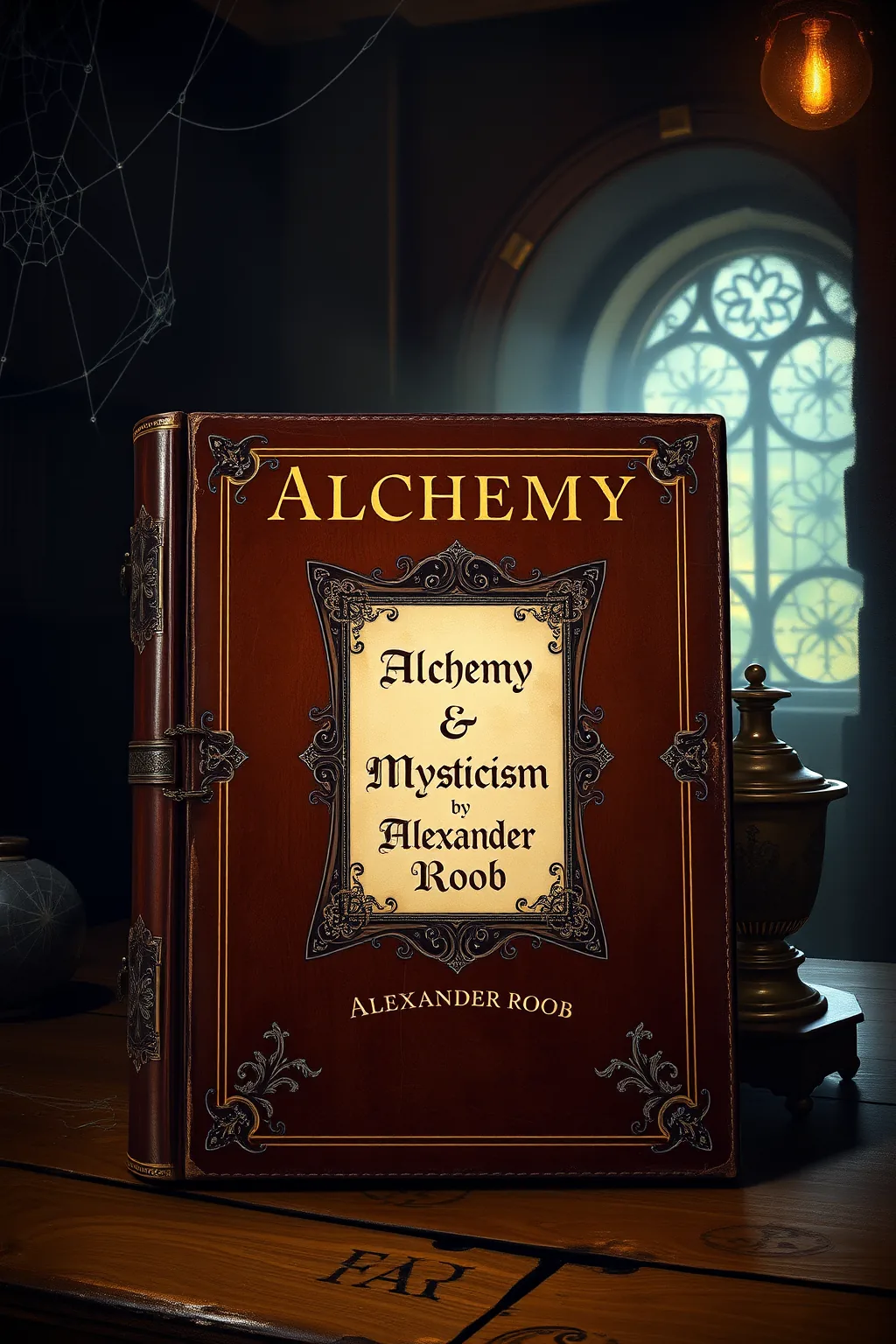
Alchemy & mysticism
 77
77

Alchemy & mysticism
Alexander Roob’s Alchemy & Mysticism offers a substantial scholarly overview that admirably distinguishes between historical alchemical theory and speculative mysticism. Its strength lies in its detailed engagement with visual culture – the intricate woodcuts and engravings that served as alchemical allegories are given ample space and thoughtful analysis. A particular passage discussing the symbolic representation of the *coniunctio oppositorum* through the embrace of royal figures is both illuminating and representative of the book's depth. However, the sheer density of information and the academic prose can, at times, render the material less approachable for the casual reader. While the book meticulously details the symbolic landscape, it could benefit from more direct comparisons to contemporary mystical traditions beyond the obvious Hermetic and Gnostic links. Ultimately, Roob provides a valuable, if demanding, resource for understanding alchemy's visual and philosophical heritage.
📝 Description
77
Alexander Roob's Alchemy & Mysticism, published in 2009, examines alchemy and mysticism's shared concerns.
Alexander Roob's Alchemy & Mysticism analyzes the historical and practical connections between alchemy and mysticism across different cultures and time periods. The book argues that these fields share fundamental interests in transformation, spiritual progress, and the hidden order of the cosmos. It is not a guide to performing alchemical operations, but rather a scholarly review of the philosophy behind them and their links to other esoteric systems.
This work is intended for students and academics specializing in Western esotericism, the history of religion, and the history of thought. It will particularly interest those drawn to alchemy's symbolic language, its philosophical meanings, and its relationship with Hermeticism, Gnosticism, and Kabbalah. Readers who want a detailed academic survey, rather than practical instructions, will find this book valuable.
Published in 2009, Roob's book arrives at a time of increased academic and public attention to esoteric subjects. It builds on scholarship from the late 19th century onward that began to reassess alchemical texts and practices. The book positions alchemy as more than just early chemistry, but as a complex philosophical and spiritual discipline active during the Renaissance and Enlightenment. These periods often saw alchemy interacting with, or standing apart from, established religious and scientific views.
💡 Why Read This Book?
• Gain a nuanced understanding of alchemy's philosophical dimensions, moving beyond its common association with mere metallurgy, as explored through Roob's analysis of the *prima materia*. • Appreciate the intricate visual language of alchemical texts, learning how symbols in illustrations from the Renaissance period conveyed complex spiritual and transformative ideas. • Discover the deep connections between alchemical symbolism and other esoteric traditions, particularly Hermeticism and Gnosticism, as illuminated by Roob's scholarly approach.
⭐ Reader Reviews
Honest opinions from readers who have explored this book.
❓ Frequently Asked Questions
What is the primary focus of Alexander Roob's Alchemy & Mysticism?
The book primarily focuses on the historical, philosophical, and symbolic aspects of alchemy, examining its interconnectedness with various mystical traditions. It analyzes alchemical texts and imagery rather than providing practical instructions for alchemical operations.
When was Alchemy & Mysticism first published?
Alchemy & Mysticism by Alexander Roob was first published in 2009, contributing to a later wave of scholarship on esoteric subjects.
Does the book offer practical alchemical recipes?
No, the book is an analytical and historical survey. It does not offer practical alchemical recipes or instructions for performing alchemical processes. Its emphasis is on understanding the theory and symbolism.
What historical periods does Alchemy & Mysticism cover?
The work covers a broad sweep of history, with significant attention given to periods when alchemical thought was prominent, such as the Renaissance and the Enlightenment, examining its evolution through centuries of manuscript and print culture.
How does this book relate to Hermeticism?
Alchemy & Mysticism explores the deep philosophical and symbolic links between alchemical practices and Hermetic traditions. It positions alchemy as a significant manifestation of Hermetic thought, concerned with cosmic correspondences and spiritual transformation.
Is the book suitable for beginners in esoteric studies?
While rich in detail, the book's academic tone and dense subject matter may be more suitable for those with some prior interest or background in esoteric studies or history of ideas, rather than absolute beginners.
🔮 Key Themes & Symbolism
The Visual Language of Alchemy
Alchemy & Mysticism places considerable emphasis on the visual representations that accompanied alchemical texts. These are not mere illustrations but complex symbolic allegories that convey philosophical and spiritual doctrines. Roob analyzes the iconography of transformation, the interplay of elements, and the stages of the Great Work as depicted in woodcuts and engravings from sources like the *Atalanta Fugiens*. Understanding these images is presented as crucial to grasping the alchemist's worldview and the esoteric meaning of their pursuit.
Spiritual Transformation and the Great Work
The book frames alchemy not as a primitive science but as a profound system for spiritual and psychological transformation. The 'Great Work' is explored as a metaphor for inner purification and the attainment of a higher state of consciousness, often symbolized by the creation of the Philosopher's Stone. This process involves the integration of opposites and the refinement of the soul, mirroring the alchemical manipulation of base matter into gold.
Interconnections with Esoteric Traditions
Roob meticulously details how alchemical thought is interwoven with other esoteric lineages, most notably Hermeticism and Gnosticism. The concept of *as above, so below*, central to Hermeticism, finds resonance in alchemical cosmology. Furthermore, the Gnostic emphasis on hidden knowledge and liberation from material constraints aligns with the alchemist's quest for the *lapis philosophorum*. The book charts these dialogues and shared conceptual spaces across centuries.
Symbolism of the Elements and Prima Materia
Central to the alchemical worldview discussed in this volume are the classical elements (earth, air, fire, water) and the enigmatic *prima materia*. Roob examines how these fundamental concepts were interpreted symbolically – not just as physical substances but as principles governing both the cosmos and the inner human landscape. The *prima materia*, the chaotic, undifferentiated starting point, is presented as a key to unlocking the secrets of creation and transformation.
💬 Memorable Quotes
Direct passages from the work, attributed to the author.
“Alchemical imagery frequently employed royal allegories to depict the union of opposites.”
— This concept underscores the symbolic language of alchemy, suggesting that the integration of conflicting forces (like masculine and feminine, sun and moon) was often represented through the archetypal imagery of king and queen, signifying a harmonious resolution.
“The *prima materia* represented the potentiality of all creation.”
— This interpretation focuses on the fundamental alchemical substance, emphasizing its role not just as a physical starting point but as a symbol of primordial chaos and the infinite potential from which all forms arise.
💡 Key Ideas
Editorial paraphrase of the work's core concepts — not direct quotes.
The pursuit of the Philosopher's Stone was often a metaphor for spiritual perfection.
This paraphrase highlights the book's argument that alchemical goals extended far beyond material wealth or scientific discovery, pointing to an inner, spiritual dimension of the alchemist's quest for ultimate knowledge and transformation.
Early printed alchemical texts relied heavily on visual allegory.
This paraphrase points to the importance Roob places on the visual elements within alchemical literature. It suggests that the complex symbolic imagery in woodcuts and engravings was integral to conveying the esoteric teachings of the time.
Alchemy shares deep roots with Hermetic philosophy.
This statement summarizes a key thesis of the book, emphasizing the philosophical kinship and shared conceptual frameworks between alchemical pursuits and the ancient Hermetic tradition, particularly concerning cosmic principles and spiritual ascent.
🌙 Esoteric Significance
Tradition
This work is firmly situated within the study of Western Esotericism, specifically examining traditions that blend Hermetic philosophy, Neoplatonism, and Gnosticism with the practices and symbolism of alchemy. Roob positions alchemy not as an isolated phenomenon but as a potent expression of a broader esoteric worldview concerned with cosmic correspondences, spiritual transformation, and the hidden unity of creation.
Symbolism
The book explores potent alchemical symbols such as the *coniunctio oppositorum* (union of opposites), often depicted through the embrace of royal figures, representing the integration of masculine and feminine principles. The *prima materia*, the undifferentiated primordial substance, is explored as a symbol of both cosmic potential and the raw state of the human soul requiring refinement for spiritual attainment.
Modern Relevance
Contemporary practitioners and scholars of Hermeticism, esoteric psychology, and comparative mysticism often draw upon works like Roob's to understand the symbolic language and philosophical underpinnings of these traditions. Its detailed analysis of alchemical imagery provides a valuable resource for those seeking to grasp the visual and conceptual vocabulary that continues to influence modern esoteric thought and practice.
👥 Who Should Read This Book
• Students of Western Esotericism: Those seeking a rigorous academic overview of alchemy's philosophical and symbolic dimensions, its historical evolution, and its connections to Hermeticism and Gnosticism. • Art Historians and Symbolism Enthusiasts: Individuals interested in deciphering the intricate visual language of Renaissance and early modern alchemical illustrations and understanding their esoteric meanings. • Comparative Religion Scholars: Researchers exploring the intersection of religious thought, mystical practices, and philosophical inquiry across different historical periods and cultural contexts.
📜 Historical Context
Published in 2009, Alexander Roob's *Alchemy & Mysticism* emerged into a scholarly landscape that had long since moved beyond viewing alchemy solely as a precursor to modern chemistry. The late 20th century saw significant contributions from scholars like Frances Yates, who illuminated the Renaissance esoteric context, and Jungian psychology, which reinterpreted alchemical processes psychologically. Roob’s work builds on this foundation, offering a detailed examination of alchemical symbolism, particularly its visual manifestations, from late antiquity through the early modern period. It engages with the intellectual currents of Hermeticism, Neoplatonism, and Kabbalah, which often informed alchemical thought. While not a direct polemic against a specific competing school, the book implicitly counters reductionist interpretations by presenting alchemy as a rich philosophical and spiritual discipline, a perspective that gained traction as academic interest in Western esotericism grew.
📔 Journal Prompts
The symbolism of the *coniunctio oppositorum* as depicted in alchemical art.
Reflect on the concept of the *prima materia* and its potential meaning for personal transformation.
How do the visual allegories of alchemy, such as royal unions, convey spiritual or psychological states?
Consider the parallels between the alchemist's quest and the pursuit of hidden knowledge in Gnosticism.
Explore the Hermetic principle of 'as above, so below' within the context of alchemical cosmology.
🗂️ Glossary
Prima Materia
The fundamental, undifferentiated substance from which all things are believed to be created in alchemical theory. It represents chaos, potentiality, and the starting point for the Great Work.
Philosopher's Stone (Lapis Philosophorum)
The legendary alchemical substance said to be capable of transmuting base metals into gold and/or bestowing immortality. Symbolically, it represents spiritual perfection and ultimate wisdom.
Coniunctio Oppositorum
Latin for 'union of opposites.' A key alchemical concept symbolizing the reconciliation of dualistic forces (e.g., masculine/feminine, sun/moon) to achieve wholeness and the creation of the Philosopher's Stone.
Great Work (Main work)
The entire alchemical process, from the initial preparation of the *prima materia* to the creation of the Philosopher's Stone. It is often interpreted as a metaphor for spiritual purification and enlightenment.
Hermeticism
A religious, philosophical, and esoteric tradition based primarily upon writings attributed to Hermes Trismegistus. It emphasizes principles like 'as above, so below' and the interconnectedness of the cosmos.
Gnosticism
A complex set of religious and philosophical ideas and systems that emerged in the first century CE. Gnostics sought salvation through esoteric knowledge (gnosis) and often viewed the material world as flawed or evil.
Allegory
A story, poem, or picture that can be interpreted to reveal a hidden meaning, typically a moral or political one. Alchemical texts frequently employed allegory to conceal their esoteric teachings.
🔮 Readers Also Liked
Browse all →


![Herrman's [sic] black art](/img/thumb/herrman-s-sic-black-art-alexander-herrmann.webp)





More by Alexander Roob
All books →





More Free Alchemy & Hermeticism Books
View all →