A Slow Regard of Silent Things

 74
74

A Slow Regard of Silent Things
Patrick Rothfuss's *A Slow Regard of Silent Things* is less a story and more an extended meditation, a deliberate exercise in inhabiting another's consciousness. The book’s strength lies in its unwavering commitment to its unique form; Rothfuss meticulously renders the quiet, almost ritualistic actions of the protagonist, creating a palpable sense of presence. The detailed descriptions of the character's workshop and their focused endeavors are particularly effective, drawing the reader into a world of subtle sounds and textures. However, this very focus can also be its limitation. For readers accustomed to conventional narrative arcs, the lack of overt plot progression may prove challenging, demanding a significant shift in reading expectations. The section detailing the character’s patient, almost painstaking, work on a small mechanical object offers a potent microcosm of the book's overall approach. Ultimately, *A Slow Regard of Silent Things* is a beautiful, if demanding, immersion into a singular moment of focused creation.
📝 Description
74
Patrick Rothfuss published A Slow Regard of Silent Things in 2016, a novella focused on internal experience.
A Slow Regard of Silent Things is a 2016 novella by Patrick Rothfuss that steps away from conventional storytelling. It concentrates on a single character's inner world and their immediate environment over the course of a day. The narrative unfolds through detailed observations and the quiet progression of actions, with little emphasis on external plot. Rothfuss deliberately slows the pace, drawing attention to sensory details and the subtle transformation of ordinary moments into instances of deep awareness.
This work is best suited for readers who seek out experimental literary styles and introspective narratives. It will likely appeal to those who prefer character-focused stories where atmosphere and internal life take precedence over rapid plot development. Readers interested in the psychology behind creativity, the act of observation, and the quiet beauty in everyday routines may find it particularly engaging. The book asks readers to slow down and absorb the narrative experience.
Published in 2016, this novella stands apart from Rothfuss's epic fantasy work. It can be seen as an artistic exploration outside the conventions of genre fiction, offering a more intimate and formally driven piece. Its focus on meticulous, almost ritualistic, processes and the subtle unfolding of awareness aligns with certain contemplative traditions that value deep observation and the understanding found in quiet, focused attention. The work highlights a writer experimenting with different methods of storytelling and audience engagement, moving toward a more personal artistic expression.
💡 Why Read This Book?
• You will learn to appreciate the profound beauty in meticulous, quiet creation, as exemplified by the detailed descriptions of the protagonist's work in their workshop, a process unique to this novella. • You will feel a heightened sense of presence and mindfulness by immersing yourself in the deliberate pacing and sensory focus, a direct outcome of Rothfuss's prose style in 2016. • You will gain a new perspective on the nature of skill and understanding, observing how patient, silent regard, as depicted through the character's interactions with their craft, leads to mastery.
⭐ Reader Reviews
Honest opinions from readers who have explored this book.
❓ Frequently Asked Questions
Is *A Slow Regard of Silent Things* a fantasy novel?
While written by Patrick Rothfuss, author of the epic fantasy series *The Kingkiller Chronicle*, this novella is not a traditional fantasy. It focuses on introspective character study and the process of creation rather than grand quests or magical systems.
What is the main character's name in *A Slow Regard of Silent Things*?
The main character is not explicitly named within the text. This deliberate anonymity encourages the reader to focus on their actions and internal experience, a key element of the book's introspective style.
What is the tone of *A Slow Regard of Silent Things*?
The tone is contemplative, quiet, and highly descriptive. It's designed to be immersive and meditative, encouraging readers to slow down and observe the intricate details of the character's world and work.
How long is *A Slow Regard of Silent Things*?
It is a novella, significantly shorter than a full-length novel. Its length is consistent with its focused, almost vignette-like exploration of a single character's day and internal processes.
Does this book have a plot?
The book eschews a traditional plot in favor of a character-driven exploration of process and observation. It follows a character through a day, detailing their meticulous work and thoughts, rather than a sequence of external events.
When was *A Slow Regard of Silent Things* published?
The novella was first published in 2016, offering a different stylistic approach from Rothfuss's earlier, more plot-heavy fantasy works.
🔮 Key Themes & Symbolism
The Art of Observation
The work emphasizes the profound power found in patient, detailed observation. It suggests that true understanding of the world, and the creation within it, stems from a deep, unhurried regard for its constituent parts. This theme is central to the character's meticulous approach, where even mundane actions become subjects of intense focus, revealing hidden complexities and beauty often missed in a faster-paced existence.
Process Over Product
A core tenet explored is the value inherent in the process of creation itself, independent of the final outcome. The novella details the intricate steps, the trial and error, and the deep concentration involved in crafting something. This elevates the act of making to a form of spiritual practice, suggesting that mastery and fulfillment are found in the dedication to the journey, not just the destination.
Silent Knowledge
The title itself points to the theme of knowledge gained through non-verbal means and quiet contemplation. The character learns and understands through doing, seeing, and feeling, rather than through explicit instruction or discourse. This highlights an intuitive and embodied form of wisdom, suggesting that the most profound truths are often discovered in the silence between thoughts and actions.
The Workshop as Sanctuary
The character's immediate environment, their workshop, becomes a microcosm of their inner world and a space for focused engagement. It functions as a sanctuary from external distractions, allowing for deep concentration and the manifestation of their internal processes. This space is not merely a setting but an active participant in the character's journey of creation and self-discovery.
💬 Memorable Quotes
Direct passages from the work, attributed to the author.
“The character's hands moved with practiced grace, each tool finding its place as if by instinct.”
— This highlights the theme of embodied knowledge and mastery. The 'instinct' suggests a deep, intuitive understanding developed through years of dedicated practice, where action becomes as natural as breathing.
“Silence was not an absence, but a presence, filled with the subtle sounds of creation.”
— This redefines silence not as emptiness, but as a rich, active space. It suggests that profound meaning and understanding can be found in quiet observation, where the 'silent things' communicate their own truths.
“Each component was examined, turned, and considered before being returned to its place.”
— This exemplifies the novella's focus on meticulous attention to detail. It illustrates the patient, deliberate process of understanding something fully before acting upon it, a core principle of deep engagement.
“The character's focus was absolute, shutting out the world to attend to the intricate workings before them.”
— This captures the theme of intense concentration and the creation of a personal sanctuary. It shows how deep focus can become a form of meditation, isolating the self with the object of its attention.
“There was a quiet satisfaction in the careful assembly, a reward in the unfolding of the process itself.”
— This speaks to the intrinsic motivation and fulfillment derived from the act of creation. The reward is not solely in the finished product but in the dedication and skill demonstrated throughout the journey.
🌙 Esoteric Significance
Tradition
While not explicitly tied to a single esoteric lineage, the novella's emphasis on meticulous craft, patient observation, and the inherent power within 'silent things' aligns with principles found in various contemplative traditions. It echoes aspects of Hermeticism's focus on understanding the underlying mechanisms of the universe through careful study and the Gnostic idea of uncovering hidden knowledge through focused inner work. The dedication to the process and the belief in finding profundity in the mundane resonate with practices aimed at achieving a state of mindful presence.
Symbolism
The primary symbol is the workshop itself, representing a microcosm of the universe and a space for focused creation, akin to an alchemist's laboratory or a magician's sanctum. Tools and materials, though ordinary, become imbued with potential and meaning through the character's focused attention, symbolizing the transformation of base elements into something ordered and significant. The act of careful assembly mirrors the Hermetic principle of 'As Above, So Below,' where the small-scale, deliberate actions reflect universal laws of order and creation.
Modern Relevance
Contemporary thinkers and practitioners in fields like mindfulness, slow living, and deliberate practice find resonance in Rothfuss's work. The novella's exploration of deep focus and finding meaning in the everyday appeals to those seeking an antidote to the rapid pace of modern life. Artists, craftspeople, and writers looking for inspiration in the discipline of their own creative processes can draw parallels to the character's unwavering dedication, seeing it as a modern interpretation of pursuing mastery through patient, silent regard.
👥 Who Should Read This Book
• Readers seeking a meditative literary experience, particularly those interested in the philosophy of craft and creation, will find value in the novella's deliberate pacing and introspective focus. • Students of narrative structure and experimental fiction, especially those exploring works published around 2016 that challenge traditional storytelling, will appreciate its unique approach. • Fans of Patrick Rothfuss who are curious about his stylistic range beyond epic fantasy will discover a different, more intimate facet of his writing.
📜 Historical Context
Published in 2016, *A Slow Regard of Silent Things* emerged during a period when literary fiction was increasingly exploring experimental narrative structures and immersive reader experiences. Patrick Rothfuss, already a celebrated author for his epic fantasy *The Kingkiller Chronicle*, offered this novella as a stark contrast to genre conventions. It appeared in an era where autofiction and metafictional elements were gaining prominence, and authors like Karl Ove Knausgård were exploring the profound in the mundane. While not directly engaging with a specific intellectual movement, the book reflects a broader literary trend towards introspection and a re-evaluation of narrative pace. Its reception was largely framed by Rothfuss's existing fanbase, curious about this stylistic departure. Unlike many genre works that might face immediate categorization debates, this novella's focus on craft and internal experience placed it in conversation with more literary sensibilities, though its genesis within a fantasy author's oeuvre remained a significant point of discussion.
📔 Journal Prompts
The character's meticulous examination of each component before assembly.
The quality of silence as a 'presence' rather than an absence.
The satisfaction derived purely from the process of creation.
The transformation of ordinary materials through focused attention.
The character's dedication to their craft despite the lack of external narrative.
🗂️ Glossary
Silent Things
A concept referring to the often-overlooked elements, processes, and details of existence that hold inherent significance and can be understood through patient observation rather than overt action or discourse.
Regard
In the context of the book, 'regard' implies not just looking, but a deep, attentive, and contemplative observation, suggesting a form of understanding that comes from sustained focus and mindful presence.
Process
The novella elevates the journey of creation—the steps, the effort, the focus involved—to a level of importance equal to, or greater than, the final product, highlighting the value of engagement and practice.
Workshop
The primary setting, serving as a physical space where the character engages in their detailed work. It functions symbolically as a sanctuary for focus and a crucible for creation.
Assembly
The act of putting together components, which in the novella is depicted with extreme care and deliberation, symbolizing the unfolding of order and the manifestation of intent.
Craft
Refers to the skilled execution of the character's work, emphasizing the dedication, precision, and deep knowledge required, presented as a path to understanding and fulfillment.
Mindfulness
Though not explicitly named, the character's intense focus and sensory awareness embody principles of mindfulness, suggesting a state of being fully present in the current activity.
🔮 Readers Also Liked
Browse all →







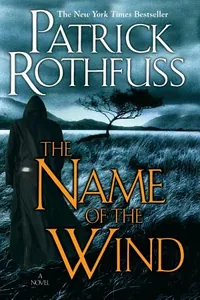
More by Patrick Rothfuss
All books →




More Free Alchemy & Hermeticism Books
View all →