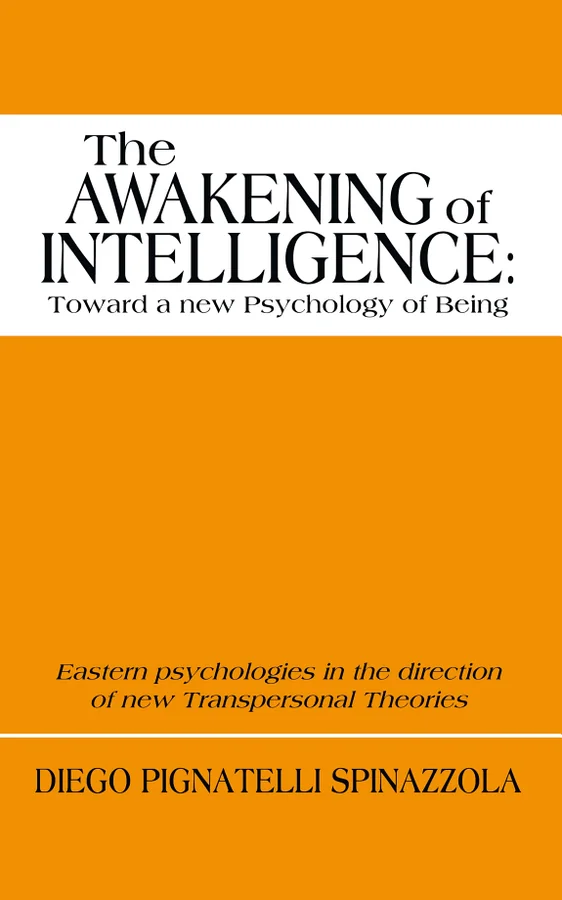
The Awakening of Intelligence: Toward a New Psychology of Being
 80
80

The Awakening of Intelligence: Toward a New Psychology of Being
Diego Pignatelli Spinazzola’s The Awakening of Intelligence offers a compelling synthesis, moving beyond the confines of conventional psychology. His exploration of transpersonal psychology, particularly his engagement with Stanislav Grof’s holotropic paradigm, is a significant contribution. The book’s strength lies in its poetic prose and its willingness to traverse the liminal territories where myth, religion, and science converge. One particular passage discussing the integration of perinatal dynamics with mythological narratives stands out for its evocative power. However, the breadth of topics, while ambitious, sometimes leads to a density that might challenge readers unfamiliar with the foundational concepts of Jungian psychology or Eastern spiritual traditions. Despite this, Spinazzola successfully argues for a more expansive understanding of intelligence, one that embraces the subjective and the transcendent. This work is a serious intellectual undertaking for those dedicated to the deeper currents of human consciousness.
📝 Description
80
Diego Pignatelli Spinazzola's 2010 book bridges modern psychology with myth, religion, and spirituality.
The Awakening of Intelligence: Toward a New Psychology of Being is not a standard self-help text. Diego Pignatelli Spinazzola uses a creative, poetic style to connect empirical psychology with myth, religion, and spirituality. The book examines the boundaries of consciousness beyond usual understanding, finding links between different thought systems.
This work is suited for those who study consciousness, academics interested in transpersonal ideas, and individuals aiming to combine scientific knowledge with spiritual experience. It appeals to readers who value an interdisciplinary view that addresses less explored human experiences, including altered states and existential questions.
Published in 2010, this book arises from a renewed focus on integrating consciousness studies with psychology. It follows thinkers like Carl Jung and Stanislav Grof, who investigated the psyche's depths and perinatal experiences. The book is part of the transpersonal psychology discourse, which examines spiritual and transcendent aspects of human experience, often drawing from non-Western traditions and contemplative practices.
💡 Why Read This Book?
• Gain an understanding of the holotropic paradigm as developed by Stanislav Grof, allowing for a new perspective on non-ordinary states of consciousness and their therapeutic potential, as detailed in the book's exploration of Grof's work. • Explore the intersections between Western depth psychology, specifically Jungian concepts, and Eastern spiritual philosophies, offering a framework for integrating diverse wisdom traditions into your personal understanding of the psyche. • Examine the significance of Near-Death Experiences (NDEs) and Out-of-Body Experiences (OBEs) within a broader psychological and spiritual context, providing insights into consciousness beyond the physical body, as discussed in the text.
⭐ Reader Reviews
Honest opinions from readers who have explored this book.
❓ Frequently Asked Questions
What is the primary focus of Diego Pignatelli Spinazzola's The Awakening of Intelligence?
The book focuses on expanding the definition of intelligence beyond empirical measures to include spiritual and transcendent aspects of being. It synthesizes transpersonal psychology, mythology, religion, and various spiritual traditions to explore consciousness.
Which psychological paradigms does the book engage with?
It engages with transpersonal psychology, Stanislav Grof's holotropic paradigm, Jungian psychology, and depth psychology, exploring their connections to spirituality and altered states of consciousness.
What non-Western traditions are discussed in The Awakening of Intelligence?
The work explores Oriental and Indian psychology, as well as shamanism, integrating their insights into a broader understanding of human consciousness and intelligence.
Does the book discuss near-death experiences?
Yes, the book discusses Near-Death Experiences (NDEs) and Out-of-Body Experiences (OBEs) as phenomena that challenge conventional psychological models and point toward expanded states of awareness.
When was The Awakening of Intelligence first published?
The book was first published on September 23, 2010, marking its place within contemporary discussions on consciousness and psychology.
Who is the author of The Awakening of Intelligence?
The author is Diego Pignatelli Spinazzola, an explorer of consciousness who seeks to bridge scientific understanding with spiritual and mythological insights.
🔮 Key Themes & Symbolism
Transpersonal Psychology Integration
The work champions transpersonal psychology as a vital field for understanding the full spectrum of human consciousness. It moves beyond the individual ego to explore spiritual, mystical, and transcendent experiences, framing them not as pathologies but as integral aspects of being. Spinazzola bridges empirical research with contemplative traditions, suggesting that these 'higher' states of consciousness hold keys to a more complete understanding of intelligence and human potential, drawing from figures like Stanislav Grof.
Mythology and Consciousness
Spinazzola posits that myths are not mere stories but profound psychological maps of the human soul. The book explores how ancient myths and religious narratives mirror the internal landscapes of consciousness, particularly during altered states. By examining symbols and archetypes found in global mythologies, the work suggests a universal language of the psyche that can be accessed through psychological exploration, echoing Jungian archetypal psychology.
Perinatal Dynamics and Existential States
A significant focus is placed on perinatal dynamics – the experiences surrounding birth. Spinazzola connects these primal experiences to existential themes, altered states of consciousness, and even experiences of death and rebirth found in NDEs and OBEs. This perspective suggests that understanding the wide impact of birth trauma and transition can unlock deeper layers of psychological and spiritual intelligence.
Eastern and Western Psyche Synthesis
The book critically examines and synthesizes concepts from both Western depth psychology (Jungian, psychoanalytic) and Eastern spiritual traditions (Indian psychology, Zen Buddhism, etc.). It highlights commonalities and complementary perspectives on the nature of mind, suffering, and liberation, proposing a unified approach to psychological and spiritual well-being that transcends cultural boundaries.
💬 Memorable Quotes
Direct passages from the work, attributed to the author.
“Intelligence is not merely rational thought, but a capacity for deep connection and understanding that encompasses the spiritual.”
— This interpretation underscores Spinazzola's core thesis: that true intelligence transcends logic and intellect, embracing intuition, empathy, and spiritual awareness as essential components of a fully realized human being.
“Mythological narratives serve as blueprints for the soul's journey through profound psychological transformations.”
— This captures the essence of Spinazzola's approach to mythology, viewing ancient stories as symbolic representations of inner experiences and developmental stages, akin to Jung's concept of archetypes.
“Perinatal experiences echo across our lives, shaping our encounter with birth, death, and existential freedom.”
— This highlights the book's focus on the foundational impact of birth experiences, suggesting their influence extends to our deepest existential concerns and our understanding of life and death cycles.
“Near-Death Experiences offer glimpses into the non-physical dimensions of consciousness.”
— This statement reflects the book's engagement with phenomena like NDEs, interpreting them not as mere hallucinations but as potential evidence for a consciousness that can exist independently of the physical body.
💡 Key Ideas
Editorial paraphrase of the work's core concepts — not direct quotes.
The holotropic paradigm reveals non-ordinary states as pathways to self-discovery, not deviations from normalcy.
This paraphrased concept emphasizes Spinazzola's alignment with Stanislav Grof's work, framing altered states of consciousness (induced by breathwork or other means) as valuable tools for psychological healing and spiritual insight.
🌙 Esoteric Significance
Tradition
This work fits within the Hermetic and Gnostic traditions' pursuit of gnosis, or direct knowledge of the divine and the deeper self. It echoes Gnostic cosmology's emphasis on escaping material limitations and awakening to higher consciousness. Spinazzola's integration of Jungian psychology, which itself drew heavily from Gnosticism and Hermeticism, further situates the book within esoteric lineages that explore the psyche's relationship to transcendent realities and hidden knowledge.
Symbolism
The book implicitly engages with symbols of transformation and awakening. The concept of the 'holotropic' itself, meaning 'turning toward the whole,' is symbolic of a spiritual quest for integration and unity. Mythological figures and narratives, such as those found in creation myths or tales of descent and ascent, function as symbolic maps of consciousness, representing the soul's journey through various states and challenges, echoing alchemical processes of transformation.
Modern Relevance
Contemporary thinkers and practitioners in fields like consciousness studies, integral psychology (e.g., Ken Wilber), and depth psychology continue to explore the integration of spiritual and psychological dimensions. Spinazzola's work appeals to modern approaches that value subjective experience, altered states, and cross-cultural wisdom traditions, offering a framework for those seeking a more holistic understanding of the human condition beyond purely mechanistic or materialistic paradigms.
👥 Who Should Read This Book
• Students and scholars of Transpersonal Psychology seeking a comprehensive overview of its key concepts, including the holotropic paradigm and its relation to mythology. • Practitioners of Jungian and depth psychology interested in expanding their understanding through non-Western traditions and the study of altered states like NDEs and OBEs. • Individuals on a personal spiritual or philosophical quest who wish to bridge scientific inquiry with explorations of myth, religion, and the transcendent dimensions of human consciousness.
📜 Historical Context
Published in 2010, The Awakening of Intelligence emerges in a landscape where transpersonal psychology, building on the foundations laid by figures like Carl Jung and later Stanislav Grof, was solidifying its position as a distinct field. The early 21st century saw continued interest in integrating contemplative practices and Eastern philosophies with Western psychological models, a trend exemplified by Spinazzola's work. This period was marked by ongoing academic debate, with some psychologists maintaining a strict adherence to empirical, materialistic frameworks, while others, like those associated with the Institute of Transpersonal Psychology (founded 1975), actively sought to expand the scope of psychological inquiry. Spinazzola's synthesis can be seen as contributing to this broader movement, challenging the reductionist tendencies prevalent in some branches of psychology by reintroducing the significance of subjective, spiritual, and mythological dimensions of human experience. His work implicitly engages with the legacy of psychosynthesis, pioneered by Roberto Assagioli, which also sought a holistic integration of the human personality.
📔 Journal Prompts
The holotropic paradigm and its potential for self-discovery.
Connecting personal experiences with mythological archetypes.
Reflecting on perinatal dynamics and existential awareness.
Integrating Eastern and Western psychological concepts in practice.
The role of NDEs and OBEs in understanding consciousness.
🗂️ Glossary
Transpersonal Psychology
A branch of psychology that studies the spiritual, transcendent, and mystical aspects of human experience, extending beyond the ego to include higher states of consciousness and universal connection.
Holotropic Paradigm
A framework, largely developed by Stanislav Grof, that views non-ordinary states of consciousness as intrinsically meaningful and potentially healing, offering pathways to self-discovery and psychological integration.
Perinatal Dynamics
The psychological and experiential phenomena associated with the process of birth, including the intense physical and emotional states experienced by both mother and child, which can have lasting effects on consciousness.
Jungian Psychology
A school of psychotherapy founded by Carl Jung, emphasizing the collective unconscious, archetypes, individuation, and the symbolic language of dreams and myths as keys to understanding the psyche.
Near-Death Experience (NDE)
A profound personal experience associated with events involving actual or imminent death, often characterized by altered states of consciousness, mystical encounters, and a sense of transcending the physical body.
Out-of-Body Experience (OBE)
A sensation of floating outside one's body and, in some cases, perceiving one's physical body from a distance. Often associated with altered states of consciousness, trauma, or spiritual practices.
Depth Psychology
A broad category of psychological theories (including Jungian and Freudian psychoanalysis) that emphasize the role of unconscious processes and early life experiences in shaping personality and behavior.
This book appears in 1 collection
🔮 Readers Also Liked
Browse all →









From the “Kundalini Awakening” Collection
View all →







More Free Occult Philosophy Books
View all →