Surrealism and the Occult
 76
76

Surrealism and the Occult
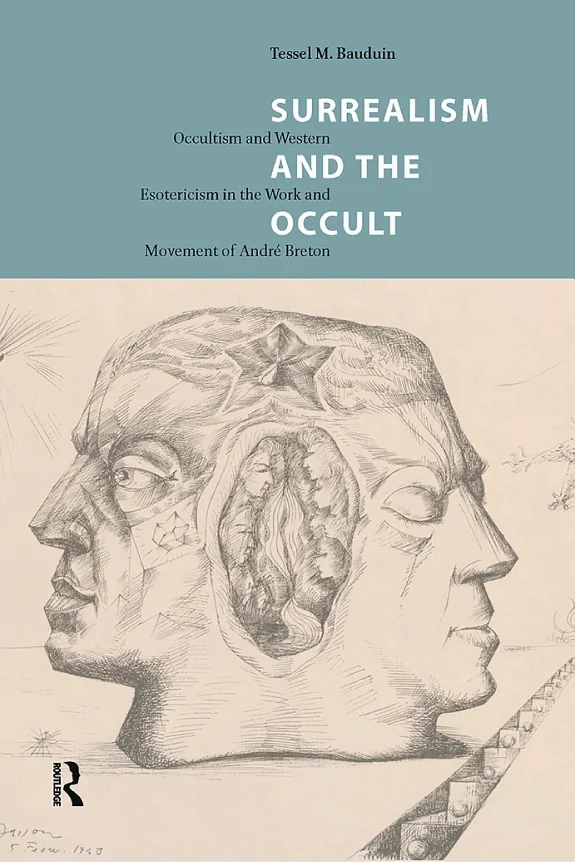
Tessel Bauduin’s "Surrealism and the Occult" offers a welcome corrective to superficial readings of the movement's spiritualist leanings. Rather than accepting Breton's pronouncements at face value, Bauduin meticulously traces the shifting sands of occult engagement across three decades. The book excels in detailing how the Surrealists’ relationship with esoteric currents was not static, but evolved significantly from the 1920s through the late 1950s, often in response to external intellectual trends and internal group dynamics. A particular strength lies in its precise archival work, demonstrating concrete links between specific occult texts and Surrealist manifestos. While the density of the research is commendable, the prose occasionally becomes overly academic, obscuring the more vibrant, potentially sensational connections being drawn. The exploration of the Surrealist interpretation of Gnostic cosmology, however, is particularly illuminating, revealing a sophisticated appropriation of ancient traditions. This study provides a vital, evidence-based reassessment of a complex relationship.
📝 Description
76
Tessel Bauduin's 2023 study re-examines Surrealism's entanglement with occult practices.
This book analyzes the connection between Surrealism and occultism, particularly during André Breton's leadership. It moves past simple explanations to offer a chronological look at how esoteric ideas shaped Surrealist thought and art between the 1920s and late 1950s. The author bases these arguments on extensive archival research, detailing the movement's changing engagement with the occult.
Scholars of art history, literary criticism, and esoteric history will find this study a useful resource. It is especially relevant for those interested in the intellectual foundations of Surrealism and its wider cultural place. Readers wanting to grasp how non-rational beliefs met avant-garde art production will appreciate its careful approach.
The early 20th century saw a rise in both occult interest and artistic innovation. Movements like Theosophy, spiritualism, and magic attracted many intellectuals and artists. Surrealism, born after World War I, aimed to free the mind from reason, making the occult a logical, if sometimes debated, area of focus. This period included figures like Aleister Crowley, whose writings reached circles that overlapped with avant-garde artists.
The book situates Surrealism within a broader 20th-century esoteric revival. This era saw widespread interest in spiritualism, theosophy, and ceremonial magic among intellectuals and artists seeking alternatives to rationalism. Surrealism's embrace of the irrational, dreams, and the unconscious naturally led many within the movement to explore occult traditions. Bauduin examines how figures like Breton selectively adapted concepts from Hermeticism, Gnosticism, and other esoteric streams to further their artistic revolution, distinguishing these engagements from earlier flirtations with spiritualism and psychoanalysis.
💡 Why Read This Book?
• Gain a precise understanding of how André Breton's Surrealist group engaged with esoteric traditions, moving beyond vague notions of mysticism to specific occult practices and philosophies discussed in the 1920s and 1930s. • Discover the evolution of Surrealism's spiritual underpinnings, learning how concepts like automatic writing and dream analysis were reinterpreted through various esoteric lenses between 1924 and 1958. • Appreciate the scholarly rigor behind the analysis, as Bauduin's work is based on extensive source material, offering verifiable connections that challenge common assumptions about Surrealist occultism.
⭐ Reader Reviews
Honest opinions from readers who have explored this book.
❓ Frequently Asked Questions
What is the primary focus of "Surrealism and the Occult" by Tessel Bauduin?
The book focuses on the evolving role and interpretation of occultism and esotericism within French Surrealism, particularly under André Breton's leadership, from the early 1920s to the late 1950s.
Which specific esoteric traditions are discussed in relation to Surrealism?
The work explores Surrealist engagement with various traditions including spiritualism, psychoanalysis, Hermeticism, and Gnosticism, detailing how these were adapted for Surrealist aims.
What period does Tessel Bauduin's study cover?
The study covers the period from the early 1920s, when Surrealism was forming, through to the late 1950s, examining shifts in the movement's engagement with the occult.
Is "Surrealism and the Occult" based on original research?
Yes, the book is based on thorough source analysis and archival research, offering a new perspective grounded in primary materials concerning Bretonian surrealism.
Who is André Breton and why is he central to this book?
André Breton was the principal founder and leader of the Surrealist movement. His writings and direction are central because the book examines the occult's influence specifically on his vision of Surrealism.
What does the book reveal about the changing understanding of esotericism within Surrealism?
It demonstrates that Surrealism's relationship with esotericism was not static, showing how interpretations and applications of occult ideas shifted significantly over the thirty-year period studied.
🔮 Key Themes & Symbolism
Bretonian Esotericism
This theme examines the specific ways André Breton integrated esoteric concepts into the core tenets of Surrealism. It moves beyond general spiritualism to investigate Breton's selective adoption of Hermetic principles, Gnostic mythologies, and even alchemical symbolism. The work details how these elements were not merely decorative but served as foundational tools for Surrealist aims, such as unlocking the unconscious and achieving a revolutionary transformation of consciousness. Bauduin highlights how Breton's personal interpretations often diverged from traditional occult doctrines, creating a unique Surrealist hermeticism.
Evolution of Occult Influence
Rather than presenting a monolithic view, this theme tracks the chronological development of occultism's role within Surrealism. It distinguishes between early engagements in the 1920s, often influenced by spiritualism and the aftermath of World War I, and later periods where more structured esoteric systems like Kabbalah or certain Gnostic traditions became points of reference. Bauduin illustrates how external intellectual currents and internal group dynamics prompted these shifts, demonstrating a dynamic, rather than static, relationship with the occult.
Artistic Manifestation of Esotericism
This theme focuses on how esoteric ideas translated into tangible Surrealist art and literature. It analyzes techniques like automatic writing, dream transcription, and the use of symbolic imagery, showing how they were informed by esoteric practices of divination, altered states of consciousness, and symbolic interpretation. The work explores how artists like Max Ernst or Salvador Dalí, while not always explicitly occultists, nevertheless drew upon a pervasive esoteric atmosphere and specific conceptual frameworks that Bauduin meticulously unpacks.
Reception and Interpretation
This theme addresses how Surrealism's occult leanings were perceived by both its proponents and critics over time. It investigates the often-contested nature of these influences, noting instances where Surrealists downplayed their esoteric interests or where critics misunderstood their intentions. Bauduin examines how the understanding of esotericism itself evolved, impacting how Surrealist engagement with it was interpreted by scholars and the public from the 1930s through contemporary analyses.
💬 Memorable Quotes
Direct passages from the work, attributed to the author.
“The work explores how Bretonian Surrealism selectively appropriated occult doctrines, often transforming them into tools for psychological liberation.”
— This interpretation highlights the active, rather than passive, role Surrealists played in engaging with esoteric traditions. It suggests a deliberate repurposing of occult ideas to fit their revolutionary agenda for art and consciousness.
“Analysis reveals a shift in Surrealist focus from early spiritualist interests to later engagements with Hermeticism.”
— This points to the chronological evolution of Surrealism's esoteric connections, indicating that their spiritual interests were not static but adapted over time, incorporating different streams of occult thought.
“Automatic writing within Surrealism is examined as a practice influenced by esoteric techniques for accessing hidden knowledge.”
— This interpretation connects a key Surrealist technique directly to occult methods, suggesting that the spontaneous creation of art was seen as a form of channeling or divination.
“The study details how occult symbolism was integrated into Surrealist imagery to convey subconscious meanings.”
— This emphasizes the visual and symbolic language of Surrealism, showing how esoteric motifs were employed not just aesthetically, but as carriers of deeper psychological and hidden messages.
“Bauduin's research traces the changing function of esotericism in Breton's movement from the 1920s to the 1950s.”
— This highlights the book's core argument: that the purpose and nature of Surrealism's occult connections were not constant but underwent significant transformation across several decades.
🌙 Esoteric Significance
Tradition
This work engages with the broad spectrum of Western Esotericism, specifically tracing its influence on a major 20th-century avant-garde movement. While not adhering strictly to a single lineage like Hermeticism or Gnosticism, it analyzes how Surrealists selectively drew from and reinterpreted elements across these traditions. Bauduin positions Breton's Surrealism as a unique, albeit often syncretic, manifestation of esoteric impulses aimed at psychological and artistic revolution, departing from earlier, more dogmatic esoteric organizations.
Symbolism
Key symbols explored include the alchemical process of transformation, often mirrored in Surrealism's quest for psychic change; the Gnostic concept of the hidden divine spark within humanity, resonating with the Surrealist focus on the unconscious; and the principle of synchronicity, which Breton famously championed as evidence of meaningful, non-causal connections in reality, linking the mundane to the transcendent.
Modern Relevance
Contemporary thinkers in fields ranging from critical theory to psychedelic research echo Surrealism's exploration of altered states and the subconscious. Artists and writers continue to engage with dream logic and symbolic imagery, often informed by the Surrealist legacy. The renewed interest in esoteric traditions within contemporary spirituality and art also finds a precedent in Surrealism's complex relationship with occultism, making Bauduin's analysis relevant for understanding modern explorations of the hidden.
👥 Who Should Read This Book
• Art historians and literary critics specializing in 20th-century modernism seeking a deeper understanding of Surrealism's intellectual foundations. • Students and researchers of Western Esotericism interested in how occult ideas were adopted and adapted by avant-garde movements. • Readers curious about the intersection of psychology, spirituality, and artistic creation, particularly concerning the influence of non-rational thought on creative output.
📜 Historical Context
Emerging in the wake of World War I and the disillusionment it fostered, Surrealism sought radical alternatives to rationalist thought. The early 20th century was a period ripe with esoteric exploration; Theosophy, spiritualism, and various occult societies held considerable intellectual currency. Figures like Aleister Crowley were active, and esoteric ideas permeated artistic and literary circles, sometimes through direct contact, other times through shared intellectual currents. Surrealism, particularly under André Breton, explicitly engaged with these non-rational domains, viewing them as pathways to the unconscious and liberation from bourgeois constraints. This engagement was not without controversy; psychoanalysis, while influential, offered a competing framework for understanding the psyche. The movement's relationship with these esoteric currents was complex and often shifting, a dynamic Tessel Bauduin's work meticulously charts from the 1920s through the late 1950s.
📔 Journal Prompts
Bretonian automatic writing as a technique for accessing esoteric knowledge.
The symbolic significance of synchronicity within the Surrealist worldview.
Comparing Surrealist interpretations of Gnosticism to historical Gnostic texts.
The evolving function of spiritualism in Surrealist manifestos across the 1920s and 1930s.
Analyzing dream narratives for hidden esoteric influences.
🗂️ Glossary
Bretonian Surrealism
The specific form of Surrealism led by André Breton, characterized by its theoretical frameworks, manifestos, and emphasis on psychological automatism and the liberation of the unconscious.
Automatic Writing
A Surrealist technique involving writing without conscious control, aiming to bypass rational thought and access subconscious or unconscious material, often seen as akin to channeling.
Esotericism
Systems of thought and practice concerned with hidden knowledge, often involving spiritual, mystical, or occult traditions, typically intended for initiates or those with specialized understanding.
Gnosticism
A diverse set of religious and philosophical ideas from antiquity emphasizing personal spiritual knowledge (gnosis) for salvation, often featuring a complex cosmology and a dualistic worldview.
Hermeticism
A philosophical and religious tradition based primarily upon writings attributed to Hermes Trismegistus, advocating principles such as 'As above, so below' and concerning alchemy, astrology, and theurgy.
Spiritualism
A belief system centered on the idea that the spirits of the dead can communicate with the living, often through mediums, popular in the late 19th and early 20th centuries.
Synchronicity
The simultaneous occurrence of events which appear significantly related but have no discernible causal connection, a concept explored by Surrealists and Carl Jung.
This book appears in 1 collection
🔮 Readers Also Liked
Browse all →








From the “Western Esotericism” Collection
View all →





More Free Occult Philosophy Books
View all →