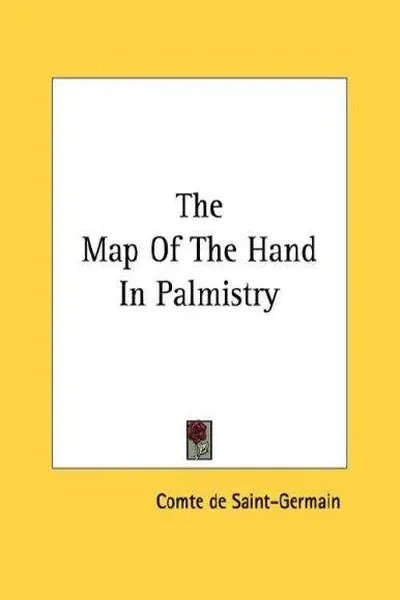
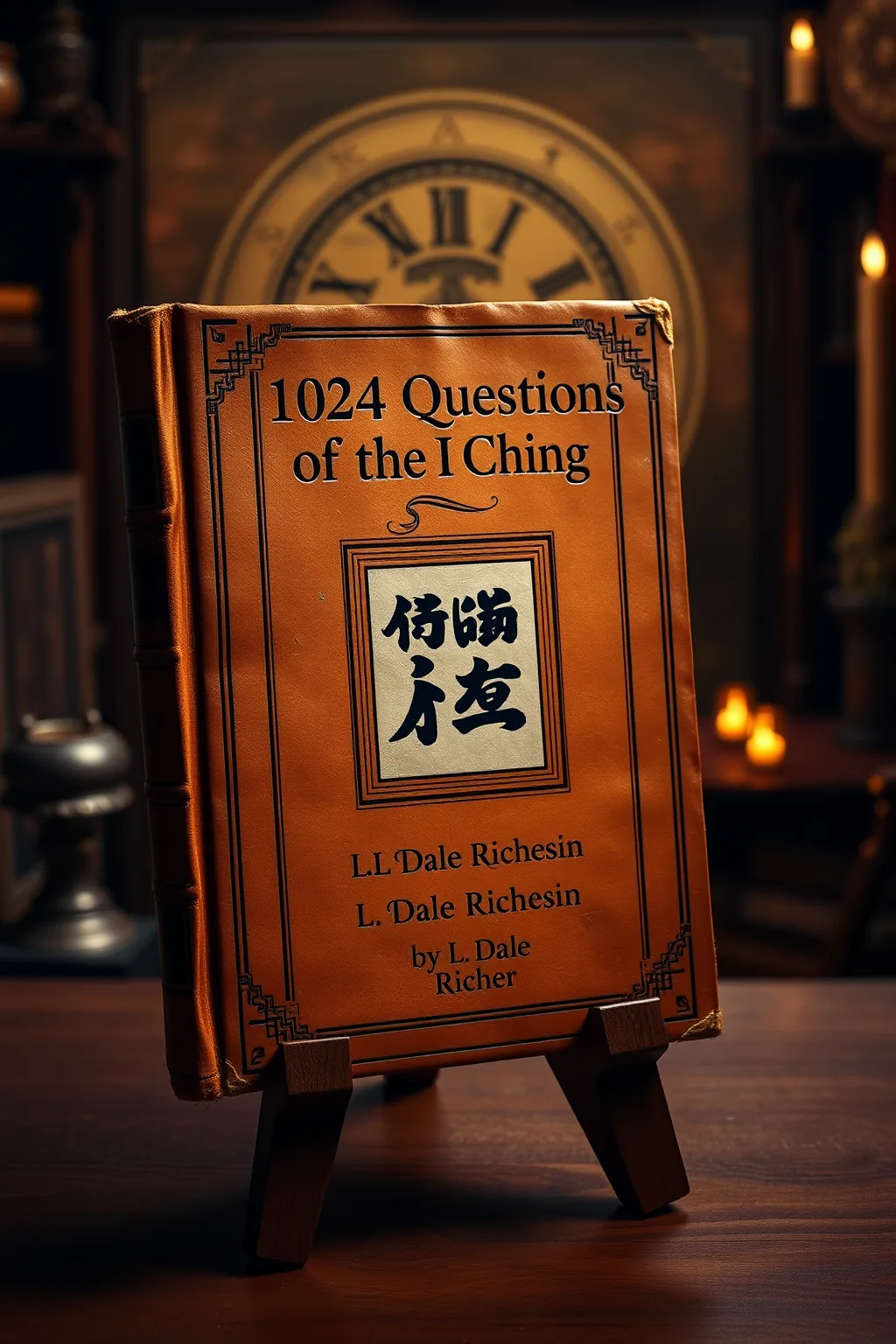
1024 Questions of the I Ching
 61
61

1024 Questions of the I Ching



Balthazar Finch (Senior Critic, Occult Philosophy) — L. Dale Richesin's '1024 Questions of the I Ching' is a masterful distillation of this ancient oracle's profound mysteries. Richesin doesn't merely present questions; he crafts a contemplative framework, guiding the reader through the labyrinthine wisdom of the hexagrams with an almost shamanic touch. The esoteric insights woven throughout are exceptional, offering a unique perspective on divination as a tool for profound spiritual growth and self-awareness. This work is indispensable for serious students of the I Ching, providing clarity and depth that transcends superficial interpretation. It speaks directly to the soul of the practitioner seeking authentic gnosis and a deeper connection to the Tao.
📝 Description
61
L. Dale Richesin compiled 1024 questions for the I Ching in this 2017 work.
This book presents a structured approach to consulting the I Ching, using a system of 1024 questions. Richesin structures the inquiry process, providing specific prompts designed to elicit detailed guidance from the oracle. The work moves beyond simple yes/no answers or generic interpretations, encouraging a deep engagement with the hexagrams.
Each question is meant to unlock a particular aspect of the hexagram's meaning, relating it to the user's circumstances. The goal is to facilitate self reflection and a clearer understanding of the forces at play in one's life. The book aims to assist individuals in discerning the patterns of change and their personal path within those shifts.
This work is situated within the tradition of Chinese divination, specifically the I Ching (Book of Changes). It builds upon centuries of commentary and practice surrounding this ancient text, which is considered one of the oldest Chinese classics. The I Ching uses a system of hexagrams, derived from combinations of yin and yang lines, to offer insight into situations and potential outcomes. Richesin's contribution focuses on developing a more systematic questioning technique to access the oracle's wisdom.
💡 Why Read This Book?
Unlock the profound symbolic language of the I Ching and gain direct access to its ancient wisdom. '1024 Questions' serves as a unique catalyst for self-reflection, offering practical guidance for navigating life's complexities through the lens of cosmic patterns. Ideal for seekers of esoteric knowledge, practitioners of divination, and scholars interested in the philosophical underpinnings of Chinese mysticism, this book illuminates the path to inner harmony and insightful decision-making.
⭐ Reader Reviews
Honest opinions from readers who have explored this book.
❓ Frequently Asked Questions
What is the primary purpose of the 1024 questions in the I Ching?
The 1024 questions act as specific prompts designed to elicit profound insights from the I Ching's hexagrams, guiding the user through complex life situations and encouraging deep introspection on their underlying causes and potential resolutions.
How does this book differ from other I Ching translations or guides?
This work distinguishes itself by focusing on a structured, question-based approach, transforming the I Ching from a passive oracle into an active dialogue for personal transformation and esoteric exploration.
Is prior knowledge of the I Ching required to benefit from this book?
While prior familiarity can enhance the experience, Richesin's clear exposition makes the book accessible to newcomers, gradually introducing the foundational concepts and symbolic language of the I Ching.
What kind of insights can one expect to gain from using these questions?
Readers can anticipate gaining clarity on challenging decisions, understanding hidden motivations, recognizing cyclical patterns in their lives, and fostering a deeper connection to their intuition and the universal flow of change.
How can the I Ching be considered a tool for esoteric study?
The I Ching is rich with esoteric symbolism representing universal principles of change, balance, and transformation. This book helps decode that symbolism, offering a path to understanding the subtle energies and archetypal forces that influence existence.
🔮 Key Themes & Symbolism
The Oracle as Dialogue
This theme explores the transformative power of viewing the I Ching not as a passive predictor, but as an active partner in a profound dialogue. Richesin's work encourages a dynamic interaction, where each question posed becomes a catalyst for self-inquiry and a deeper understanding of one's place within the cosmic order. It shifts the focus from seeking external answers to cultivating internal wisdom, transforming the divination process into a spiritual practice of co-creation and conscious evolution.
Symbolic Resonance and Archetypal Patterns
Dive into the collection of the I Ching's symbolism, where each line and hexagram appeals to universal archetypes and cosmic principles. Richesin guides the reader to perceive the interconnectedness of all things, revealing how these ancient symbols mirror the patterns of human experience and the ebb and flow of natural forces. Understanding this symbolic language unlocks a deeper comprehension of destiny, change, and the underlying order of the universe, fostering a profound sense of alignment.
Working through the Cycles of Change
The core of the I Ching lies in its profound understanding of change as the fundamental constant of existence. This theme examines Richesin's method of using the 1024 questions to navigate these inevitable shifts with wisdom and grace. By understanding the dynamics of transition, the book empowers readers to embrace uncertainty, identify opportunities within challenges, and consciously participate in their own unfolding destiny, fostering resilience and inner peace amidst life's flux.
💬 Memorable Quotes
Direct passages from the work, attributed to the author.
“Wisdom is often found in the stillness between questions.”
— This highlights the importance of contemplation and inner reflection in the divination process, suggesting that true understanding arises not just from the answers received, but from the quiet space of inquiry and observation.
“To ask is to invite the universe to speak.”
— This captures the core philosophy of the I Ching as an oracle, framing the act of asking questions as a sacred invitation for cosmic guidance and revelation.
“The patterns of the heavens are mirrored within the human heart.”
— This profound statement speaks to the hermetic principle of 'as above, so below,' suggesting a fundamental correspondence between celestial order and individual consciousness.
“Embrace the unfolding, for it is the dance of becoming.”
— This encourages acceptance of life's continuous transformation, viewing change not as disruption but as an essential and beautiful process of growth and evolution.
💡 Key Ideas
Editorial paraphrase of the work's core concepts — not direct quotes.
The hexagrams are not stones, but currents.
This quote emphasizes the dynamic, fluid nature of the I Ching's wisdom, likening its hexagrams to living forces rather than static pronouncements, encouraging a more interactive and responsive engagement.
🌙 Esoteric Significance
Tradition
The I Ching is deeply rooted in the Taoist tradition, embodying principles of Yin and Yang, the Tao itself, and the constant flux of cosmic forces. It also shares significant connections with broader Chinese esoteric philosophies that explore the interconnectedness of the human spirit, the natural world, and the celestial order. Its symbolic language is often interpreted through the lens of Hermeticism and alchemical principles, viewing the transformation of hexagrams as a metaphor for inner alchemy and spiritual refinement.
Symbolism
Key symbols include the unbroken line (Yang, active, masculine) and the broken line (Yin, passive, feminine), which combine to form trigrams and hexagrams representing fundamental forces and archetypes. The 64 hexagrams are seen as a comprehensive map of all possible states of change and human experience. Concepts like the Five Elements (Wu Xing) and the trigrams (Heaven, Earth, Water, Fire, etc.) are integral, symbolizing the dynamic interplay of energies that govern the universe and human affairs.
Modern Relevance
In contemporary times, the I Ching continues to offer profound relevance as a tool for psychological insight, spiritual guidance, and ethical reflection. Its emphasis on adaptability, understanding context, and recognizing the cyclical nature of life provides a valuable framework for working through the complexities and uncertainties of the modern world. For many, it serves as a powerful practice for cultivating mindfulness, intuition, and a deeper connection to universal wisdom, fostering personal growth and resilience.
👥 Who Should Read This Book
This book is a treasure for the dedicated seeker of esoteric wisdom, offering a profound method for engaging with the ancient oracle. Beginners will find Richesin's approach informative, providing a structured entry into the I Ching's symbolic universe. Experienced practitioners will appreciate the novel questions and deep dives into the philosophical underpinnings, enriching their ongoing practice. Scholars of comparative religion and Eastern philosophy will discover a unique perspective on divination and cosmic order. Anyone feeling adrift or seeking greater clarity in life's decisions will find this a profound guide to self-discovery and harmonious living.
📜 Historical Context
The I Ching, or 'Book of Changes,' has a lineage stretching back thousands of years, making it one of the oldest extant Chinese philosophical texts. Its compilation and interpretation have evolved through various dynasties, absorbing influences from Taoism, Confucianism, and various schools of Chinese thought. During the Han Dynasty (206 BCE – 220 CE), the I Ching was officially canonized as one of the Five Classics, solidifying its place as a core part of Chinese intellectual and spiritual life. Its influence permeated not only philosophy and divination but also cosmology, military strategy, and even traditional medicine. L. Dale Richesin's work, while modern in its presentation, taps into this rich historical and philosophical wellspring, seeking to reawaken the I Ching's potent symbolic language for contemporary seekers.
📔 Journal Prompts
Reflect on a recent challenge: Which hexagram might have best described its underlying energies, and why?
Consider a recurring pattern in your life: How does the symbolism of Yin and Yang manifest in this pattern?
If you were to consult the I Ching on your deepest aspiration, what question would you pose?
Explore the concept of 'change' as presented in the I Ching: How does this perspective shift your view of your own life transitions?
How can the wisdom of the I Ching be applied to foster greater harmony in your relationships?
🗂️ Glossary
Hexagram
A symbol composed of six stacked horizontal lines, either solid (Yang) or broken (Yin), representing a specific state of change or situation derived from the I Ching.
Trigram
A symbol composed of three stacked horizontal lines (solid or broken), forming the eight fundamental elemental configurations that combine to create the 64 hexagrams.
Yang
In I Ching philosophy, the active, masculine, light, and strong principle, represented by a solid line (—).
Yin
In I Ching philosophy, the passive, feminine, dark, and receptive principle, represented by a broken line (--).
Tao
The fundamental, ineffable principle of the universe in Taoist philosophy; the natural order and flow of existence.
This book appears in 2 collections
🔮 Readers Also Liked
Browse all →







From the “Tarot” Collection
View all →







More Free Divination & Tarot Books
View all →