Haṭha-Yoga
 74
74

Haṭha-Yoga
Mikel Burley's *Haṭha-Yoga* offers a welcome corrective to the often-superficial engagement with yoga in the West. His philosophical approach, grounded in a practitioner's understanding, provides a robust framework for understanding hatha yoga not merely as physical exercise but as a complex soteriological system. The work's strength lies in its meticulous exploration of the subtle body, particularly the interplay of *nadis*, *cakras*, and *prana*, which Burley argues is fundamental to the discipline's efficacy. However, the dense philosophical argumentation, while rigorous, may prove challenging for readers without a background in Indian philosophy or comparative religion. A particularly illuminating passage details the initiatory structure of hatha pedagogy, revealing its roots in older Vedic traditions. Ultimately, *Haṭha-Yoga* is an essential text for those seeking to comprehend the profound theoretical architecture beneath the physical postures.
📝 Description
74
Mikel Burley's 2000 study examines the philosophical basis of classical hatha yoga.
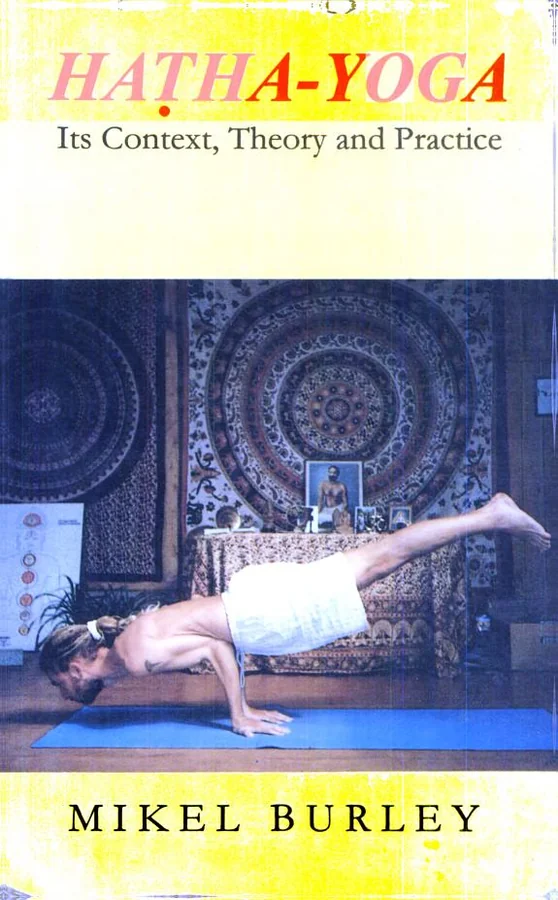
Mikel Burley's *Haṭha-Yoga*, published in 2000, moves past popular understandings to examine the theoretical foundations and ultimate goals of classical hatha yoga. The book situates this discipline within its historical and religious settings, scrutinizing the concept of the subtle body. This subtle anatomy, which includes vital channels, centers, and forces, is presented as crucial for understanding hatha practice.
Burley's work emerged during a time of renewed academic and popular interest in yoga, distinct from earlier spiritualist movements. It contrasts with the then-prevalent therapeutic and fitness-focused approaches, reasserting yoga's origins as a spiritual path aimed at liberation. The book aligns with scholarship that aimed to re-contextualize Indian ascetic practices, departing from orientalist views.
The text dissects the notion of the 'subtle bodily matrix,' a central theoretical construct in hatha yoga. This matrix comprises the *nadis* (channels), *cakras* (centers), and *prana* (vital force). Burley argues that grasping this subtle anatomy is necessary for understanding the efficacy and purpose of hatha practices, linking them to a broader Vedic religious framework and its initiatory pedagogy.
This book engages with the esoteric dimensions of hatha yoga, particularly its complex theories of the body. It focuses on concepts like *prana*, *nadis*, and *chakras*, which form the subtle anatomy central to the practice's transformative potential. Burley connects these ideas to a larger Vedic religious framework, suggesting hatha yoga was traditionally understood as an initiatory practice aimed at spiritual liberation, rather than mere physical exercise.
💡 Why Read This Book?
• Gain a scholarly perspective on hatha yoga's soteriological aims, as explored through its theoretical underpinnings and continuity with Vedic religion, moving beyond modern therapeutic interpretations. • Understand the concept of the subtle bodily matrix—comprising *nadis*, *cakras*, and *prana*—which Burley argues is crucial for grasping the efficacy and purpose of classical hatha practice. • Appreciate the initiatory pedagogical structure of hatha yoga, recognizing its historical roots and its original function as a spiritual discipline rather than a mere physical regimen.
⭐ Reader Reviews
Honest opinions from readers who have explored this book.
❓ Frequently Asked Questions
What is the primary focus of Mikel Burley's Haṭha-Yoga?
The book's primary focus is on understanding hatha yoga as a soteriological system, examining its theoretical underpinnings, its connection to Vedic religion, and its initiatory pedagogical structure, rather than its modern therapeutic applications.
What is the 'subtle bodily matrix' discussed in the book?
The 'subtle bodily matrix' refers to the theoretical energetic system within the body, comprising vital channels (*nadis*), energy centers (*cakras*), and vital force (*prana*), which is central to hatha yoga practice and its aims.
When was Haṭha-Yoga by Mikel Burley first published?
Mikel Burley's *Haṭha-Yoga* was first published on January 1, 2000, marking a return to foundational philosophical inquiry amidst growing popular interest.
Does the book explain the practical aspects of performing yoga postures?
While the book discusses the theoretical underpinnings and purpose of hatha practices, its main focus is philosophical and historical analysis rather than providing step-by-step instructions for physical postures.
What connection does Burley draw between hatha yoga and Vedic religion?
Burley highlights the continuity of hatha yoga with Vedic religion, suggesting that its practices and theoretical concepts are rooted in older Indic traditions and aimed at spiritual liberation, not just physical well-being.
Who would benefit most from reading Haṭha-Yoga?
Serious yoga practitioners seeking deeper understanding, scholars of Indian philosophy and religious studies, and individuals interested in the esoteric and spiritual dimensions of yoga would benefit most.
🔮 Key Themes & Symbolism
Soteriological Aims
The work rigorously examines hatha yoga's ultimate purpose: liberation (*moksha*). Burley situates this within its Vedic religious context, arguing that the physical and energetic practices were always intended as means to spiritual realization, a stark contrast to many contemporary interpretations focused on health and wellness.
Subtle Bodily Matrix
Central to the book is the detailed analysis of the 'subtle body,' a conceptual framework essential for understanding hatha yoga's mechanics. This includes the intricate network of *nadis* (energy channels), the energetic centers known as *cakras*, and the vital life force, *prana*.
Initiatory Pedagogy
Burley elucidates the educational structure of hatha yoga, revealing its origins in ancient initiatory traditions. This perspective highlights the role of a guru-disciple relationship and the sequential transmission of knowledge and practice, emphasizing the discipline's spiritual lineage.
Continuity with Vedic Religion
The book traces the lineage of hatha yoga back to its Vedic roots, demonstrating how its concepts and practices are not isolated phenomena but rather continuations and elaborations of earlier Indic religious and philosophical traditions, particularly concerning asceticism and spiritual attainment.
💬 Memorable Quotes
Direct passages from the work, attributed to the author.
“The soteriological system of hatha-yoga placed within its proper context.”
— This foundational statement frames Burley's entire project: to move beyond superficial understandings and reveal the profound spiritual aims inherent in classical hatha yoga, connecting it to its ancient religious origins.
“The theoretical underpinnings of hatha practice.”
— Burley emphasizes that effective hatha practice is not merely physical but relies on a sophisticated theoretical understanding, particularly of the subtle body, which he meticulously explores throughout the text.
“The complex notion of a `subtle bodily matrix`.”
— This highlights a core concept in the book: the energetic anatomy of *nadis*, *cakras*, and *prana*, which Burley argues is indispensable for comprehending the efficacy and purpose of hatha yoga's disciplines.
“Its continuity with Vedic religion.”
— This points to the book's significant contribution in linking hatha yoga to its ancient Indic heritage, demonstrating its evolution from and integration with broader Vedic religious and philosophical frameworks.
“Its initiatory pedagogical structure.”
— Burley investigates how hatha yoga was traditionally taught, emphasizing its role as an initiatory discipline passed down through lineages, underscoring its sacred and transformative purpose.
🌙 Esoteric Significance
Tradition
This work engages with the Indic esoteric traditions, specifically the Tantric and yogic lineages that developed from Vedic roots. It positions hatha yoga not as a peripheral practice but as a core spiritual technology aimed at transformative experience and liberation, rooted in the concept of awakening latent energies within the practitioner.
Symbolism
Key symbols include the *cakras*, depicted as energetic wheels or lotuses at specific bodily centers, representing stages of consciousness and power. The *nadis* function as symbolic conduits for *prana*, akin to energetic circulatory systems. The union of *Ha* (sun) and *tha* (moon) in the term 'Haṭha' itself symbolizes the balancing of opposing forces within the practitioner.
Modern Relevance
Contemporary practitioners and scholars interested in the philosophical depth of yoga, beyond asana, draw heavily on Burley's work. Thinkers exploring embodied consciousness, critical yoga studies, and the re-contextualization of ancient spiritual practices find his analysis of the subtle body and soteriological aims highly relevant to modern spiritual inquiry.
👥 Who Should Read This Book
• Advanced yoga practitioners seeking to understand the philosophical and historical roots of their practice, moving beyond purely physical engagement. • Scholars of religious studies, comparative philosophy, and South Asian history interested in the textual and theoretical underpinnings of ascetic traditions. • Individuals exploring esoteric disciplines who wish to understand the conceptual framework of the subtle body (*nadis*, *cakras*, *prana*) within a rigorous academic context.
📜 Historical Context
Mikel Burley's *Haṭha-Yoga*, published in 2000, arrived at a central moment. While yoga had achieved widespread global popularity, much of this engagement was decontextualized, focusing on physical fitness. Burley's work countered this trend by rigorously situating hatha yoga within its historical and religious milieu, emphasizing its soteriological dimensions. This aligned with a scholarly movement in the late 20th century that sought to reclaim the philosophical and religious depth of Indian traditions, moving away from orientalist tropes. His approach stood in contrast to the burgeoning New Age interpretations and the increasing secularization of yoga. While not directly engaging with specific contemporaries in a polemical fashion, Burley's work implicitly challenges the simplistic, therapeutic models that dominated popular discourse, echoing the concerns of scholars like Mircea Eliade who, decades earlier, explored yoga's ascetic and spiritual dimensions in works like *Yoga: Immortality and Freedom* (1958).
📔 Journal Prompts
The subtle bodily matrix: How might the concepts of *nadis*, *cakras*, and *prana* inform your understanding of energetic flow within your own being?
The initiatory pedagogical structure: Reflect on the value of structured transmission of esoteric knowledge in contemporary spiritual paths.
Continuity with Vedic religion: Consider how ancient religious frameworks continue to shape modern spiritual practices, even in secularized forms.
Soteriological aims: How does the pursuit of liberation, as described in the book, contrast with the common goals attributed to yoga today?
The theoretical underpinnings of practice: Identify a specific hatha yoga practice and consider its underlying theoretical justification as presented by Burley.
🗂️ Glossary
Soteriological
Relating to the doctrine of salvation or religious deliverance. In the context of Haṭha-Yoga, it refers to the practices aimed at achieving spiritual liberation or enlightenment.
Subtle Bodily Matrix
A theoretical construct within yogic traditions describing the energetic body, composed of channels (*nadis*), centers (*cakras*), and vital force (*prana*), which influences physical and mental states.
Nadis
Channels or conduits within the subtle body through which vital energy (*prana*) is believed to flow. There are often said to be thousands, with three main ones: Ida, Pingala, and Sushumna.
Cakras
Literally 'wheels' or 'centers,' these are psycho-energetic vortexes located along the spine in the subtle body, associated with different psychological states, functions, and spiritual potentials.
Prana
The vital life force or energy that pervades the universe and animates living beings. In yoga, controlling and directing *prana* is a key objective of practices like pranayama.
Vedic Religion
The religious beliefs and practices of the ancient Indo-Aryan peoples, as reflected in the Vedas, the oldest scriptures of Hinduism, characterized by rituals, hymns, and philosophical inquiry.
Pedagogical
Relating to the method and practice of teaching. In this context, it refers to the specific methods and structures used to impart yogic knowledge and practice.
This book appears in 2 collections
🔮 Readers Also Liked
Browse all →









From the “Yoga” Collection
View all →







More Free Occult Philosophy Books
View all →