Mudra
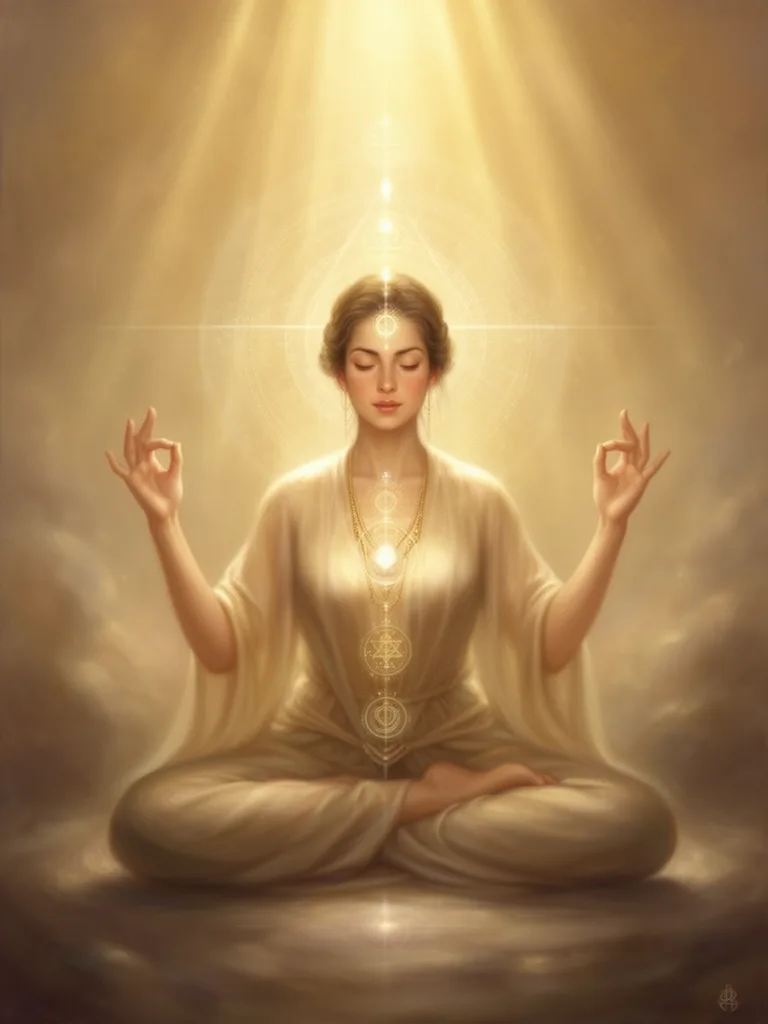
A symbolic hand gesture or posture used in spiritual practices, particularly in Hinduism and Buddhism. Mudras are believed to channel energy, evoke specific states of consciousness, and represent divine qualities or cosmic principles. They are integral to meditation, ritual, and dance.
Where the word comes from
The term "mudra" originates from Sanskrit, meaning "seal," "mark," or "gesture." Its earliest documented use appears in ancient Indian texts, predating the common era. The concept signifies a symbolic imprint or closure, often connecting the physical form to a spiritual intention or cosmic resonance.
In depth
Called the mystic seal. A system of occult signs made with the fingers. These signs imitate ancient Sanskrit characters of magic efficacy. First used in the Northern Buddhist Yogacliarya School, they were adopted later by the Hindu Tantrikas, but often misused by them for 'black magic purposes. Mukta and Mukti (8k.). Liberation from sentient life; one beatified or liberated ; a candidate for Moksha, freedom from flesh and matter, or life on this earth.
How different paths see it
What it means today
The humble gesture, the subtle arrangement of fingers, can become a profound instrument of inner transformation. As Mircea Eliade noted in his studies of shamanism and archaic techniques of ecstasy, the body is not merely a passive recipient of spiritual experience but an active participant, a finely tuned instrument for tuning into the sacred. Mudras, in this light, are not arbitrary signs but embodied metaphors, a language of the spirit spoken through the flesh. They echo the ancient wisdom that the microcosm reflects the macrocosm, that the human form, in its deliberate configuration, can resonate with universal principles.
Consider the Abhaya Mudra, the gesture of fearlessness, where the palm is raised, open, a silent declaration of protection and peace. It is a somatic prayer, a physical embodiment of courage that bypasses the intellect and speaks directly to the primal core of our being. Similarly, the Jnana Mudra, the thumb and index finger touching, represents wisdom and the union of the individual soul with the universal consciousness. These are not mere physical poses; they are invocations, seals that imprint a desired reality onto the practitioner's consciousness and, by extension, onto the fabric of existence. The efficacy of these gestures, as Helena Blavatsky suggested, lies in their ancient efficacy, their connection to primal archetypes and cosmic laws that predate our current understanding. They are, in a sense, keys to unlocking dormant potentials within the self, physical mnemonics for spiritual truths.
The practice of mudra invites us to see our physical existence not as a limitation but as a profound opportunity for sacred expression. It suggests that even the most ordinary parts of ourselves can become conduits for the extraordinary, that the silent language of the body can articulate the deepest mysteries of the cosmos, inviting us to move beyond mere intellectual assent into embodied knowing.
Related esoteric terms
Books on this concept








No reflections yet. Be the first.
Share your interpretation, experience, or question.
