Yoga
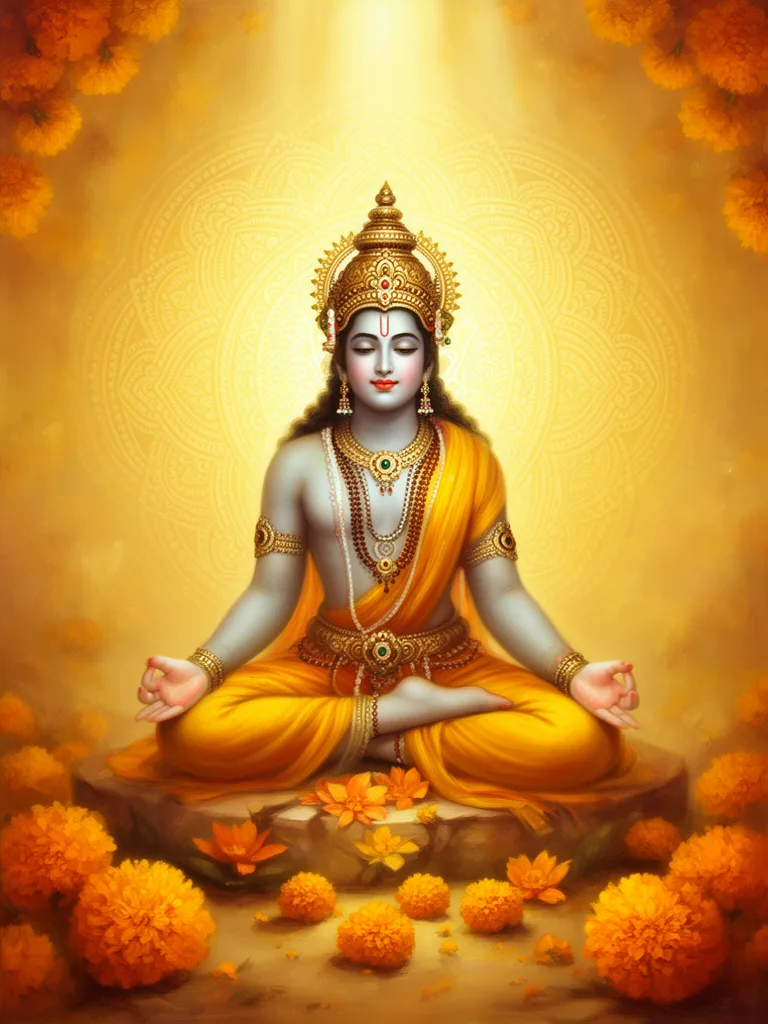
Yoga is a Sanskrit term referring to ancient Indian disciplines of mind and body, encompassing philosophical schools and practical meditation techniques aimed at achieving spiritual liberation and profound insight into reality. It involves uniting the individual consciousness with the universal.
Where the word comes from
The word "Yoga" derives from the Sanskrit root "yuj," meaning "to yoke," "to unite," or "to join." This signifies the core concept of integration and connection. The term's usage in philosophical texts dates back to at least the Upanishads, with its systematic codification attributed to Patanjali in the Yoga Sutras, circa 2nd century CE.
In depth
(1) One of the six Darshanas or schools of India; a school of philosophy founded by Patanjali, though the real Yoga doctrine, the one that is said to have helped to prepare the world for the preaching of Buddha, is attributed with good reasoils to the more ancient sage Yajnawalkya, the writer of the Shatapatha Brdhmana, of Yajur Veda, the Brihad Aranyaka, and other famous w^orks. (2) The practice of meditation as a means of leading to spiritual liberation. Psychospiritual powers are obtained thereby, and induced ecstatic states lead to the clear and correct perception of the eternal truths, in both the visible and invisible universe.
How different paths see it
What it means today
The term "Yoga," born from the Sanskrit root "yuj" signifying union, presents a profound antidote to the pervasive fragmentation of modern consciousness. It is more than the physical postures, the asanas, that have captured global imagination; it is a sophisticated system, codified by Patanjali in his Yoga Sutras, for the disciplined cultivation of inner awareness. Mircea Eliade, in his seminal work "Yoga: Immortality and Freedom," illuminated Yoga as a path to overcoming the limitations of the human condition, a technique for achieving an altered state of consciousness where the boundaries of the individual self dissolve into a larger, cosmic awareness.
The practice, as described by Blavatsky, aims at "clear and correct perception of the eternal truths." This is not a passive reception of knowledge but an active, alchemical transformation of perception. The "psychospiritual powers" mentioned are not mere parlor tricks but byproducts of a mind so refined that it can perceive the subtle energies and underlying structures of reality. This resonates with Carl Jung's exploration of the collective unconscious and the individuation process, where the integration of the psyche leads to a deeper understanding of one's place in the universal order. The yogic path, therefore, is a disciplined journey inward, akin to the alchemist's quest to transmute base metals into gold, here transmuting the leaden weight of ego-bound existence into the radiant gold of spiritual liberation. It offers a practical methodology for achieving what mystics across traditions have sought: direct, unmediated experience of the divine or the absolute.
The profound stillness cultivated through yogic techniques is not an absence of being, but a fullness, a vibrant presence that transcends the chatter of the intellect. It is a return to a state of primal unity, a recognition of the interconnectedness that binds all phenomena, a concept echoed in the non-dual philosophies that permeate Eastern thought. This ancient wisdom, far from being a relic of the past, provides a timeless framework for re-establishing harmony between the individual and the cosmos, inviting us to experience reality not as a series of discrete events, but as an indivisible whole.
Related esoteric terms
Books on this concept




No reflections yet. Be the first.
Share your interpretation, experience, or question.
