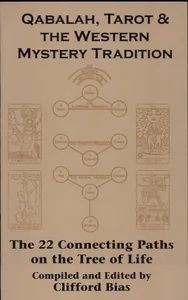
The mysticism of Hebrews
 61
61

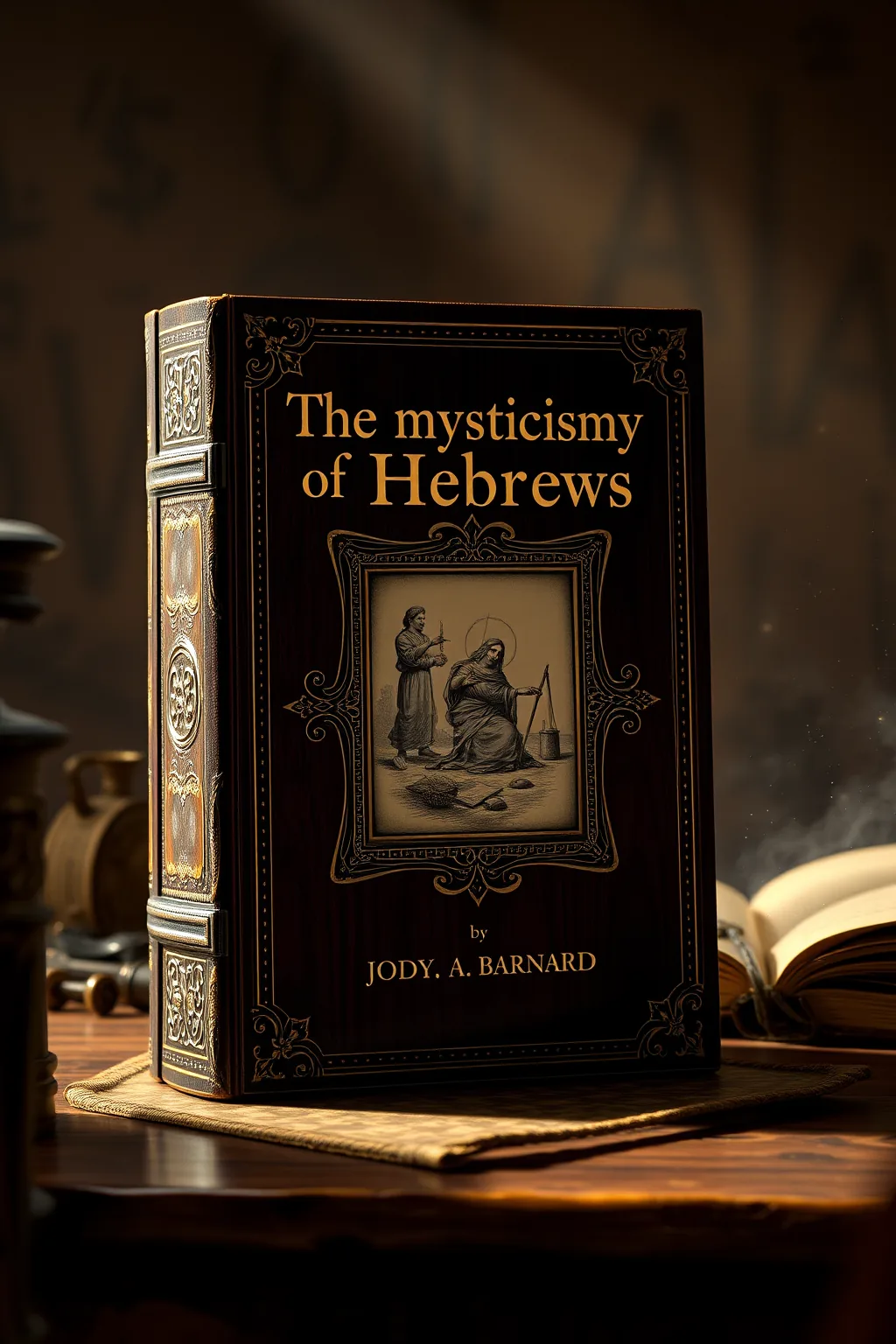
The mysticism of Hebrews



Evander Ashcroft (Alchemy & Hermeticism Editor) — Jody A. Barnard's 'The Mysticism of Hebrews' is a scholarly triumph, illuminating the often-overlooked esoteric underpinnings of this crucial New Testament epistle. Barnard astutely demonstrates how Jewish apocalyptic mysticism wasn't just a conceptual framework, but a lived reality informing the text's profound theological assertions. His rigorous analysis unearths the hidden symbolism and visionary language, offering invaluable insights for scholars and practitioners alike. This book is essential reading for anyone interested in the deep roots of Christian mysticism and its intersection with ancient Jewish wisdom traditions. It’s a vital addition to the Esoteric Library's collection.
📝 Description
61
Jody A. Barnard's 'The Mysticism of Hebrews' examines the Epistle's roots in Jewish apocalyptic thought.
This book looks at the Epistle to the Hebrews through the lens of Jewish mysticism. Jody A. Barnard argues that the text is not just a theological argument but also reflects genuine mystical experiences from its time. He identifies specific elements like divine ascent, visionary experiences, and symbolic language that connect it to known esoteric traditions within Judaism.
Barnard’s work aims to show how these mystical currents influenced the Epistle’s composition and meaning. He suggests that understanding these esoteric dimensions is key to grasping the spiritual thought of early Judeo-Christian communities. The book offers a way to see how mystical ideas were shared between different religious groups during that period. It is for readers interested in the connections between the earthly and heavenly spheres found in religious texts.
The Epistle to the Hebrews is examined here for its connections to Jewish esoteric traditions prevalent around the turn of the Common Era. These traditions often involved concepts of ascent to the divine realm, interpreting sacred texts through coded symbolism, and experiencing direct visionary encounters. Barnard places the Epistle within this context, suggesting it was shaped by individuals familiar with or participating in these mystical practices. This approach contrasts with purely historical or theological readings, focusing instead on the spiritual and experiential dimensions that informed its creation and reception.
💡 Why Read This Book?
Uncover the hidden mystical core of the Epistle to the Hebrews. Explore the profound influence of Jewish apocalyptic traditions and mystical experiences on early Christian thought. Ideal for scholars, seekers of esoteric knowledge, and those fascinated by the spiritual connections between Judaism and early Christianity.
⭐ Reader Reviews
Honest opinions from readers who have explored this book.
❓ Frequently Asked Questions
What is Jewish apocalyptic mysticism?
It's a genre of ancient Jewish literature characterized by visionary experiences, divine revelations, and an emphasis on the end times. It often explores celestial realms and hidden cosmic knowledge.
How does this relate to the Epistle to the Hebrews?
Barnard argues that the author of Hebrews drew heavily on the themes, imagery, and spiritual experiences characteristic of Jewish apocalyptic mysticism to convey his message.
Is this book for beginners or advanced readers?
While accessible, the book delves into complex theological and mystical concepts, making it most rewarding for those with some background in biblical studies or esoteric traditions.
What kind of 'mystical experience' is discussed?
The book suggests direct, transformative encounters with the divine or celestial realms, influencing the writer's understanding of Christ's role and heavenly realities.
What are the 'esoteric' aspects explored?
The esoteric aspects include hidden symbolic meanings, divine intermediaries, and the potential for direct spiritual apprehension of transcendent truths, mirroring mystical traditions.
🔮 Key Themes & Symbolism
Apocalyptic Visions and Divine Ascent
This theme studies the visionary experiences central to Jewish apocalyptic literature, where prophets and mystics journeyed through celestial realms to receive divine pronouncements. Barnard illuminates how the Epistle to the Hebrews adopts this framework, presenting Christ not just as a historical figure, but as a cosmic mediator who has ascended to the highest heavens. The text's powerful imagery of heavenly sanctuaries and divine pronouncements is re-examined through the lens of ecstatic ascent and direct apprehension of the divine, suggesting a profound connection to the mystical practices of the era.
The Hermeneutics of Hidden Knowledge
The book explores how mystical traditions often employ coded language and symbolism to convey profound truths that are not immediately apparent to the uninitiated. Barnard argues that the Epistle to the Hebrews functions similarly, requiring a deeper hermeneutical approach to unlock its esoteric meanings. This involves understanding the symbolic weight of Old Testament figures, rituals, and prophecies as prefigurations of a higher, divinely revealed reality. The interpretation of scripture becomes an act of spiritual discernment, revealing layers of hidden knowledge accessible to those attuned to its mystical resonance.
Mystical Experience as Foundational
A central to Barnard's argument is that the theological insights within Hebrews are not merely intellectual constructs but are deeply rooted in the author's and early community's actual mystical experiences. This section examines the evidence suggesting that the profound understanding of Christ's heavenly high priesthood and his role as the perfect sacrifice stems from direct encounters with the divine. The text, therefore, serves as a evidence of the transformative power of mystical experience in shaping core theological doctrines and the very nature of faith.
💬 Memorable Quotes
Direct passages from the work, attributed to the author.
“The veil of the temple is rent, revealing the celestial path.”
— Symbolizes a direct, unmediated access to the divine presence, a concept central to mystical traditions and the new covenant described in Hebrews.
“He is the radiance of God's glory, the exact imprint of his nature.”
— Highlights Christ's divine essence and his role as the ultimate revelation of God, a concept often explored through esoteric divine emanations.
“We have a high priest who has passed through the heavens.”
— Emphasizes Christ's unique position as an intermediary who has experienced the highest celestial realms, a common motif in mystical journeys.
“The earthly tabernacle is a shadow of the true.”
— Suggests a dual reality, where the material world reflects a higher, spiritual realm, a principle fundamental to many esoteric philosophies.
“Faith is the assurance of things hoped for, the conviction of things not seen.”
— Defines faith as a form of spiritual perception, an inner knowing that transcends empirical evidence, characteristic of mystical apprehension.
🌙 Esoteric Significance
Tradition
The primary esoteric tradition informing 'The Mysticism of Hebrews' is Jewish apocalypticism, with strong connections to Merkabah mysticism and early Kabbalistic thought. These traditions emphasize visionary experiences of the divine Chariot (Merkabah), journeys through heavenly palaces, and the attainment of hidden cosmic knowledge. The book reveals how these mystical frameworks provided a potent symbolic language and conceptual structure for understanding Christ's divinity, his ascension, and the nature of the heavenly sanctuary, aligning with broader esoteric quests for direct divine communion.
Symbolism
Key symbols explored include the heavenly sanctuary, the veil of the temple, divine intermediaries, and the concept of the 'perfect' sacrifice. The Epistle's strong symbolism echoes esoteric traditions where the physical world is seen as a reflection of a higher spiritual reality. The 'rending of the veil' signifies a breakthrough into direct divine presence, while Christ as the ultimate high priest represents the perfected spiritual guide. These symbols function as keys to unlock deeper, esoteric meanings concerning salvation, divine authority, and the nature of ultimate reality.
Modern Relevance
In a contemporary world often seeking deeper spiritual meaning beyond conventional dogma, 'The Mysticism of Hebrews' offers profound relevance. It bridges the gap between ancient esoteric traditions and modern spiritual inquiry, demonstrating how early Christian thought was deeply intertwined with mystical experiences and symbolic language. The book encourages readers to engage with scripture and spiritual texts on a deeper, more intuitive level, fostering an appreciation for the enduring human quest for transcendent knowledge and direct connection with the divine, applicable to various spiritual paths today.
👥 Who Should Read This Book
This work is a treasure for scholars of early Christianity, Jewish studies, and comparative religion, offering groundbreaking insights into textual origins and influences. Seekers of esoteric knowledge will find it illuminates the mystical underpinnings of a foundational Christian text, revealing hidden layers of meaning. Practitioners of contemplative prayer and meditation may resonate with its exploration of mystical experience and divine encounter. While accessible to the dedicated general reader, it is particularly suited for those with a foundational interest in biblical interpretation and the collection of ancient spiritual traditions.
📜 Historical Context
The Epistle to the Hebrews emerged from a period of intense intellectual and spiritual ferment in the late first century CE, a time when the boundaries between Judaism and nascent Christianity were still fluid and contested. This era witnessed a flourishing of Jewish mysticism, particularly apocalyptic thought, which offered a framework for understanding divine revelation, celestial hierarchies, and the imminent fulfillment of God's plan. Influences from Hellenistic philosophy were also pervasive, contributing to a rich intellectual milieu where concepts of the divine, the cosmos, and human spiritual potential were debated and reinterpreted. The author of Hebrews was deeply immersed in this environment, drawing upon its rich symbolic language and mystical traditions to articulate a unique Christology and understanding of salvation, aiming to strengthen the faith of a community grappling with persecution and existential questions.
📔 Journal Prompts
Reflect on a time you felt a direct connection to something divine. How did this experience shape your understanding of reality?
How might the concept of 'hidden knowledge' influence your interpretation of sacred texts or everyday experiences?
Consider the symbolism of a 'veil.' What separates you from perceived truths or divine presence, and how might it be 'rent'?
If the earthly realm is a 'shadow,' what does this imply about the importance of spiritual realities in your life?
Explore the idea of a 'celestial path.' What journey are you currently undertaking in your spiritual or personal growth?
🗂️ Glossary
Apocalypticism
A religious belief that emphasizes the imminent end of the world and the revelation of divine secrets, often through visions and prophecies.
Mysticism
The pursuit of spiritual truth and direct experience of the divine or ultimate reality, often through contemplation, meditation, or ecstatic states.
Merkabah Mysticism
A form of Jewish mysticism focused on visionary ascents through heavenly realms to behold the divine 'Chariot' (Merkabah) described in Ezekiel's vision.
Hermeneutics
The theory and methodology of interpretation, especially the interpretation of biblical texts, literary works, or symbols.
Esoteric
Intended for or likely to be understood by only a small number of people with a specialized knowledge or interest; secret or mysterious.
This book appears in 1 collection
🔮 Readers Also Liked
Browse all →









More by Jody A. Barnard
All books →
From the “Kabbalah” Collection
View all →







More Free Kabbalah & Jewish Mysticism Books
View all →