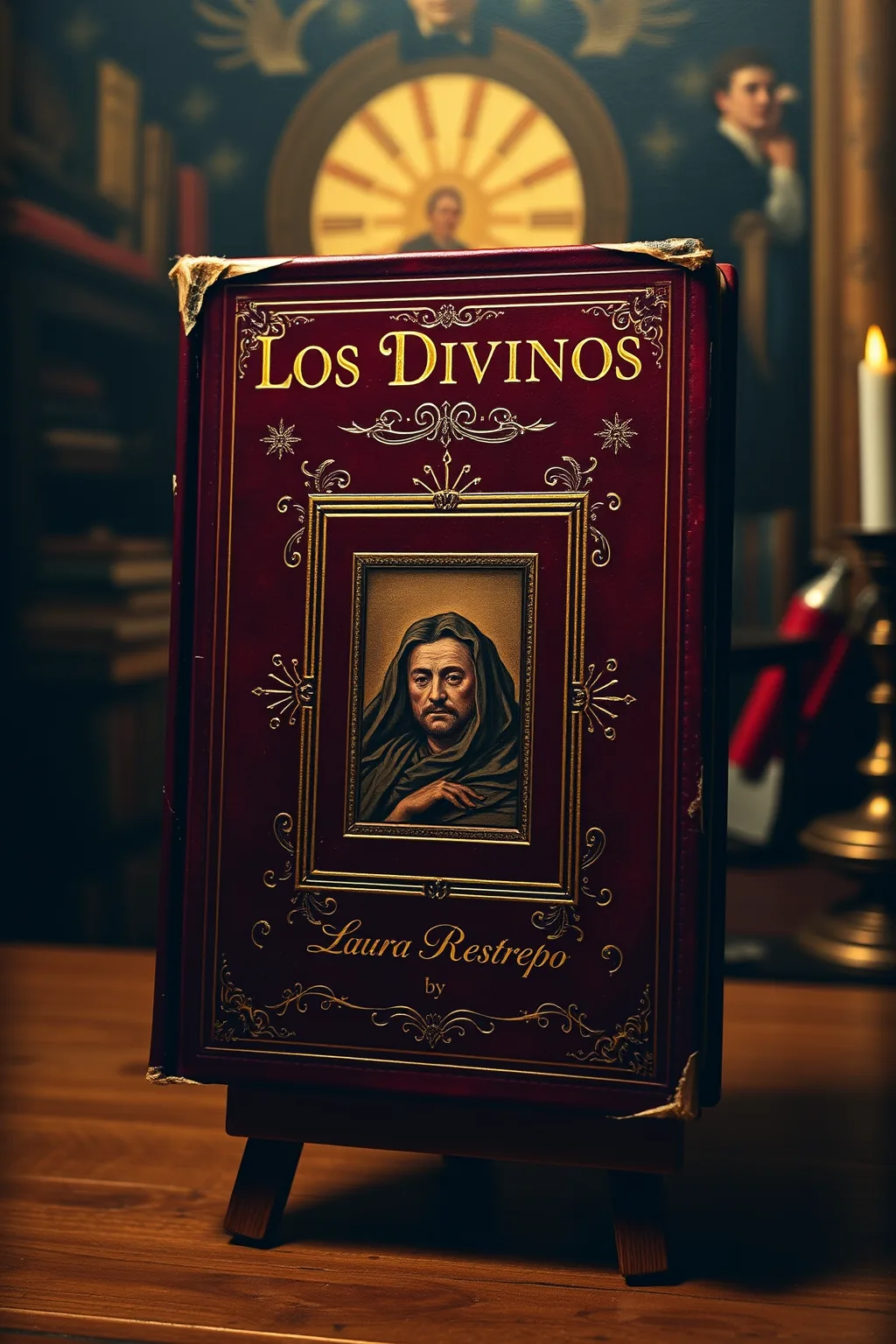
Los Divinos
 64
64

Los Divinos



Aurelia Blackwood (Occult Philosophy Critic) — Laura Restrepo's 'Los Divinos' is a masterclass in psychological dissection, revealing the arcane machinations that can lie beneath gilded surfaces. The author masterfully constructs a fictionalized account of a real crime, unearthing the 'dark scaffolding' of the perpetrators' elite world. The 'Tutti Frutti' are not merely delinquents, but embodiments of a warped fraternity, their shared past a potent, if destructive, form of esoteric bonding. This novel offers profound insights into the nature of spiritual corruption when unchecked by consequence or conscience, making it a compelling read for those interested in the darker aspects of human nature and the societal structures that can foster them.
📝 Description
64
Laura Restrepo's 2005 novel 'Los Divinos' examines a pact between five Bogotà youths.
Laura Restrepo's 2005 novel, 'Los Divinos,' centers on a dark pact made by five privileged young men from Bogotà's elite. Though fictional, the story draws inspiration from a real crime, lending its narrative a palpable sense of dread. These characters, known as the 'Tutti Frutti,' engage in a series of increasingly perverse acts, fueled by their belief in their own immunity.
The novel dissects themes of corrupted innocence and the corrupting nature of unchecked power. Restrepo reveals the hidden machinations beneath a veneer of opulence, showing how wealth and social standing can create a spiritual vacuum. The narrative follows the young men's descent, highlighting the psychological underpinnings of their actions and their eventual isolation within their own gilded cages.
'Los Divinos' prompts reflection on the nature of morality when insulated by privilege. It questions how youthful hubris, when amplified by status, can lead to a detachment from consequence. The book invites readers to consider the hidden forces and psychological states that can drive individuals to transgress societal norms.
While not a direct manual of occult practices, 'Los Divinos' touches on esoteric themes through its portrayal of spiritual voids and malevolent influence. The pact among the five youths can be seen as a perversion of ritual, a binding agreement that isolates them and fuels their destructive behavior. The novel suggests that unchecked hubris, particularly when coupled with extreme privilege, can create a self-imposed spiritual exile, a theme resonant in various traditions that explore the consequences of seeking power outside conventional morality.
💡 Why Read This Book?
Delve into the opulent yet sinister world of Bogotà's elite, where a pact of corrupted innocence binds privileged young men. 'Los Divinos' offers a gripping fictionalization of a real crime, exploring themes of power, corruption, and the hidden architecture of malevolence. Ideal for seekers of psychological depth and those fascinated by the intersection of wealth, privilege, and darkness. Discover the subtle occult currents that can shape even the most seemingly fortunate lives.
⭐ Reader Reviews
Honest opinions from readers who have explored this book.
❓ Frequently Asked Questions
Is 'Los Divinos' a factual account of the crime?
While rooted in a real crime, 'Los Divinos' is a work of fiction. The characters and specific events are imagined, serving Restrepo's thematic exploration of the psychological and societal forces at play.
What is the significance of the 'Tutti Frutti'?
The 'Tutti Frutti' represent a fraternity of privileged young men whose bond is forged through a shared history of playful, yet increasingly criminal, activities. They embody a warped sense of camaraderie and entitlement.
What esoteric themes are explored in the book?
The novel touches upon themes of corrupted innocence, the seductive nature of power, spiritual voids masked by opulence, and the unseen influences that can shape destiny, hinting at a subtle, darker 'esotericism' of the privileged.
Who would enjoy this novel?
Readers who appreciate psychological thrillers, literary fiction with a dark edge, and those interested in explorations of social class, corruption, and the darker aspects of human nature will find 'Los Divinos' compelling.
What is the overall tone of 'Los Divinos'?
The tone is atmospheric, suspenseful, and psychologically intense. It balances the allure of the elite world with a profound sense of unease and impending tragedy.
🔮 Key Themes & Symbolism
Corrupted Innocence and the Shadow Self
The novel intricately dissects the concept of corrupted innocence, particularly within the privileged circles of Bogotà's elite. The 'Tutti Frutti' are presented as individuals whose youthful indiscretions, nurtured by wealth and a sense of impunity, evolve into a sinister pact. This theme explores how a lack of moral grounding, combined with an intoxicating sense of power, can lead to the manifestation of a 'shadow self' – a darker, more destructive aspect of personality that operates beyond conventional societal constraints. Restrepo suggests that this corruption isn't always overt evil, but a gradual erosion of empathy and ethical boundaries, cloaked in the guise of youthful rebellion and fraternal loyalty.
The Architecture of Power and Privilege
Restrepo masterfully constructs a narrative that exposes the 'dark scaffolding' beneath the glittering facade of wealth and social standing. 'Los Divinos' scrutinizes how privilege can create insulated worlds where laws and morality are perceived as malleable. The novel examines the subtle, almost esoteric, ways in which power is wielded and maintained within elite circles, often through unspoken agreements and a shared understanding of how to navigate or circumvent consequences. This theme challenges readers to consider the invisible structures that protect the privileged and the psychological impact of living in a reality where one is seemingly above reproach, fostering a sense of detached entitlement.
The Esoteric Bonds of Brotherhood and Malevolence
The 'juguetonamente perversa y levemente delictiva' brotherhood of the 'Tutti Frutti' hints at a more profound, almost occult, dimension to their male bonding. Their shared history, marked by increasingly transgressive acts, becomes a form of dark initiation and a binding esoteric ritual. This theme explores how shared secrets and complicity in wrongdoing can forge intense, albeit destructive, connections between individuals, creating a self-contained universe with its own set of rules and loyalties. Restrepo suggests that this twisted fraternity becomes a breeding ground for a shared malevolence, where individual conscience is subsumed by the collective will and the intoxicating allure of mutual transgression.
💬 Memorable Quotes
Direct passages from the work, attributed to the author.
“Their brotherhood, a pact of gilded shadows.”
— This evocative phrase highlights the dark, almost secret nature of the protagonists' bond, suggesting it was forged in shared transgressions and hidden from the light of day.
“A subtle, darker architecture of influence.”
— This speaks to the hidden systems of power and manipulation that operate beneath the surface of elite society, shaping destinies in unseen ways.
“Innocence, a fragile bloom in poisoned soil.”
— This metaphor poignantly illustrates how environments of privilege and moral ambiguity can corrupt even the purest of intentions, leading to a tragic fall.
💡 Key Ideas
Editorial paraphrase of the work's core concepts — not direct quotes.
The opulent cages masked a spiritual void.
This quote succinctly captures the novel's critique of wealth and privilege, suggesting that material comfort can conceal a profound emptiness of purpose and moral decay.
The dazzling world held a whisper of the abyss.
This quote emphasizes the dangerous duality of the elite society depicted, where outward glamour conceals a profound and terrifying darkness.
🌙 Esoteric Significance
Tradition
While not explicitly tied to a formal esoteric tradition, 'Los Divinos' examines the psychological underpinnings of what could be termed 'occult' social dynamics. It explores a form of secular esotericism where power, privilege, and shared transgression create a hidden doctrine and a secret fraternity. This 'esotericism of the elite' operates through unspoken rules, shared secrets, and a collective belief in their exceptionalism, allowing them to maintain a world apart from conventional morality and consequence. It speaks to the human need for belonging and ritual, twisted into a destructive force.
Symbolism
The novel is rich with symbolic resonance. The 'Tutti Frutti' themselves symbolize a perversion of youthful exuberance and camaraderie, their shared name a playful yet sinister echo of their destructive bond. The 'opulent cages' represent the gilded prisons of wealth and privilege, which, while offering material comfort, stifle genuine spiritual growth and moral accountability. The 'dark scaffolding' symbolizes the hidden, often illicit, structures and systems that uphold the elite's power and insulation from societal repercussions. The very act of unraveling the crime becomes a symbolic descent into the hidden layers of this privileged world.
Modern Relevance
'Los Divinos' holds significant modern relevance in its exploration of unchecked privilege, the psychological impact of wealth without responsibility, and the insidious nature of systemic corruption. In an era where discussions of social inequality, accountability for the powerful, and the erosion of ethical boundaries are paramount, Restrepo's novel offers a compelling, fictionalized case study. It prompts readers to question who truly holds power, how it is wielded, and the invisible forces that can shape both individual lives and societal outcomes, urging a critical examination of the 'hidden architectures' that govern our world.
👥 Who Should Read This Book
This novel is highly recommended for discerning readers who appreciate literary depth and psychological intrigue. **Seekers of Truth:** Those interested in exploring the darker facets of human nature and the corrupting influence of power will find much to ponder. **Scholars of Society:** Students of sociology, psychology, and cultural studies will appreciate the novel's nuanced portrayal of elite dynamics and moral compromise. **Practitioners of Insight:** Readers who engage with complex narratives that dissect motivations and societal structures will find 'Los Divinos' a rewarding intellectual journey. **Beginners to the Esoteric:** While not overtly mystical, the novel's exploration of hidden influences and corrupted bonds provides an accessible entry point into understanding the subtle, often dark, currents that can shape human experience.
📜 Historical Context
Laura Restrepo's 'Los Divinos' emerges from a rich literary tradition of exploring the complexities of Latin American societies, particularly the stark contrasts between extreme wealth and pervasive social issues. The novel is set against the backdrop of a Bogotà grappling with its own identity, a city where opulent enclaves exist alongside profound social inequalities and the persistent specter of crime. The era in which the story is implicitly set is one where the influence of powerful families and the impunity enjoyed by certain social strata were subjects of intense public discourse and artistic exploration. Restrepo's work taps into this ongoing dialogue, offering a fictional lens through which to examine the psychological and moral consequences of such societal structures, echoing themes found in Latin American 'magical realism' and 'new journalism' but with a distinctly grounded, psychological focus.
📔 Journal Prompts
Reflect on a time you witnessed or experienced the 'gilded cage' effect of privilege. How did it manifest?
Consider the concept of a 'shadow self.' How might the characters in 'Los Divinos' embody this concept?
Explore the idea of a 'secret fraternity' or pact. What are the potential psychological and societal implications of such bonds?
If you were to create a symbolic representation for the 'dark scaffolding' of power, what would it look like and why?
How does the novel challenge your perceptions of innocence and corruption, particularly within different social strata?
🗂️ Glossary
Tutti Frutti
A playful yet sinister nickname for a group of five privileged young men, signifying their shared, often criminal, pastimes and a twisted sense of camaraderie.
Dark Scaffolding
Refers to the hidden, often illicit, structures and systems that support and protect the elite, enabling them to operate with impunity.
Gilded Cage
A metaphor for a life of material wealth and privilege that, despite its outward allure, can be restrictive and lead to spiritual or moral stagnation.
Corrupted Innocence
The state of losing purity and moral integrity, often due to exposure to negative influences, particularly within environments of entitlement and power.
Esotericism of the Elite
The concept of a hidden knowledge or set of unspoken rules and beliefs that govern the behavior and interactions within privileged social circles, fostering a sense of separation and superiority.
This book appears in 3 collections
🔮 Readers Also Liked
Browse all →







From the “Tarot” Collection
View all →






More Free Divination & Tarot Books
View all →