Animism
 77
77

Animism



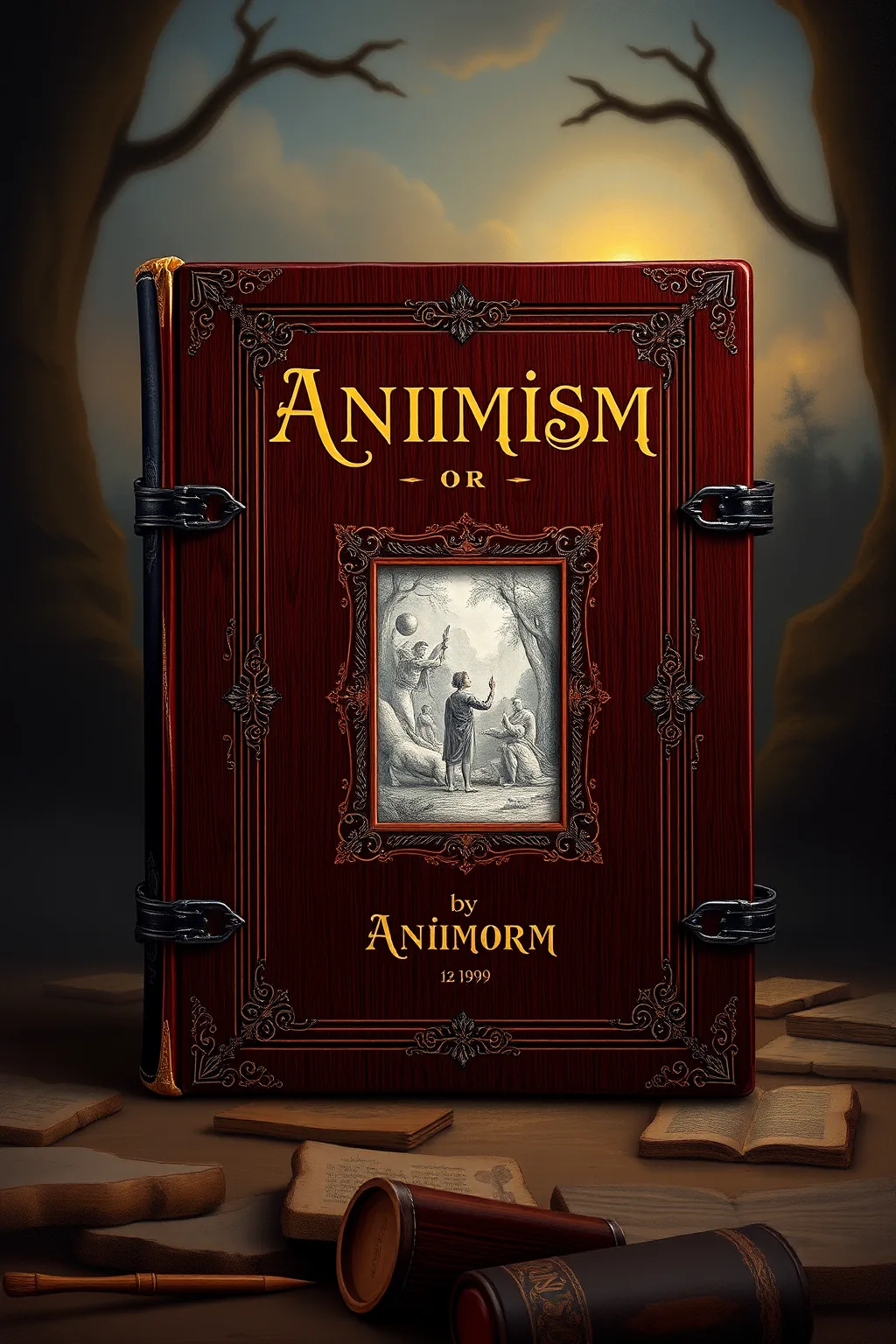
Alaric Kestrel (Metaphysical Studies Reviewer) — George William Gilmore's 'Animism: Or, Thought Currents of Primitive Peoples' remains a cornerstone text for anyone seeking to understand the bedrock of animistic belief. Published in an era of burgeoning anthropological study, Gilmore's work transcends mere academic observation, offering a profound exploration of the spiritual matrix that underpins many indigenous cultures. His meticulous examination of how early humans perceived spirit in all forms of existence provides invaluable context for contemporary witchcraft and pagan practices. This book is essential for practitioners and scholars alike, offering a deep dive into the animistic worldview that continues to resonate in modern esoteric thought. A truly enlightening and foundational read.
📝 Description
77
George William Gilmore's 'Animism' was published in 1919, detailing 'Thought Currents of Primitive Peoples.'
Published in 1919, George William Gilmore's 'Animism' examines the worldview of early peoples, identifying animism as a central current of their thought. Gilmore traces how this belief system shaped their understanding of the cosmos, seeing spirit in all things. He details the origins of these beliefs and the reverence for nature that characterized these societies.
The book is not simply an anthropological study. Instead, it aims to illuminate the foundational aspects of spiritual thinking. Gilmore analyzes the symbolic systems and underlying logic that structured ancient communities. For those interested in primal wisdom or the history of esoteric thought, 'Animism' presents a detailed account of ancient beliefs.
It reveals how animistic ideas influenced early human consciousness and suggests their lasting presence in modern metaphysical and pagan practices. The work invites readers to consider a universe perceived as alive with unseen forces, where the boundaries between the material and spiritual were less distinct.
This book sits within the early 20th-century academic interest in comparative religion and anthropology, particularly as it touched upon what were then termed 'primitive' spiritual beliefs. Gilmore's work is an attempt to codify a foundational worldview that predated many organized religions, seeing animism as a key to understanding the psychological and spiritual roots of human societies. It is part of a lineage that sought to understand ancient or non-Western belief systems as having their own internal logic and significance, often contrasting them with later, more formalized religious structures.
💡 Why Read This Book?
Uncover the ancient roots of spiritual belief and the profound interconnectedness of all existence. 'Animism' offers a foundational understanding of the animistic worldview, essential for practitioners of witchcraft and paganism, scholars of religion and anthropology, and any seeker interested in the primal forces that shape human consciousness. Explore the origins of our spiritual landscape.
⭐ Reader Reviews
Honest opinions from readers who have explored this book.
❓ Frequently Asked Questions
What is animism?
Animism is the belief that all natural things—plants, animals, rocks, rivers, etc.—have a spirit or soul. It posits a universe alive with consciousness and agency, influencing the development of early religious and spiritual thought.
Who was George William Gilmore?
George William Gilmore was an author and scholar whose work explored the thought currents and beliefs of primitive peoples, with 'Animism' being a significant contribution to understanding early spiritual systems.
Is this book suitable for beginners in witchcraft?
Absolutely. It provides essential foundational knowledge about animistic principles, which are central to many modern pagan and witchcraft traditions, offering context and deeper understanding.
What themes does the book explore?
The book explores themes of nature spirits, the animation of the inanimate, the interconnectedness of all life, early ritual practices, and the development of belief systems rooted in a vibrant, spiritualized cosmos.
Where can I access this public domain text?
This text is available in the public domain and has been digitized and reformatted by sources like www.sacred-texts.com, making it freely accessible for non-commercial use.
🔮 Key Themes & Symbolism
The Sentient Cosmos
This volume illuminates the ancient perception of a universe brimming with inherent spirit and consciousness. It details how early peoples viewed the natural world not as inert matter, but as a vibrant, interconnected web of animate forces. From the rustling leaves to the flowing rivers, each element was understood to possess a unique spirit, capable of interaction and influence. This perspective fostered a deep sense of reverence and responsibility, shaping rituals and daily life around maintaining harmony with these unseen energies. Understanding this pervasive animacy is crucial for grasping the origins of many spiritual and magical practices.
Origins of Spiritual Belief
Gilmore's work examines the deep wellsprings of human spirituality, tracing the genesis of belief systems back to primal encounters with the sacred in nature. It explores how the animistic worldview provided the foundational framework for later religious and metaphysical developments, demonstrating a direct lineage from ancient reverence for spirits to more formalized pantheons and spiritual doctrines. This exploration offers invaluable insight into the psychological and cultural drivers that led to the development of complex mythologies and ritualistic practices across diverse human societies, revealing the universal human drive to connect with the transcendent.
Symbiotic Human-Nature Relationship
A central tenet explored is the profound and symbiotic relationship between early humanity and the natural world, viewed through the lens of animism. The book illustrates how, when all of existence is perceived as animate and spiritual, human existence becomes intrinsically woven into the fabric of the cosmos. This understanding fostered a deep respect for ecological balance and a recognition of mutual dependence. Practices, beliefs, and social structures were often designed to honor and appease these spirits, ensuring the continued benevolence of the natural world upon which human survival depended. This perspective offers a powerful antidote to modern disconnection.
💬 Memorable Quotes
Direct passages from the work, attributed to the author.
“The world was not a dead mechanism, but a living spirit.”
— This concisely captures the essence of animism: a universe imbued with life and consciousness, rather than mere physical matter.
“Every stone, every stream, every leaf held a voice.”
— Highlights the pervasive animacy and spiritual presence attributed to all elements of the natural world in animistic thought.
“The unseen governed the seen.”
— Emphasizes the foundational animistic belief that spiritual forces and entities held dominion over the physical realm.
“A communion of souls across all creation.”
— Points to the deep interconnectedness and shared spiritual essence perceived between humans and the rest of the living world.
“The dawn of reverence for the primal forces.”
— Suggests the book's exploration of how animism represents humanity's earliest attempts to understand and honor the fundamental energies of existence.
🌙 Esoteric Significance
Tradition
Animism forms the bedrock of numerous esoteric and indigenous spiritual traditions, including many forms of modern witchcraft, shamanism, and paganism. It represents the earliest known framework for understanding the spiritual nature of reality, emphasizing direct experience and a reciprocal relationship with the unseen world. Its principles of immanent spirit and interconnectedness are vital for practitioners seeking to reconnect with the Earth and its energies, offering a pathway to understanding the fundamental forces that underpin magical practice.
Symbolism
The symbolism in animism is deeply rooted in the natural world: animals often represent spirit guides or totemic energies, plants carry medicinal and spiritual properties, and natural formations like mountains or rivers are seen as sacred loci of power. The concept of the 'spirit world' itself is a potent symbol of realms beyond the physical, accessible through altered states of consciousness and ritual. Understanding these symbols allows for a richer engagement with ancient wisdom and the symbolic language of magical traditions.
Modern Relevance
In an age often characterized by disconnection from nature and the material world, animism offers a powerful antidote. Its core tenets of reverence for all life, interconnectedness, and the presence of spirit in everyday existence resonate deeply with contemporary environmental consciousness and the desire for authentic spiritual experience. Modern practitioners of witchcraft and paganism frequently draw upon animistic principles to foster a more grounded, reciprocal, and spiritually rich engagement with the world around them, revitalizing ancient wisdom for contemporary challenges.
👥 Who Should Read This Book
This foundational text is essential for a diverse readership. **Beginners** in witchcraft and paganism will find it an indispensable guide to understanding the core animistic worldview that underpins many traditions. **Scholars** of anthropology, religious studies, and comparative mythology will appreciate its detailed exploration of early belief systems and thought currents. **Seekers** of deeper spiritual understanding will discover clear insights into the nature of consciousness and humanity's place in the cosmos. **Practitioners** of earth-based spiritualities will find it a rich source for deepening their connection to nature and the spirit world, informing their rituals and practices with ancient wisdom.
📜 Historical Context
Published in 1919, 'Animism: Or, Thought Currents of Primitive Peoples' emerged during a central period of anthropological and sociological inquiry. The early 20th century saw a surge in efforts to systematically study and categorize the beliefs and practices of non-Western cultures, often through the lens of evolutionary theory. Scholars like Sir James Frazer and Émile Durkheim were actively shaping the discourse on religion and magic. George William Gilmore's work fits within this intellectual milieu, aiming to provide a comprehensive understanding of animism as a foundational stage in the development of human religious thought. The book reflects both the scientific aspirations of the era and a growing, albeit often ethnocentric, fascination with the 'primitive mind' and its unique spiritual insights.
📔 Journal Prompts
Reflect on a natural object (stone, plant, water) that you feel possesses a spirit. Describe its perceived qualities and how you might communicate with it.
How does the concept of an 'animate cosmos' differ from a purely materialistic worldview? What are the implications for your own perception of reality?
Consider a ritual or practice you engage in. How might its animistic roots inform or enhance its meaning and effectiveness?
What does 'interconnectedness' mean to you in the context of animism? How can you foster a greater sense of this connection in your daily life?
Explore the idea of 'spirit' in non-human entities. What lessons or wisdom might they offer us if we were to listen attentively?
🗂️ Glossary
Animism
The belief that all natural things—plants, animals, rocks, rivers, etc.—have a spirit or soul. It posits a universe alive with consciousness and agency.
Thought Currents
The prevailing ideas, beliefs, and intellectual movements characteristic of a particular time or group, especially concerning primitive societies.
Primitive Peoples
A term historically used to describe societies considered to be at an early stage of cultural or technological development, often studied for their foundational belief systems.
Spirit
In an animistic context, the animating force or consciousness that resides within all natural phenomena, not limited to human or animal forms.
Cosmos
The universe regarded as a complex and orderly system. In animism, this system is understood to be inherently spiritual and alive.
This book appears in 2 collections
🔮 Readers Also Liked
Browse all →









From the “Witchcraft” Collection
View all →


![D. [i. e., Doktor] Balthasar Bekkers reformierten Predigers in Amsterdam bezauberte Welt. ... 1781: Vol 2 Iss 81](/img/thumb/d-i-e-doktor-balthasar-bekkers-reformierten-predigers-in-amsterdam-bezauberte-welt-1781-vol-2-iss-81-bekker-balthasar-1634-1698.webp)


More Free Witchcraft & Paganism Books
View all →