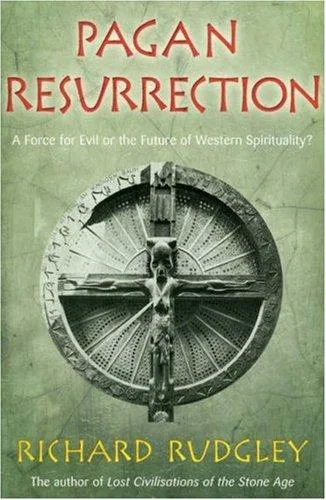
Pagan Resurrection
 75
75

Pagan Resurrection
Richard Rudgley's Pagan Resurrection offers a compelling argument for the persistent vitality of pagan thought, tracing its reappearance through history. Rudgley excels at connecting disparate historical threads, demonstrating how ancient pagan impulses manifest even in modern society. A notable strength is his ability to draw parallels between seemingly unrelated cultural phenomena, suggesting a deeper, underlying current. The work, however, occasionally leans towards a broad interpretation of 'pagan,' which might leave some readers wanting more precise definitional boundaries. The exploration of the Euboean cults, for instance, highlights the book's meticulous research but also its tendency to generalize across diverse traditions. Ultimately, Rudgley presents a sophisticated case for paganism's enduring influence, demanding a reconsideration of its historical trajectory.
📝 Description
75
Richard Rudgley's 2006 book, Pagan Resurrection, examines the cyclical resurgence of pagan beliefs.
Pagan Resurrection, published in 2006, investigates the enduring presence and cyclical resurgence of pagan beliefs and practices across different eras and cultures. Rudgley moves beyond simplistic historical accounts to examine the psychological and social currents that propel these ancient systems back into contemporary consciousness. The book shows how elements of paganism, often mischaracterized or suppressed, continue to inform modern spirituality and cultural expressions.
This work is intended for readers with an interest in esoteric studies, comparative religion, and the anthropology of belief. It assumes some familiarity with historical pagan traditions and their symbolic languages. Individuals seeking to understand archetypal patterns in human spirituality, and those interested in the persistence of pre-Christian worldviews, will find this book relevant. It caters to scholars and practitioners who wish to engage with the subject matter critically and analytically.
Published in the early 21st century, Pagan Resurrection emerged during a period of renewed interest in neopaganism and pre-Christian European religions. The work engages with scholarship re-evaluating indigenous European spiritualities, challenging earlier Christian-centric narratives. Rudgley's research situates itself within an intellectual milieu that included figures like Mircea Eliade, whose work on the eternal return and archaic societies provided a framework for understanding cyclical spiritual phenomena. The book also implicitly addresses the dialogue between historical religious studies and contemporary spiritual movements.
💡 Why Read This Book?
• Gain a nuanced understanding of the cyclical resurgence of pagan traditions, moving beyond simple historical timelines to explore underlying archetypal patterns, as demonstrated in Rudgley's analysis of recurring spiritual motifs. • Discover how pre-Christian European worldviews, often suppressed, continue to inform contemporary cultural and spiritual expressions, offering fresh perspectives on modern belief systems. • Analyze the concept of 'pagan resurrection' through Rudgley's critical lens, understanding its manifestation in various historical periods and its connection to natural cycles and animistic thought.
⭐ Reader Reviews
Honest opinions from readers who have explored this book.
❓ Frequently Asked Questions
What is the primary focus of Richard Rudgley's Pagan Resurrection?
The book investigates the cyclical resurgence of pagan beliefs and practices throughout history. It explores how these ancient spiritual currents persist, re-emerge, and influence contemporary culture and consciousness, moving beyond superficial historical accounts.
When was Pagan Resurrection first published?
Pagan Resurrection was first published in 2006, placing its analysis within the context of early 21st-century scholarship and popular interest in neopaganism.
Does the book discuss specific historical pagan cults?
Yes, the work explores various historical manifestations of paganism, including references to specific cults and traditions, examining their enduring impact and cyclical reappearance across different eras.
What kind of reader would benefit most from Pagan Resurrection?
Readers interested in esoteric studies, comparative religion, the anthropology of belief, and those seeking to understand the enduring influence of pre-Christian worldviews will find this book particularly valuable.
How does Pagan Resurrection approach the concept of 'resurrection'?
The book uses 'resurrection' to describe the recurring phenomenon of pagan beliefs and practices reappearing throughout history, often in transformed ways, suggesting a cyclical rather than linear spiritual evolution.
Is Pagan Resurrection a practical guide to modern paganism?
No, it is primarily an analytical and historical study. While it illuminates the roots of modern paganism, it focuses on the historical and anthropological examination of pagan revivals rather than offering practical instructions.
🔮 Key Themes & Symbolism
Cyclical Nature of Belief
The central thesis of Pagan Resurrection revolves around the idea that spiritual beliefs, particularly those associated with paganism, are not static but exhibit a cyclical pattern of emergence, suppression, and resurgence. Rudgley examines how ancient motifs and worldviews reappear across different epochs, suggesting a recurring spiritual impulse in human societies. This theme is explored through historical examples, illustrating how elements of pre-Christian traditions continue to find new life and relevance, often in transformed contexts, challenging linear historical narratives of religious development.
Archetypal Paganism
Rudgley posits that paganism's enduring appeal lies in its connection to deep-seated psychological and archetypal patterns. The book examines the animistic worldview, the reverence for natural cycles, and the integration of the sacred into the mundane as core components that resonate across generations. This archetypal perspective suggests that paganism taps into fundamental aspects of the human psyche, explaining its persistent influence even when its specific forms have been altered or forgotten, offering a framework for understanding its repeated 'resurrection'.
Historical Persistence and Re-emergence
A significant aspect of Pagan Resurrection is its tracing of how pagan elements have persisted throughout history, often beneath the surface of dominant religious or cultural paradigms. Rudgley investigates instances where these ancient traditions have been revived, adapted, or reinterpreted. This theme highlights the resilience of indigenous European spiritualities and their capacity to re-emerge, sometimes through scholarly rediscovery, sometimes through popular spiritual movements, demonstrating their profound historical depth and adaptability.
💬 Memorable Quotes
Direct passages from the work, attributed to the author.
“The persistence of pagan motifs suggests a recurring spiritual current.”
— This statement expresses Rudgley's core argument that paganism is not merely a historical artifact but a living force that reappears cyclically, influencing spiritual and cultural landscapes across time.
“Ancient worldviews resurface when societal needs align with their archetypal strengths.”
— This interpretation suggests that the re-emergence of pagan ideas is often driven by contemporary human psychological or social requirements that ancient pagan philosophies are uniquely equipped to address.
“Suppression does not equate to eradication of pagan consciousness.”
— This idea highlights the enduring nature of pagan beliefs and practices, arguing that despite historical efforts to eliminate them, their underlying essence or influence continues to survive and manifest.
“The cyclical pattern challenges linear notions of religious evolution.”
— This interpretation points to Rudgley's critique of standard historical models of religion, proposing instead a model where spiritual traditions like paganism experience repeated cycles of activity rather than a simple progression.
“Animistic connections to nature remain a potent source of spiritual vitality.”
— This interpretation emphasizes the deep, often instinctual, human connection to the natural world that paganism embodies, suggesting this connection is a primary reason for its ongoing appeal and recurrent revivals.
🌙 Esoteric Significance
Tradition
Pagan Resurrection fits within the broader esoteric study of Western indigenous spiritualities and comparative mythology. While not strictly adhering to a single lineage like Hermeticism or Gnosticism, it draws upon the archetypal psychology and cyclical philosophies often explored within these traditions. The work departs from purely academic religious studies by examining the psychological and spiritual 'resurrection' of pagan forms, aligning with esoteric interests in the enduring power of ancient magical and religious systems.
Symbolism
The book implicitly engages with potent pagan symbols of cyclical renewal, such as the seasonal cycle of death and rebirth (Winter Solstice, Spring Equinox) and the archetypal imagery of the Great Mother and the Horned God. These symbols represent not just fertility and nature but also the integration of life and death, the wild and the civilized, reflecting core pagan philosophies of cosmic balance and interconnectedness that Rudgley argues continue to hold appeal.
Modern Relevance
Contemporary neopagan traditions, eco-spiritual movements, and scholars of indigenous European religions frequently draw upon the historical and archetypal frameworks discussed in Pagan Resurrection. Thinkers exploring the resurgence of animistic worldviews or the psychological need for connection to nature and ancestral roots find Rudgley's analysis of paganism's cyclical return particularly relevant to modern spiritual seeking.
👥 Who Should Read This Book
• Students of comparative religion and mythology: To gain a deeper understanding of the persistence of pre-Christian European belief systems and their influence across historical periods. • Esoteric practitioners and neopagans: To explore the historical roots and archetypal underpinnings of pagan traditions, informing contemporary practice with historical context. • Cultural anthropologists and historians: To analyze the recurring patterns of spiritual belief and the cyclical nature of religious phenomena in human societies.
📜 Historical Context
Pagan Resurrection, published in 2006, emerged in an academic and popular landscape increasingly open to reconsidering pre-Christian European spiritual traditions. This period saw a burgeoning interest in neopaganism and a critical re-evaluation of historical religious studies, moving away from exclusively Abrahamic frameworks. Rudgley's work engaged with scholarship that sought to reclaim and understand indigenous European belief systems, challenging earlier dismissals. Key figures like Mircea Eliade, whose work on myth and the eternal return provided conceptual tools for understanding cyclical religious phenomena, had already laid groundwork that informed such investigations. While not directly engaging in public debates or facing censorship, the book contributed to a broader intellectual current that questioned dominant historical narratives and explored the persistence of ancient worldviews, standing alongside contemporary works that explored comparative mythology and the anthropology of religion.
📔 Journal Prompts
The concept of 'pagan resurrection' and its cyclical manifestation.
Reflect on the archetypal strengths of pagan worldviews that continue to resonate.
Analyze the historical persistence of pagan elements despite suppression.
Consider the animistic connections to nature discussed in the book.
Examine how ancient motifs reappear in modern spiritual expressions.
🗂️ Glossary
Pagan Resurrection
The recurring phenomenon of pagan beliefs, practices, and worldviews re-emerging and gaining prominence throughout history, often in transformed guises.
Archetypal Patterns
Fundamental, universal psychological motifs and images that recur across cultures and time, believed to be deeply ingrained in the human psyche and often expressed in mythology and religion.
Animistic Worldview
A belief system that attributes a soul or spirit to natural objects, plants, animals, and phenomena, viewing the world as imbued with a living essence.
Cyclical Nature
The idea that processes, events, or phenomena occur in recurring patterns or cycles, rather than in a linear progression; applied here to the resurgence of spiritual traditions.
Pre-Christian European Religions
The diverse indigenous spiritual and religious systems practiced in Europe before the widespread adoption of Christianity, often characterized by polytheism, nature worship, and ritual.
Esoteric Studies
The academic or practical investigation of hidden, inner, or mystical knowledge and traditions, often focusing on spiritual or occult philosophies.
Neopaganism
Modern spiritual movements and religious practices that draw inspiration from historical pagan religions of Europe, often incorporating elements of nature worship, magic, and mythology.
🔮 Readers Also Liked
Browse all →
![The old colony town [Plymouth, Mass.], and other sketches. 1893: Iss 118](/img/thumb/the-old-colony-town-plymouth-mass-and-other-sketches-1893-iss-118-bliss-william-root-1825-1906.webp)







More by Richard Rudgley
All books →


More Free Witchcraft & Paganism Books
View all →