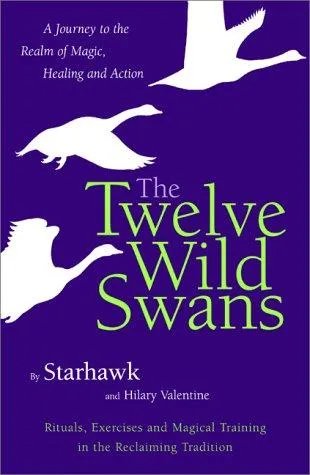
The twelve wild swans
 76
76

The twelve wild swans
Starhawk and Valentine's "The Twelve Wild Swans" offers a compelling re-framing of a classic fairy tale, imbuing it with the potent symbolism of the wild feminine. The strength of the work lies in its ability to connect the narrative arc of the swans to the lived experiences of women seeking liberation and reconnection with primal forces. The authors skillfully draw parallels between the sisters' quest and the challenges faced in reclaiming ancestral power. However, the book sometimes leans heavily on established ecofeminist tropes, which, while valid, can feel familiar to seasoned readers. A particularly resonant passage explores the sisters' silent endurance, interpreting it not as passive suffering but as a deep, internal process of gathering strength and maintaining spiritual integrity amidst oppressive circumstances. It’s a valuable text for its specific lens on myth as a tool for empowerment.
📝 Description
76
### What It Is "The Twelve Wild Swans," co-authored by Starhawk and Hilary Valentine, presents a unique exploration rooted in the folklore and spiritual traditions that inform contemporary witchcraft and ecofeminism. Published in 2000, the book draws from ancient myths and archetypal imagery to illuminate pathways for personal and collective transformation. It functions as both a narrative retelling and a guide to understanding the symbolic language embedded within these powerful stories, offering insights into the wild feminine and its connection to the natural world.
### Who It's For This work will appeal to readers interested in the intersection of mythology, spirituality, and activism, particularly those drawn to the Goddess movement and feminist interpretations of ancient lore. It is suited for individuals seeking to reconnect with primal energies and understand the symbolic resonance of fairy tales as spiritual texts. Those practicing modern Paganism, witchcraft, or engaged in ecofeminist thought will find particular value in its thematic explorations.
### Historical Context The book emerges from a period of resurgence in Pagan and Wiccan spiritualities, building upon foundational works in feminist theology and ecopsychology. Its publication in 2000 coincided with a growing interest in reclaiming ancient narratives and archetypes within Western esoteric traditions. Authors like Starhawk were already established figures, known for integrating spiritual practice with social justice activism, drawing from earlier influences such as Marija Gimbutas's work on Old European cultures and the feminist spirituality movement of the 1970s and 80s.
### Key Concepts Central to "The Twelve Wild Swans" is the concept of the wild feminine, an archetype representing untamed nature, instinct, and primal power. The work also delves into the transformative potential of myth, suggesting that ancient stories are not mere tales but living maps for psychological and spiritual growth. The symbolism of transformation, particularly the metamorphosis of women into wild creatures, serves as a metaphor for breaking free from societal constraints and reclaiming one's authentic self and connection to the earth.
💡 Why Read This Book?
• Understand the archetype of the wild feminine through the specific narrative of the "Twelve Wild Swans" and its connection to Starhawk's broader ecofeminist philosophy. • Explore the symbolic meaning of transformation and reclaiming ancestral power as depicted in the sisters' journey from subjugation to liberation. • Gain practical insights into interpreting fairy tales as spiritual maps, drawing directly from the book's analysis of the story's esoteric underpinnings.
⭐ Reader Reviews
Honest opinions from readers who have explored this book.
❓ Frequently Asked Questions
What is the core message of "The Twelve Wild Swans"?
The core message centers on the reclamation of the wild feminine and the transformative power of myth. It interprets the tale of the twelve swans as a journey of liberation, spiritual endurance, and reconnection with primal, natural energies.
Who are Starhawk and Hilary Valentine?
Starhawk is a prominent author, activist, and spiritual teacher known for her work in ecofeminism and modern Paganism. Hilary Valentine is her co-author on "The Twelve Wild Swans," contributing to its exploration of myth and spirituality.
What esoteric traditions does the book draw from?
The book draws from the traditions of witchcraft, Goddess spirituality, and ecofeminism, reinterpreting ancient archetypes and fairy tales through a lens of personal and collective empowerment and connection to nature.
How does "The Twelve Wild Swans" relate to witchcraft?
It connects to witchcraft by exploring themes of reclaiming feminine power, working with nature's cycles, and utilizing myth and archetypes for spiritual growth and activism, aligning with many contemporary Pagan and Wiccan practices.
When was "The Twelve Wild Swans" first published?
"The Twelve Wild Swans" was first published in the year 2000, reflecting a period of significant engagement with feminist spirituality and eco-consciousness.
What is the significance of the swan symbol in this context?
The swan symbolizes transformation, spiritual purity, and the wild, untamed aspects of the feminine. In the book, the twelve wild swans represent women undergoing a profound metamorphosis to reclaim their power and freedom.
🔮 Key Themes & Symbolism
The Wild Feminine Archetype
The book identifies and explores the 'wild feminine' as a potent archetype representing untamed nature, instinct, and primal power. It posits that this energy, often suppressed by patriarchal structures, is crucial for individual wholeness and ecological balance. The narrative of the twelve swans becomes a vehicle to understand this archetype's journey of suppression, endurance, and eventual reclamation, offering readers a framework to recognize and integrate these wild energies within themselves and their communities.
Myth as Spiritual Map
"The Twelve Wild Swans" champions the idea that fairy tales and ancient myths are not merely stories but living spiritual maps. The authors analyze the symbolic language embedded within the "Twelve Wild Swans" narrative, demonstrating how its archetypal patterns can guide personal transformation and illuminate psychological truths. This perspective encourages readers to engage with traditional narratives as sources of wisdom for navigating contemporary spiritual and existential challenges, fostering a deeper connection to ancestral knowledge.
Transformation and Rebirth
A central theme is the profound process of transformation and rebirth, embodied by the sisters who are cursed and turned into wild swans. Their silent suffering and eventual regaining of human form are interpreted as a metaphor for breaking free from societal constraints and reclaiming one's authentic self. The book frames this transformation as a necessary, albeit arduous, path toward spiritual liberation and the integration of marginalized aspects of the self, particularly those associated with the natural world.
Ecofeminism and Nature Connection
The work is deeply rooted in ecofeminist principles, emphasizing the interconnectedness of the feminine principle, nature, and liberation. The imagery of wild swans and their natural habitat serves as a powerful symbol of the Earth's vitality and the intrinsic link between human well-being and ecological health. "The Twelve Wild Swans" advocates for a spiritual path that honors and protects the natural world, viewing its degradation as intrinsically linked to the suppression of feminine power.
💬 Memorable Quotes
Direct passages from the work, attributed to the author.
“The wild is not chaos, but a potent, life-affirming order.”
— This interpretation challenges conventional views of wildness as destructive or disordered. Instead, it presents it as a dynamic, vital force integral to life, suggesting a need to reconnect with and honor these primal energies.
“Myth offers pathways for the soul's journey, mirroring our own quests for wholeness.”
— This emphasizes the functional role of myth in spiritual and psychological development. It suggests that ancient stories provide archetypal frameworks that can guide individuals through their personal struggles and aspirations for self-realization.
“The curse is a metaphor for societal constraints placed upon women's power.”
— This interpretation directly links the fairy tale's magical predicament to real-world social and psychological oppression. It positions the narrative as a symbolic representation of women's struggle against limitations imposed by patriarchal structures.
💡 Key Ideas
Editorial paraphrase of the work's core concepts — not direct quotes.
The sisters endure silence and the elements, their transformation a profound act of internal gathering.
This passage highlights the concept of enduring hardship not as passive victimhood, but as an active, internal process of accumulating strength and maintaining spiritual integrity. It reframes suffering as a crucible for inner fortitude and eventual liberation.
Reclaiming the wild feminine means embracing instinct and the wisdom of the body.
This paraphrased concept points to the core tenets of reclaiming suppressed feminine energies. It advocates for valuing intuition, bodily wisdom, and natural impulses as essential components of a liberated self.
🌙 Esoteric Significance
Tradition
This work fits within the modern esoteric field of Goddess Spirituality, Wicca, and Ecofeminism. It departs from strictly traditional, lineage-based magical systems by focusing on archetypal psychology and mythic narrative as primary vehicles for spiritual empowerment and transformation. While drawing on ancient European folklore, it reinterprets these tales through a contemporary lens that prioritizes personal liberation and ecological consciousness, rather than rigid ritualistic adherence.
Symbolism
The central symbol is the "wild swan," representing the untamed, primal feminine power that has been suppressed. The transformation motif, where women become swans and then regain human form, symbolizes the arduous process of reclaiming lost aspects of the self and breaking free from patriarchal constraints. The "silent suffering" of the sisters during their transformation signifies inner resilience and the gathering of spiritual strength before outward action.
Modern Relevance
Contemporary practitioners of ecofeminist witchcraft, nature-based spiritualities, and those engaged in ecopsychology find resonance in Starhawk and Valentine's work. Thinkers exploring the reclamation of suppressed feminine archetypes and activists advocating for environmental justice often cite or are influenced by this approach to myth and spirituality. Its emphasis on the wild feminine continues to inform discussions on embodied spirituality and the integration of ecological ethics into personal practice.
👥 Who Should Read This Book
• Practitioners of modern witchcraft and Paganism seeking to deepen their understanding of archetypal imagery and the wild feminine. • Students of comparative mythology and folklore interested in feminist interpretations of ancient tales. • Activists and individuals engaged in ecofeminist thought looking for spiritual frameworks that connect personal liberation with ecological stewardship.
📜 Historical Context
Published in 2000, "The Twelve Wild Swans" emerged during a period of continued growth for contemporary Paganism and the broader New Age movement, which often looked to mythology and folklore for spiritual inspiration. Starhawk, already a significant figure in feminist spirituality and ecowarrior activism since the 1970s, brought her established voice to this retelling. The book builds upon earlier academic and spiritual explorations of the Goddess and archetypal psychology, influenced by scholars like Marija Gimbutas and theorists within the burgeoning ecofeminist movement. While not directly engaging in public debates with specific contemporaries at the time of its release, its perspective resonated with the ongoing discourse on nature spirituality and feminist theology, often positioned against more traditional religious doctrines and secularized psychological frameworks that overlooked these symbolic dimensions.
📔 Journal Prompts
The sisters' enduring silence: what inner strength does this represent for you?
Reflect on the "wild feminine" archetype as depicted in the story.
How can the myth of the "Twelve Wild Swans" serve as a spiritual map for your own life?
Consider the symbolism of transformation in your personal journey.
Identify societal constraints that mirror the curse placed upon the sisters.
🗂️ Glossary
Wild Feminine
An archetype representing untamed, primal, instinctual female energy connected to nature, often suppressed by patriarchal societal structures. Its reclamation is seen as vital for personal and ecological balance.
Archetype
A universal, inherited pattern of thought or image derived from the collective unconscious, serving as a fundamental symbol or motif in literature and myth.
Mythic Narrative
A story that conveys fundamental truths or beliefs about a culture, often involving supernatural beings or events, used here as a framework for spiritual understanding.
Transformation
A profound change in form, nature, or appearance; in this context, it signifies a spiritual or psychological metamorphosis, often involving struggle and rebirth.
Ecofeminism
A philosophical and political movement linking feminism with ecology, emphasizing the interconnectedness of the oppression of women and the exploitation of nature.
Goddess Spirituality
A range of spiritual beliefs and practices that focus on the divine feminine, often drawing from pre-patriarchal religions, nature-based cycles, and feminist theology.
Primal Energy
Refers to fundamental, instinctual forces of life and consciousness, often associated with the earth and the body, considered essential for spiritual vitality.
🔮 Readers Also Liked
Browse all →








More Free Witchcraft & Paganism Books
View all →