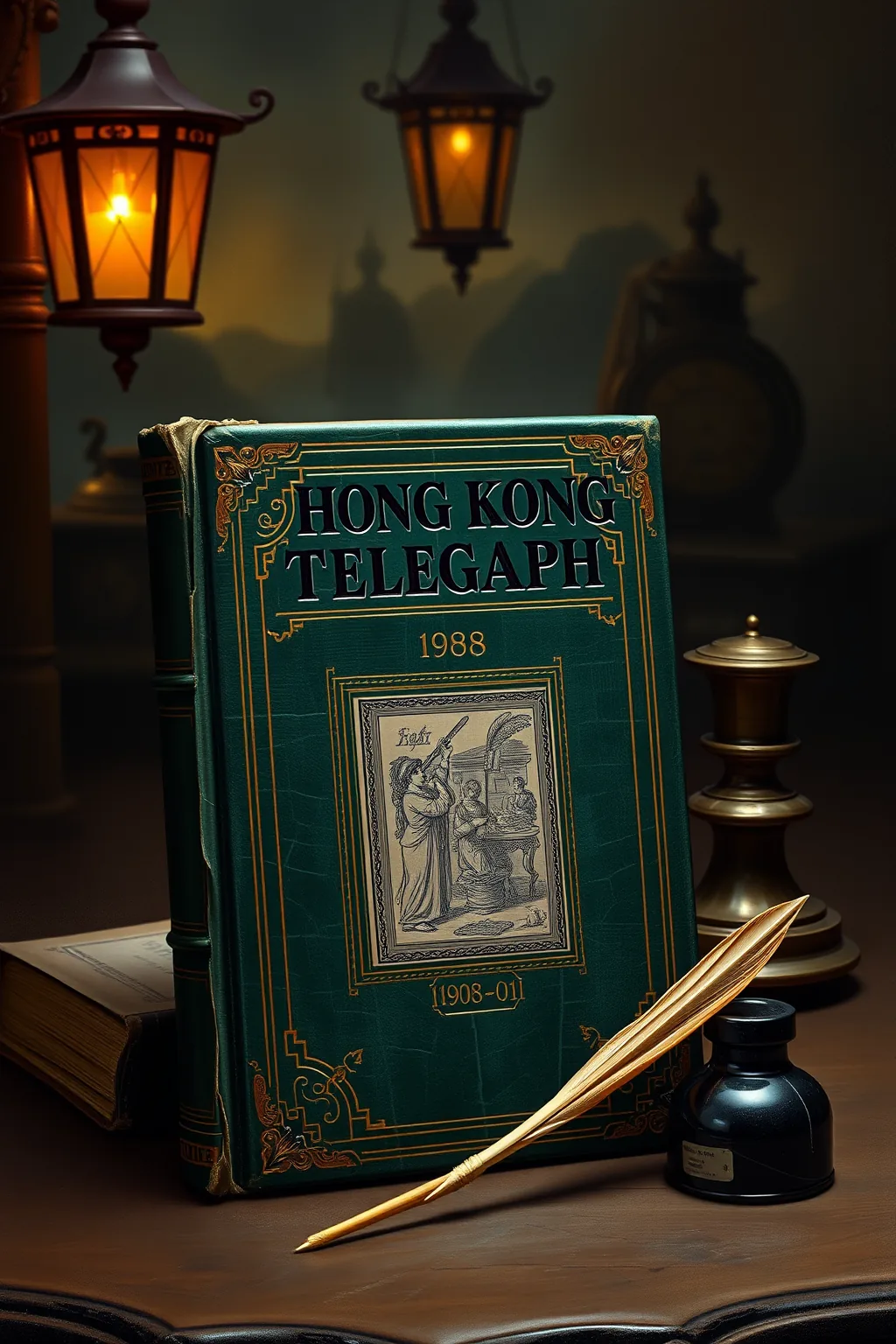
Hong Kong Telegraph 1908-10-01
 80
80

Hong Kong Telegraph 1908-10-01


Ophelia Vance (Mystical Literature Reviewer) — This digitized fragment of the Hong Kong Telegraph is a treasure trove for those who seek the esoteric within the historical. The articles on Cuban witchcraft ('Brujería') are particularly compelling, offering a rare ethnographic window into indigenous magical practices and folk remedies like the 'White Blood' cure. While the reporting is framed within its era, the underlying themes of power, healing, and spiritual belief resonate deeply. The juxtaposition with contemporary Shanghai and railway developments provides a fascinating context for the global flow of information and ideas, some of which were undoubtedly steeped in the arcane. An essential, if brief, read for scholars of comparative religion and occult history.
📝 Description
80
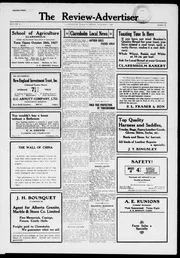
The October 1, 1908, Hong Kong Telegraph issue details Cuban witchcraft and a 'White Blood' cure.
This digitized edition of the Hong Kong Telegraph from October 1, 1908, contains more than just news of the era. It includes specific content on the practice of Brujería, or witchcraft, in Cuba, focusing on its colored population and their rituals. The issue also reports on a folk healing remedy known as the 'White Blood' cure. Alongside these esoteric elements, the newspaper touches upon Shanghai's growing modernity and its railway infrastructure, contrasting it with the perceived mysteries of the East.
This document offers a view into the early 20th century's interest in occult subjects and cultural practices. It presents a blend of contemporary events and what was then considered hidden knowledge. The content suggests a readership interested in both global developments and the less conventional aspects of human belief and practice.
This newspaper issue touches upon practices associated with folk magic and healing, placing it within a broad category of esoteric interests prevalent around the turn of the 20th century. The specific mention of Brujería in Cuba and a 'White Blood' cure suggests an engagement with regional magical traditions and remedies that were often documented or sensationalized in popular press of the time. It reflects a period where interest in the occult, spiritualism, and non-Western belief systems was gaining traction, sometimes through journalistic accounts that blended reportage with a fascination for the exotic or unknown.
💡 Why Read This Book?
Unlock forgotten knowledge on Cuban witchcraft and folk healing, explore the esoteric undercurrents of early 20th-century global reporting, and gain a unique perspective on the blend of the mundane and the mystical. Ideal for seekers of hidden histories, practitioners interested in comparative occultism, and scholars of early modern esoteric thought.
⭐ Reader Reviews
Honest opinions from readers who have explored this book.
❓ Frequently Asked Questions
What is 'Brujería' as described in this article?
Brujería, as presented in this 1908 text, refers to the practice of witchcraft and sorcery, particularly within the context of Cuba's diverse cultural landscape, suggesting a system of spiritual and magical beliefs and practices.
What is the 'White Blood' cure?
The 'White Blood' cure is alluded to as a folk remedy or esoteric healing practice found within Cuban traditions, hinting at the use of natural or symbolic elements for restorative purposes.
What other topics are covered in this issue?
Besides witchcraft, the issue touches upon the colored population of Cuba, cultural practices, global shipping, Shanghai's development and its railway, and legal proceedings, offering a broad societal snapshot.
Is this a primary source for witchcraft studies?
Yes, this article serves as a primary source, offering a contemporary (1908) perspective on how witchcraft and related practices were perceived and reported on in a colonial context.
Can I find more information about the author?
The author is listed as 'Unknown,' which is common for newspaper articles of this era, making the content itself the primary focus rather than individual authorship.
🔮 Key Themes & Symbolism
Brujería: Cuban Witchcraft and Folk Magic
This theme explores the historical depiction of 'Brujería,' the indigenous witchcraft practices of Cuba as observed in 1908. It examines how these traditions, deeply intertwined with the island's cultural fabric, were perceived and documented by external observers. The articles explore the rituals, beliefs, and potential spiritual energies associated with these practices, highlighting their role in community life and personal well-being. It offers a glimpse into the syncretic nature of Cuban spirituality, where African, European, and indigenous elements often converged to form unique magical systems. The 'White Blood' cure serves as a specific example of the practical applications of this esoteric knowledge.
The Interplay of Global Affairs and Esoteric Knowledge
This theme analyzes how the Hong Kong Telegraph from 1908 positions esoteric subjects like witchcraft alongside contemporary global events. The inclusion of articles on Shanghai's modernization and its railway infrastructure, contrasted with the ancient practices of Cuban Brujería, illustrates a world where burgeoning technological advancement coexisted with enduring mystical traditions. It suggests that even in an era of rapid industrialization, the human fascination with the supernatural, healing, and hidden knowledge remained a significant undercurrent. This juxtaposition provides a unique lens through which to view the cultural exchange and differing perceptions of reality across continents during the early 20th century.
Symbolism of Healing and Cultural Exchange
Here, we focus on the symbolic dimensions of the 'White Blood' cure and other cultural practices mentioned. The 'White Blood' cure, though vaguely described, likely carries symbolic weight related to purity, life force, or ancestral power within its originating tradition. The text invites contemplation on how different cultures conceptualize health, vitality, and the body's energetic systems. The reporting itself becomes a form of cultural artifact, reflecting the observer's understanding and interpretation of these foreign practices. It prompts questions about the universal human need for healing and the diverse symbolic languages developed to address it across different societies and historical periods.
💬 Memorable Quotes
Direct passages from the work, attributed to the author.
“Brujería or Witchcraft.”
— A direct designation of the esoteric subject, signaling its importance and framing the following discourse on Cuban magical practices and beliefs.
“The 'White Blood' Cure.”
— Highlights a specific, intriguing folk remedy, suggesting a connection to vital essences and ancient healing wisdom, inviting deeper investigation into its symbolic meaning.
“The coloured population of Cuba.”
— Indicates an exploration of the spiritual and cultural practices of a specific demographic, hinting at the collection of beliefs within the island's diverse communities.
“Shanghai in 1907.”
— Provides a temporal and geographical anchor, contrasting the ancient with the modern and suggesting a global narrative that encompasses both mystical traditions and industrial progress.
“A Fair Exchange.”
— Suggests a theme of reciprocity or transaction, possibly relating to magical pacts, healing exchanges, or the trading of knowledge, adding a layer of intrigue.
🌙 Esoteric Significance
Tradition
This document offers a fragmented yet potent glimpse into the intersection of various esoteric and folk traditions. Primarily, it touches upon syncretic forms of magic and spirituality prevalent in post-colonial Cuba, likely influenced by West African religions (like Santería or Palo Monte), Catholicism, and indigenous Taino beliefs. The term 'Brujería' itself is a broad descriptor for sorcery and witchcraft. The mention of the 'White Blood' cure suggests a focus on vitalistic or elemental healing practices, common in many ancient and folk magical systems that emphasize the body's energetic balance and connection to natural forces.
Symbolism
The symbolism within this text is many-sided. 'Brujería' itself symbolizes the power of the unseen and the invocation of forces beyond ordinary comprehension. The 'White Blood' cure likely symbolizes purity, life, essence, or perhaps even spiritual lineage, depending on its specific context within the magical system it belongs to. The juxtaposition with Shanghai's modernization represents the clash between the ancient, mystical world and the encroaching modern, rationalistic one. The act of reporting on these subjects by a newspaper in Hong Kong suggests the global dissemination and interpretation of esoteric knowledge, revealing how different cultures perceived and categorized magical practices.
Modern Relevance
In contemporary times, interest in indigenous spiritual practices, folk magic, and alternative healing methods has surged. This historical document is relevant as it provides an early, albeit outsider's, perspective on traditions that continue to evolve and be practiced today. It encourages a critical examination of how such practices were documented and perceived during colonial eras, highlighting potential biases while also preserving valuable ethnographic data. For modern practitioners and scholars of esotericism, it offers a historical touchstone, allowing for comparative study and a deeper understanding of the enduring human connection to the spiritual and magical realms across cultures and time.
👥 Who Should Read This Book
This digitized issue is highly recommended for several distinct groups. **Scholars of Esotericism and Anthropology** will find it an invaluable primary source for understanding the reporting and perception of witchcraft and folk magic in the early 20th century, particularly concerning Cuban traditions. **Practitioners of Folk Magic and Healing Arts** may discover insights into historical practices and symbolic meanings, offering inspiration for contemporary work. **Seekers of Hidden Histories and Cultural Explorers** will appreciate its mix of global news and esoteric content, providing a window into a world where the mystical was often intertwined with the everyday. **Beginners** interested in the history of occultism and comparative religion will find it an accessible, albeit brief, introduction to the diverse manifestations of spiritual beliefs.
📜 Historical Context
The early 20th century was a period of immense global change, marked by rapid industrialization, colonial expansion, and a burgeoning interest in the esoteric. As Western societies grappled with modernity, there was a simultaneous fascination with the 'exotic' and the 'primitive,' leading to the documentation and sometimes sensationalization of non-Western spiritual practices. This issue of the Hong Kong Telegraph, published in 1908, reflects this duality. While reporting on global commerce and infrastructure like the Shanghai-Nanking Railway, it also explores subjects like Cuban witchcraft ('Brujería'). This era saw the rise of occult societies and a widespread interest in spiritualism, psychoanalysis, and anthropology, all seeking to understand the human psyche and the hidden forces of the universe. The newspaper acted as a conduit, transmitting these diverse currents of thought across continents, blending the mundane with the mystical in its pages.
📔 Journal Prompts
Reflect on the perceived dichotomy between 'modern' global affairs (like Shanghai's railway) and 'ancient' practices (like Cuban Brujería) presented in this text. How does this juxtaposition resonate with contemporary societal views?
Consider the potential symbolism behind the 'White Blood' cure. What might 'white blood' represent in the context of indigenous healing practices?
Imagine you are a reader of the Hong Kong Telegraph in 1908 encountering this article on Cuban witchcraft. What questions would arise for you, and how might you interpret the information provided?
How might the colonial context of 1908 have influenced the reporting and interpretation of 'Brujería' and its practitioners?
Explore the concept of 'fair exchange' in relation to esoteric practices. What are the ethical considerations or symbolic meanings associated with such exchanges in magical traditions?
🗂️ Glossary
Brujería
A Spanish term broadly referring to witchcraft, sorcery, or the practice of magic, particularly within Latin American and Caribbean cultural contexts. It often encompasses a range of spiritual beliefs and practices aimed at influencing events or people.
Esoteric
Intended for or likely to be understood by only a small number of people with a specialized knowledge or interest. In the context of literature, it refers to subjects related to mysticism, occultism, and hidden spiritual knowledge.
Syncretic
The combining of different beliefs, religions, or schools of thought. In the context of spirituality, it refers to the blending of elements from various traditions to form a new system, common in post-colonial societies.
Vitalistic
Relating to the belief that the processes of life are not reducible to purely physical or chemical terms, but are instead driven by a vital principle or 'life force.' This concept is often found in traditional healing and magical systems.
Ethnographic
Relating to the scientific description of peoples and cultures and their behavior and relationships to one another. In this context, it refers to the documentation and study of cultural practices and beliefs from an observational standpoint.
This book appears in 2 collections
🔮 Readers Also Liked
Browse all →






![The Tipperary (or Clonmel) witch case : [transcripts of newspaper reports &c. concerning Bridget Cleary, burned as a witch, and the trial of her husband and neighbours for murder, in 1895]](/img/thumb/the-tipperary-or-clonmel-witch-case-transcripts-of-newspaper-reports-c-concerning-bridget-cleary-burned-as-a-witch-and-the-trial-of-her-husband-and-neighbours-for-murder-in-1895.webp)


From the “Witchcraft” Collection
View all →



More Free Witchcraft & Paganism Books
View all →