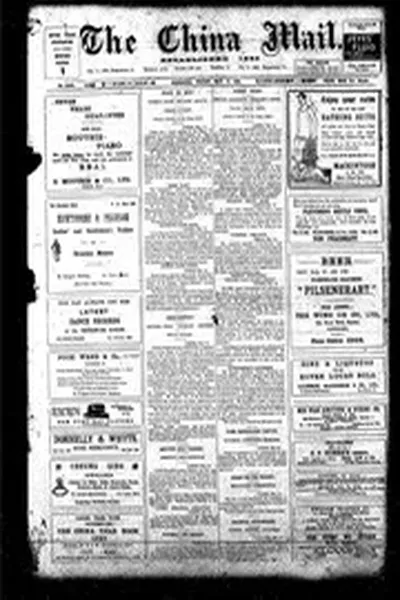
Hong Kong Daily Press 1884-09-13
 72
72

Hong Kong Daily Press 1884-09-13



Lorelei Sage, Contemplative Literature Editor: This fascinating artifact from the *Hong Kong Daily Press* offers a tantalizing whisper of the esoteric amidst colonial dispatches. The inclusion of 'Murder and Witchcraft in Mauritius' is a potent hook for scholars of historical occultism and comparative mythology. It serves as a stark reminder that even in the perceived rationality of the late 19th century, the shadows of ancient beliefs and practices persisted. This is not a grimoire, but its value lies in its context – a window into how such phenomena were perceived and reported by the mainstream press. Highly recommended for researchers of historical folklore and those intrigued by the intersection of colonialism and the occult.
📝 Description
72
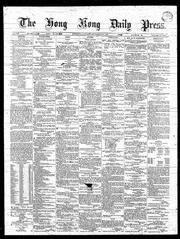
The September 13, 1884, Hong Kong Daily Press contains a report on 'Murder and Witchcraft in Mauritius'.
This issue of the Hong Kong Daily Press from September 13, 1884, features more than just colonial news. Alongside reports on political appointments and global affairs, it includes a speculative mention of 'Murder and Witchcraft in Mauritius'. This brief article suggests that anxieties about magic and the occult persisted even as the Victorian era waned.
The newspaper fragment shows how global news dissemination, even in its sensationalized forms, touched on occult themes. It touches on spiritual darkness, the manipulation of unseen forces, and the public's enduring interest in the forbidden. This serves as a window into the hidden histories and shadow narratives that coexisted with official colonial accounts.
This newspaper clipping situates itself within the late Victorian fascination with spiritualism and the occult. While not a formal treatise, its brief mention of witchcraft in Mauritius reflects a broader cultural undercurrent where ancient fears and forbidden practices found expression. It demonstrates how sensationalized journalism of the era could amplify or reflect public engagement with topics that skirted the edges of accepted science and religion, touching on themes of unseen forces and spiritual darkness.
💡 Why Read This Book?
Uncover the veiled narratives of the late 19th century. This edition of the *Hong Kong Daily Press* offers a rare glimpse into how witchcraft and occult mysteries were perceived and reported in a colonial setting. It's an essential read for seekers of hidden histories, scholars of comparative folklore, and anyone fascinated by the enduring power of ancient beliefs in the modern world. Discover the spectral echoes of the past.
⭐ Reader Reviews
Honest opinions from readers who have explored this book.
❓ Frequently Asked Questions
What is the primary esoteric theme in this newspaper issue?
The primary esoteric theme is the lingering presence and reporting of witchcraft and occult mysteries, particularly highlighted by the mention of events in Mauritius, suggesting ancient fears and forbidden practices within a colonial context.
Who is the intended audience for this publication?
The intended audience includes scholars of occult history, researchers of colonial narratives, folklore enthusiasts, and individuals interested in the intersection of historical events and esoteric beliefs.
Does this publication contain actual spells or rituals?
No, this is a historical newspaper report. It discusses alleged witchcraft and murder, rather than providing direct instructions for spells or rituals.
What is the historical significance of the Hong Kong Daily Press in this period?
The Hong Kong Daily Press was a key colonial newspaper, reflecting the news, attitudes, and societal concerns of the era, including the reporting of sensational or unusual events that touched upon popular beliefs.
How does this document contribute to the study of witchcraft history?
It offers insight into how witchcraft and occult phenomena were perceived, sensationalized, or documented by mainstream media in the late 19th century, providing valuable contextual information for historical occult studies.
🔮 Key Themes & Symbolism
The Shadow of the Occult in Colonial Discourse
This edition of the *Hong Kong Daily Press* serves as a fascinating case study in how the 'darker arts' and perceived supernatural phenomena permeated colonial consciousness. The mention of witchcraft in Mauritius, juxtaposed with official news of viceregal appointments and Egyptian affairs, reveals a societal undercurrent where ancient fears and beliefs coexisted with the outward march of empire and modernity. It highlights the enduring human fascination with the unknown and the ways in which such narratives were disseminated and consumed, offering a glimpse into the psychological range of the era and the spectral dimensions of colonial encounters. This theme invites readers to consider how perceived 'primitive' beliefs were often a source of both fear and morbid curiosity for the colonizers.
Journalism as a Conduit for Hidden Histories
Beyond its function as a purveyor of official news, this newspaper extract acts as an unwitting chronicler of hidden histories and esoteric undercurrents. The reporting of 'Murder and Witchcraft in Mauritius' suggests that even sensationalized news could touch upon the marginalized, the misunderstood, and the seemingly irrational aspects of human experience. For the esoteric scholar, such reports are not merely anecdotal; they are fragments of a larger collection, indicating the persistent presence of folk magic, spiritual anxieties, and the ways in which these manifested in documented events. It underscores journalism's role, however unintentional, in preserving traces of belief systems that existed outside the dominant rationalist framework of the time.
The Traces of Ancient Fears in a Modernizing World
This 1884 publication speaks to the enduring power of ancient fears within a rapidly modernizing world. While the headlines speak of imperial expansion and geopolitical shifts, the subtext of witchcraft in Mauritius points to the persistent grip of primal anxieties and spiritual beliefs that transcended geographical and temporal boundaries. It suggests that the forces of 'civilization' did not entirely extinguish older ways of understanding the world, particularly concerning misfortune, transgression, and the unseen. This theme encourages an examination of how these archaic fears continued to influence perceptions and shape narratives, even as societies embraced new technologies and ideologies, offering a clear insights into the duality of human experience.
💬 Memorable Quotes
Direct passages from the work, attributed to the author.
“Murder and Witchcraft in Mauritius”
— This stark phrase expresses the latent esoteric anxieties of the era, hinting at primal fears and forbidden practices persisting amidst colonial expansion and 'civilized' discourse.
“The New Viceroy of India”
— Represents the imposition of external authority and the structured hierarchies of colonial power, a stark contrast to the chaotic and unseen forces alluded to in the witchcraft report.
“Egyptian Affairs”
— Suggests the complex geopolitical range of the time, where ancient mystique and modern political maneuvering intertwined, mirroring the blend of the mundane and the mystical within the newspaper itself.
“Hong Kong Daily Press 1884”
— A timestamp and location, grounding the reader in a specific historical moment and geographical nexus where global events and local perceptions converged.
“Opening of a New Jewish Synagogue”
— Illustrates the diverse spiritual range of the era, hinting at established religious traditions existing alongside whispers of more clandestine or ancient forms of belief and practice.
🌙 Esoteric Significance
Tradition
This artifact touches upon the broad, cross-cultural tradition of folk magic and witchcraft, which predates organized religion and continues to manifest in various forms across different cultures. The report from Mauritius suggests an engagement with perceived malevolent spiritual forces and ritualistic practices common in historical accounts of European and colonial witchcraft accusations, reflecting a persistent undercurrent of animistic beliefs and fears of unseen harm.
Symbolism
The juxtaposition of official news (synagogue opening, viceroy appointment) with the mention of 'witchcraft' creates a powerful symbolic contrast. It highlights the tension between established order and the perceived chaos of the unknown, between rational discourse and primal fear. The geographical locations – Hong Kong as a colonial hub, Mauritius as a site of alleged sorcery, and Egypt with its ancient mystical associations – further enrich the symbolic landscape, hinting at the global reach of both imperial power and esoteric concerns.
Modern Relevance
In an age often characterized by scientific rationalism, the enduring fascination with witchcraft and occult phenomena, as evidenced by historical reports, speaks to a persistent human need to understand and engage with the mysterious and the transcendent. This document reminds us that the 'shadow' aspects of human experience and belief systems have not disappeared but often manifest in new forms, resonating with contemporary interests in alternative spirituality, conspiracy theories, and the exploration of consciousness beyond empirical limits.
👥 Who Should Read This Book
This particular edition of the *Hong Kong Daily Press* is a treasure for several distinct groups. For the **occult historian** and **scholar of comparative folklore**, it offers primary source material on how witchcraft and supernatural occurrences were reported and perceived in a colonial context, providing valuable insights into historical belief systems. **Seekers of hidden histories** will find it compelling for its glimpse into the less-documented aspects of societal consciousness, where ancient fears and modern narratives intertwine. **Practitioners** interested in the historical roots of folk magic and the societal impact of such beliefs will appreciate its contextual value. Even for the **curious general reader**, it offers a captivating window into a past where the mundane and the mystical coexisted in fascinating ways.
📜 Historical Context
The year 1884 was a period of intense global colonial expansion, technological advancement, and burgeoning intellectual curiosity, yet it was also an era where older beliefs and superstitions held significant sway. The British Empire was at its zenith, its reach extending across continents, influencing cultures and economies. In this milieu, news from distant colonies like Mauritius and India, as well as geopolitical hotbeds like Egypt, were of paramount interest. The *Hong Kong Daily Press* functioned as a crucial conduit, not only for imperial news but also for reflecting the societal consciousness of the time. The mention of 'witchcraft' alongside more conventional news items reveals a fascinating duality: the embrace of modernity and rationalism coexisting with lingering anxieties about the supernatural, folk practices, and the darker aspects of human nature, particularly in the exoticized and often misunderstood colonial territories. This context provides a rich backdrop for understanding how esoteric themes were perceived and reported.
📔 Journal Prompts
How did the reporting of 'witchcraft' reflect the anxieties and prejudices of the colonial era?
Consider the symbolic contrast between the 'Opening of a New Jewish Synagogue' and the mention of 'Murder and Witchcraft in Mauritius'. What does this juxtaposition reveal about the spiritual range of 1884?
If you were a reader of the *Hong Kong Daily Press* in 1884, how might the mention of witchcraft in Mauritius have affected your perception of the world?
Explore the enduring human fascination with the occult. How has this fascination evolved from the era of colonial reporting to today?
Reflect on the idea of 'hidden histories'. What might be the 'hidden histories' within your own community or personal experiences?
🗂️ Glossary
Viceroy
A ruler or governor of a country or province who rules in the name of a king or queen. In this context, the political appointee governing British India.
Mauritius
An island nation in the Indian Ocean, a British colony in 1884, known for its diverse population and historical accounts of folk beliefs and alleged sorcery.
Witchcraft
The practice of magic, especially in relation to the supernatural, often associated with folk beliefs, curses, and malevolent spiritual influence.
Synagogue
A building used by Jewish people for religious worship and instruction.
Esoteric
Intended for or likely to be understood by only a small number of people with a specialized knowledge or interest; relating to the occult.
This book appears in 2 collections
🔮 Readers Also Liked
Browse all →
![The old colony town [Plymouth, Mass.], and other sketches. 1893: Iss 118](/img/thumb/the-old-colony-town-plymouth-mass-and-other-sketches-1893-iss-118-bliss-william-root-1825-1906.webp)




From the “Witchcraft” Collection
View all →




More Free Witchcraft & Paganism Books
View all →