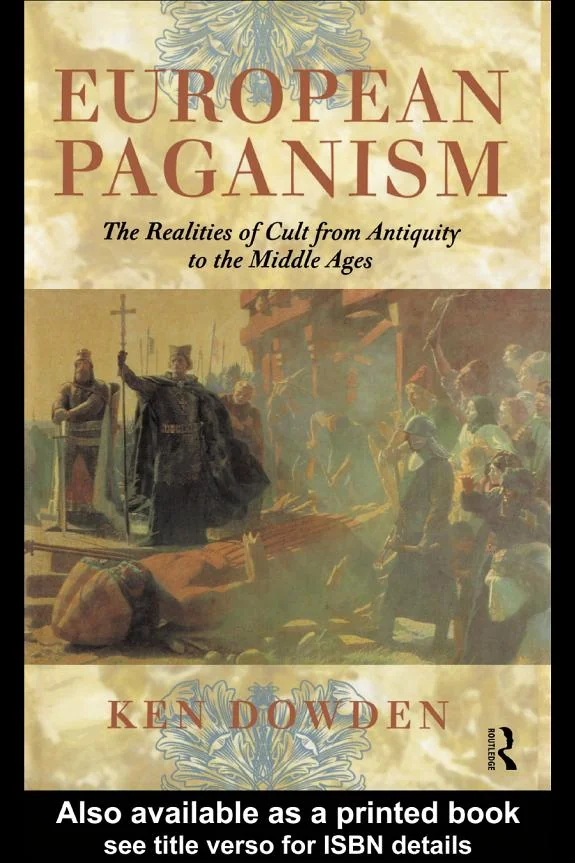
European Paganism
 80
80

European Paganism
Dowden's *European Paganism* approaches its subject with a commendable scholarly rigor, a welcome departure from more speculative popular accounts. The book excels in its systematic cataloging of evidence from various regions, offering a granular view of practices that might otherwise be generalized. For instance, the detailed examination of Germanic tribal religion provides a solid foundation for understanding its specific deities and social functions. However, the sheer density of information, while a strength, can sometimes make the narrative feel less fluid for readers less accustomed to academic prose. The work’s focus on empirical evidence, while admirable, occasionally leads to a reserve in discussing the more visceral or ecstatic elements that were undoubtedly part of many pagan experiences. Still, for its lucid presentation of historical data and avoidance of romantic embellishment, Dowden's volume serves as a foundational text for serious study.
📝 Description
80
Ken Dowden's 2008 book surveys pre-Christian European religions from archaeological and textual evidence.
Ken Dowden's *European Paganism* offers a scholarly survey of pre-Christian religious practices across the European continent. The work meticulously examines the diverse beliefs, rituals, and social structures that characterized these ancient traditions. It moves beyond simplistic or romanticized notions, focusing on reconstructing these faiths from available archaeological evidence and classical textual sources. This approach provides a grounded perspective on a complex historical subject. The book is intended for serious students of ancient history, comparative religion, and European folklore. It will appeal to academics, researchers, and dedicated practitioners seeking a detailed, evidence-based understanding of paganism before the widespread influence of Christianity. Those interested in the origins of Western cultural and spiritual traditions will find its scope particularly valuable.
Published in 2008, *European Paganism* engages with earlier scholarship, such as that of Mircea Eliade, while also incorporating advancements in archaeological interpretation and the study of Indo-European linguistics. The work situates itself within ongoing debates about the nature of pagan religion, particularly concerning the reconstruction of mythologies and the evidence for organized priesthoods or temples in various regions. Dowden addresses the challenges of interpreting religious practices from material remains and fragmented historical accounts, emphasizing critical engagement with sources.
This book contributes to the academic study of European paganism, a field that has seen fluctuating interest and interpretation. While distinct from modern practitioners' approaches, it engages with scholarly discussions that often inform or are informed by esoteric traditions. By reconstructing pre-Christian beliefs and practices from historical and archaeological data, Dowden provides a factual basis that can be contrasted with or integrated into various modern pagan or occult worldviews. The work acknowledges the difficulties in interpreting ancient sources, a common theme in both academic and esoteric investigations into historical religious systems.
💡 Why Read This Book?
• Understand the distinct religious landscape of pre-Christian Europe, moving beyond generalized "paganism" to appreciate the specific cults and practices of Germanic, Celtic, and Slavic peoples, as detailed in chapters concerning regional variations. • Gain critical skills for evaluating historical evidence concerning ancient religions, learning to distinguish between archaeological findings and textual interpretations, a method exemplified in the book's approach to Roman sources. • Explore the complex relationship between nature, society, and the divine in ancient European cultures, as Dowden analyzes the function of natural sites and seasonal cycles in pagan worship.
⭐ Reader Reviews
Honest opinions from readers who have explored this book.
❓ Frequently Asked Questions
What is the primary focus of Ken Dowden's *European Paganism*?
The book offers a comprehensive scholarly survey of pre-Christian religious practices across Europe, focusing on diverse beliefs, rituals, and social structures derived from archaeological evidence and classical texts.
When was *European Paganism* by Ken Dowden first published?
Ken Dowden's *European Paganism* was first published in 2008, placing it within a period of renewed academic interest in ancient European religions.
Does the book discuss specific deities or mythological figures?
Yes, the work explores various deities, mythic themes, and ritual structures associated with different European cultures, such as those found in Germanic and Celtic traditions, based on available historical and archaeological data.
Is *European Paganism* suitable for beginners in the study of ancient religions?
While comprehensive, the book is written from a scholarly perspective. It is best suited for serious students, researchers, and those with a foundational understanding of ancient history or comparative religion.
What kind of evidence does Dowden use to reconstruct ancient pagan practices?
Dowden primarily utilizes archaeological findings, such as burial sites and votive offerings, alongside interpretations of classical textual sources, including accounts from Roman and Greek writers.
How does this book differ from popular portrayals of paganism?
Unlike popular accounts, Dowden's work emphasizes scholarly rigor and evidence-based reconstruction, avoiding romanticized notions and focusing on the complexities and diversity of pre-Christian European faiths.
🔮 Key Themes & Symbolism
Reconstructing Ancient Beliefs
The book meticulously reconstructs the diverse religious field of pre-Christian Europe, moving beyond generalized terms to examine specific cults and practices of groups like the Celts and Germanic tribes. Dowden emphasizes reliance on archaeological evidence and critical analysis of classical texts, acknowledging the inherent difficulties in interpreting the spiritual lives of past societies and differentiating between localized traditions and broader patterns of worship.
The Role of Nature and Cosmos
A central theme is the profound connection between the natural world and religious practice in European paganism. Dowden explores how elements like sacred groves, rivers, celestial bodies, and seasonal cycles were integrated into worship and understood as manifestations of the divine. This perspective highlights a worldview deeply intertwined with the rhythms of the earth and the cosmos, a stark contrast to later theological frameworks.
Social and Ritual Structures
The work investigates the social functions and ritualistic expressions of pagan communities. It examines evidence for religious specialists, communal ceremonies, ancestor veneration, and the role of myth in structuring societal understanding. Dowden differentiates between various forms of religious engagement, from personal devotion to large-scale festivals, illustrating how these practices maintained social cohesion and cosmic order.
Evidence and Interpretation Challenges
Dowden consistently addresses the methodological challenges inherent in studying ancient religions. The book highlights the fragmentary nature of evidence, the biases of external observers (like Roman writers), and the need for careful interpretation of archaeological finds. This critical approach underscores the scholarly nature of the work, urging readers to engage with the material through a lens of historical inquiry.
💬 Memorable Quotes
Direct passages from the work, attributed to the author.
“The evidence for a widespread, unified paganism across Europe is scant.”
— This statement underscores the book's central argument against monolithic interpretations of ancient European religion, emphasizing the diversity and regional specificity of pre-Christian beliefs and practices.
“We must be cautious in extrapolating modern spiritual desires onto ancient peoples.”
— This highlights Dowden's critical stance against anachronism, cautioning against imposing contemporary sensibilities or romantic ideals onto the historical practices and motivations of ancient European pagans.
“Archaeology provides tangible, though often ambiguous, glimpses into ritual life.”
— This acknowledges the crucial role of material culture in reconstructing pagan practices, while also recognizing the inherent interpretive challenges and the need for careful analysis beyond simple identification of objects.
“Roman accounts offer valuable data but must be read with an awareness of their political and cultural context.”
— This points to the significant but problematic nature of classical written sources. Dowden implies that these texts, often produced by outsiders, require critical deconstruction to extract reliable information about indigenous European religions.
“The distinction between myth and historical narrative is often blurred in ancient sources.”
— This observation addresses the complex nature of ancient storytelling and its relationship to religious belief. It suggests that separating factual accounts from mythological elements in historical texts is a significant challenge for scholars.
🌙 Esoteric Significance
Tradition
While not explicitly aligned with a single esoteric lineage like Hermeticism or Theosophy, *European Paganism* serves as a critical foundational text for modern practitioners and scholars of Western Esotericism interested in the roots of European magical and spiritual traditions. It provides a historically grounded counterpoint to more mythopoetic or New Age interpretations, offering a scholarly basis for understanding the pre-Christian spiritual substratum of the West.
Symbolism
The work frequently touches upon potent symbols derived from nature and the cosmos. For example, the concept of the World Tree (axis mundi), a recurring motif in Indo-European cultures, symbolizes cosmic order and connection between realms. Sacred animals, such as the raven or wolf in Germanic traditions, often represent divine messengers, aspects of deities, or embodiments of primal forces. Dowden examines how these symbols were embedded within ritual and myth, reflecting a worldview where the immanent divine permeated all aspects of existence.
Modern Relevance
Contemporary Heathen and Asatru practitioners, as well as scholars of the New Paganisms, draw upon works like Dowden's for historical context and validation. Thinkers engaged in comparative mythology and the study of archaic consciousness also find value in its detailed examination of ancient European spiritual systems. It informs modern discussions on animism, ecological spirituality, and the reconstruction of pre-Christian European worldviews, providing a scholarly anchor for contemporary spiritual exploration.
👥 Who Should Read This Book
• Academic researchers and students of ancient history and comparative religion seeking a rigorous, evidence-based overview of pre-Christian European faiths. • Modern Pagan practitioners and Heathens interested in understanding the historical and archaeological basis of their spiritual traditions beyond popular myth. • Cultural historians and folklorists examining the deep roots of Western European cultural and spiritual identities prior to Christianization.
📜 Historical Context
Ken Dowden's *European Paganism*, published in 2008, arrived during a period of significant academic re-evaluation of ancient European religions. The early 21st century saw a move away from earlier, more speculative works and a greater emphasis on archaeological data and comparative linguistics. Dowden's study engages with the legacy of scholars like Marija Gimbutas but also incorporates newer archaeological interpretations and critical readings of classical sources. The work was published in a landscape where competing schools of thought existed, ranging from Indo-European reconstructionists to those focusing primarily on localized, post-Roman pagan survivals. While specific reception events like major reviews or controversies are not widely documented for this particular volume, its publication contributed to the ongoing scholarly discourse challenging simplistic notions of paganism and promoting nuanced, evidence-based approaches. It sits alongside contemporary works by scholars such as Aldhouse-Green and Cunliffe who also examined Celtic and broader European ancient cultures.
📔 Journal Prompts
The interpretation of archaeological evidence for pagan ritual.
The significance of natural landscapes in ancient European religious practice.
Variations in Germanic vs. Celtic religious expressions.
The challenges of reconstructing pre-Christian mythologies.
Reconciling classical accounts with archaeological findings.
🗂️ Glossary
Animism
The belief that natural objects, phenomena, and the universe itself possess souls or consciousness. In European paganism, this often manifested as reverence for spirits in trees, rivers, mountains, and animals.
Polytheism
A religious system involving the belief in multiple gods or deities. This was characteristic of many European pagan traditions, with distinct pantheons and cults for various divine figures.
Votive Offering
An object or act presented to a deity or supernatural power as a token of prayer, vow, or thanksgiving. Archaeological finds often include such offerings in sacred sites.
Axis Mundi
A concept representing the world's center or connection between the heavens, earth, and underworld. Often symbolized by a tree, mountain, or pillar in various mythologies.
Ancestor Veneration
The practice of honoring and worshipping deceased ancestors, often believed to possess influence over the living. This was common in many ancient European societies.
Mythopoetic
Pertaining to the creation or interpretation of myths. In religious studies, it can refer to approaches that emphasize the symbolic and narrative dimensions of belief systems.
Indo-European Linguistics
The comparative study of languages belonging to the Indo-European family. This field provides evidence for reconstructing shared cultural and religious concepts among ancient European peoples.
🔮 Readers Also Liked
Browse all →








More by Ken Dowden
All books →

More Free Witchcraft & Paganism Books
View all →
![D. [i. e., Doktor] Balthasar Bekkers reformierten Predigers in Amsterdam bezauberte Welt. ... 1781: Vol 2 Iss 81](/img/thumb/d-i-e-doktor-balthasar-bekkers-reformierten-predigers-in-amsterdam-bezauberte-welt-1781-vol-2-iss-81-bekker-balthasar-1634-1698.webp)