Pagan Portals - The Hedge Druid's Craft

 83
83

Pagan Portals - The Hedge Druid's Craft
Joanna van der Hoeven's "The Hedge Druid's Craft" effectively demystifies the solitary practice of hedge magic within a Druidic framework. The author's strength lies in her grounded approach, making complex ideas accessible without resorting to overly academic language. A particularly well-articulated section discusses the importance of sensory awareness in connecting with the land, highlighting how mundane observations can become profound spiritual acts. However, the book occasionally feels a touch repetitive in its emphasis on solitude, potentially overlooking the value of community for some practitioners. While it offers a solid foundation, readers seeking deeply intricate ritual mechanics might need to supplement this with other texts. Overall, it’s a valuable primer for the independent spiritual seeker.
📝 Description
83
Joanna van der Hoeven's 2018 book, Pagan Portals - The Hedge Druid's Craft, guides solitary practitioners in modern Druidry.
Published in 2018, Pagan Portals - The Hedge Druid's Craft by Joanna van der Hoeven details a specific approach to modern Druidry for the solitary practitioner. It emphasizes building a personal spiritual connection with the natural world, outside of organized groups. The book aims to make hedge magic and its ideas understandable and accessible to anyone ready to engage with them. It is suitable for newcomers seeking basic information on hedge magic and for those already practicing who wish to improve their personal craft. Readers who feel a strong link to the land, the changing seasons, and the environment's subtle energies will likely connect with its core ideas. The work situates itself within the broader evolution of contemporary Paganism, where movements like Druidry have diversified significantly since the mid-20th century.
This book is part of the 'Pagan Portals' series, which appeared during a time of considerable growth and variety in contemporary Paganism. Following Wicca's wider acceptance, traditions like Druidry began to develop in various directions. Van der Hoeven's work contributes to this ongoing development by articulating a specific form of hedge magic popular in the late 2010s. It focuses on the individual practitioner's direct relationship with nature and intuition, moving away from solely established doctrines or group rituals.
💡 Why Read This Book?
• Gain practical techniques for solitary nature communion, as detailed in chapters focusing on seasonal observation and elemental attunement, which foster a direct, personal connection to the earth's energies. • Understand the philosophical underpinnings of hedge magic as presented by van der Hoeven, allowing for the development of an independent spiritual path distinct from organized groups. • Learn to integrate the cyclical rhythms of nature into daily life, a concept central to the book's exploration of the Wheel of the Year and its practical application.
⭐ Reader Reviews
Honest opinions from readers who have explored this book.
❓ Frequently Asked Questions
What is the primary focus of "The Hedge Druid's Craft"?
The book centers on the solitary practice of hedge magic within a modern Druidic context. It emphasizes a personal, nature-based spirituality and the development of intuitive skills for practitioners working outside of formal groups.
Is this book suitable for beginners in Druidry?
Yes, it is highly suitable for beginners looking for an accessible introduction to Druidic concepts and practical hedge magic techniques. It provides foundational knowledge without assuming prior esoteric experience.
What does 'hedge magic' refer to in this book?
In "The Hedge Druid's Craft," hedge magic signifies a form of folk magic focused on the solitary practitioner's connection to nature, intuition, and the subtle energies of the land, often acting as a bridge between mundane and spiritual realms.
Does the book discuss specific rituals?
While it emphasizes personal practice and intuition, the book does outline foundational approaches to ritual, particularly concerning seasonal observances and creating sacred space, as discussed in its sections on the Wheel of the Year.
What is the significance of the 'Pagan Portals' series?
The 'Pagan Portals' series aims to provide clear, accessible introductions to various Pagan paths. "The Hedge Druid's Craft" is one entry, offering a focused look at a specific aspect of modern Druidry.
When was "The Hedge Druid's Craft" first published?
The book was first published in 2018, placing it within the recent wave of literature exploring diverse forms of modern Paganism and nature-based spirituality.
🔮 Key Themes & Symbolism
Solitary Practice
The book strongly advocates for the efficacy and beauty of solitary spiritual work. It details how the hedge druid can cultivate a rich inner life and a deep connection to the divine through personal practice, observation, and intuition, without reliance on formal groups or established orders. This emphasis is crucial for understanding the book's approach to modern Druidry as an adaptable, individual path.
Nature as Sacred Space
Central to van der Hoeven's craft is the idea that the natural world is inherently sacred and a primary source of spiritual power. The text guides readers to perceive their immediate environment—whether a garden, a park, or wilder landscapes—as a place for communion, learning, and magical work. It highlights seasonal cycles and the energies of the land as foundational elements.
Intuition and Personal Craft
Developing personal intuition is presented as a key skill for the hedge druid. The book encourages readers to trust their inner guidance and to build their own unique practice based on their experiences and connection to nature. This focus on subjective, felt experience differentiates it from more dogmatic or ritual-bound traditions.
The Wheel of the Year
The cyclical passage of the seasons, known as the Wheel of the Year, forms a significant framework within the book. Van der Hoeven explains how each festival and season offers unique opportunities for magical work, reflection, and deepening one's relationship with the earth's rhythms. This cyclical understanding is vital for grounding spiritual practice in natural processes.
💬 Memorable Quotes
Direct passages from the work, attributed to the author.
“The hedge witch is often a solitary figure, working with the energies of the land around them.”
— This statement expresses the core identity presented in the book: the hedge druid as an independent practitioner deeply connected to their local environment and its inherent magical forces.
“Our connection to the earth is fundamental to our spiritual well-being.”
— This highlights the book's emphasis on animism and nature reverence, suggesting that a healthy spiritual life is intrinsically linked to a conscious relationship with the natural world.
“The seasons provide a natural rhythm for magic and spiritual observance.”
— This interpretation underscores the importance of the Wheel of the Year in the hedge druid's craft, framing seasonal changes not just as natural events but as opportune moments for magical engagement.
“Trust your intuition; it is your most valuable tool.”
— This emphasizes the book's focus on developing personal gnosis and inner guidance, positioning intuition as the primary faculty for magical insight and practice.
“Creating a personal sacred space is the first step for the solitary practitioner.”
— This points to the practical necessity of establishing a dedicated space, however small, for focused spiritual work, reinforcing the book's theme of self-directed practice.
🌙 Esoteric Significance
Tradition
This work fits within the broad spectrum of modern Neo-Paganism, specifically aligning with contemporary Druidry and folk magic practices. While not strictly Hermetic or Gnostic, it shares with these traditions an emphasis on inner gnosis and a personal relationship with the divine. It departs from more structured, initiatory systems by championing solitary practice and intuitive development, drawing parallels to historical accounts of village wise-folk and solitary practitioners of folk magic.
Symbolism
Key symbols include the "hedge" itself, representing a liminal space between worlds and the boundary between the mundane and the sacred, often worked by solitary practitioners. The "wheel of the year" is another crucial motif, symbolizing the cyclical nature of life, death, and rebirth as observed in natural phenomena and marked by seasonal festivals. Trees, particularly ancient ones, often serve as symbols of connection to the earth, ancestral wisdom, and spiritual grounding.
Modern Relevance
The book's emphasis on solitary, nature-based practice holds significant relevance for contemporary practitioners seeking spiritual paths outside of institutionalized religion or large online communities. It speaks to a growing desire for authentic, personal connection with the earth, particularly among younger generations engaged with ecological awareness and mindfulness. Thinkers and practitioners focused on animism, rewilding, and ecopsychology often find resonance with its core principles.
👥 Who Should Read This Book
• Solitary practitioners of nature-based spirituality seeking to deepen their personal craft and connection to the land. • Individuals exploring Druidry who prefer independent study and practice over group-based traditions. • Aspiring folk magic practitioners interested in developing intuition and working with the energies of their local environment.
📜 Historical Context
Published in 2018, "The Hedge Druid's Craft" emerged during a flourishing period for modern Paganism, particularly within the Druidic revival. Following the establishment of prominent Druid orders like the Order of Bards, Ovates & Druids (OBOD) in the late 20th century, there was a growing interest in more personalized and less structured forms of Druidry. The work addresses a segment of this revival that sought to reconnect with older, more solitary folk magic traditions, often termed 'hedge traditions'. This period also saw a diversification of Wiccan practices, with figures like Judika Illes publishing extensive encyclopedias that brought lesser-known magical traditions to wider attention. Van der Hoeven's book fits into this landscape by offering a specific, accessible articulation of solitary hedge practice, distinct from the more ceremonial or order-based approaches that dominated earlier discourse.
📔 Journal Prompts
Reflect on your personal "hedge" – the boundaries and thresholds in your life.
What sensory details from your immediate natural environment can become spiritual anchors?
Map the current phase of the Wheel of the Year onto your personal experiences.
How does the concept of the solitary practitioner resonate with your spiritual inclinations?
Identify one intuitive nudge you have recently experienced and explore its meaning.
🗂️ Glossary
Hedge Druid
A practitioner of Druidry who focuses on solitary work, often engaging in folk magic and a direct relationship with nature, acting as a bridge between the mundane and spiritual realms.
Hedge Magic
A form of folk magic often practiced solitarily, emphasizing intuition, connection to the land, and working with subtle energies. It is associated with the figure of the hedge witch or wise-folk.
Wheel of the Year
The cycle of eight seasonal festivals observed in many modern Pagan traditions, marking the solar year's progression from the solstices and equinoxes to the cross-quarter days.
Sacred Space
A designated area, either physical or energetic, set aside for spiritual practice, ritual, or communion, fostering focus and a connection to the divine or sacred energies.
Solitary Practitioner
An individual who follows a spiritual path or engages in magical practice independently, without formal affiliation to a group, coven, or order.
Intuition
The ability to understand something immediately, without the need for conscious reasoning; in this context, a key faculty for magical insight and personal spiritual development.
Animism
The belief that natural objects, phenomena, and the universe itself possess souls or their own kind of consciousness; a foundational concept for nature-based spirituality.
🔮 Readers Also Liked
Browse all →






More by Joanna van der Hoeven
All books →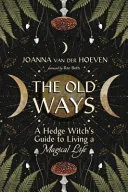



More Free Witchcraft & Paganism Books
View all →