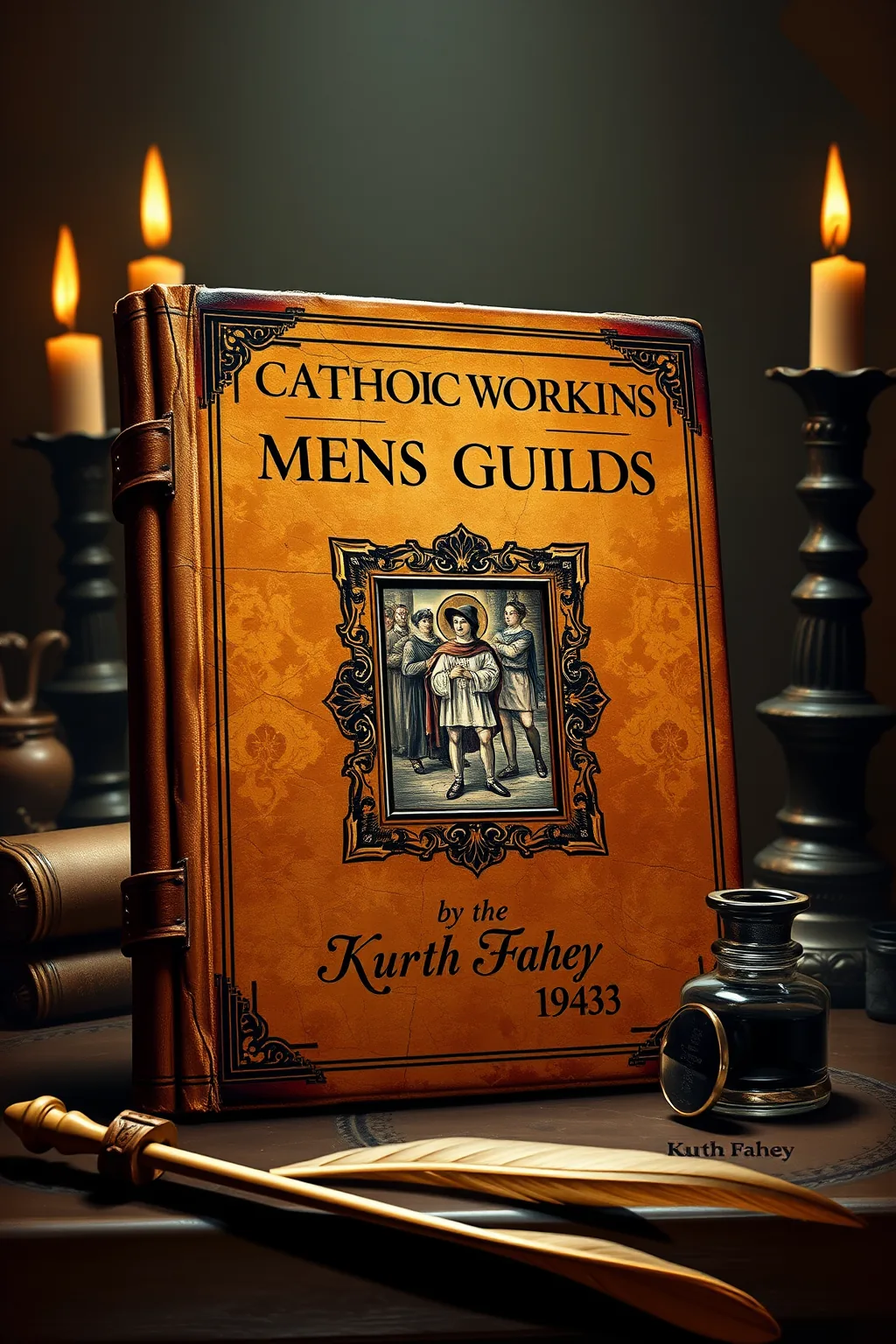
Catholic Working Mens Guilds Middle Ages Kurth Fahey 1943
 74
74

Catholic Working Mens Guilds Middle Ages Kurth Fahey 1943



Kurth Fahey's 'Catholic Working Men's Guilds: Middle Ages' is a profound and enlightening read for modern esoteric seekers. Fahey masterfully weaves historical narrative with esoteric insights, providing a compelling argument about the moral decay in contemporary corporate culture. The book's strength lies in its detailed exploration of medieval guilds, which were more than just professional associations; they were communities rooted in spiritual and moral principles. Fahey's comparison of these guilds to modern corporate practices, which he equates with paganism, is both provocative and thought-provoking. The text is rich with historical context and esoteric symbolism, making it an invaluable resource for those interested in the intersections of religion, ethics, and economics. While the writing style may be dense for some readers, the depth of research and the unique perspective make it a must-read for anyone seeking to understand the spiritual underpinnings of medieval society and their relevance today.
📝 Description
74
Kurth Fahey's 1943 study examines the Catholic Working Men's Guilds of the Middle Ages.
This book investigates the structure and meaning of medieval Catholic guilds, focusing on their role in shaping society. Fahey details the moral codes and communal practices that defined these organizations. The work suggests these guilds were more than mere economic bodies; they held spiritual and symbolic significance for their members. It examines how daily labor was integrated with religious devotion, creating a unified worldview. The guilds served as a framework for both social order and personal piety during the period. Readers will find an account of how collective life was understood through a religious lens.
This study places medieval Catholic guilds within an esoteric framework, suggesting their organizational principles and moral teachings contained hidden or mystical dimensions. It connects the guilds' practices to occult elements and a reverence for the spiritual aspects of craftsmanship. The work implies that the communal ethics and rituals of these guilds represented a form of applied esoteric knowledge, shaping the moral fabric of medieval society through practices imbued with deeper symbolic meaning.
💡 Why Read This Book?
Reading 'Catholic Working Men's Guilds: Middle Ages' today offers a unique perspective on the moral and ethical frameworks that guided medieval workers. In an era where corporate financial codes often prioritize profit over ethics, this book provides a contrasting view of a time when community and moral integrity were paramount. For esoteric seekers, it offers insights into the spiritual and symbolic practices that underpinned medieval guilds. This book is a valuable resource for understanding the deeper spiritual and moral foundations of past societies and their relevance in today's world.
⭐ Reader Reviews
Honest opinions from readers who have explored this book.
❓ Frequently Asked Questions
What is the main theme of 'Catholic Working Men's Guilds: Middle Ages'?
The main theme of the book is the contrast between the moral and ethical frameworks of medieval guilds and the modern corporate world, which the author likens to paganism.
Who should read this book?
This book is ideal for historians, esoteric seekers, and anyone interested in the spiritual and moral foundations of medieval society.
What historical context does the book provide?
The book provides a detailed exploration of the medieval guilds, which were communities bound by strong moral codes and esoteric practices.
🔮 Key Themes & Symbolism
Occult Symbolism in Labor
Fahey looks at the hidden symbols and rituals that imbued the labor of medieval guilds with spiritual significance. These symbols often reflected deeper mystical and occult beliefs, providing a window into the esoteric worldview of the time.
Communal Ethics and Spirituality
The book examines how the moral codes of medieval guilds were deeply intertwined with spiritual and occult practices. This exploration reveals the lasting impact of communal ethics on the spiritual lives of medieval workers.
Hidden Knowledge and Mysticism
Fahey uncovers the layers of hidden knowledge and mysticism that were integral to the guilds' operations. This hidden wisdom offers insights into the esoteric traditions that shaped medieval society.
💡 Key Ideas
Editorial paraphrase of the work's core concepts — not direct quotes.
The moral code of the guilds was not just a set of rules, but a sacred path to spiritual enlightenment.
This quote highlights the mystical significance of guild ethics, suggesting a deeper spiritual journey.
Labor in the guilds was a form of sacred craftsmanship, imbued with occult symbolism.
This passage underscores the spiritual dimensions of labor within the guilds, revealing the occult underpinnings of craftsmanship.
The guilds embodied the hidden knowledge of the ages, preserving mystical traditions.
This quote emphasizes the role of guilds as custodians of esoteric wisdom and occult practices.
The spiritual dimensions of communal ethics were the heartbeat of the guilds.
This passage illustrates the lasting impact of spiritual and occult beliefs on the moral codes of the guilds.
The guilds' moral codes were a reflection of the mystical and occult worldview of the time.
This quote underscores the esoteric underpinnings of the guilds' ethics, revealing the occult symbolism embedded within them.
🌙 Esoteric Significance
Tradition
This book belongs to the Hermetic tradition, which emphasizes the spiritual and mystical dimensions of labor and community. It looks at the occult symbolism and hidden knowledge embedded within the guilds' moral codes, providing insights into the esoteric underpinnings of medieval society.
Symbolism
Key symbols in the book include the sacred tools of craftsmanship, which were imbued with occult meanings. These symbols reflect the deeper mystical and spiritual beliefs of the guilds, offering a window into the esoteric worldview of the time.
Modern Relevance
The book's exploration of the spiritual dimensions of labor and community is particularly relevant today, as modern practitioners seek to reconnect with the mystical and occult traditions of the past. It offers valuable insights for those interested in the esoteric underpinnings of historical narratives and the philosophical significance of communal ethics.
👥 Who Should Read This Book
This book is ideal for scholars of esoteric history, practitioners of the occult, and anyone interested in the mystical underpinnings of historical narratives. Beginners in the occult may find it challenging but rewarding, as it provides a unique perspective on the spiritual dimensions of labor and community. Spiritual seekers will appreciate the book's exploration of the hidden knowledge and symbolism embedded within the guilds' moral codes.
📜 Historical Context
Catholic Working Men's Guilds of the Middle Ages was written in 1943, a time when the world was grappling with the aftermath of two world wars and the rise of industrialization. Fahey's work provided a nostalgic yet enlightening look back at a time when the moral fabric of society was tightly woven with spiritual and occult beliefs. The book's importance lies in its ability to reveal the hidden knowledge and symbolism of medieval guilds, offering a unique perspective on the spiritual dimensions of labor and community.
📔 Journal Prompts
How do the moral codes of medieval guilds reflect the spiritual dimensions of labor?
What are some of the occult symbols and rituals associated with medieval guilds?
How did the guilds' moral codes shape the spiritual lives of medieval workers?
In what ways does the book's exploration of hidden knowledge and mysticism inform our understanding of medieval society?
How can the spiritual dimensions of communal ethics be applied to modern-day communities?
🗂️ Glossary
Guild
A medieval association of craftsmen or merchants, often with a strong spiritual and occult component.
Occult Symbolism
The use of symbols and rituals with hidden mystical meanings, often associated with esoteric traditions.
Hermetic Tradition
An esoteric tradition that emphasizes the spiritual and mystical dimensions of life, often focusing on hidden knowledge and symbolism.
Communal Ethics
The moral principles and values that govern a community, often reflecting deeper spiritual and occult beliefs.
Hidden Knowledge
Esoteric wisdom and occult practices that are preserved and passed down through generations, often within secretive groups like guilds.
This book appears in 2 collections
🔮 Readers Also Liked
Browse all →
![Magic, witchcraft, animal magnetism [&c.].](/img/thumb/magic-witchcraft-animal-magnetism-c-james-braid.webp)


![D. [i. e., Doktor] Balthasar Bekkers reformierten Predigers in Amsterdam bezauberte Welt. ... 1781: Vol 1 Iss 81](/img/thumb/d-i-e-doktor-balthasar-bekkers-reformierten-predigers-in-amsterdam-bezauberte-welt-1781-vol-1-iss-81-bekker-balthasar-1634-1698.webp)



From the “Witchcraft” Collection
View all →






More Free Witchcraft & Paganism Books
View all →