The Life After Death

 81
81

The Life After Death
Charles Webster Leadbeater's *The Life After Death* offers a remarkably detailed, albeit highly specific, map of the post-mortem existence, rooted firmly in Theosophical doctrine. Its strength lies in its systematic approach; Leadbeater presents his observations of the astral and devachanic planes with the conviction of empirical reportage, providing a coherent, if esoteric, framework for understanding spiritual continuity. The passages describing the "astral body" and its function are particularly illustrative of his clairvoyant claims, painting a vivid picture of non-physical anatomy and experience. However, the book's primary limitation is its inherent reliance on Theosophical premises, which can be inaccessible or unconvincing to those outside that tradition. The detailed cosmology, while internally consistent, requires a significant leap of faith regarding the existence and nature of the planes described. A particularly striking concept is the description of the "kama-loka," which posits lingering desires and attachments shaping the immediate post-death experience, a notion that provides a nuanced perspective on the transition. Ultimately, *The Life After Death* serves as a significant document of early 20th-century esoteric thought, offering detailed, if dogmatic, insights into the Theosophical view of the afterlife.
📝 Description
81
Charles Webster Leadbeater's 1912 book, The Life After Death, maps the continuity of consciousness beyond physical death.
Published in 1912, The Life After Death by Charles Webster Leadbeater examines the soul's existence after the body ceases. Leadbeater, a significant figure in early Theosophy, details the nature of consciousness, the death process, and what he describes as subsequent states of being in non-physical environments. The book presents a systematic view of life's continuation, grounded in esoteric teachings and personal observations. It is written not as fiction, but as a serious attempt to describe unseen realities.
This work is intended for readers interested in the Theosophical understanding of existence, death, and rebirth. It will interest those who seek to grasp the soul and the afterlife from an esoteric perspective. Students of comparative religion and philosophy looking for non-materialist theories of existence will find considerable content here. The book also addresses individuals with personal questions about what occurs after death, offering a structured Theosophical perspective.
The Life After Death appeared in 1912, a time when spiritualism and esoteric philosophy saw broad interest. The Theosophical Society, established in 1875, was an active intellectual current, promoting Eastern religions and occult studies. Leadbeater was a notable, if controversial, Theosophist known for his descriptions of astral and mental planes. This period included figures like Annie Besant and Arthur Conan Doyle, who investigated spiritualist phenomena. Leadbeater's cosmology reflects the Theosophical movement's aim to combine ancient traditions with contemporary philosophical and scientific ideas.
✍️ Author
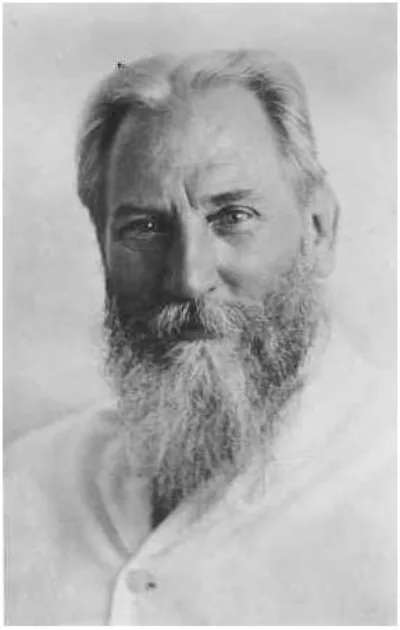
Charles Webster Leadbeater
Charles Webster Leadbeater was a British occultist and prominent member of the Theosophical Society.
Theosophist
💡 Why Read This Book?
• Understand the Theosophical model of the afterlife, including the distinct states of "kama-loka" and "devachanic plane," as detailed by Leadbeater in the early 20th century. • Gain insight into the concept of the "astral body" and its separation from the physical form, providing a specific esoteric mechanism for post-mortem consciousness. • Explore the Theosophical interpretation of "karma" and its role in shaping the soul's journey through multiple "reincarnations," as presented in this foundational text.
⭐ Reader Reviews
Honest opinions from readers who have explored this book.
❓ Frequently Asked Questions
What is the primary focus of Charles Webster Leadbeater's The Life After Death?
The book primarily focuses on the Theosophical understanding of the afterlife, detailing the nature of consciousness, the soul's journey after physical death, and the various planes of existence, such as the astral and devachanic planes.
When was The Life After Death first published and by whom?
The Life After Death was first published in 1912 by Charles Webster Leadbeater, a prominent figure in the early Theosophical movement.
What is the 'astral body' according to Leadbeater in this book?
Leadbeater describes the 'astral body' as a subtle, non-physical vehicle of consciousness that separates from the physical body at death, allowing for experience on the astral plane.
Does the book discuss reincarnation?
Yes, reincarnation is a central concept. The work explores the process of successive physical lives and the soul's evolution through them, guided by the law of karma.
Is this book suitable for beginners in esoteric studies?
It is suitable for beginners interested in Theosophy, but the detailed esoteric cosmology and terminology may require dedicated study or supplementary reading for full comprehension.
What is the 'devachanic plane' as explained in the book?
The devachanic plane is described as a higher, blissful state of consciousness where the soul rests and experiences the results of past good karma between physical incarnations.
🔮 Key Themes & Symbolism
The Astral and Devachanic Planes
Leadbeater meticulously details the "astral plane," a realm of intense emotional and sensory experience, and the "devachanic plane," a state of spiritual repose and fruition. He posits that upon physical death, consciousness, housed within the "astral body," transitions through these planes. The astral plane is described as the immediate post-mortem environment where lingering desires and karmic residues are processed, while the devachanic plane offers a period of peace and assimilation of past life lessons before the next incarnation.
The Nature of the Soul and Consciousness
Central to the work is the concept of the soul as an enduring entity, distinct from the physical and astral bodies. Leadbeater explains consciousness not as a product of the brain but as an attribute of the soul, capable of existing and perceiving independently. The book asserts that death is merely the shedding of the physical vehicle, allowing the soul to continue its evolutionary journey through various states of being, guided by the principles of karma.
Karma and Reincarnation as Evolutionary Drivers
The text presents "karma" as the immutable law of cause and effect, governing the soul's progression. Each action, thought, and intention creates karmic imprints that shape future experiences, both within a single life and across successive "reincarnations." This cyclical process of birth, death, and rebirth is framed as essential for the soul's purification and spiritual development, leading ultimately towards higher states of consciousness and liberation.
The Process of Death and Transition
Leadbeater offers a detailed, step-by-step account of the dying process, focusing on the gradual withdrawal of consciousness from the physical body. He distinguishes between physical death and the subsequent "death" of the astral body. The work describes the dissolution of the "lower self" in "kama-loka" and the journey of the "higher self" to "devachan," emphasizing the different experiences based on an individual's spiritual advancement and karmic debts.
💬 Memorable Quotes
“The death of the physical body is only the death of the physical body.”
— This statement highlights the core Theosophical tenet that physical death is not an end but a transition. It underscores the existence of other bodies or vehicles of consciousness, such as the astral body, which persist beyond the cessation of physical life.
“Devachan is a state of bliss, a period of rest and enjoyment.”
— This concisely describes the devachanic plane as a positive and restorative phase experienced by the soul after physical death, where it assimilates past experiences and enjoys the fruits of its good karma.
“Karma is the unerring law which governs the destiny of all.”
— This emphasizes the deterministic yet purposeful nature of karma within the Theosophical framework. It suggests that all experiences, fortunate or unfortunate, are the direct result of past actions, guiding the soul's evolution.
“The astral body is the vehicle of desire and emotion.”
— This defines the astral body's primary function as the carrier of the individual's feelings, passions, and desires, explaining its significance in the post-mortem experiences on the astral plane.
“Man is not a single life, but a long series of lives.”
— This encapsulates the doctrine of reincarnation, presenting life not as an isolated event but as part of a continuous, extended evolutionary process spanning multiple physical incarnations.
🌙 Esoteric Significance
Tradition
This work is deeply embedded within the Theosophical tradition, itself a synthesis of Western esoteric currents (Hermeticism, Neoplatonism) and Eastern philosophies (Hinduism, Buddhism). Leadbeater's detailed descriptions of planes of existence, subtle bodies, and karmic law are quintessentially Theosophical, expanding upon the foundational ideas laid out by Helena Blavatsky in works like 'The Secret Doctrine'. It presents a systematic, quasi-scientific approach to occultism, aiming to demystify spiritual concepts for a modern audience.
Symbolism
Key symbols in *The Life After Death* include the "astral body," representing the vehicle of desire and emotion that persists after physical death, and the "devachanic plane," symbolizing a state of spiritual bliss and fruition. The serpent, often associated with cyclic processes and wisdom in esoteric traditions, implicitly underlies the concept of "reincarnation" as a continuous cycle of birth and rebirth. The "lotus" symbol, prevalent in Theosophy, can be seen as representing the unfolding of consciousness through these various stages of existence.
Modern Relevance
Leadbeater's detailed cartography of the afterlife continues to inform contemporary esoteric and New Age thought. Many modern spiritual teachers and practitioners, particularly within the broader Theosophical lineage and related movements like Anthroposophy, draw upon his descriptions of subtle bodies and spiritual planes. Concepts like the astral body, karma, and reincarnation, as articulated by Leadbeater, remain foundational for individuals exploring non-materialist perspectives on life, death, and consciousness today.
👥 Who Should Read This Book
• Students of Theosophy seeking authoritative explanations of the afterlife according to C.W. Leadbeater's clairvoyant investigations. • Individuals interested in comparative studies of afterlife beliefs, particularly those exploring non-Western or esoteric religious frameworks. • Seekers of personal meaning regarding death and consciousness who are open to detailed, systematic esoteric cosmologies.
📜 Historical Context
The Life After Death, published in 1912, emerged from the vibrant intellectual milieu of early 20th-century Theosophy. This period saw a widespread fascination with spiritualism, occultism, and Eastern philosophies, largely fueled by the influence of Helena Blavatsky and the Theosophical Society. Charles Webster Leadbeater, a key figure within the Society, was known for his detailed, clairvoyant descriptions of unseen worlds. His work resonated with a public seeking alternatives to materialistic science and orthodox religion, and it engaged with contemporary spiritualist movements that focused on mediumship and communication with the departed. While Theosophy offered a more structured and philosophical approach than much of the spiritualist phenomena of the time, it shared the era's profound interest in the nature of consciousness beyond death. Leadbeater's writings, alongside those of Annie Besant, solidified a specific Theosophical cosmology that profoundly influenced subsequent esoteric traditions and New Age thought, distinguishing itself from purely religious doctrines or parapsychological investigations.
📔 Journal Prompts
The function of the 'astral body' in post-mortem experience.
How the concept of 'karma' shapes the journey through the 'kama-loka'.
Reflecting on the perceived differences between the 'astral plane' and the 'devachanic plane'.
The implications of 'reincarnation' for understanding personal growth.
What constitutes the 'higher self' versus the 'lower self' in the context of death and transition.
🗂️ Glossary
Astral Body
A subtle, non-physical vehicle of consciousness, often described as the seat of desires and emotions, which separates from the physical body at death and functions on the astral plane.
Devachanic Plane
A higher, blissful spiritual realm where the soul experiences the results of good karma and rests between physical incarnations, assimilating past life lessons.
Kama-loka
A lower astral region where the consciousness, still bound by earthly desires and attachments, undergoes a period of dissolution and purification after physical death.
Reincarnation
The process by which the soul, or spiritual self, undergoes successive physical lives on Earth, learning and evolving through each experience.
Karma
The universal law of cause and effect, where actions in one life determine the circumstances and experiences in future lives.
Physical Body
The tangible, material form that houses the consciousness during a single lifetime on the physical plane.
Higher Self
The spiritual aspect of the individual, often associated with the permanent soul or monad, which guides the evolutionary process across lifetimes.