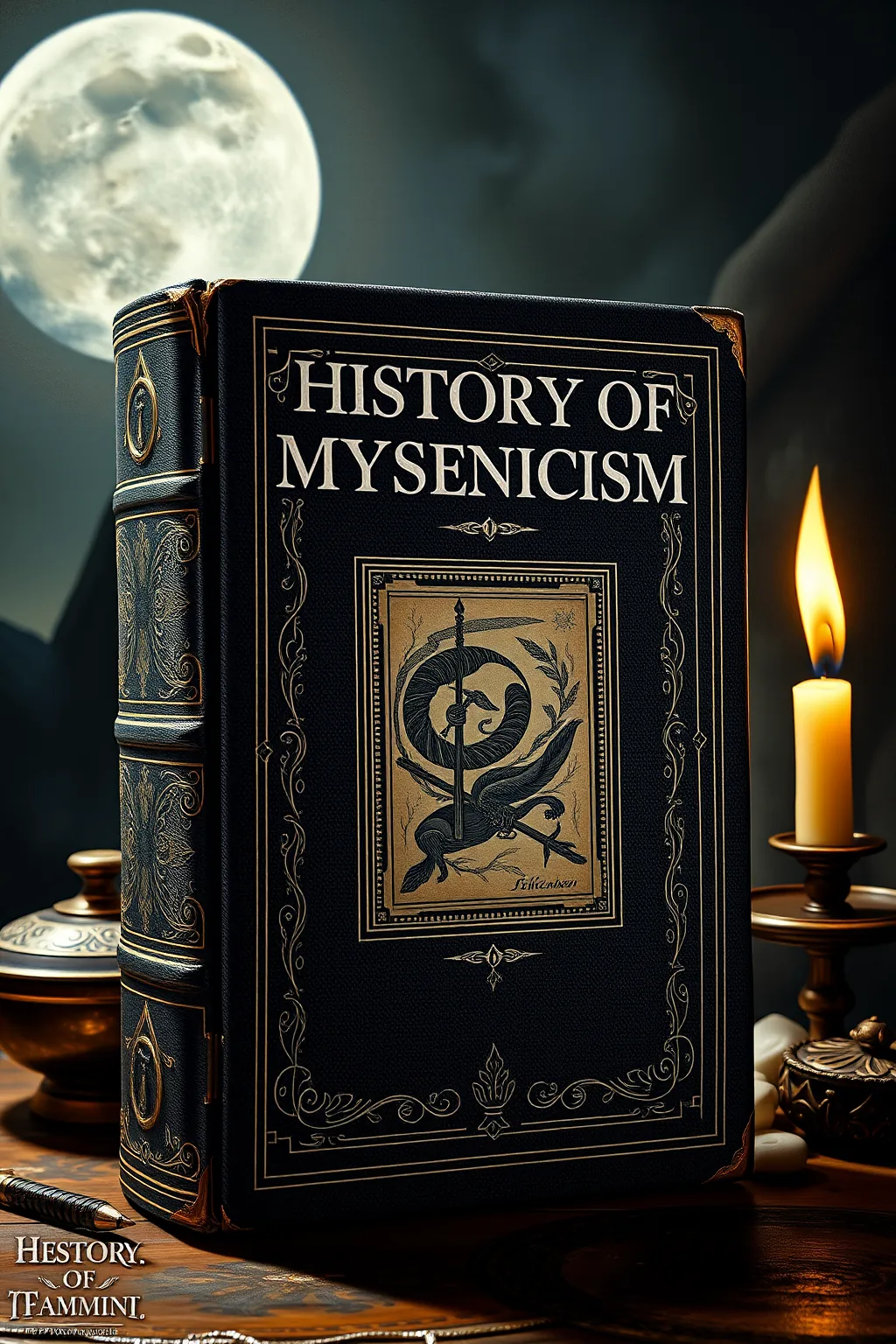
History of Mysticism
 71
71

History of Mysticism


Evander Ashcroft (Alchemy & Hermeticism Editor) — 'History of Mysticism' by The Unchanging Testament is a monumental achievement, offering an authoritative and deeply resonant chronicle of humanity's perennial quest for the divine. The work masterfully synthesizes vast historical and cross-cultural data, revealing the underlying unity of mystical experiences across ages and traditions. Its strength lies in its ability to articulate complex esoteric insights with clarity and grace, making it accessible yet profound. This volume is an indispensable resource for anyone seeking to understand the deep roots of spiritual realization, offering a compelling narrative that resonates with both the intellect and the soul. It is a foundational text for serious students of esoteric philosophy and comparative mysticism.
📝 Description
71
The Unchanging Testament's 'History of Mysticism' traces mystical experiences across millennia and cultures.
'History of Mysticism' by The Unchanging Testament examines the lineage of mystical experiences across diverse cultures and time periods. The book follows the currents of esoteric knowledge, connecting the words of ancient sages with the pronouncements of enlightened individuals. It covers mystical traditions from the East, such as contemplative practices, and Western mysticism, characterized by ecstatic fervor.
The work aims to reveal the universal human pursuit of ultimate Truth. It presents mystical awakening as an inherent aspect of the human spirit, emphasizing direct, unmediated experience. The book is intended for serious seekers, scholars, and practitioners interested in understanding the common threads of genuine mystical awakenings.
This book sits within theosophical and anthroposophical traditions, which often seek to understand spiritual realities and human consciousness through historical and comparative analysis. It aligns with a perspective that views mystical traditions not as isolated phenomena but as expressions of a continuous, underlying spiritual current in human history. The focus on 'direct, unmediated experience' suggests an interest in phenomena studied in fields like comparative mysticism and religious experience, often interpreted through a lens seeking universal truths behind varied religious forms.
✍️ Author
The Unchanging Testament
Nabeel Asif Qureshi (Urdu: نبیل قریشی; April 13, 1983 – September 16, 2017) was a Pakistani-American evangelical Christian apologist. Raised in a devout Ahmadi Muslim family, Qureshi converted to Christianity as a university student following several years…
💡 Why Read This Book?
Uncover the universal threads connecting diverse spiritual traditions, gain profound insights into the nature of consciousness, and explore the historical evolution of mystical thought. Ideal for seekers yearning for deeper understanding, scholars investigating esoteric lineages, and practitioners seeking inspiration and context for their own spiritual journey. Discover the timeless wisdom that has guided humanity toward ultimate realization.
⭐ Reader Reviews
Honest opinions from readers who have explored this book.
❓ Frequently Asked Questions
What is the primary focus of 'History of Mysticism'?
The book's primary focus is tracing the lineage and diverse expressions of mystical experiences and realizations throughout human history across various cultures and spiritual traditions.
Who is the author, 'The Unchanging Testament'?
'The Unchanging Testament' is a collective or symbolic authorial entity, representing a unified voice of timeless spiritual wisdom, as presented in this compilation.
Is this book suitable for beginners in mysticism?
Yes, while rich in depth, the book's comprehensive nature makes it an excellent starting point for beginners seeking a broad understanding of mystical traditions.
Does the book delve into specific mystical practices?
While primarily historical and philosophical, it illuminates the context and outcomes of various mystical paths, offering insights that can inform practice.
Where can I find other works by Swami Abhayananda?
Swami Abhayananda's other writings and resources are available for free download on his website: www.themysticsvision.weebly.com.
🔮 Key Themes & Symbolism
The Perennial Philosophy
This theme explores the concept of a universal, eternal wisdom that underlies all genuine mystical traditions. It posits that despite superficial differences in dogma and ritual, a core spiritual truth—the immanence of the divine, the unity of existence, and the potential for direct experience of the Absolute—is consistently expressed by mystics across time and geography. The book highlights how this underlying unity manifests through diverse cultural lenses, revealing the shared humanity of the spiritual quest and the common ground of ultimate realization, often articulated through profound, transformative encounters with the sacred.
The Nature of Mystical Experience
Central to this work is the examination of what constitutes a genuine mystical experience. It examines the subjective yet universally recognizable phenomena of spiritual awakening: ecstatic states, clear insights into the nature of reality, the dissolution of the ego, and the direct perception of unity. The book traces how these experiences have been described, interpreted, and integrated into various spiritual frameworks, emphasizing the transformative power of these encounters. It underscores that these are not mere intellectual pursuits but profound, life-altering encounters with the divine or ultimate reality, often accompanied by declarations of absolute certainty like 'I am the Truth!'
Cross-Cultural Spiritual Lineages
This theme maps the interconnectedness of mystical traditions worldwide, demonstrating how spiritual insights and practices have traveled, influenced, and echoed across continents and civilizations. From ancient Vedic traditions and Buddhist contemplative paths to Pythagorean philosophy, Hermeticism, Sufism, Christian mysticism, and indigenous spiritualities, the book reveals a collection of shared wisdom. It highlights the recurring archetypes, symbols, and core tenets that bind these disparate paths, illustrating a global spiritual heritage and the continuous human endeavor to apprehend the divine mystery, often through symbolic language and esoteric teachings.
💬 Memorable Quotes
Direct passages from the work, attributed to the author.
“I am the Truth!”
— A powerful declaration of self-realization, signifying the mystic's direct apprehension of the Absolute, transcending all duality and external authority.
“Elements of realization across ages.”
— Suggests the recurring nature of profound spiritual insights, demonstrating that the fundamental truths of mysticism are timeless and universally experienced.
“The hidden currents of consciousness.”
— Refers to the subtle, often unacknowledged, streams of spiritual awareness and inner knowing that flow beneath the surface of ordinary perception.
“The range of human seeking.”
— Illustrates the diverse yet interconnected journey of humanity in its search for meaning, purpose, and ultimate spiritual fulfillment.
“The divine spark within.”
— Highlights the inherent spiritual essence or divine potential present in every individual, waiting to be recognized and awakened.
🌙 Esoteric Significance
Tradition
This work is deeply rooted in the Perennial Philosophy, a concept popularized by Aldous Huxley, which posits an underlying unity and timeless truth shared by all major esoteric and mystical traditions. It draws from various streams, including Vedanta, Buddhism, Hermeticism, Sufism, Christian Mysticism, and Gnosticism, presenting them not as separate entities but as different expressions of the same fundamental spiritual reality. The significance lies in revealing the interconnectedness and shared purpose of these diverse paths, emphasizing direct experience over dogma.
Symbolism
The book implicitly engages with the detailed symbolism inherent in mystical traditions. While not a dedicated symbol dictionary, it references archetypal symbols and narrative motifs that recur across cultures—light, unity, the divine marriage, the journey of the soul, the awakening of consciousness. These symbols serve as vehicles for conveying profound truths that often transcend literal interpretation, acting as keys to unlock deeper layers of meaning within spiritual texts and experiences. The interpretation of these symbols is crucial for understanding the underlying esoteric messages.
Modern Relevance
In an era often characterized by fragmentation, materialism, and spiritual searching, 'History of Mysticism' offers a vital antidote. It provides a sense of continuity and universal connection, demonstrating that the deepest human longings for meaning and transcendence are not new. By highlighting the shared essence of mystical experiences, it encourages interfaith understanding and validates the inner life of the individual. Its relevance lies in its ability to inspire contemporary seekers, offering a broad map of the spiritual landscape and affirming the enduring possibility of profound self-realization and connection with the Absolute.
👥 Who Should Read This Book
This comprehensive history is essential for the dedicated spiritual seeker yearning to understand the vast range of human consciousness and its pursuit of the divine. Scholars of comparative religion, philosophy, and esoteric studies will find it an invaluable, authoritative reference. Practitioners of various contemplative disciplines, from meditation to yoga and prayer, will gain a deeper context and inspiration for their path. Even the curious beginner, seeking a holistic overview of humanity's spiritual journey, will find this book an clear and accessible gateway into the profound world of mysticism.
📜 Historical Context
The compilation of 'History of Mysticism' by The Unchanging Testament emerges from a rich tradition of esoteric scholarship and spiritual archiving. While the specific 'era' of The Unchanging Testament is intentionally ambiguous, reflecting its timeless nature, the work itself draws upon and synthesizes knowledge that spans millennia, from the earliest recorded spiritual traditions of humanity to more recent expressions of mystical thought. The mid-to-late 20th and early 21st centuries have seen a resurgence of interest in comparative mysticism and esoteric studies, driven by a globalized world and a growing dissatisfaction with purely materialistic worldviews. This book stands as a significant contribution to this ongoing dialogue, offering a broad, unifying perspective that challenges sectarian divides and emphasizes the shared essence of spiritual realization across diverse cultures and historical periods. Its very presentation suggests a deliberate effort to present an authoritative, distilled wisdom for contemporary seekers.
📔 Journal Prompts
Reflect on the shared "I am the Truth!" realization across different cultures. How does this resonate with your own understanding of self?
Identify a recurring symbol or theme from a specific mystical tradition discussed and explore its personal meaning for you.
Consider the concept of the 'Perennial Philosophy.' What common threads do you observe in your own spiritual or philosophical inclinations?
How has the historical context of a particular mystical movement influenced its expression and message?
What does the idea of 'hidden currents of consciousness' suggest about your own inner spiritual life and potential for awakening?
🗂️ Glossary
Mystical Experience
A direct, intuitive, and often ineffable apprehension of ultimate reality, the divine, or spiritual truth, transcending ordinary sensory perception and rational intellect.
Esoteric
Pertaining to or accessible only by a select group of initiated individuals; secret or mysterious knowledge, often concerning spiritual or philosophical truths.
Theosophy
A philosophical, religious, and mystical movement that sought to understand the underlying principles of the universe and the place of humanity within it, often drawing from Eastern and Western esoteric traditions.
Anthroposophy
A spiritual philosophy founded by Rudolf Steiner, aiming to connect the spiritual and material worlds through a path of spiritual development, emphasizing the human being as a spiritual-physical-soul entity.
Perennial Philosophy
The viewpoint that all major religious traditions share a common core of mystical truths and teachings about the ultimate nature of reality, the spiritual path, and the goal of human existence.
This book appears in 2 collections
🔮 Readers Also Liked
Browse all →







From the “Theosophy” Collection
View all →






More Free Theosophy & Anthroposophy Books
View all →