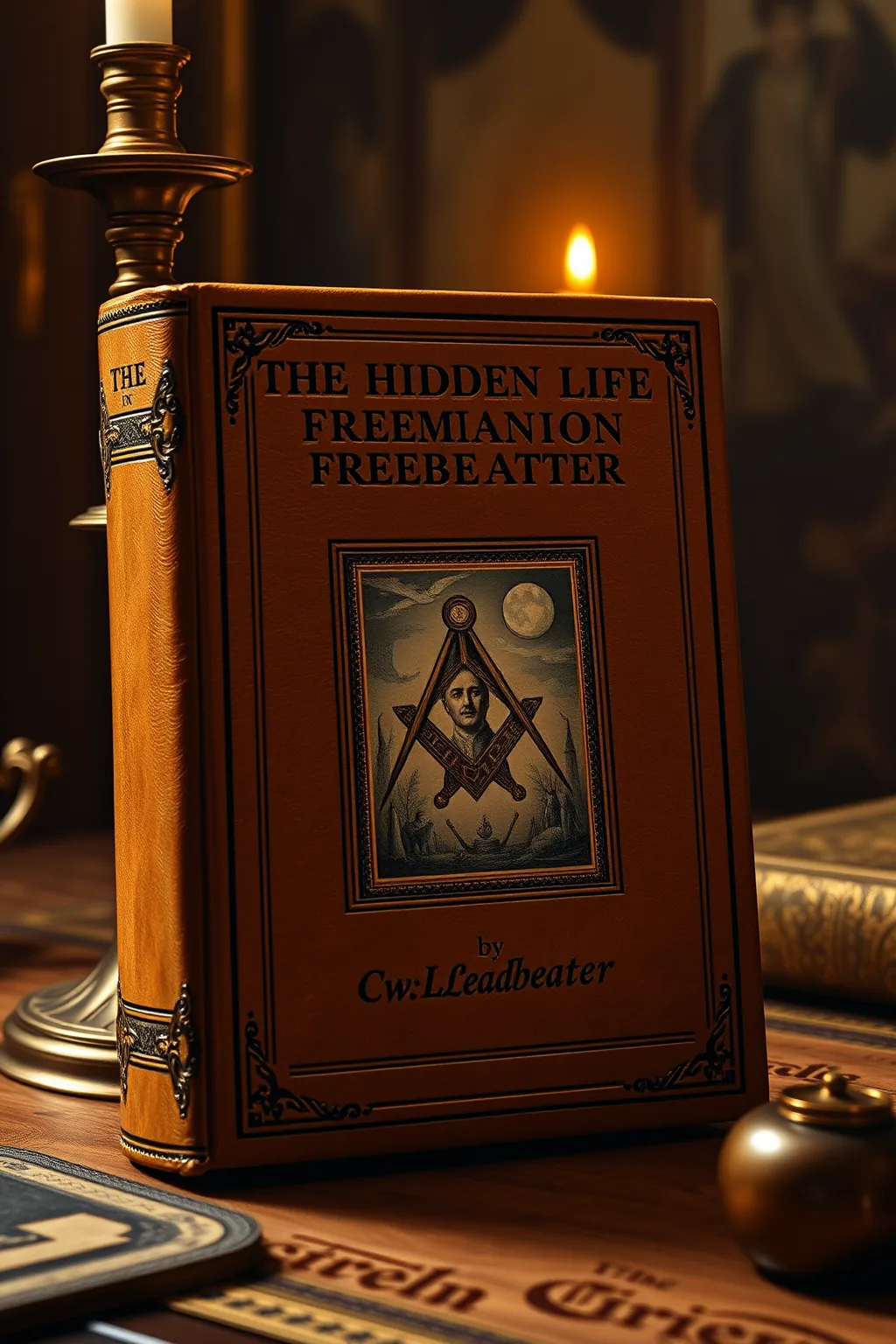
The Hidden Life in Freemasonry
 80
80

The Hidden Life in Freemasonry


Isolde Whitaker (Sacred Texts Editor) — C. W. Leadbeater's "The Hidden Life in Freemasonry" remains an indispensable guide for those seeking the esoteric heart of the Craft. From its Theosophical vantage point, the book masterfully deciphers Masonic symbolism, transforming ceremonial acts into profound spiritual lessons. Leadbeater's clarity and depth offer invaluable insights into the inner journey of the aspirant, making complex concepts accessible. This work is essential for Masons yearning for a deeper understanding of their rituals and for students of Western esotericism eager to explore the spiritual dimensions of fraternal orders. A truly illuminating text.
📝 Description
80
First published in 1926, Charles Leadbeater's "The Hidden Life in Freemasonry" interprets Masonic ritual through a Theosophical lens.
Charles Leadbeater's "The Hidden Life in Freemasonry," published in 1926, examines the esoteric dimensions of Masonic practices. Leadbeater, a prominent Theosophist, interprets the outward forms of Masonic ritual and symbolism to reveal an inner path of moral and spiritual development. He argues that Masonic ceremonies are not simply historical observances but practical tools for self-mastery and the cultivation of higher consciousness.
The book presents the Masonic lodge as a space for alchemical transformation, where ancient symbols function as keys to internal spiritual awakening. It aims to guide those seeking a deeper understanding of Freemasonry, moving beyond superficial adherence to dogma and toward universal spiritual truths. The richly illustrated volume details the sacred geometry and veiled wisdom associated with the Craft.
This work is situated within the broader Theosophical movement, which sought to synthesize Eastern and Western esoteric traditions. Leadbeater applies his Theosophical understanding, informed by concepts of spiritual hierarchy, karma, and reincarnation, to the specific symbolism and structure of Freemasonry. He treats Masonic rituals not as historical artifacts but as living expressions of universal spiritual laws, intended to facilitate the initiate's inner transformation.
✍️ Author
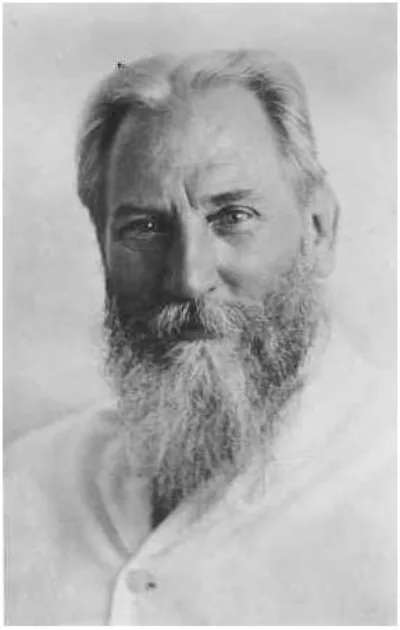
Charles Webster Leadbeater
Charles Webster Leadbeater was a British occultist and prominent member of the Theosophical Society.
Theosophist
💡 Why Read This Book?
Uncover the profound spiritual blueprint embedded within Masonic rituals and symbols. This book is ideal for Freemasons seeking inner meaning, students of esoteric traditions, and seekers of personal transformation. It offers a unique lens through which to view ancient wisdom, revealing practical pathways to self-awareness and spiritual growth. Discover the hidden dimensions of a timeless fraternity.
⭐ Reader Reviews
Honest opinions from readers who have explored this book.
❓ Frequently Asked Questions
What is the primary aim of 'The Hidden Life in Freemasonry'?
The book aims to reveal the 'hidden' or inner spiritual meanings behind Masonic rituals, symbolism, and lodge practices, presenting them as stages on a path of moral and spiritual development from a Theosophical viewpoint.
Is this book suitable for non-Masons?
Yes, while written with a Masonic context, the book's exploration of universal spiritual principles, symbolism, and self-improvement makes it highly valuable for anyone interested in esoteric philosophy and personal growth.
What is C. W. Leadbeater's perspective on Freemasonry?
Leadbeater views Freemasonry through a Theosophical lens, interpreting its outward forms as symbolic representations of inner spiritual truths and stages in the evolution of consciousness.
What kind of symbolism is explored in the book?
The book delves into a wide range of Masonic symbolism, including the layout of the lodge, ceremonial elements, and specific regalia, interpreting them as allegorical tools for spiritual understanding and self-transformation.
When was 'The Hidden Life in Freemasonry' first published?
The book was first published in 1926.
🔮 Key Themes & Symbolism
The Esoteric Interpretation of Masonic Ritual
This theme explores how C. W. Leadbeater deciphers the outward ceremonial actions within Freemasonry, transforming them into potent allegories for the inner journey of spiritual awakening. He meticulously breaks down each ritualistic element, revealing its correspondence to psychological states, moral challenges, and stages of consciousness evolution. The focus is on the transformative power of these ancient rites, not as mere historical practices, but as living mechanisms for the aspirant's soul development and the unveiling of hidden divine potential within the individual.
Theosophical Symbolism and Universal Truths
Leadbeater's Theosophical framework is central, offering a unique lens through which to understand Masonic symbols. This theme examines how he connects Masonic iconography to broader esoteric principles, ancient wisdom traditions, and the underlying spiritual laws governing the universe. The book argues that Masonic symbolism is a universal language, capable of conveying profound metaphysical truths about humanity's place in the cosmos, the nature of reality, and the path towards enlightenment, transcending sectarian boundaries to speak to the soul.
The Lodge as a Crucible for Transformation
This theme highlights Leadbeater's vision of the Masonic lodge not merely as a physical meeting place, but as a sacred space designed for profound personal alchemy. The layout of the lodge, the interactions between members, and the progression through degrees are presented as a carefully orchestrated environment intended to foster self-discipline, ethical refinement, and the development of higher faculties. It underscores the practical application of esoteric principles within the fraternal context, guiding the initiate towards inner liberation and spiritual mastery.
💬 Memorable Quotes
Direct passages from the work, attributed to the author.
“Each symbol is a step upon the ladder of ascent.”
— This highlights the progressive nature of Masonic teachings, suggesting that each symbol encountered within the fraternity serves as a guidepost, aiding the aspirant in their journey towards higher consciousness and spiritual realization.
“The true Mason seeks the light within.”
— This emphasizes the inward-focused nature of genuine Masonic practice, shifting the emphasis from external dogma or social affiliation to the personal quest for inner illumination and self-discovery.
“Ceremony is the outward expression of an inward reality.”
— This reinforces the idea that rituals are not arbitrary, but are designed to manifest and solidify the spiritual principles and experiences that lie at the heart of the Masonic tradition.
“The square and compass are instruments of spiritual geometry.”
— This suggests a deeper, metaphysical interpretation of common Masonic tools, portraying them as symbolic representations of the balance between the material and spiritual realms, and the principles of order and divine proportion.
💡 Key Ideas
Editorial paraphrase of the work's core concepts — not direct quotes.
The outer form is but the vehicle for the inner meaning.
This quote captures Leadbeater's core thesis: that the observable rituals and symbols of Freemasonry are merely shells, designed to convey deeper, spiritual truths about the nature of existence and the human soul.
🌙 Esoteric Significance
Tradition
This work is deeply rooted in the Theosophical tradition, as espoused by Helena Blavatsky and further developed by figures like C. W. Leadbeater and Annie Besant. Theosophy posits an ancient, universal wisdom underlying all religions and philosophies, and Leadbeater applies this framework to Freemasonry, viewing its rituals and symbols as a tangible expression of these profound, underlying spiritual laws and principles. It emphasizes reincarnation, karma, and the evolution of consciousness.
Symbolism
Leadbeater meticulously dissects Masonic symbolism, interpreting elements like the square, compass, apron, and various degrees as keys to understanding the aspirant's spiritual journey. He reveals how these symbols represent moral virtues, cosmic principles, and stages of inner development, guiding the individual from ignorance towards enlightenment. The lodge's architecture and ceremonial actions are presented as a symbolic map of the soul's path.
Modern Relevance
Despite its publication date, "The Hidden Life in Freemasonry" remains remarkably relevant. In an age often characterized by superficiality and disconnection, Leadbeater's work offers a profound reminder of the potential for deep, inner meaning within structured traditions. It provides a valuable resource for contemporary seekers of esoteric knowledge, Freemasons yearning for a richer understanding of their Craft, and anyone interested in the timeless pursuit of self-mastery and spiritual growth through symbolic allegory.
👥 Who Should Read This Book
This useful text is essential for several audiences. Current Freemasons seeking to deepen their understanding of the spiritual underpinnings of their ritual and symbolism will find it invaluable. Students of Western esotericism and comparative religion will appreciate Leadbeater's systematic approach to interpreting sacred traditions. For spiritual seekers and philosophers, it offers a compelling exploration of universal truths and a blueprint for personal transformation. Beginners to esoteric studies will find Leadbeater's clear, instructive tone accessible, while scholars will benefit from his detailed symbolic exegesis.
📜 Historical Context
Published in 1926, "The Hidden Life in Freemasonry" emerged during a vibrant period of esoteric revival in the West. The early 20th century saw a surge of interest in spiritualism, Theosophy, Rosicrucianism, and other mystical traditions, fueled by a post-Victorian yearning for deeper meaning and a questioning of established materialism. C. W. Leadbeater, a prominent figure in the Theosophical Society, was at the forefront of popularizing these ancient wisdom teachings for a modern audience. His work sought to bridge the perceived gap between ancient esoteric knowledge and contemporary spiritual seeking, offering systematic interpretations of symbols and rituals found in various traditions, including Freemasonry. This era was characterized by a belief in hidden knowledge and the possibility of direct spiritual experience, making Leadbeater's detailed exegesis of Masonic symbolism particularly resonant.
📔 Journal Prompts
Reflect on a Masonic symbol or ritual you are familiar with. How does Leadbeater's interpretation resonate with your understanding or offer a new perspective?
Consider the concept of the lodge as a 'crucible for transformation.' What aspects of your own life could benefit from such a structured approach to inner work?
Leadbeater emphasizes the 'hidden meaning' behind outward forms. Where in your daily life do you suspect there are deeper, unseen realities or significances?
How does the idea of a 'ladder of ascent' through symbolic steps apply to your personal journey of growth and learning?
Reflect on the connection between moral virtue and spiritual development as presented in the book. How do these two aspects intertwine in your own experience?
🗂️ Glossary
Theosophy
A philosophical and spiritual movement founded in the late 19th century, positing an ancient, universal wisdom tradition that underlies all religions and sciences, emphasizing spiritual evolution and the interconnectedness of all life.
Esoteric
Intended for or likely to be understood by only a small number of people with a specialized knowledge or interest; relating to the inner, spiritual teachings of a tradition, often veiled in symbolism.
Allegory
A story, poem, or picture that can be interpreted to reveal a hidden meaning, typically a moral or political one. In this context, Masonic rituals and symbols are presented as allegories for spiritual truths.
Initiation
A formal admission or acceptance into a group or organization, often involving a ceremony or ritual that signifies a transition to a new level of understanding or responsibility, particularly in esoteric or religious contexts.
Spiritual Evolution
The concept, central to Theosophy, that consciousness and the soul progress through successive stages of development over many lifetimes, gradually unfolding higher spiritual potentials and understanding.
This book appears in 2 collections
🔮 Readers Also Liked
Browse all →







More by Charles Webster Leadbeater
All books →




From the “Secret Societies” Collection
View all →



More Free Freemasonry & Secret Societies Books
View all →