Aryan Path Vol. 5.6

 83
83

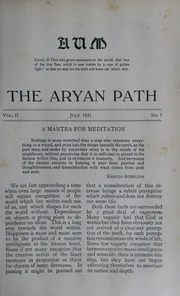
Aryan Path Vol. 5.6



Cassian Rothmann, Senior Critic, Ancient Wisdom, writes: 'Aryan Path Vol. 5.6 is a beacon for those navigating the labyrinthine corridors of esoteric thought. Theosophy Company consistently delivers profound insights, and this installment is no exception. It masterfully guides readers towards their inherent spiritual discernment, encouraging a critical yet open-minded approach to universal wisdom. The strength lies in its gentle yet firm insistence on empirical spiritual experience over blind faith. Ideal for seasoned Theosophists and newcomers alike who seek authentic spiritual inquiry and a deeper understanding of life's mysteries.'
📝 Description
83
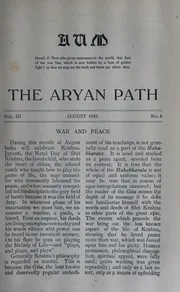
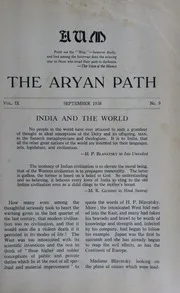
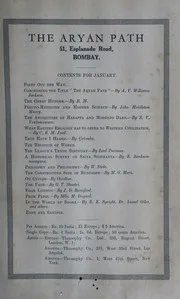
Aryan Path Vol. 5.6, published by the Theosophy Company of Mysore, India, presents essays on spiritual inquiry.
This volume from the Theosophy Company of Mysore, India, contains essays that encourage direct engagement with universal principles. It aims to foster an environment for free thought and intellectual honesty, seeking to awaken latent spiritual intuition. The collected texts promote contemplation and the pursuit of knowledge. It is intended for readers who desire deeper understanding and recognize the interconnectedness of existence. The book advocates for a path combining reason and intuition to approach ultimate reality.
As part of the Theosophical tradition, this volume likely engages with concepts central to the movement, such as the search for a universal brotherhood, the study of comparative religion, philosophy, and science, and the investigation of latent human powers and the divine nature of humanity. Theosophy, drawing from Eastern and Western esoteric thought, often emphasizes the underlying unity of all religions and the evolutionary development of consciousness.
💡 Why Read This Book?
This volume offers a rare opportunity to engage with foundational Theosophical principles, encouraging the awakening of your innate spiritual intuition. It provides a framework for discerning truth beyond dogma, fostering intellectual honesty and self-empowerment. Ideal for spiritual seekers, students of comparative religion, and practitioners of inner disciplines who desire a deeper, more reasoned understanding of the universe and their place within it.
⭐ Reader Reviews
Honest opinions from readers who have explored this book.
❓ Frequently Asked Questions
What is the primary goal of 'The Aryan Path'?
The primary goal is to awaken spiritual intuitions and point towards the universal truths underlying all creeds and dogmas, rather than proselytizing or enforcing specific beliefs. It encourages free inquiry and intellectual honesty.
Who is the intended audience for this volume?
The intended audience includes individuals seeking spiritual knowledge, those interested in Theosophy and its philosophical underpinnings, and anyone who values independent thought and intuitive understanding over blind adherence to doctrine.
Does 'The Aryan Path' promote a specific religion?
No, it explicitly states it does not proselytize to any creed. Its aim is to uncover the common spiritual bedrock beneath diverse religious and philosophical systems.
What kind of knowledge can one expect to find?
Readers can expect insights into spiritual evolution, the nature of consciousness, symbolic interpretations of ancient wisdom, and practical guidance for developing inner perception and intuitive understanding.
Is 'The Aryan Path' accessible to beginners in esoteric studies?
Yes, while rich in depth, the publication's ethos of clarity and directness makes it accessible to earnest beginners who are open to exploring profound philosophical and spiritual concepts.
🔮 Key Themes & Symbolism
The Awakening of Spiritual Intuition
This volume emphasizes the paramount importance of nurturing and trusting one's inherent spiritual intuition. It posits that true wisdom is not solely derived from external doctrines or intellectual pursuits, but from a direct, inner knowing. The essays guide the reader in cultivating this faculty, encouraging a discerning approach to life's mysteries and the recognition of the subtle currents of truth that flow beneath the surface of ordinary perception. It's an invitation to tap into a deeper reservoir of understanding, moving beyond the limitations of the purely material or the dogmatically defined.
The Unity of Underlying Truth
A central tenet explored is the concept that despite the myriad forms of religions, philosophies, and cultural expressions, a singular, fundamental truth underlies them all. 'Aryan Path' seeks to bridge perceived divides, highlighting the common threads of wisdom that connect diverse traditions. It advocates for a holistic view of reality, urging readers to look beyond the superficial differences of creeds and sects to discover the shared spiritual bedrock that binds humanity and the cosmos. This theme encourages a universalist perspective, fostering tolerance and a profound appreciation for the interconnectedness of all existence.
The Principle of Free and Open Inquiry
This volume champions intellectual honesty and the unfettered pursuit of knowledge. It stands firmly against dogma and unquestioning belief, advocating instead for a path of critical examination, pure reason, and direct experience. Readers are encouraged to question, to explore, and to form their own conclusions based on evidence and inner realization. The essays foster an environment of open discussion and respectful debate, creating a space where the seeker can confidently engage with complex ideas and forge their own authentic spiritual path, unburdened by external pressures or imposed doctrines.
💬 Memorable Quotes
Direct passages from the work, attributed to the author.
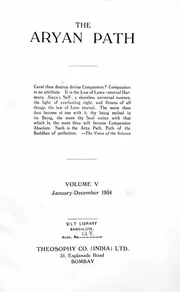
“To quicken men’s spiritual intuitions, and to point to the bedrock of truth underlying dogmas and sects.”
— This core aspiration reveals the publication's intent: to stimulate inner perception and guide readers toward universal, foundational truths, transcending religious divisions.
“It urges no beliefs upon its readers- in fact, it deprecates beliefs not based on knowledge, pure reason and clear intuition.”
— This highlights the publication's commitment to intellectual rigor and personal spiritual discovery, valuing verifiable understanding over blind faith.
“The Aryan Path stands for free and open enquiry and discussion- above all for intellectual honesty…”
— This expresses the ethos of the journal: fostering an environment of fearless exploration and truthfulness in the pursuit of wisdom.
“…so that those who will may energize themselves to uncover it.”
— This emphasizes the reader's active role in their spiritual journey, positioning the publication as a catalyst for self-empowerment and personal revelation.
“…the bedrock of truth underlying dogmas and sects, rites and superstitions…”
— This points to the underlying unity of wisdom, suggesting that beneath the varied external forms of human belief systems lies a singular, profound reality.
🌙 Esoteric Significance
Tradition
This volume is deeply rooted in the Theosophical tradition, a modern esoteric movement that draws heavily from ancient Eastern philosophies (primarily Hinduism and Buddhism) and Neoplatonic thought. It seeks to understand the underlying unity of all religions and to reveal the esoteric principles governing the cosmos and human evolution. Theosophy emphasizes the existence of a universal divine wisdom, accessible through study, meditation, and the development of higher consciousness, aiming to illuminate the path of spiritual self-realization.
Symbolism
The 'Aryan Path' itself is a potent symbol, representing the noble eightfold path to enlightenment found in Buddhism, but expanded within a broader Theosophical context to signify the journey of spiritual progress and self-mastery. Other symbols implicitly explored include the interconnectedness of all life (often represented by the circle or the Ouroboros), the divine spark within humanity (the Monad), and the cyclical nature of existence (karma and reincarnation). The language often employs metaphor and allegory to convey profound spiritual truths that transcend literal interpretation.
Modern Relevance
In an age saturated with information and often characterized by skepticism, the call for spiritual intuition and intellectual honesty found in 'Aryan Path Vol. 5.6' is more relevant than ever. It provides a valuable counterpoint to superficial digital interactions and rigid belief systems, offering tools for discerning truth and cultivating a grounded, inner wisdom. The emphasis on universal principles and brotherhood speaks to contemporary desires for connection and understanding across diverse cultures and perspectives, encouraging a holistic approach to personal growth and global harmony.
👥 Who Should Read This Book
This volume is a treasure for dedicated spiritual seekers starting their path of self-discovery, offering profound philosophical insights and practical guidance. Scholars of comparative religion, philosophy, and esoteric traditions will find rich material for academic exploration and intellectual engagement. Practitioners of meditation, yoga, or other contemplative disciplines will benefit from the emphasis on intuition and the underlying principles of spiritual development. Even newcomers curious about Theosophy and the deeper questions of existence will find an accessible yet profound invitation to explore wisdom beyond dogma, fostering a spirit of open inquiry and personal growth.
📜 Historical Context
Published during a vibrant period of spiritual and philosophical awakening in the early to mid-20th century, 'Aryan Path' emerged from the Theosophical movement, which sought to synthesize Eastern and Western esoteric traditions. Founded by Helena Blavatsky and further developed by figures like Annie Besant and C.W. Leadbeater, Theosophy aimed to revive ancient wisdom, promote universal brotherhood, and encourage the study of comparative religion, philosophy, and science. This era saw a surge of interest in Eastern thought, mysticism, and the hidden aspects of consciousness, often in response to the perceived materialism of the industrial age. 'Aryan Path Vol. 5.6' reflects this intellectual milieu, offering a sophisticated exploration of these themes to a global audience seeking deeper meaning and spiritual guidance.
📔 Journal Prompts
Reflect on a time you relied on your intuition rather than pure logic. What was the outcome, and what did you learn?
Consider the concept of 'bedrock truth.' How does this idea challenge or affirm your current understanding of reality?
Identify one dogma or belief system you have encountered. How might you seek the underlying truth within it, as suggested by 'The Aryan Path'?
What does 'intellectual honesty' mean to you in your personal or spiritual life? How can you cultivate it more fully?
Explore the idea of 'energizing yourself to uncover' truth. What personal actions or practices could you implement to deepen your understanding?
🗂️ Glossary
Theosophy
A modern esoteric philosophical movement that seeks to understand the underlying unity of all religions and to reveal the esoteric principles governing the cosmos and human evolution. It emphasizes universal brotherhood and the study of ancient wisdom.
Intuition
The ability to understand something immediately, without the need for conscious reasoning; inner knowing or direct perception of truth, often considered a higher faculty than intellect.
Dogma
A principle or set of principles laid down by an authority as incontrovertibly true, often associated with religious or political systems and resistant to questioning.
Creed
A system of religious belief; a faith or religion. In this context, it refers to specific doctrines or formulations of belief within any given religion or philosophy.
Spiritual Intuitions
A subtle, inner perception or faculty that allows an individual to grasp truths related to the spiritual or metaphysical realms, distinct from ordinary sensory perception or rational thought.
This book appears in 2 collections
🔮 Readers Also Liked
Browse all →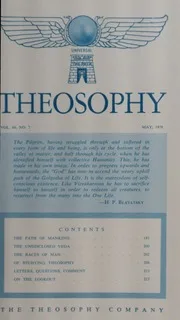






More by Theosophy Company (Mysore) India
All books →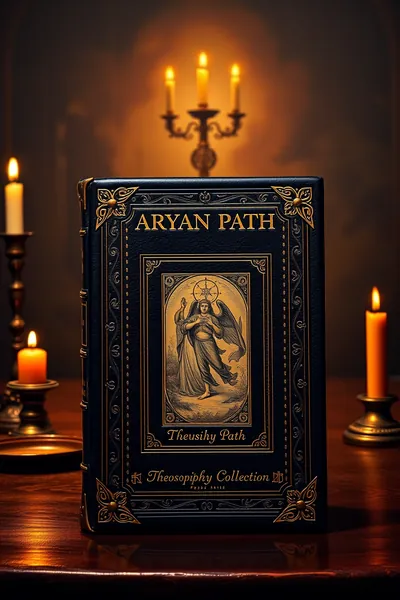


From the “Theosophy” Collection
View all →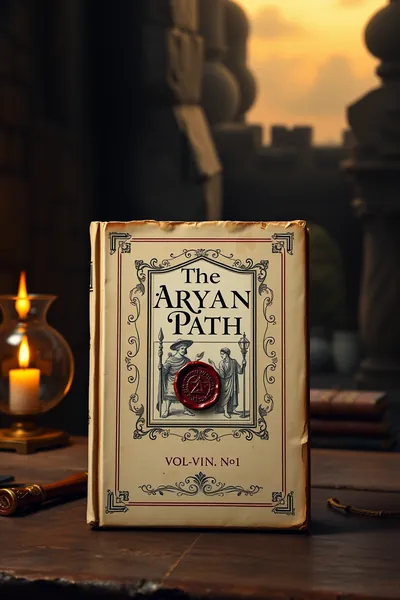






More Free Theosophy & Anthroposophy Books
View all →