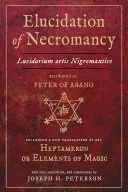
Elucidation of Necromancy Lucidarium Artis Nigromantice attributed to Peter of Abano
 79
79

Elucidation of Necromancy Lucidarium Artis Nigromantice attributed to Peter of Abano
Joseph Peterson's edition of Peter of Abano's Lucidarium artis Nigromantice offers a much-needed scholarly treatment of a foundational text in Western ceremonial magic. The strength lies in Peterson's careful reconstruction of the text and his lucid translation, making accessible a work previously obscured by manuscript variations. A particular passage detailing the preparation of a 'Lamen' for angelic invocation provides concrete, actionable instructions that illuminate the practical aims of the grimoire. However, the text's inherent complexity and the dense nature of medieval conjuration may present a steep learning curve for those unfamiliar with the genre. The work is a vital resource for understanding the mechanics of angel magic as conceived in the late Middle Ages.
📝 Description
79
Joseph Peterson's 2019 edition translates the Lucidarium artis Nigromantice, a medieval grimoire attributed to Peter of Abano.
The Elucidation of Necromancy, also known as the Lucidarium artis Nigromantice, is a medieval grimoire attributed to Peter of Abano. Joseph Peterson prepared this critical translation, presenting a text that has influenced ritual magic traditions for centuries. It details methods for invoking supernatural entities, primarily angels, for various aims. The work is distinguished by its structured approach to ceremonial magic, offering instructions and theoretical underpinnings for its practices. This volume is for students of Western esotericism, occult history, and ceremonial magic. It will appeal to practitioners interested in the historical roots of angel conjuration and ritual techniques. Researchers of medieval intellectual history, particularly concerning magic and its philosophical context, will find it a valuable primary source. Those interested in the lineage of grimoires and their impact on later magical traditions will also benefit.
The Elucidation of Necromancy emerged from late medieval Europe, a time when scholasticism interacted with Neoplatonic philosophy and classical occult traditions. Peter of Abano was a physician and philosopher at the University of Padua in the early 14th century, whose own writings touched upon natural magic and astrology. This text, however, moves into ceremonial practices, situating it within grimoire literature that often faced suspicion or condemnation from authorities, leading to its circulation in manuscript form for centuries before wider printing.
This text belongs to the tradition of medieval grimoires, which codified magical practices and beliefs. Unlike purely theoretical works, it offers practical instructions for ritual. The attribution to Peter of Abano places it within the intellectual currents of the early 14th century, a period where scholarly interest in occult philosophy, natural magic, and astrology was present, though often in tension with orthodox religious views. The work's focus on angelology and the concept of 'Nigromantia' as a high art distinguishes it from simpler forms of magic, aligning it with more complex systems of spiritual interaction.
💡 Why Read This Book?
• Learn specific methods for angelic invocation, including the creation of talismans and pentacles as detailed in the 'Elucidation of Necromancy,' offering a practical understanding of medieval ceremonial magic. • Understand the historical milieu of Peter of Abano and the University of Padua, gaining insight into how philosophical and magical texts circulated and were synthesized in the 14th century. • Explore the structured approach to ritual magic presented, distinguishing 'Nigromantia' as a complex art of spiritual interaction rather than mere superstition.
⭐ Reader Reviews
Honest opinions from readers who have explored this book.
❓ Frequently Asked Questions
What is the historical significance of Peter of Abano's 'Elucidation of Necromancy'?
The 'Elucidation of Necromancy' is significant as a 14th-century grimoire attributed to Peter of Abano, a prominent philosopher and physician. It details angel conjuration and ritual magic, influencing later occult traditions and providing insight into medieval European magical practices.
How does the 'Lucidarium artis Nigromantice' differ from modern understandings of necromancy?
The 'Lucidarium artis Nigromantice' uses 'Nigromantia' to denote a higher art of working with spiritual intelligences, particularly angels, rather than the modern association with communicating with the dead. It focuses on ceremonial invocation and the acquisition of spiritual knowledge.
What kind of magical practices are described in this text?
The text describes ceremonial magic focused on the invocation of angels. Practices include the use of divine seals, specific conjurations, astrological timing, ritual purification, and the creation of magical objects like amulets and pentacles.
Who was Peter of Abano and what was his role in the intellectual world?
Peter of Abano (c. 1250–c. 1315) was an Italian physician, philosopher, and astrologer associated with the University of Padua. While known for his medical and philosophical commentaries, his attributed works like the 'Elucidation' place him in the realm of practical magic.
Is this a practical guide for performing rituals today?
While the text provides historical instructions for rituals, its primary value for modern readers lies in historical study and understanding the theoretical framework of medieval angel magic. Practitioners may adapt its principles, but direct application requires significant scholarly interpretation and caution.
What makes Joseph Peterson's edition valuable?
Joseph Peterson's edition provides a critical translation and scholarly apparatus for the 'Elucidation of Necromancy.' This makes a historically significant but difficult-to-access grimoire available with academic rigor, aiding researchers and practitioners alike.
🔮 Key Themes & Symbolism
Angel Conjuration
The work meticulously details methods for invoking angelic beings, presenting specific divine names, seals, and incantations required for successful communication and cooperation. It posits angels as intermediaries for divine knowledge and assistance, a core tenet within the framework of late medieval angelology and ceremonial magic. The emphasis is on structured, respectful engagement with these celestial intelligences.
The Art of Nigromantia
Peterson's edition clarifies that 'Nigromantia' in this context refers not to dark arts or necromancy in the modern sense, but to a sophisticated 'art of black wisdom' or spiritual knowledge. It encompasses a complex system of understanding the celestial hierarchy and utilizing divine power through specific ritualistic actions and divine names.
Magical Implements and Astrology
Central to the practice described are the creation and use of specific magical implements, such as pentacles, lamens, and amulets, inscribed with divine symbols and sigils. The text also stresses the critical importance of astrological timing, aligning ritual actions with propitious celestial configurations for maximum efficacy.
Medieval Grimoire Tradition
This text is a prime example of a medieval grimoire, offering a window into the practical magical literature of the period. It stands alongside other such works in its focus on structured ritual, the use of specific divine names, and the belief in the efficacy of ceremonial magic for achieving spiritual and material aims.
💬 Memorable Quotes
Direct passages from the work, attributed to the author.
“Countless amulets and pendants have been made with its designs.”
— This highlights the practical, widespread influence of the grimoire's iconography and symbolism, demonstrating its tangible impact on the creation of magical objects beyond its theoretical instructions.
“Neither a critical edition nor a translation has been previously publis”
— This statement emphasizes the scholarly gap this edition fills, underscoring its importance for providing reliable access to a text previously only available through less accurate or incomplete manuscript copies.
“The Elucidation of Necromancy... essential guides for individuals seeking to call on angels and other supernatural beings for help.”
— This interpretation frames the work's core purpose: providing practical guidance for interacting with higher spiritual entities, positioning it as a foundational text for angel conjuration.
“Elements have repeatedly been adapted and incorporated into other manuals of ritual magic.”
— This points to the text's significant role as a source or influence within the broader history of grimoire compilation and magical literature across different traditions and eras.
“The closely related Heptameron.”
— This comparison situates the Lucidarium within a specific context of related magical texts, particularly Peter of Abano's other reputed work, the Heptameron, suggesting thematic and practical connections.
🌙 Esoteric Significance
Tradition
The work firmly belongs to the Western Esoteric Tradition, specifically within the lineage of ceremonial magic and angelology that draws heavily from late medieval and Renaissance Hermeticism and Kabbalistic thought. It represents a practical application of these traditions, aiming to facilitate direct interaction with celestial hierarchies, differentiating it from purely theoretical or philosophical systems.
Symbolism
Key symbols include divine seals and names, which are believed to hold inherent spiritual power and act as keys to unlock angelic communication. The pentacle, often depicted as a complex geometric figure, serves as a protective and invoking tool. Astrological symbols are also crucial, representing the celestial influences that must be aligned for successful ritual operations.
Modern Relevance
Contemporary practitioners of Western ceremonial magic, particularly those interested in angel conjuration and historical grimoires, draw upon texts like the 'Elucidation.' It informs modern approaches to angelic magic, talismanic creation, and the study of grimoire evolution, influencing figures and groups within traditions like the Hermetic Order of the Golden Dawn and independent magical researchers.
👥 Who Should Read This Book
• Students of medieval history and philosophy interested in the intersection of intellectual thought and practical occultism in 14th-century Europe. • Practitioners of ceremonial magic seeking to understand the historical development of angel conjuration and the structure of grimoires like the 'Lucidarium artis Nigromantice.' • Researchers of esoteric literature who require a scholarly edition and translation of a significant, previously less accessible, grimoire.
📜 Historical Context
The 'Elucidation of Necromancy' emerged from the intellectual ferment of the early 14th century, a period marked by the synthesis of Aristotelian philosophy, Neoplatonism, and esoteric traditions within European universities. Peter of Abano, a respected physician and philosopher at the University of Padua, was active in this environment. While scholasticism dominated official discourse, currents of magical and astrological thought persisted, often debated and sometimes suppressed. The 'Lucidarium artis Nigromantice' represents a strand of this tradition, focusing on angel conjuration, and stands in contrast to purely philosophical or theological approaches. Its circulation in manuscript form suggests a clandestine or specialized readership, likely aware of the theological controversies surrounding such practices, especially in light of condemnations like the 1277 condemnations at Paris.
📔 Journal Prompts
The structure of angelic seals as presented in the Lucidarium.
The role of astrological timing in the Elucidation of Necromancy.
Interpreting the distinction between 'Nigromantia' and modern necromancy.
The efficacy of talismans and pentacles described in the text.
The historical reception of Peter of Abano's magical works.
🗂️ Glossary
Nigromantia
In the context of this text, 'Nigromantia' refers to a high art of spiritual knowledge and wisdom, particularly concerning the invocation of celestial intelligences, rather than the modern concept of communicating with the dead.
Lamen
A magical plate or amulet, often made of metal, inscribed with divine names, symbols, or sigils, used in ceremonial magic for protection, invocation, or as a focus for spiritual power.
Pentacle
A magical symbol, typically a geometric figure or inscribed disc, used in rituals for protection, consecration, or as a means to invoke or banish spirits and intelligences.
Angel Conjuration
The ritualistic process of calling upon angelic beings, using specific prayers, divine names, and symbolic implements, with the aim of receiving knowledge, assistance, or performing specific magical operations.
Sigil
A magical symbol or sign, often derived from divine names or angelic correspondences, believed to possess inherent spiritual power and used in talismans and rituals.
Heptameron
A medieval grimoire also attributed to Peter of Abano, focused on daily magical operations and angel conjuration, often studied in conjunction with the Lucidarium artis Nigromantice.
Esoteric
Relating to or accessible only by a relatively small number of people with specialized knowledge or interest; a branch of mystical or occult philosophy.